Improving observation skills Normal Worksheets for Ages 7-8
3 filtered results
-
From - To
Enhance your child's attention to detail with our "Improving Observation Skills Normal Worksheets for Ages 7-8". These expertly designed worksheets are perfect for developing keen observation abilities critical at this stage. Each activity encourages the young learner to notice subtle differences, patterns, and hidden objects, fostering an eye for detail. Aligned with educational standards, these engaging exercises combine fun with learning, ensuring children develop sharp, analytical skills. Suitable for both classroom and home use, our worksheets transform learning into an enjoyable experience, setting a solid foundation for academic success. Download now and watch your child's observational skills flourish!
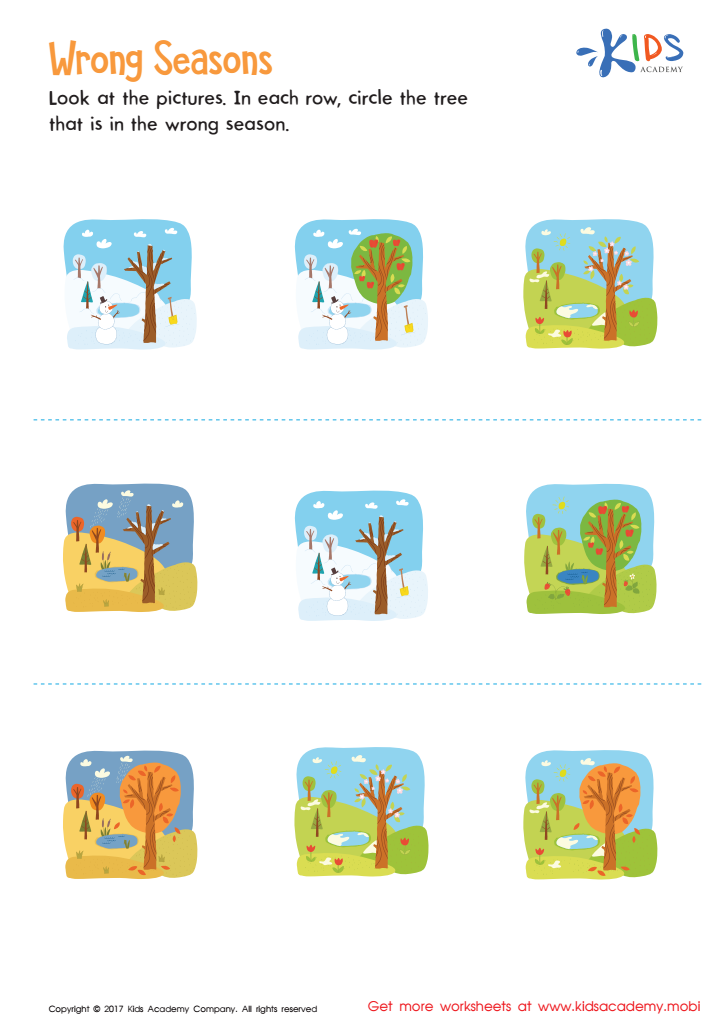
Wrong Seasons Worksheet
 Assign to My Students
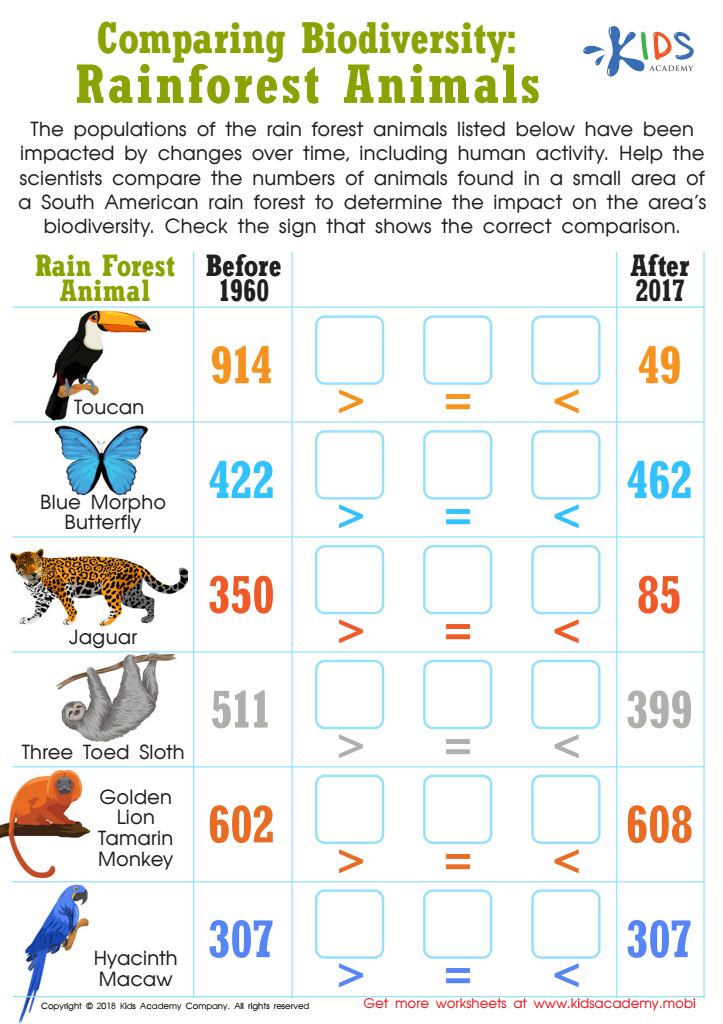
Comparing Biodiversity: Rainforest Animals Worksheet
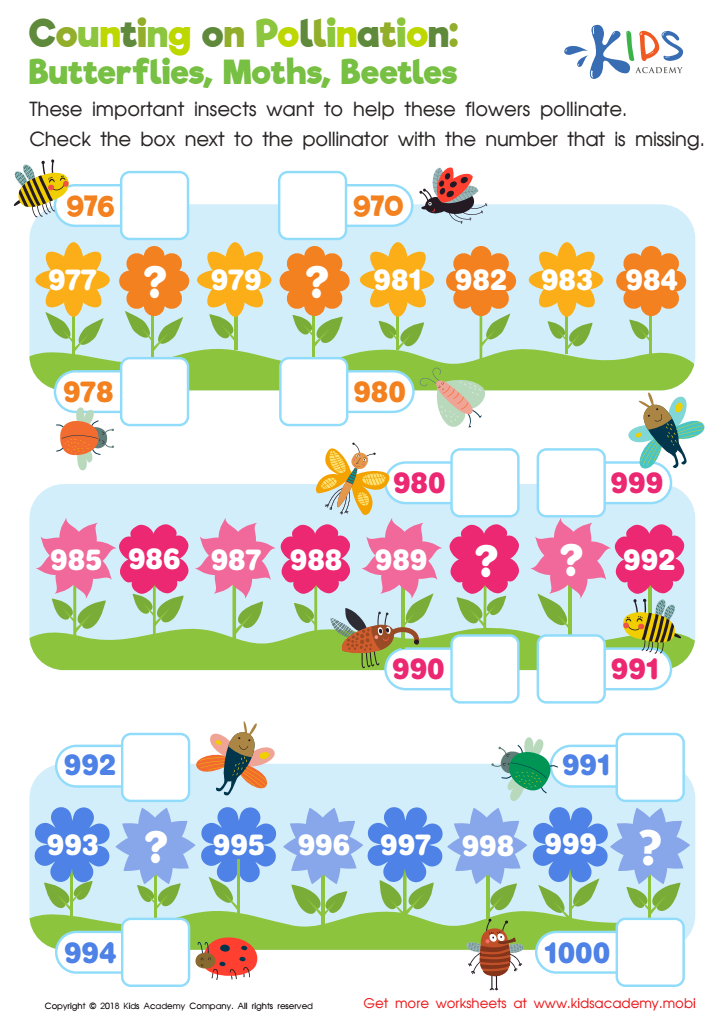
Counting on Pollination: Butterflies, Moths, Beetles Worksheet



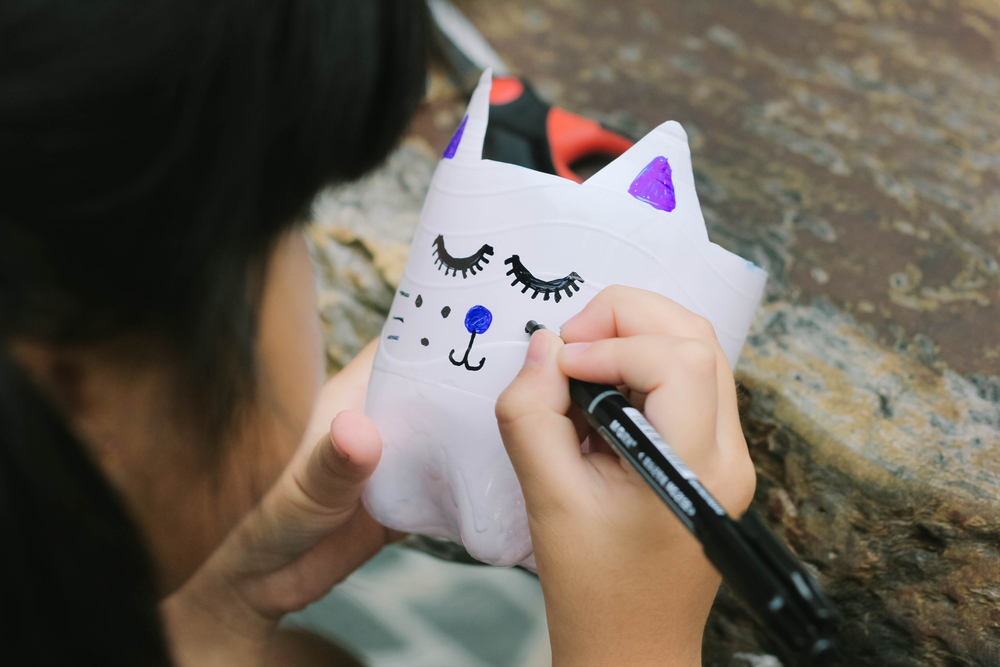

.jpg)
.jpg)
Improving observation skills in children aged 7-8 is vital for their cognitive and social development. At this age, children are keen explorers and inquisitive learners, teetering at the bridge between early childhood and more formal education. Observation skills help them make sense of the world by noticing details, patterns, and changes, which fosters critical thinking and analytical abilities.
Good observation skills catalyze academic success across subjects. In science, they enable children to closely examine experiments and nature, leading to better hypothesis formation. In literacy, noticing details in texts enhances comprehension and storytelling skills. Additionally, in math, closely observing shapes, patterns, and numerical relationships builds a stronger foundation for complex problem-solving.
Socially, keen observation skills allow children to better understand social cues, emotions, and gestures, enhancing empathy and communication. This, in turn, leads to more meaningful interactions and relationships, which are fundamental as they grow.
Moreover, improving observation encourages mindfulness and patience, qualities that can help reduce stress and improve overall well-being. Teachers and parents fostering these skills engage children in activities like nature walks, descriptive drawing, story discussions, and interactive games. These not only enrich learning but also cultivates a curious, attentive mindset, crucial for lifelong learning.








