Map reading Normal Worksheets for Ages 7-8
3 filtered results
-
From - To
Explore our engaging "Map Reading Normal Worksheets" designed specifically for children ages 7-8. These worksheets provide a fun way for young learners to develop essential map reading skills. Through interactive activities, kids will enhance their abilities to locate landmarks, understand symbols, and navigate various types of maps. Each worksheet encourages critical thinking and problem-solving while fostering a love for exploration and learning about geography. Perfect for home or classroom use, these resources aid teachers and parents in enriching their curriculum and enhancing students’ spatial awareness. Help your child become confident map readers with our comprehensive and enjoyable worksheets today!
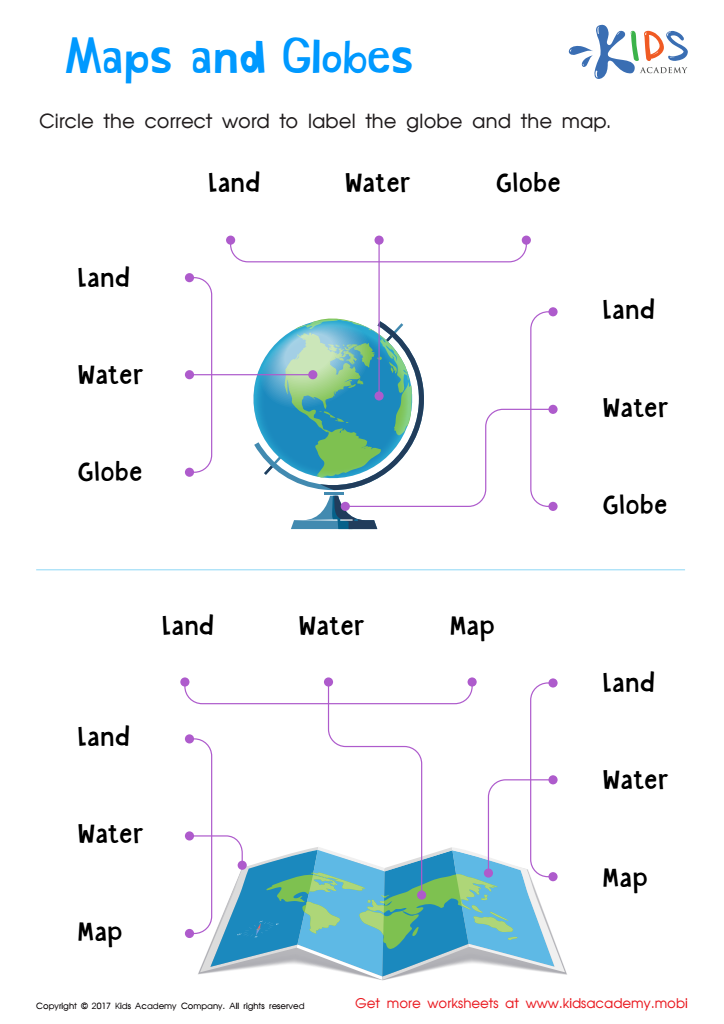
 Assign to My Students
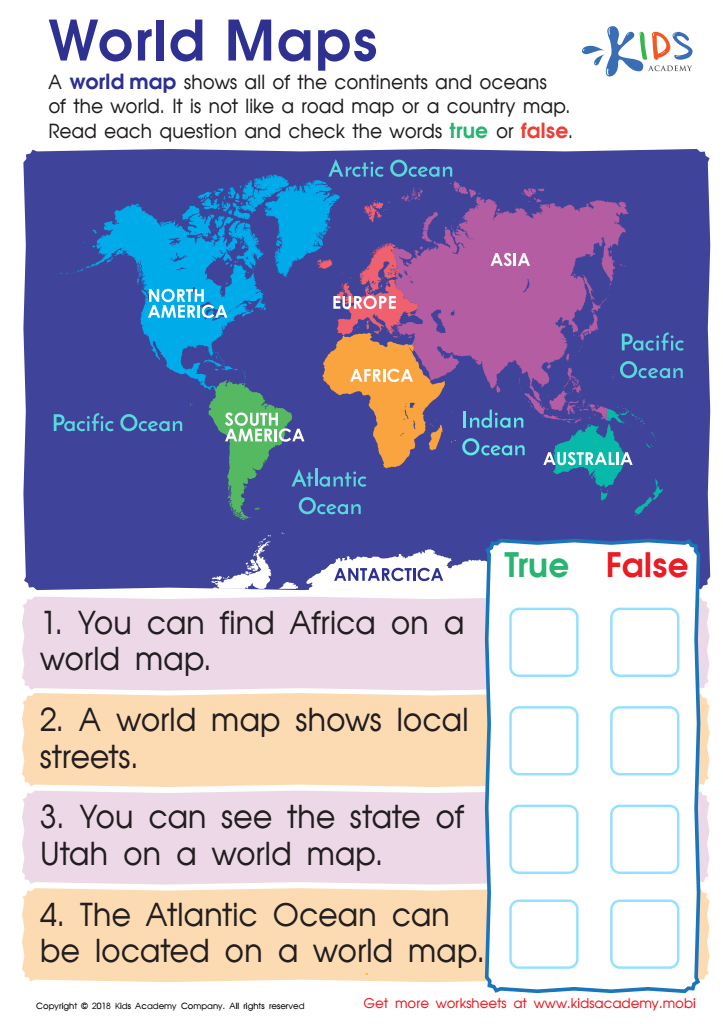
World Maps Worksheet
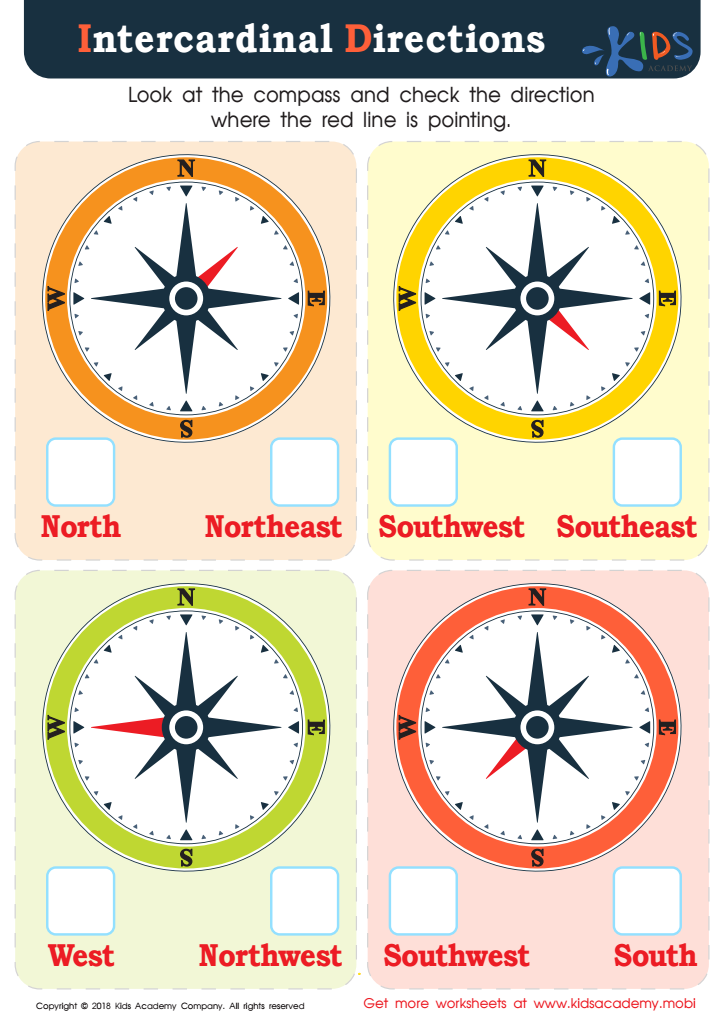
Intercardinal Directions Worksheet






.jpg)
Map reading skills are essential for children aged 7-8, as they foster critical thinking, spatial awareness, and navigation abilities. For parents and teachers, nurturing these skills not only enhances academic performance but also empowers children to engage with the world around them more actively.
Understanding maps helps children develop problem-solving skills that are applicable in real-world situations, such as planning routes for travel or understanding their local environment. It encourages them to think critically about distance, direction, and scale, thereby laying the groundwork for future geography and math concepts. Additionally, reading maps can promote the development of responsibility and independence. By learning how to read a map, children gain confidence in their ability to navigate unfamiliar places and scenarios.
Furthermore, map reading can pave the way for family activities like hiking or exploring new neighborhoods, fostering quality time and teaching children the significance of teamwork and cooperation. In essence, cultivating map reading skills in early education provides children with practical tools for life, equipping them with essential skills to become informed, capable individuals who can confidently interact with their surroundings. Thus, it is crucial for parents and teachers to prioritize map reading in their teaching and parenting strategies.








