Reading clocks Normal Worksheets for Ages 7-8
3 filtered results
-
From - To
Enhance your child's time-telling skills with our "Reading Clocks Normal Worksheets" designed specifically for ages 7-8. These engaging and printable worksheets provide a variety of fun activities that help children master both analog and digital clocks. From identifying clock hands to solving time-related tasks, every resource promotes essential math concepts while making learning enjoyable. Our worksheets cater to different learning styles, ensuring every child can practice at their own pace. Support your child's educational journey and build their confidence in reading time with these interactive activities that transform clock reading into an exciting adventure! Download today and watch them flourish!
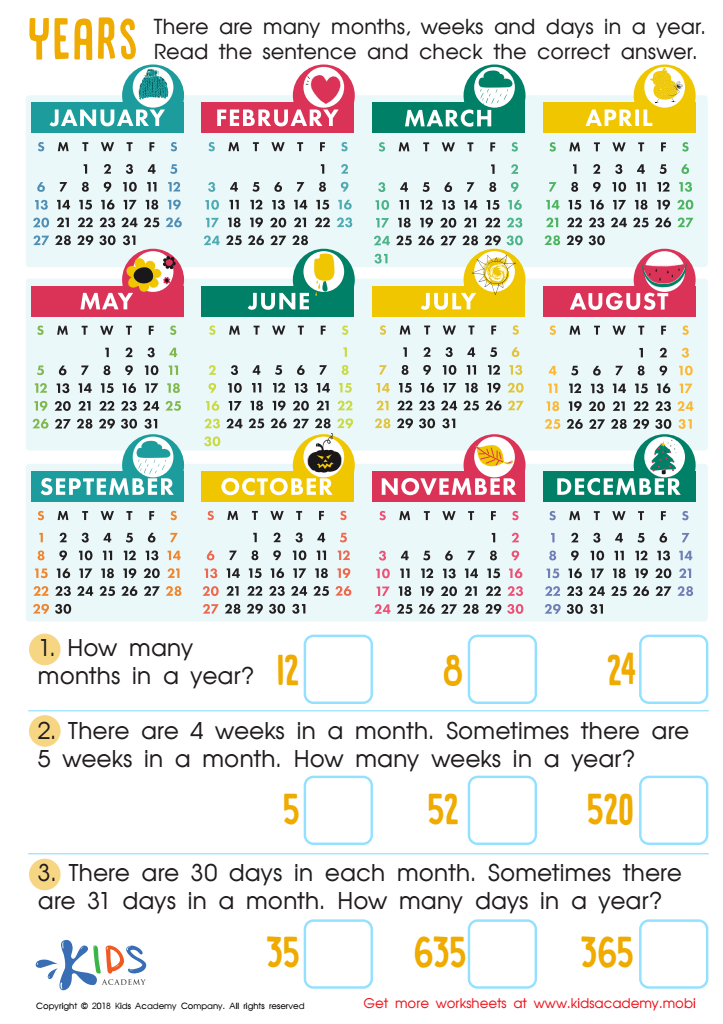
Years Worksheet
 Assign to My Students
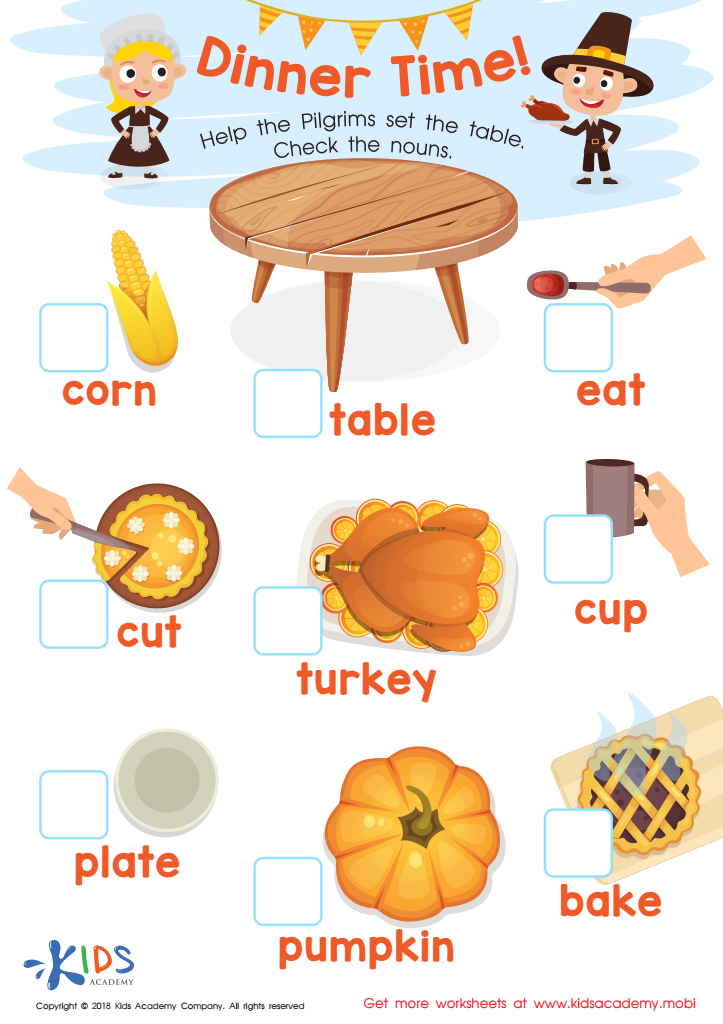
Dinner Time! Worksheet
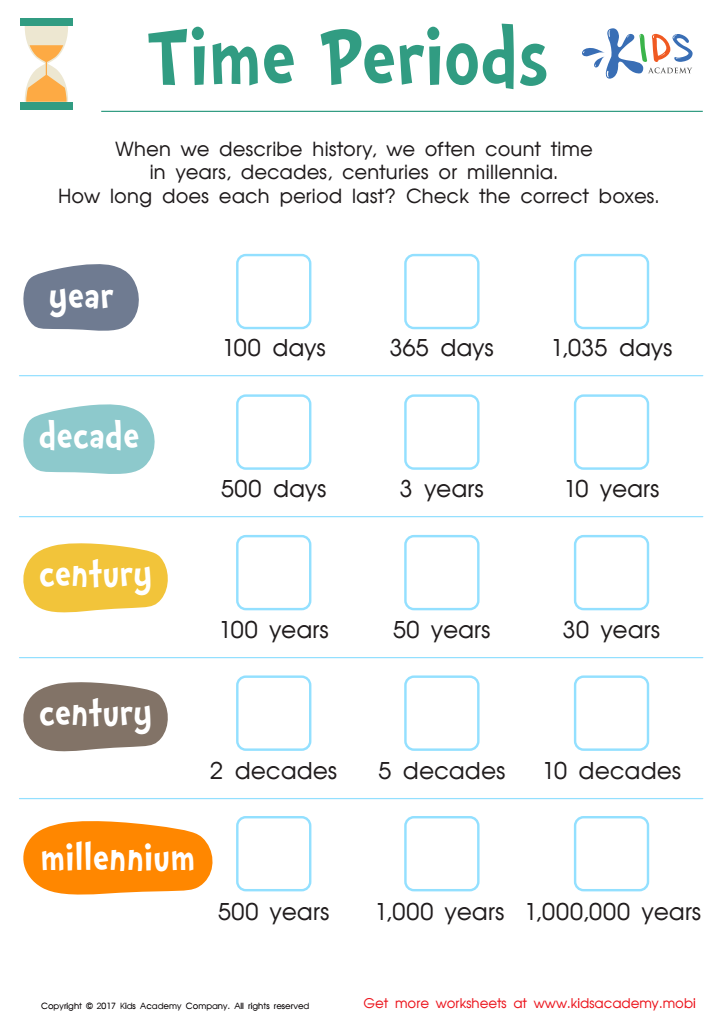
Time Periods Worksheet







Parents and teachers should prioritize teaching children how to read clocks for several important reasons. At ages 7-8, children are developing critical life skills, and understanding how to tell time enhances their independence and responsibility. Mastering time concepts allows children to manage their schedules, whether it’s getting to school on time, participating in extracurricular activities, or completing homework assignments.
Moreover, reading analog clocks introduces children to important math skills such as learning to divide the clock face into fractions and understanding the concepts of intervals and rotation. These mathematical foundations serve as a valuable tool that can be applied in various contexts throughout their education.
Additionally, knowing how to read time fosters a sense of routine and structure in children’s lives. When they comprehend time, they are better positioned to understand the importance of being punctual, which is essential in both academic and social environments.
Finally, technological devices have made digital time-telling commonplace, but knowing how to read analog clocks helps preserve traditional skills, fostering a sense of adaptability among children. Overall, nurturing this foundational skill not only builds confidence but also equips children with essential tools for their future.








