
Understanding context Normal Worksheets for Ages 7-8
4 filtered results
Difficulty Level
Grade
Age
-
From - To
Subject
Activity
Standards
Discover engaging "Understanding Context" worksheets designed for ages 7-8 to enhance learning skills! These printable activities from Kids Academy help young learners develop essential reading comprehension by focusing on understanding context clues within a text. Perfect for second and third graders, the worksheets make learning fun and interactive, aiding in the identification of unfamiliar words and overall text interpretation. Support your child's literacy journey with expert-crafted exercises that boost confidence and academic success. Explore our diverse selection of context worksheets that cater to your child’s educational needs and help them excel in understanding the nuances of language.
Favorites
With answer key
Interactive
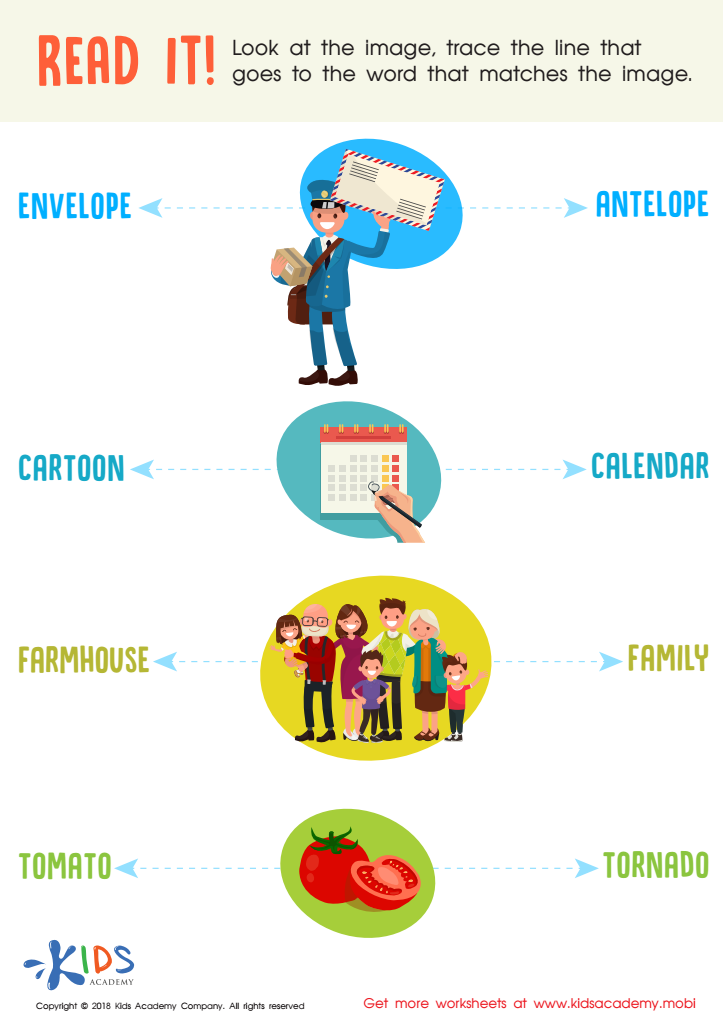
Read It! Worksheet
Point to each image on this worksheet, asking your child what it is. Read the 2 options then help your child trace the line to the correct word. It'll keep them engaged and provide visual stimulation.
 Assign to My Students
Read It! Worksheet
Worksheet
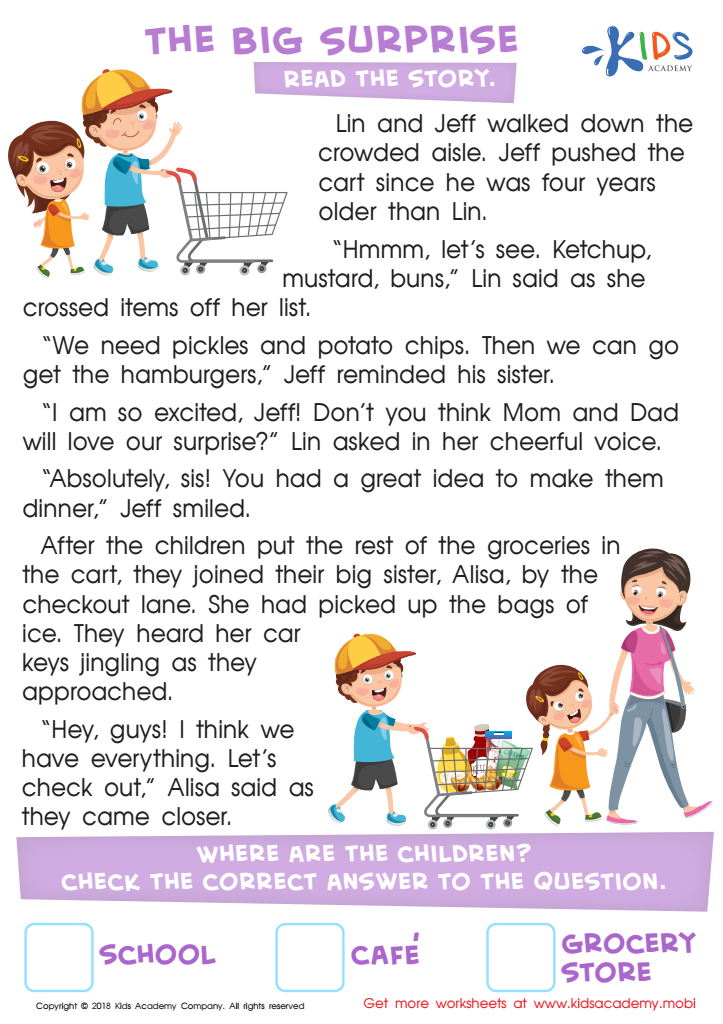
The Big Surprise Worksheet
Read this story to your kids: Lin and Jeff are in the supermarket with their big sister Alisa. They're excited to buy groceries. Listen closely to the details and ask the questions at the end to check your understanding. Read it twice to ensure full comprehension.
The Big Surprise Worksheet
Worksheet
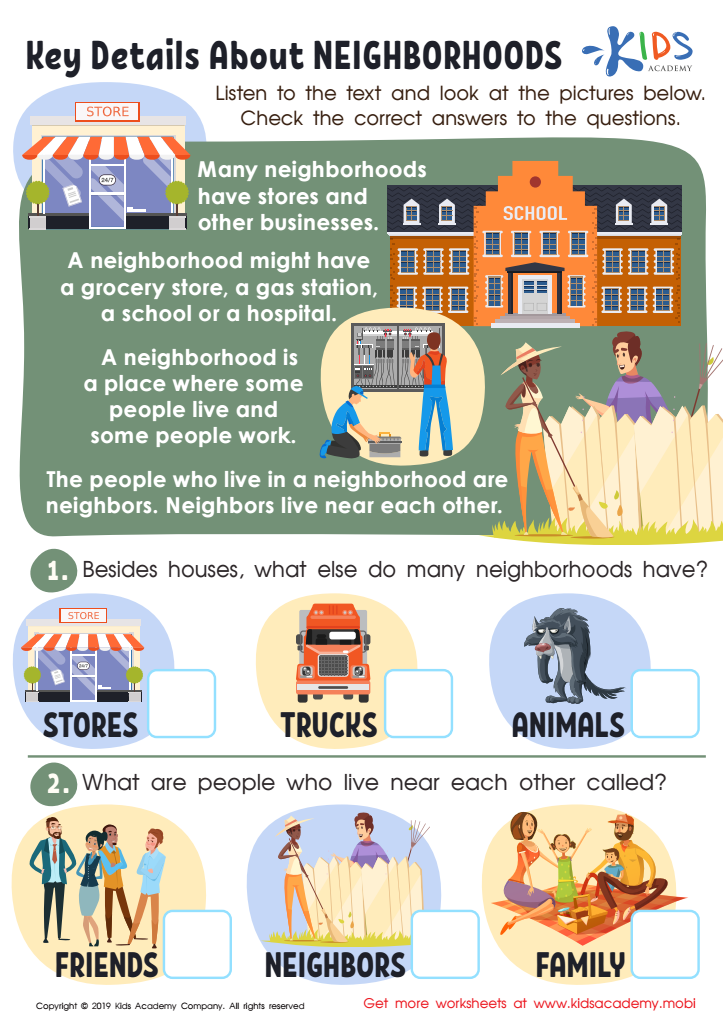
Key Details Neighborhoods Worksheet
This worksheet helps your child strengthen reading comprehension by teaching them to pull out key details and store them in their memory. It includes words and pictures that demonstrate how the two can work together to create better understanding. As they learn about a neighborhood, they'll practice these skills by answering comprehension questions.
Key Details Neighborhoods Worksheet
Worksheet
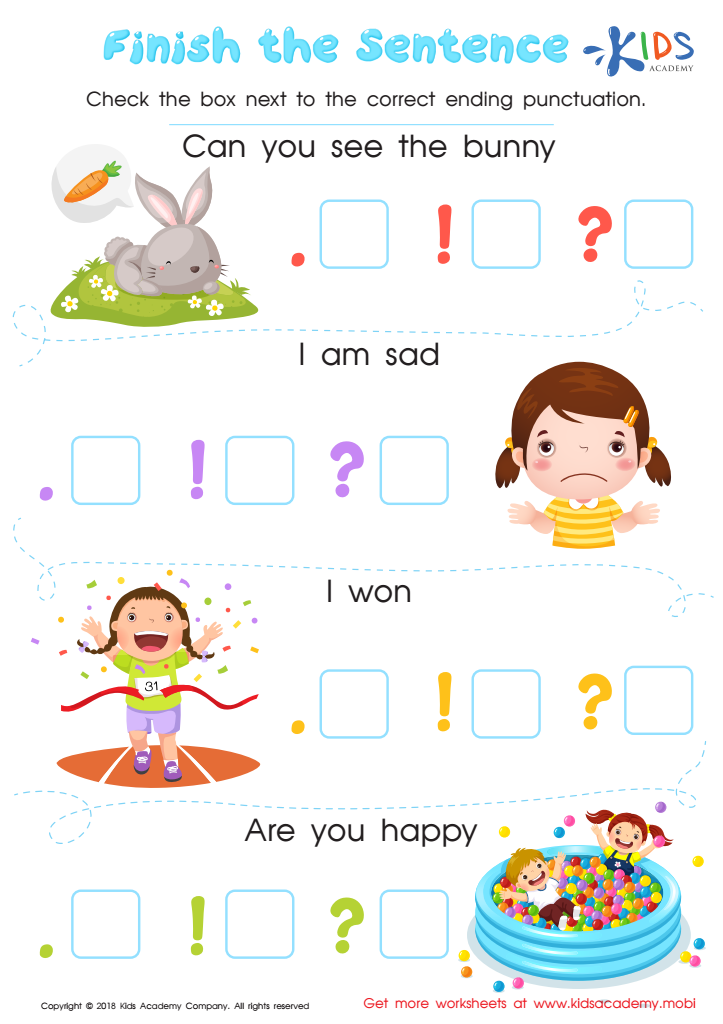
Finish the Sentence Worksheet
If your students have difficulty with punctuation, have them read sentences aloud and check the box next to the correct ending punctuation with this simple worksheet. Punctuation signals the tone and meaning of sentences. It helps students understand what is being communicated.
Finish the Sentence Worksheet
Worksheet
Join Kids Academy for Free
Who is primarily going to use this learning content?







Understanding context is crucial for children ages 7-8 because it fundamentally supports their cognitive and social development. At this age, kids start to integrate more complex ideas and connect different pieces of information. This ability helps them comprehend stories, follow instructions, and interact socially in more nuanced ways. For instance, when reading, understanding context allows children to infer the meaning of new words or identify the motivations behind a character's actions. This improves their reading comprehension and critical thinking skills, making their overall learning experience richer and more engaging.
Moreover, grasping context enhances children's social skills. In conversations, understanding context helps them recognize social cues and determine appropriate responses. This can prevent misunderstandings and build stronger, healthier peer relationships. Social context comprehension is essential for empathy as well, as it enables kids to appreciate others' perspectives and emotions.
Teachers and parents should care about teaching context because it lays a foundation for academic success and personal development. It equips children with essential life skills, such as problem-solving and effective communication, that are important in everyday situations. Understanding context fosters a more enriching educational environment and helps children become more empathetic and competent individuals. Without mastering this skill, children may struggle academically and socially, impacting their overall well-being and future success.








