Logical thinking development Normal Addition & Subtraction Worksheets for Ages 7-8
4 filtered results
-
From - To
Enhance your child's logical thinking skills with our Normal Addition & Subtraction Worksheets, designed specifically for ages 7-8. These engaging worksheets encourage critical thinking and problem-solving abilities through interactive math exercises. As children work through various addition and subtraction problems, they’ll not only practice fundamental math concepts but also develop essential logical reasoning skills. Perfect for at-home practice or classroom activities, our worksheets offer a fun and challenging way for young learners to build their mathematical confidence. Equip your child with the tools they need to thrive academically and foster a love for learning through our thoughtfully crafted resources!
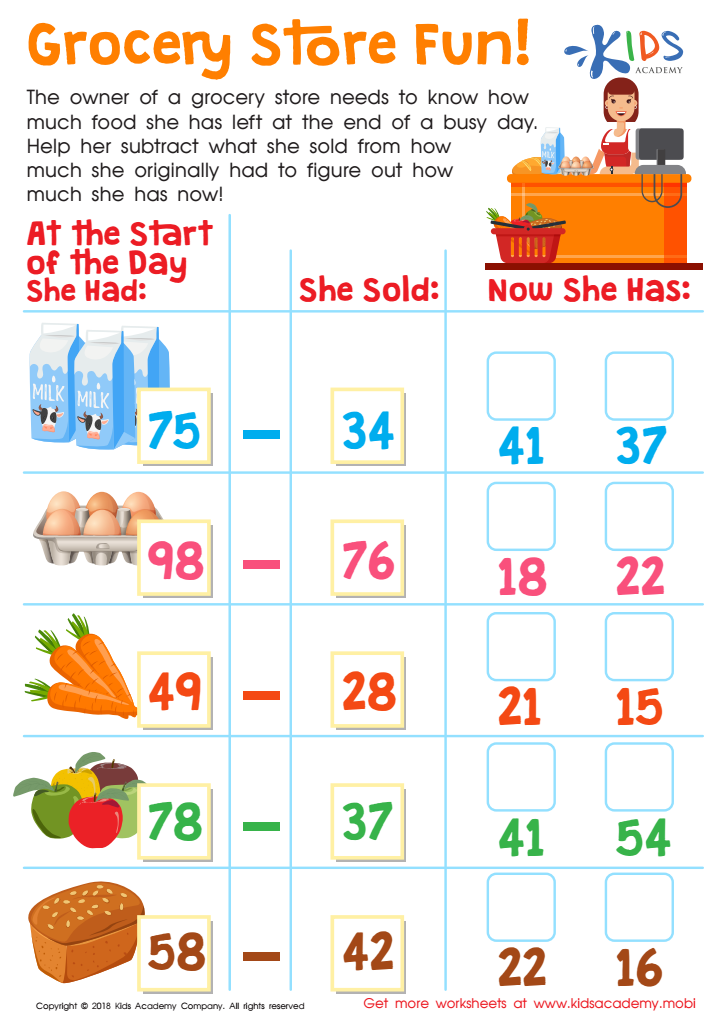
Grocery Store Fun! Worksheet
 Assign to My Students
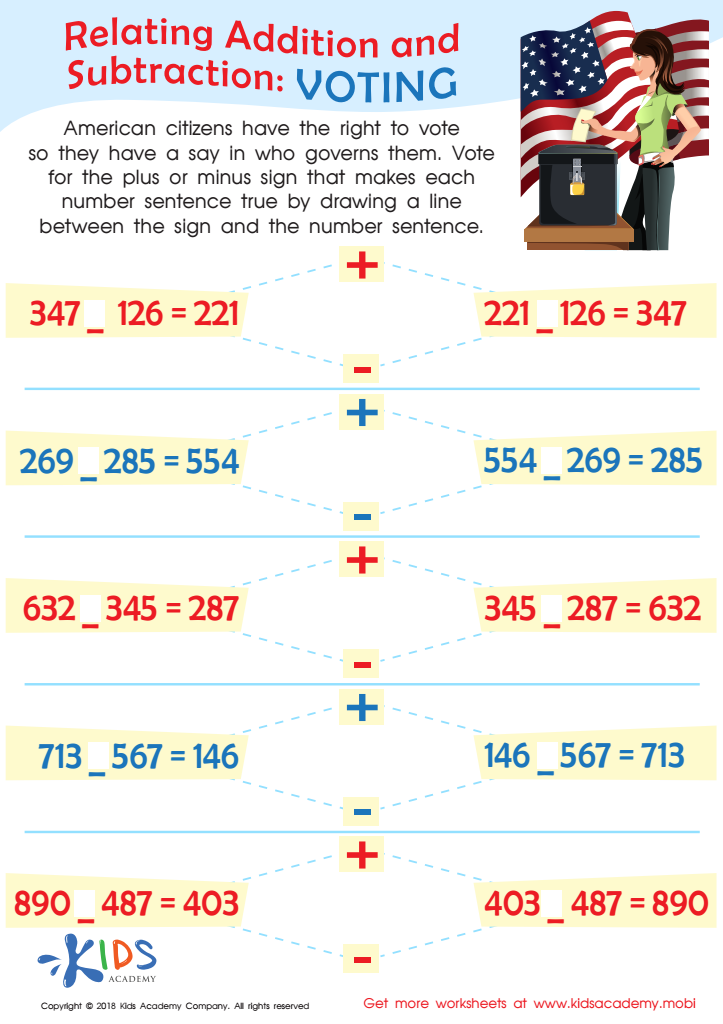
Voting Worksheet
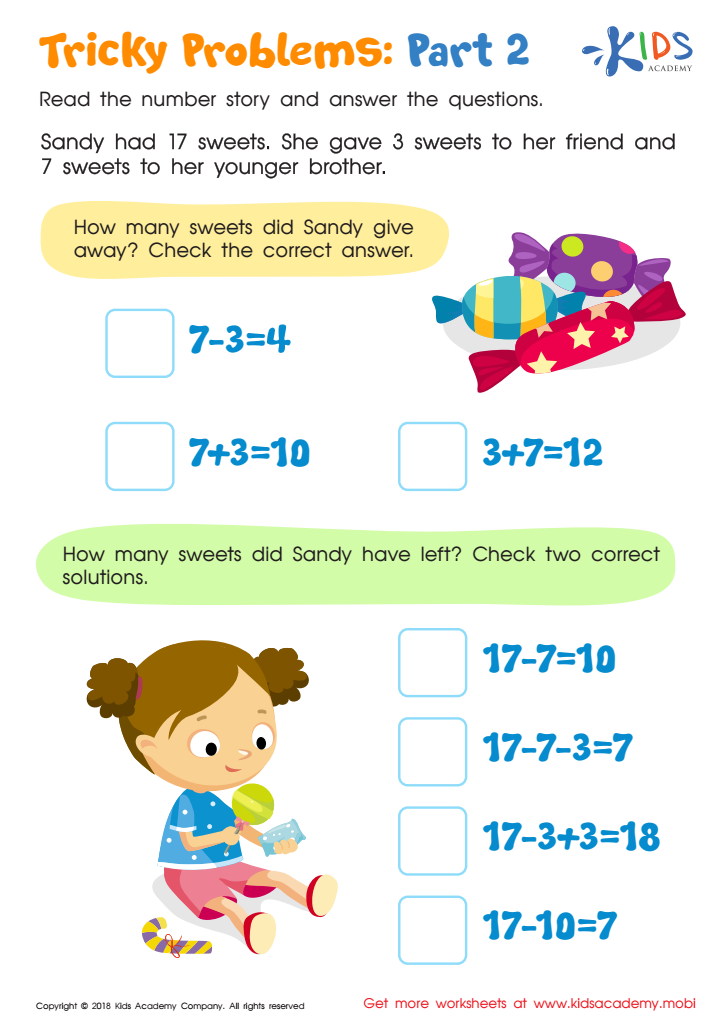
Tricky Problems Worksheet: Part 2
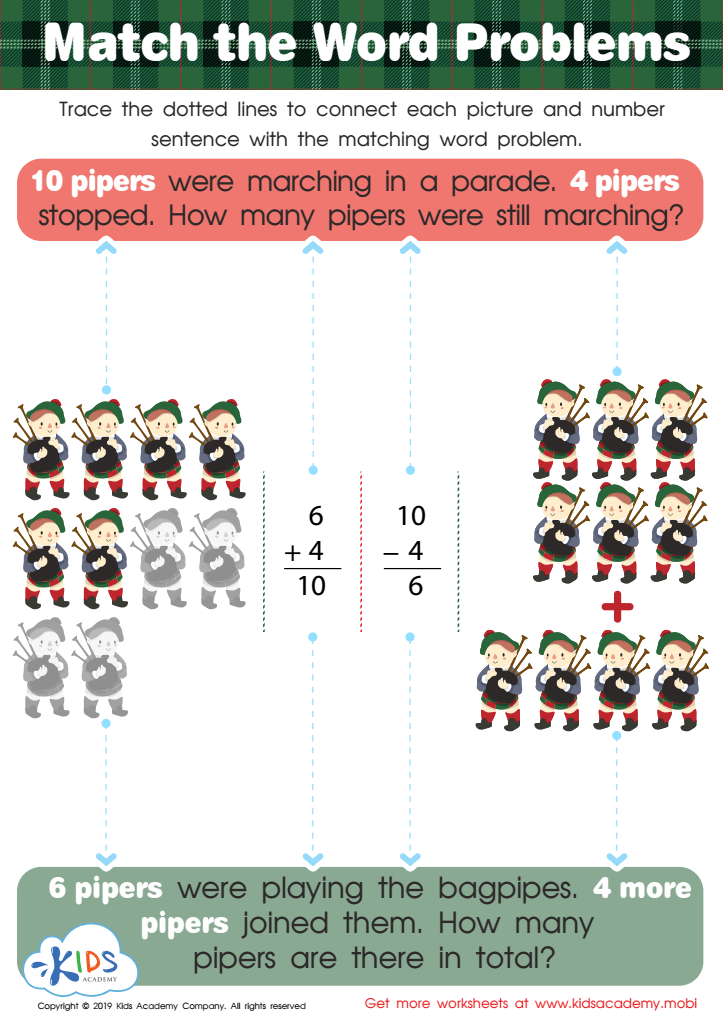
Match the Word Problems Worksheet








Parents and teachers play a critical role in fostering logical thinking and arithmetic skills in children aged 7-8, as both are foundational for their future academic and personal success. At this age, children are developing more sophisticated cognitive abilities, including reasoning, problem-solving, and critical thinking. Logical thinking aids students in organizing their thoughts, understanding concepts, and applying skills to real-world situations.
Focusing on normal addition and subtraction not only establishes a solid math foundation but also enhances logical thinking. Mastery of these operations empowers children to tackle more complex mathematical concepts in later grades, thereby reducing anxiety and increasing confidence in their abilities. Furthermore, engaging students in practical applications of math through games or real-life scenarios encourages them to think logically as they strategize and solve problems.
Parents and teachers can cultivate a love for math by creating a supportive environment where mistakes are seen as learning opportunities. Encouraging discussions about different approaches to addition and subtraction fosters deeper understanding and critical thinking skills.
Ultimately, developing logical thinking through normal addition and subtraction prepares children not only for academic challenges but also equips them with essential life skills, such as decision-making and analytical reasoning.








