Basic Addition Normal Numbers Worksheets for Ages 7-8
5 filtered results
-
From - To
Discover our engaging Basic Addition Normal Numbers Worksheets, perfectly designed for ages 7-8. These printable worksheets focus on enhancing addition skills with normal numbers, helping children build a strong mathematical foundation. Each sheet is crafted to make learning enjoyable through fun exercises and relatable examples. Ideal for classroom use or at-home practice, our worksheets develop problem-solving strategies and boost confidence in basic math. Tailored to meet educational standards, these resources support both teachers and parents in nurturing the love for numbers. Equip your child with essential math skills through our well-structured and captivating worksheets today!
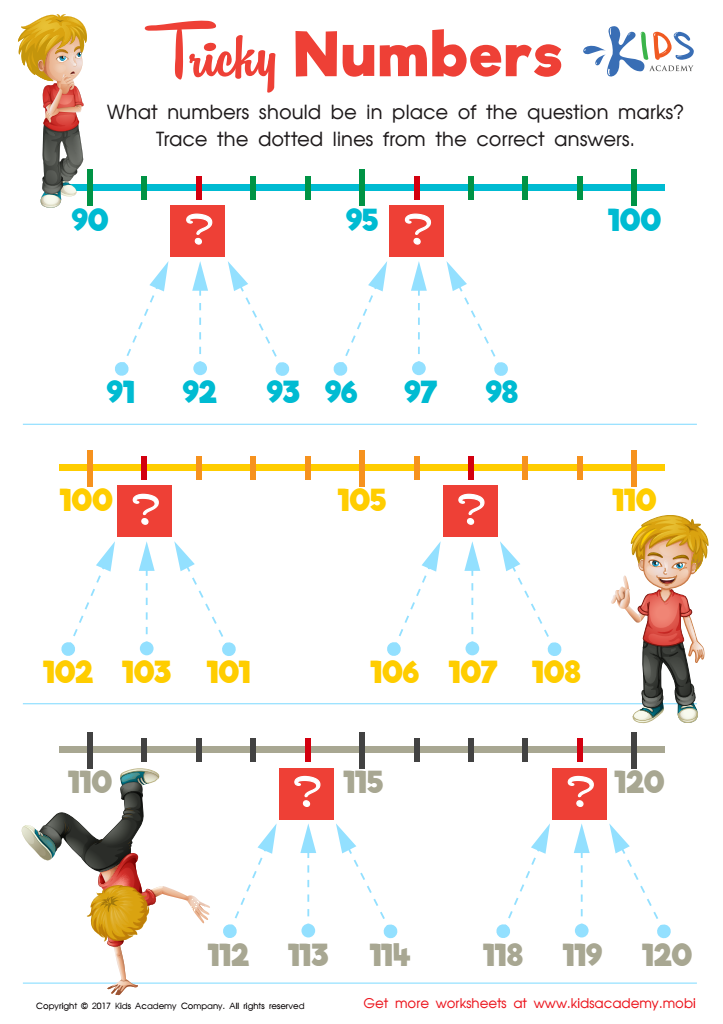
Tricky Numbers Worksheet
 Assign to My Students
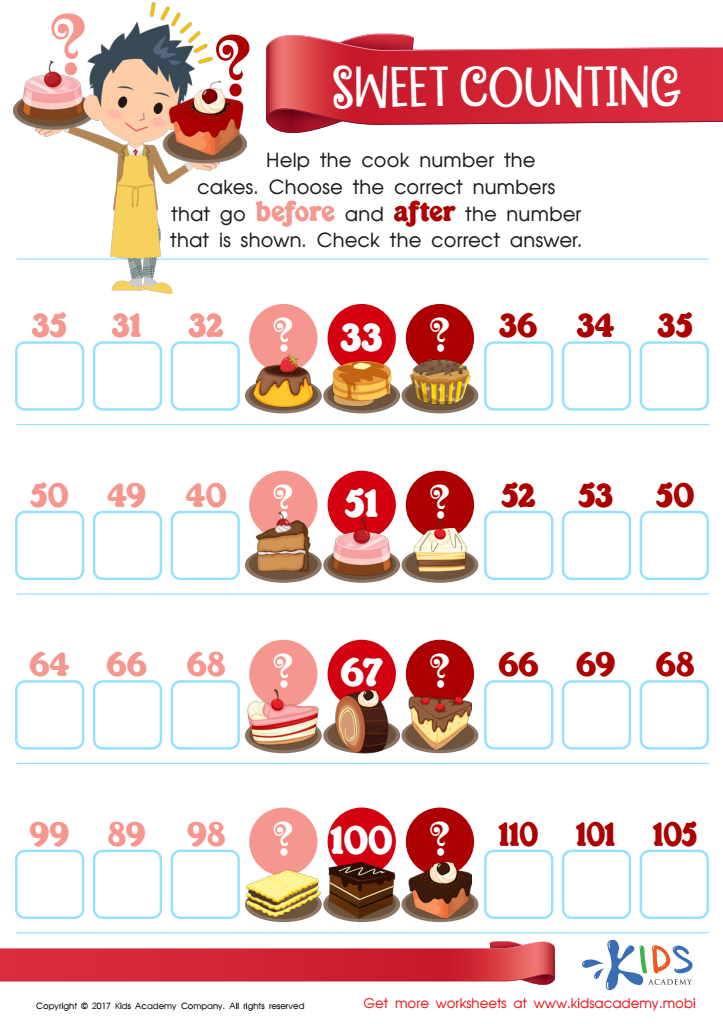
Sweet Counting - Part 1 Worksheet
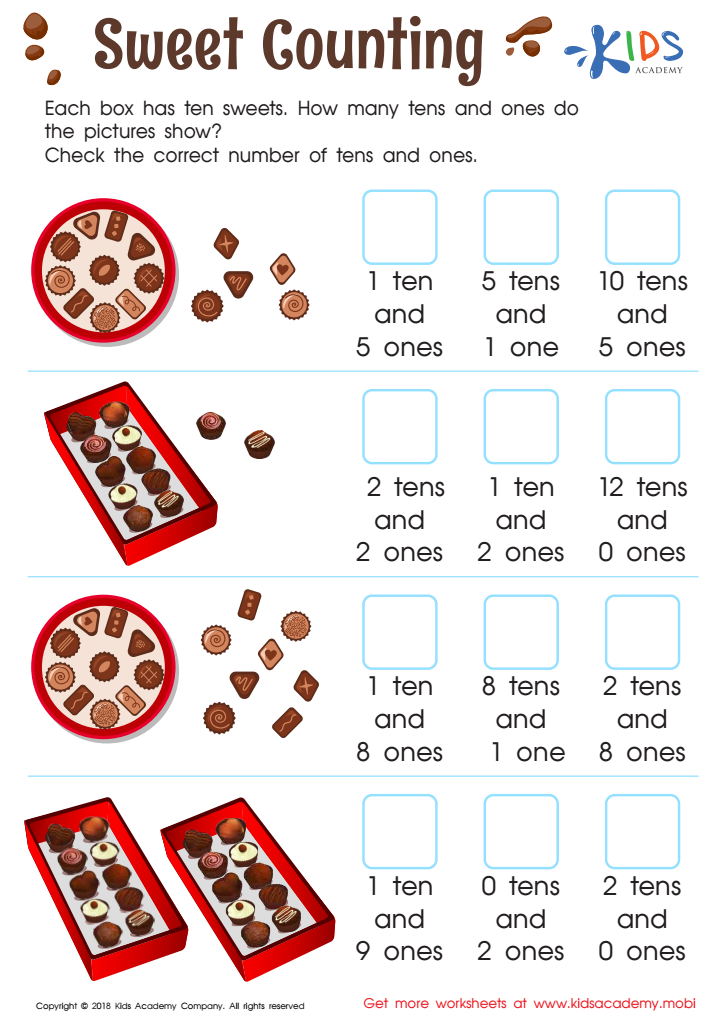
Sweet Counting - Part 2 Worksheet
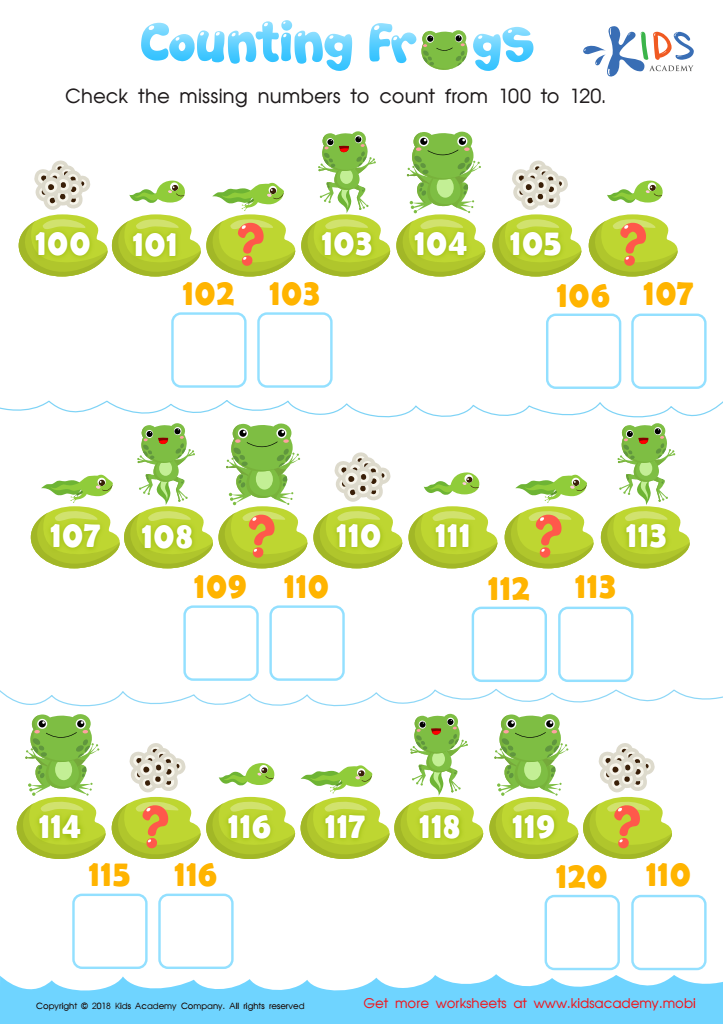
Counting Frogs Worksheet
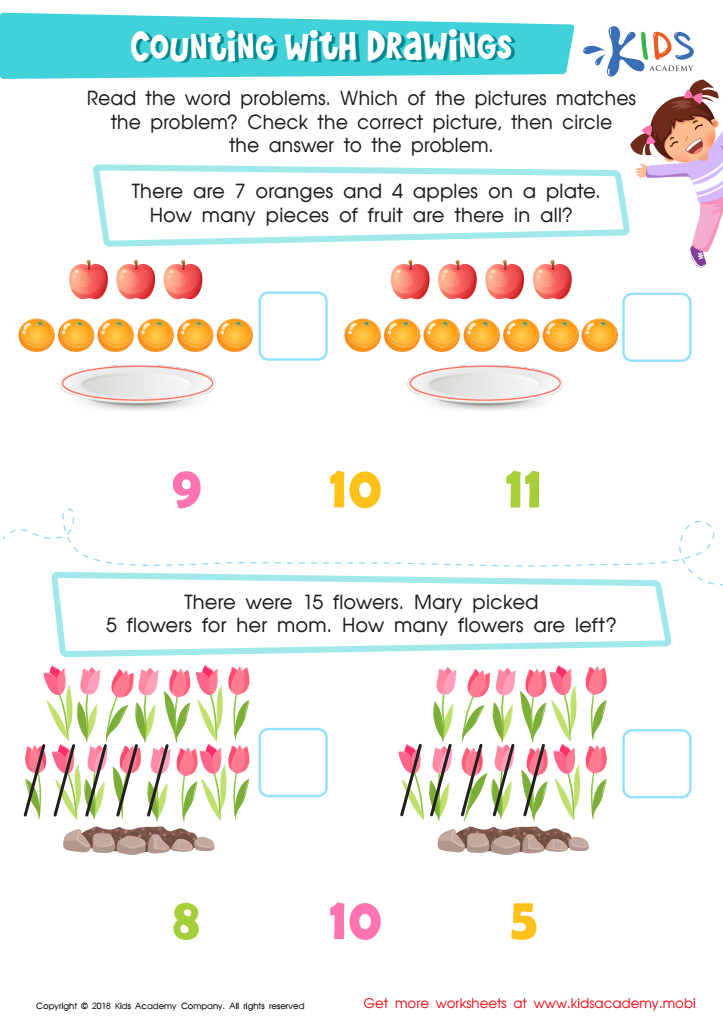
Counting with Drawings:Fruits & Flowers Worksheet





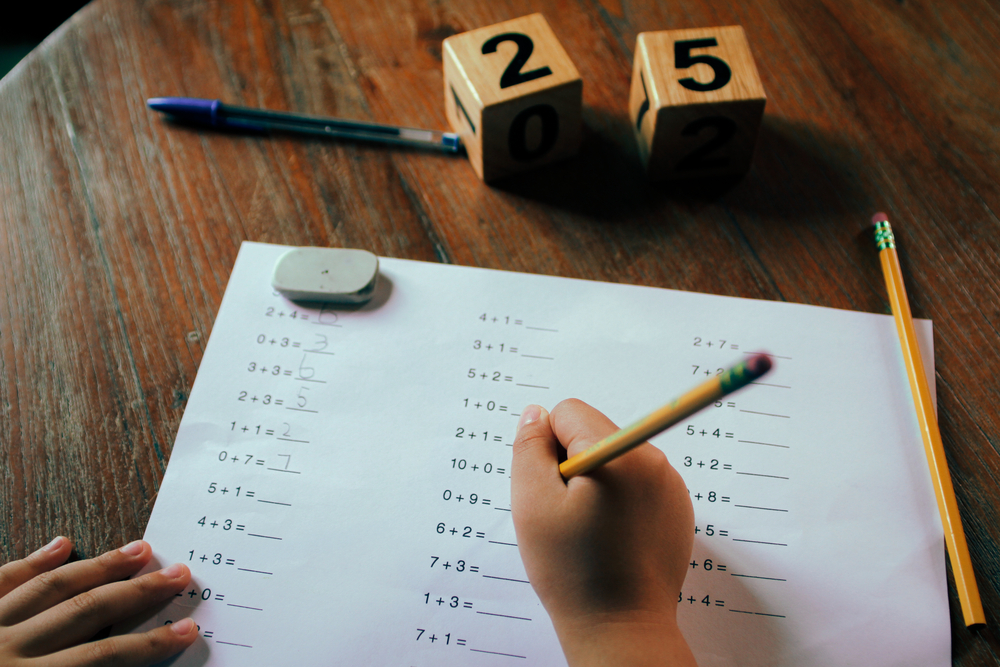


Basic addition is a foundational skill for children aged 7-8, and it's crucial for both parents and teachers to prioritize its mastery. At this developmental stage, kids are building the core math skills that will support their future learning and problem-solving abilities. Understanding and applying basic addition helps children develop their numerical fluency, which is essential for more advanced mathematical concepts such as subtraction, multiplication, and division.
When children can add numbers confidently, they also improve their mental math abilities, which leads to quicker and more accurate decision-making in everyday situations, such as managing money or measuring ingredients in a recipe. Furthermore, proficiency in basic addition bolsters children's self-esteem and positive attitudes toward math. Early success in math often influences their performance and interest in this subject throughout their academic journey.
Moreover, grasping these concepts fosters cognitive development, as it enhances logical thinking, memory, and concentration. It encourages problem-solving, critical thinking, and the ability to assess patterns and make predictions. Ultimately, by ensuring children understand basic addition, parents, and teachers lay a strong foundation for their mathematical literacy, which is vital for academic success and real-world competence.








