Addition skills Normal Place Value Worksheets for Ages 7-8
5 filtered results
-
From - To
Enhance your child’s math abilities with our engaging Addition Skills Normal Place Value Worksheets, specifically designed for ages 7-8. These interactive worksheets focus on developing a strong understanding of place value while reinforcing addition skills. Children will enjoy solving various problems that encourage critical thinking and problem-solving abilities. Our worksheets are tailored to cater to different learning styles, ensuring every child can grasp fundamental concepts with ease. With clear instructions and vibrant illustrations, your young learners will be motivated to practice and improve their math proficiency. Prepare your child for future success in mathematics with our thoughtfully designed activities today!
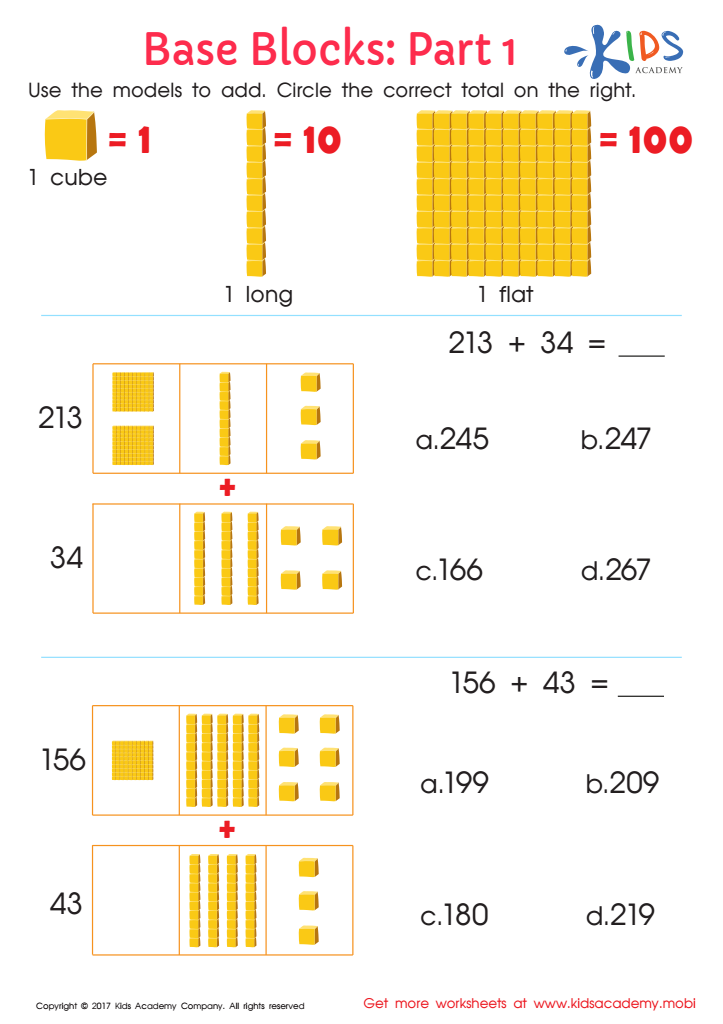
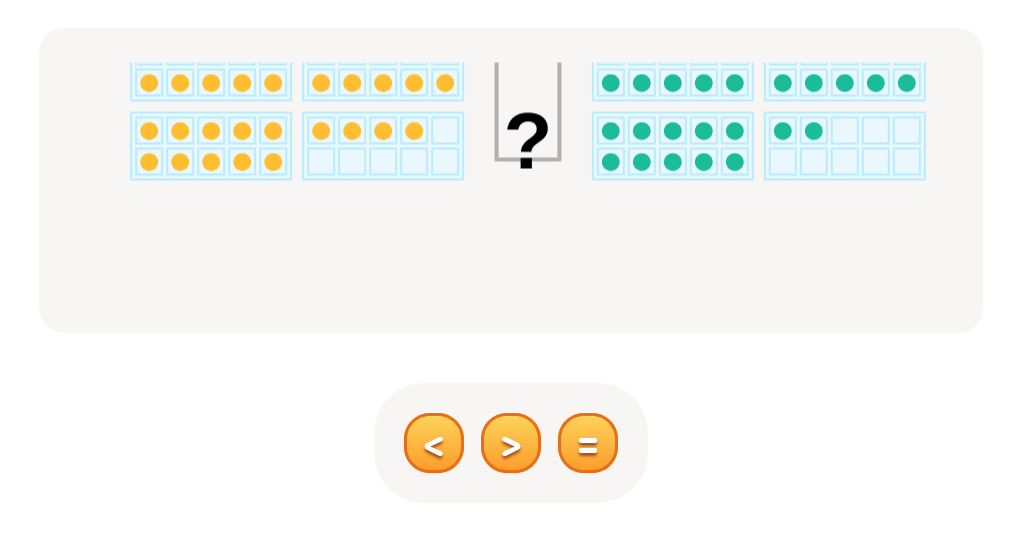
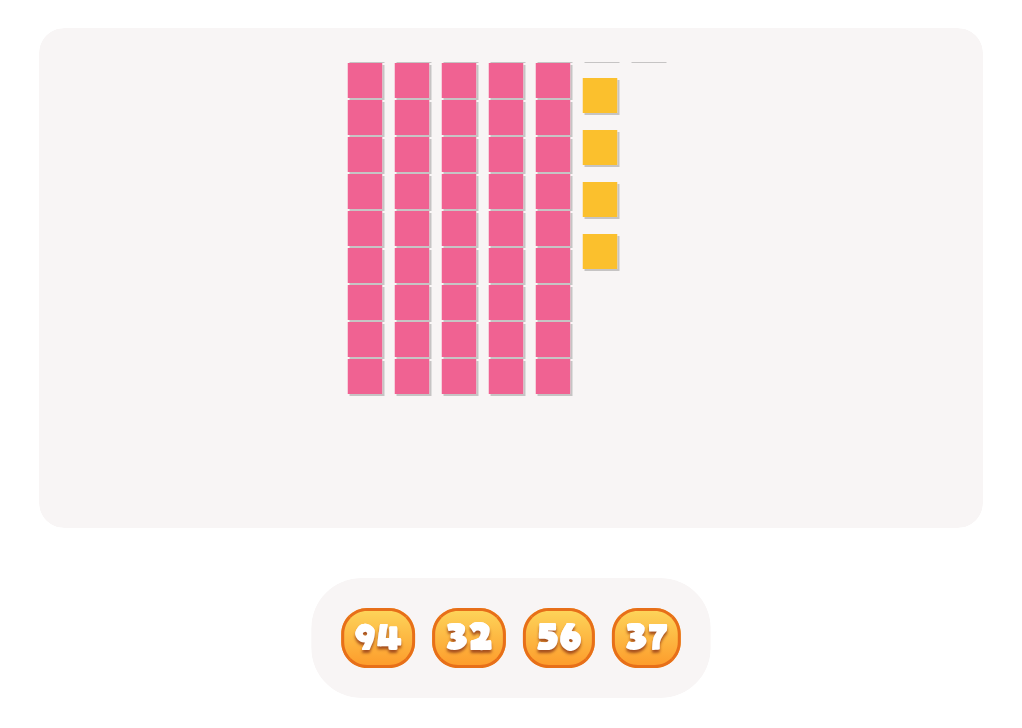
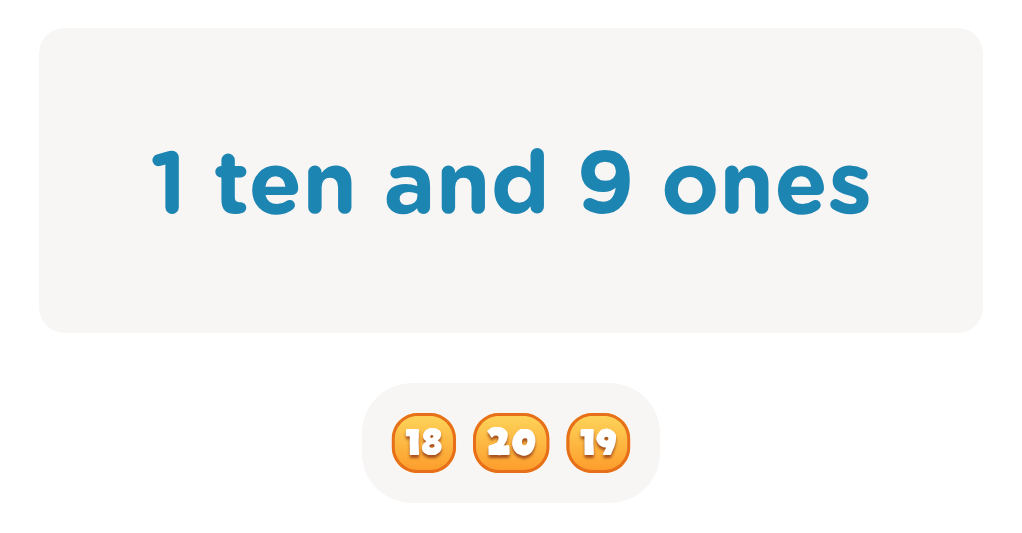
Base Ten Blocks Worksheet: Part 1
 Assign to My Students

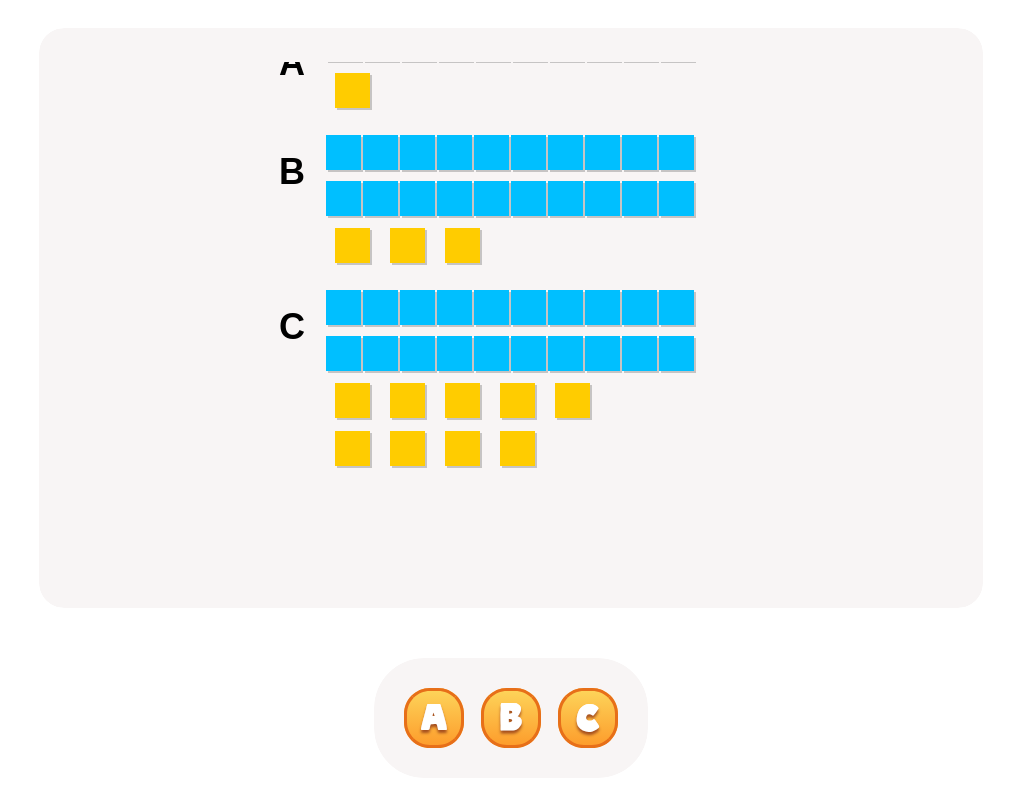
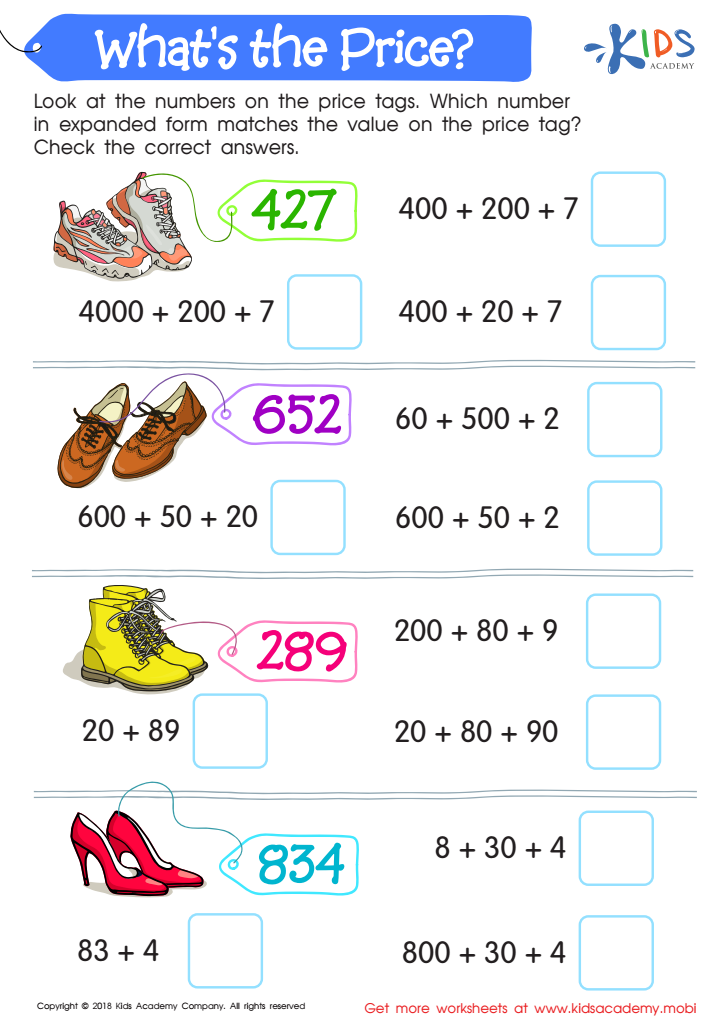
What's the Price? Worksheet
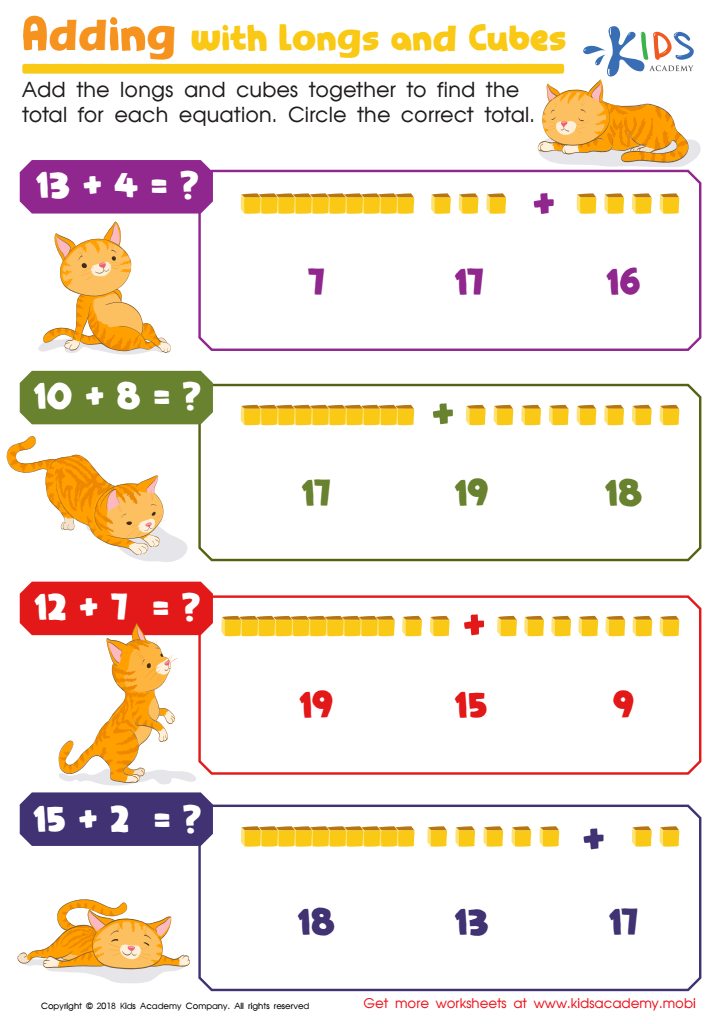
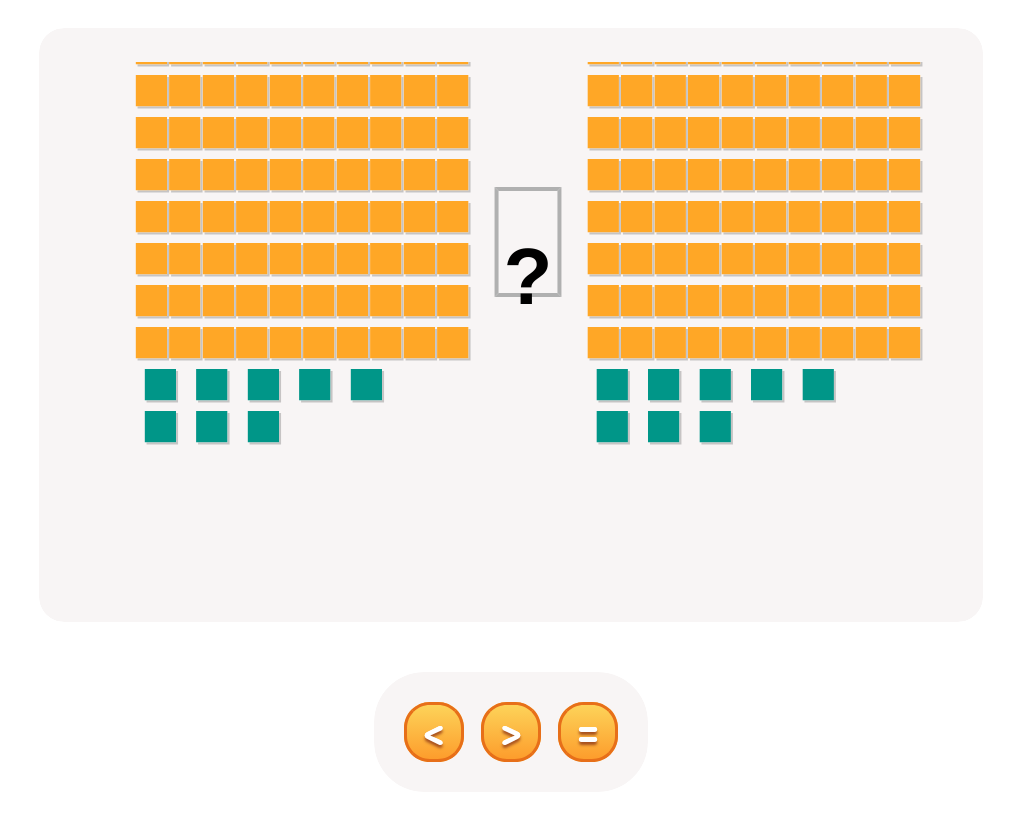
Adding With Longs and Cubes Worksheet
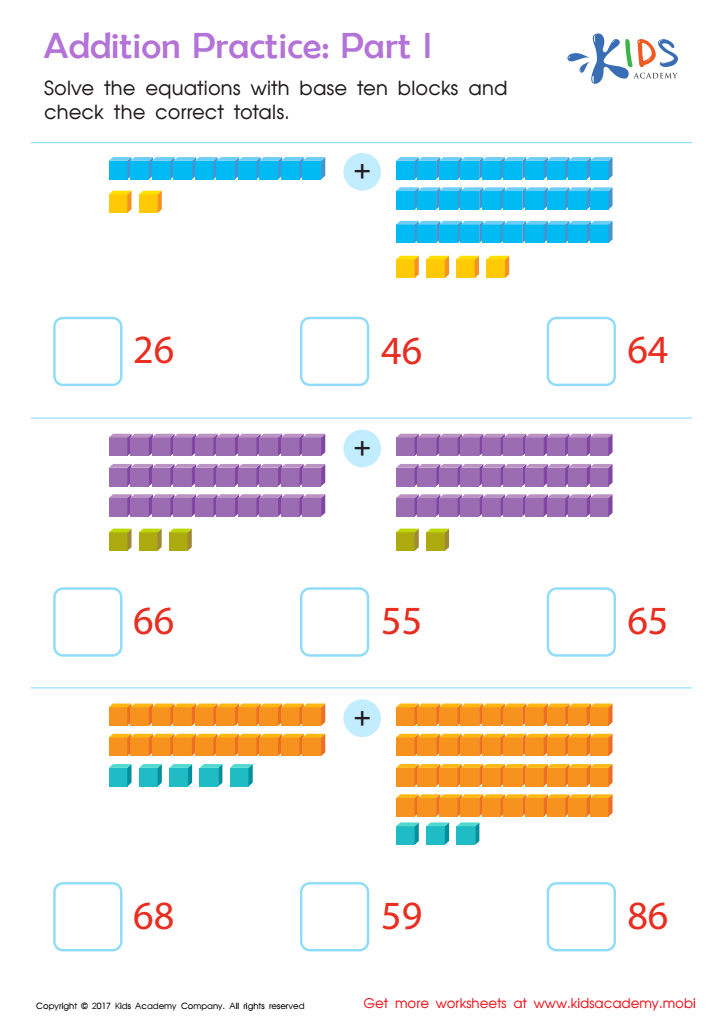
Addition Practice Sheet: Part 1
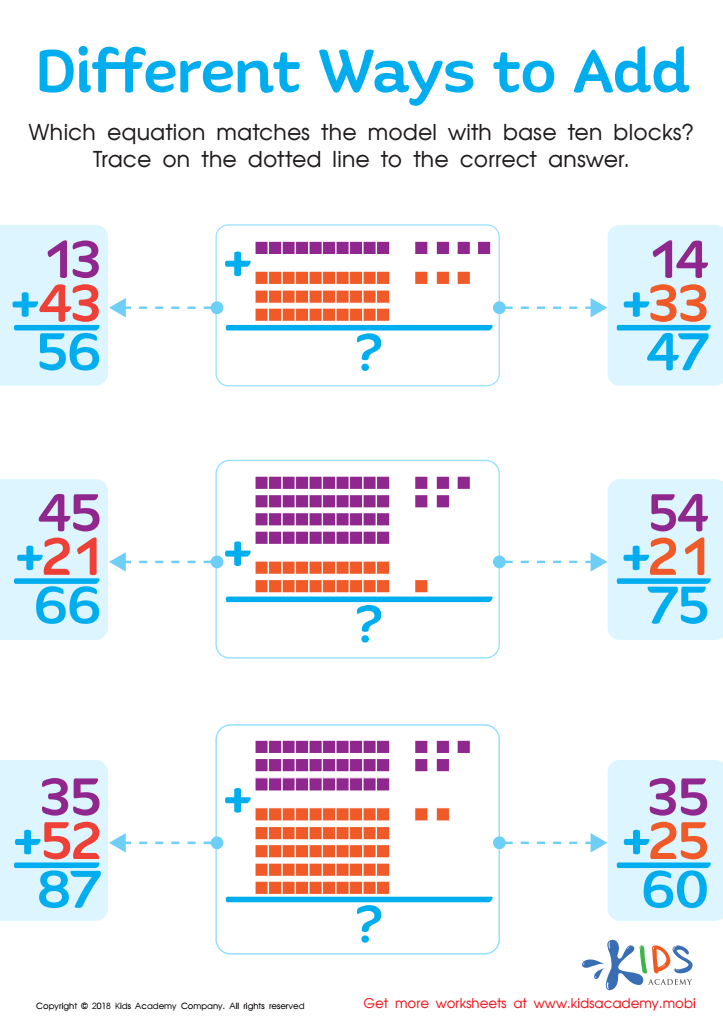
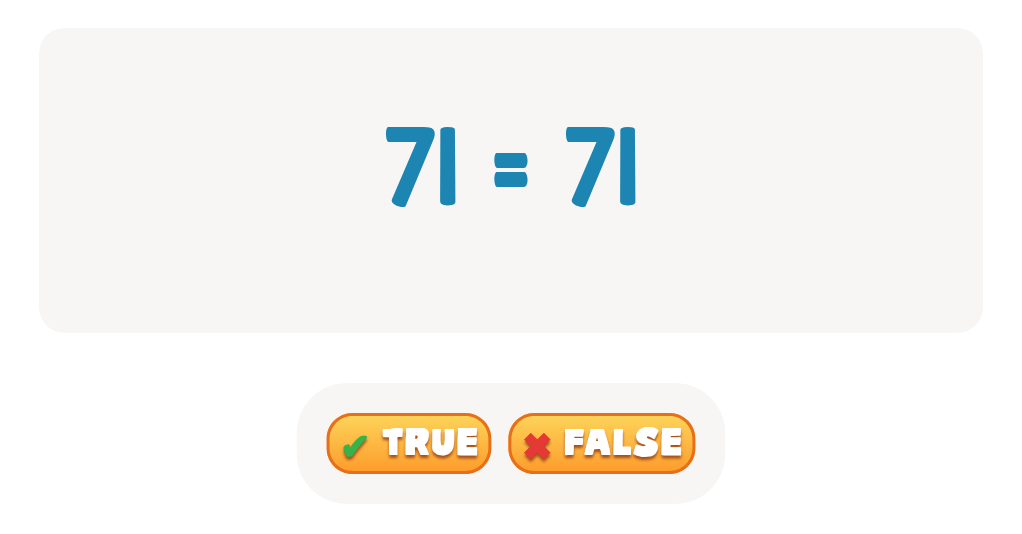
Different Ways to Add Worksheet








Parents and teachers should prioritize the development of addition skills and understanding normal place value for children aged 7-8 because these concepts form the foundation for future mathematical understanding. Mastering addition at this stage not only enhances computational fluency but also supports problem-solving abilities in real-life situations. Children begin to notice patterns in numbers, helping them approach mathematics with confidence and curiosity.
Moreover, understanding place value allows children to comprehend the significance of each digit in a number, which is crucial for operations like addition, subtraction, and ultimately multiplication and division. For example, recognizing that the "3" in "43" represents three tens as opposed to three ones empowers children to perform calculations with greater accuracy and efficiency.
These skills also foster critical thinking, as students learn to approach problems systematically. When children are confident in their addition and place value skills, they are more likely to engage in complex math concepts as they advance in school. Additionally, strong mathematical foundations correlate with overall academic success. Therefore, parents and teachers should actively support and encourage practice in these areas to nurture a positive attitude towards math in everyday life.