
Phonics practice Normal Building Vocabulary Worksheets for Ages 7-8
4 filtered results
Difficulty Level
Grade
Age
-
From - To
Subject
Activity
Standards
Unlock the magic of reading with our Phonics Practice Normal Building Vocabulary Worksheets, specially designed for ages 7-8. These engaging worksheets make learning fun, combining playful activities with essential phonics drills. Kids will love enhancing their reading skills through a variety of exercises that focus on sound recognition, word formation, and phonetic patterns. Packed with colorful illustrations and interactive tasks, each worksheet aims to boost vocabulary and improve reading proficiency. Ideal for both classroom and at-home learning, our resources foster a strong foundation in literacy, setting your child up for academic success and a lifelong love of reading.
Favorites
With answer key
Interactive
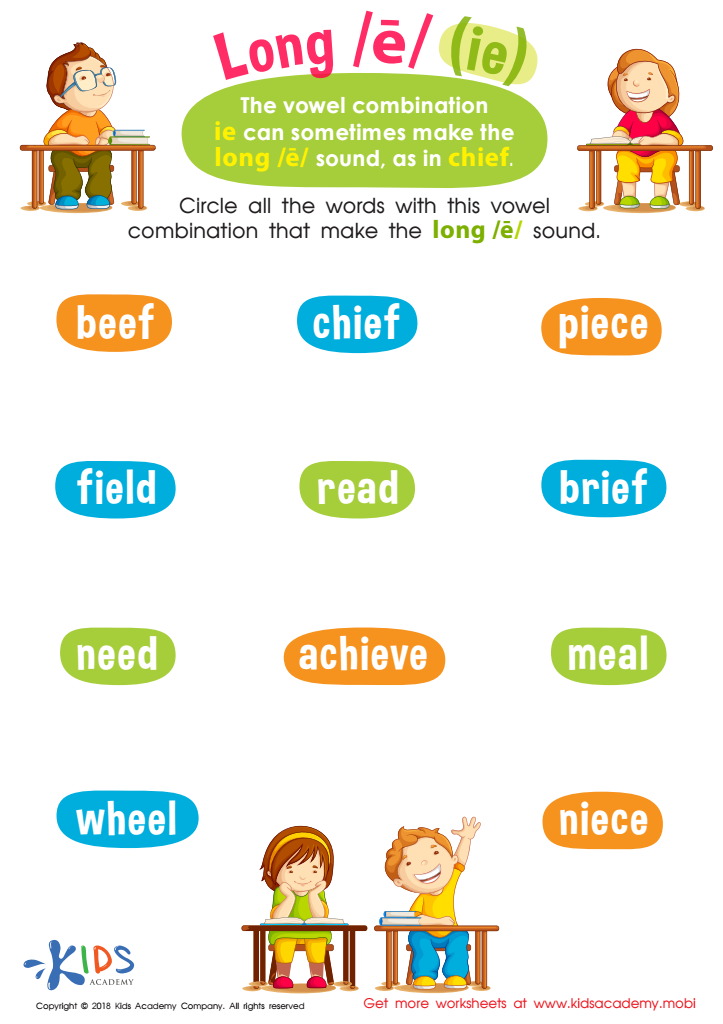
Reading: Long E and IE Worksheet
Ask your child to name some words with the long /e/ sound they hear every day. Then, read aloud all the words in the worksheet with them. Ask them to circle the words containing ie that make this sound.
 Assign to My Students
Reading: Long E and IE Worksheet
Worksheet











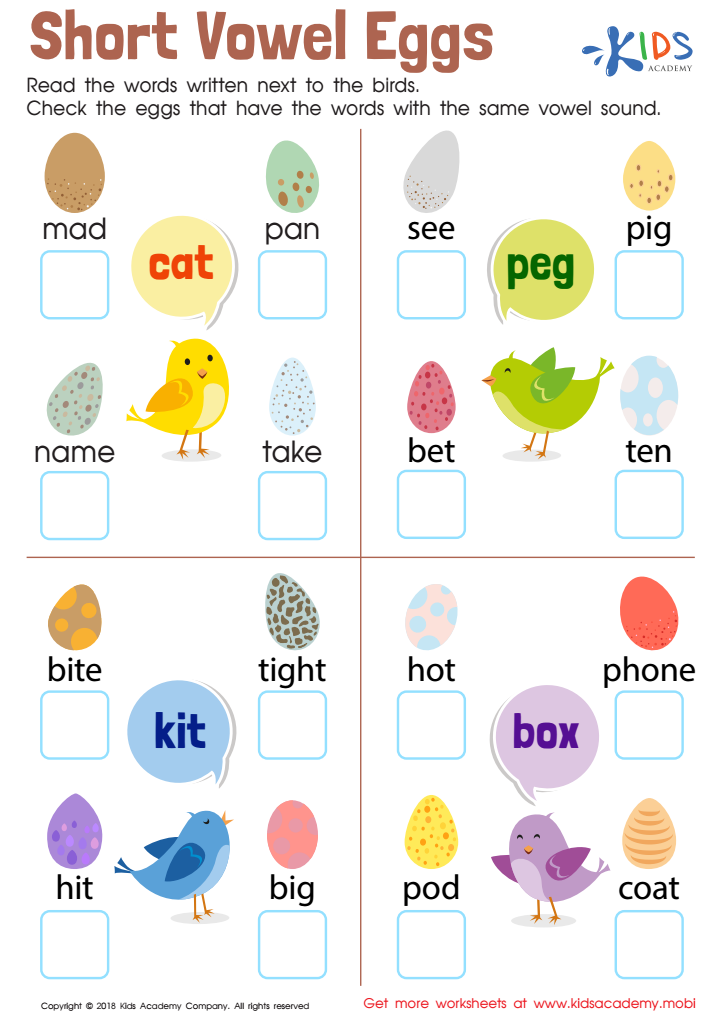
Short Vowel Eggs Worksheet
Your students will love helping these birdies pick the short vowel eggs! Have them read the words in the thought bubbles, then check off the boxes with the same short vowel sounds. The bright colors of this free Worksheet will draw them in and get them practicing their vowels!
Short Vowel Eggs Worksheet
Worksheet
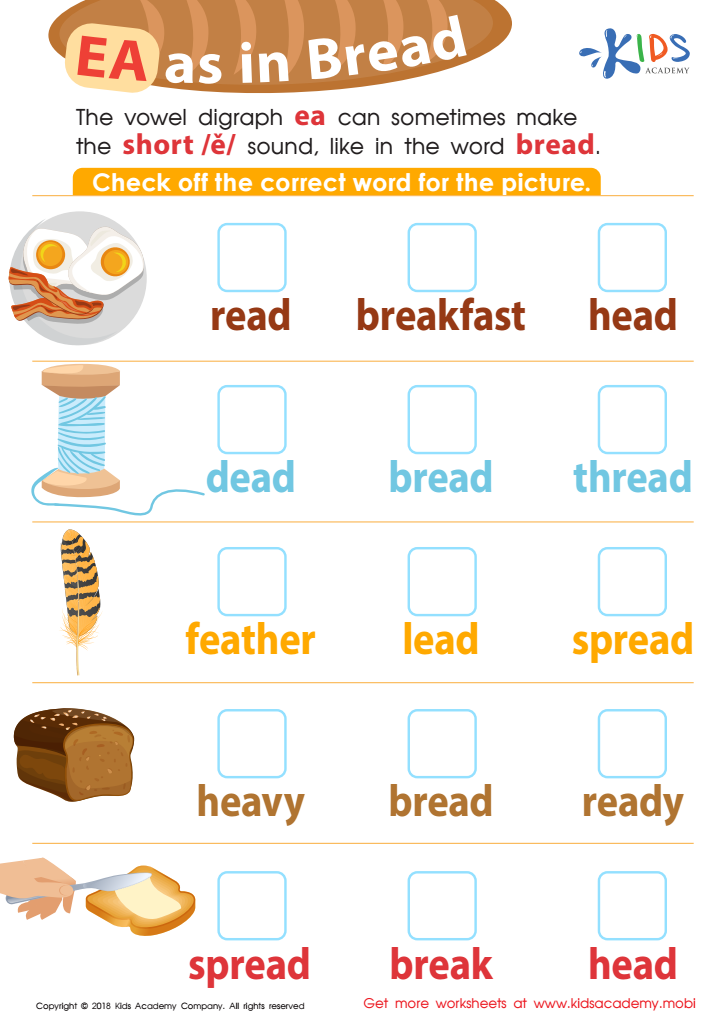
Reading: EA as in Bread Worksheet
The vowel digraph ea can be read in two ways. Examples of the long sound are "read" and "lead"; examples of the short sound are "bread" and "head". Ask your kids to give you more examples and then have them check off the correct word for the pictures on this worksheet. This will help them understand the ea sound.
Reading: EA as in Bread Worksheet
Worksheet
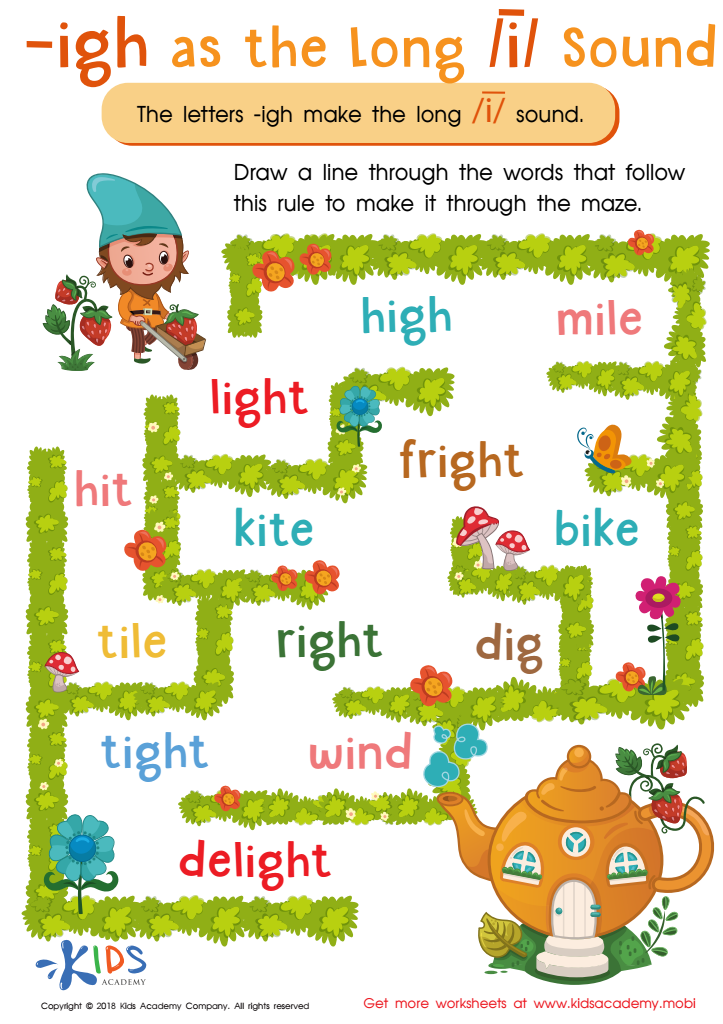
Reading: IGH as Long I Worksheet
Kids can have fun and learn with this maze! They'll look for and read words with the 'long I' sound spelled 'igh'. Most words ending with 'T' have this spelling. Decode words while learning about long vowel sounds and their spellings.
Reading: IGH as Long I Worksheet
Worksheet
Join Kids Academy for Free
Who is primarily going to use this learning content?








Phonics practice and building vocabulary are foundational elements for children aged 7-8, essential for their reading and language development. At this age, children transition from learning to read to reading to learn. Phonics provides them with skills to decode words by correlating sounds with letters or groups of letters. This helps in word recognition, enabling smoother reading and improving comprehension, allowing them to better access and understand subject matter across all areas, including science and math.
Building a broad vocabulary is equally important. It enhances a child's ability to convey thoughts accurately and understand others. A rich vocabulary supports deeper comprehension of texts, as children encounter new words within different contexts. This dual focus on phonics and vocabulary not only cements their language foundation but also stokes curiosity and confidence in communication, both orally and in writing.
Moreover, this practice aligns with cognitive and social development goals. Through engaging with words, children also learn nuances of language like synonyms, antonyms, and homonyms, which promote critical thinking and problem-solving skills. Hence, incorporating phonics practice and systematic vocabulary building into daily routines helps in developing well-rounded, proficient readers and effective communicators, laying a crucial foundation for lifelong learning.








