
Sight words recognition Normal Building Vocabulary Worksheets for Ages 7-8
4 filtered results
Difficulty Level
Grade
Age
-
From - To
Subject
Activity
Standards
Unlock your child's reading potential with our "Sight Words Recognition Normal Building Vocabulary Worksheets" designed specifically for ages 7-8. These engaging worksheets enhance vocabulary and reading skills by focusing on essential sight words that form the foundation of fluent reading. With fun activities and exercises, your child can practice recognition, improve comprehension, and boost confidence while learning. Each worksheet supports diverse learning styles, making it easier for children to master key sight words. Whether in the classroom or at home, these resources offer a valuable opportunity to foster a love of reading and strengthen early literacy skills. Start the adventure today!
Favorites
With answer key
Interactive
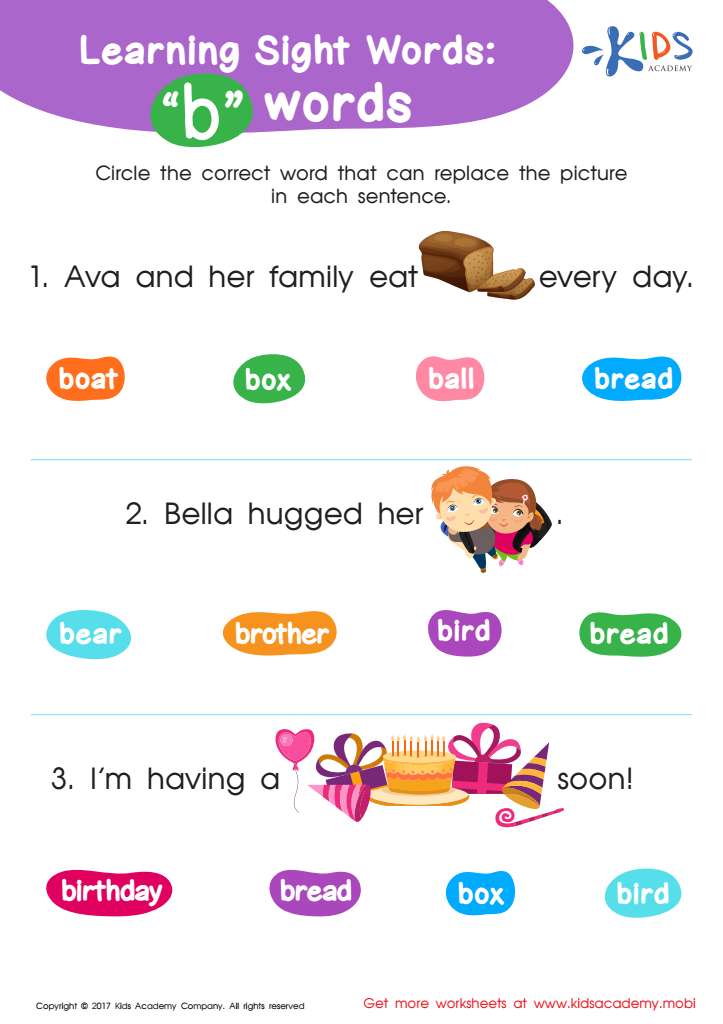
Sight Words Free Worksheet – B Words
This free 2nd grade sight words worksheet – b words – is a great way to help your child expand their sight word repertoire. They can read through each sentence, using the context and illustrations as clues to pick the right answer. Offer your child a quick practice session for even more learning!
 Assign to My Students
Sight Words Free Worksheet – B Words
Worksheet











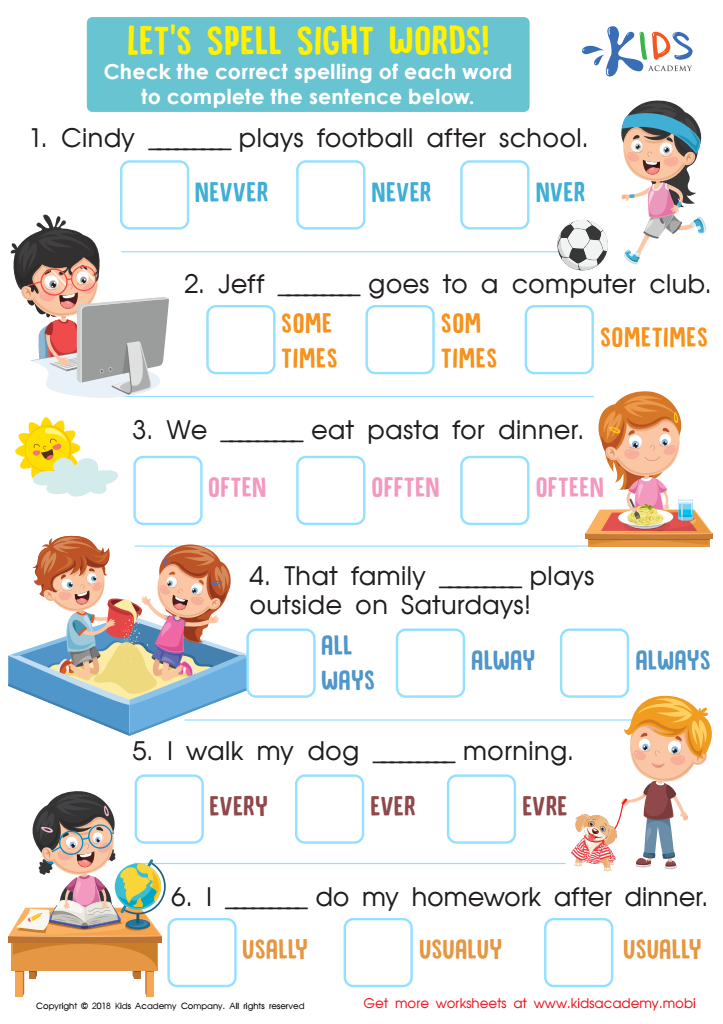
Let's Spell Sight Words Worksheet
Help your kids spell tricky sight words by asking them to spot differences in the sentences of activities they do regularly. This worksheet contains incomplete sentences, with the correct spelling of the word in the options for them to fill in. Get them to look out for words with the wrong spellings.
Let's Spell Sight Words Worksheet
Worksheet
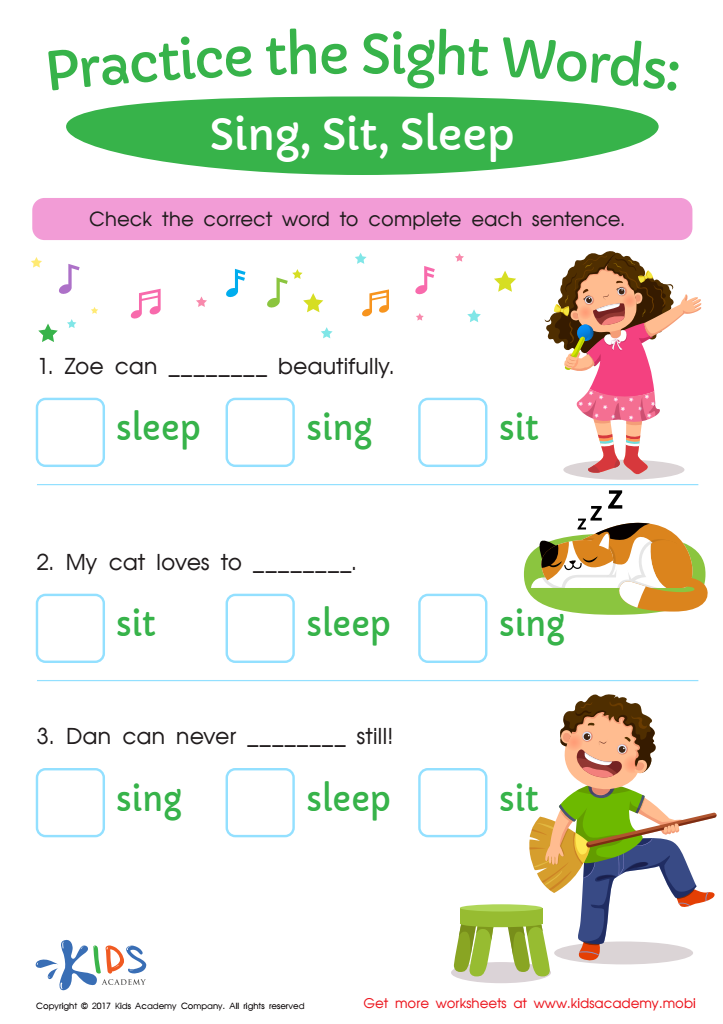
Sing, Sit, Sleep Sight Words Worksheet
Practice sight words with this printable worksheet featuring sing, sit, sleep! Confusing at first, these words can be mastered with the help of simple sentences and fun illustrations.
Sing, Sit, Sleep Sight Words Worksheet
Worksheet
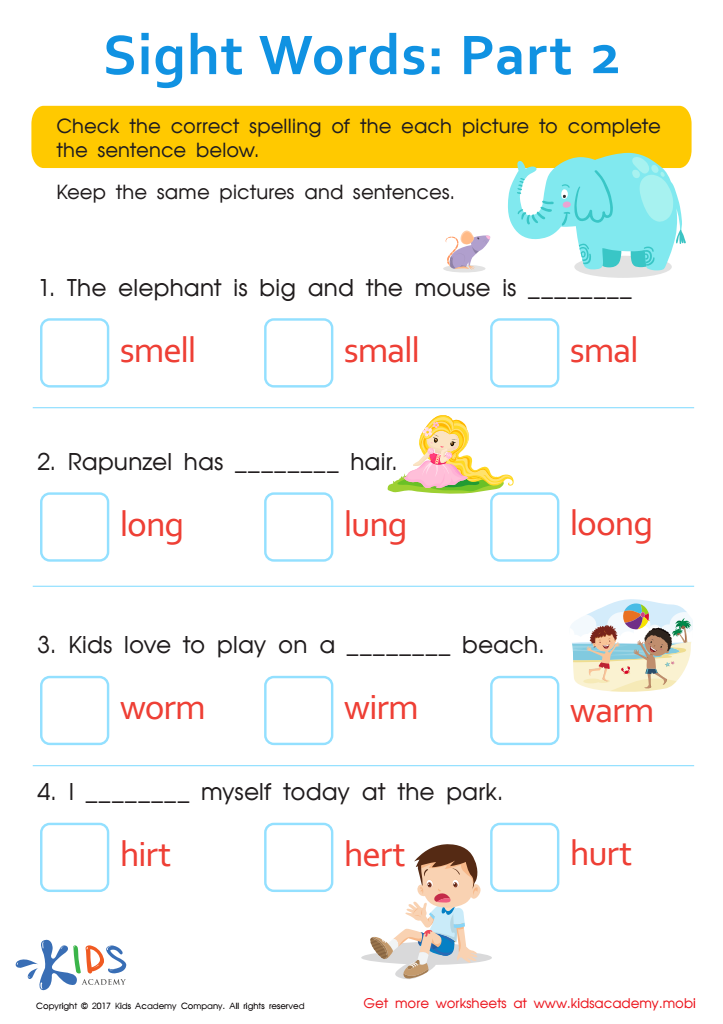
Sight Words Worksheet
This 3rd grade worksheet strengthens fluency and spelling in just a few minutes! Kids will read a sentence and fill in each blank with the correct sight word. Enjoy watching their skills grow!
Sight Words Worksheet
Worksheet
Join Kids Academy for Free
Who is primarily going to use this learning content?








Sight word recognition and vocabulary building are crucial for children ages 7-8, as they are foundational skills for literacy development. At this stage, children are transitioning from learning to read to reading to learn. Sight words, often high-frequency words, are essential for fluent reading. When children can quickly recognize these words, they can focus more on comprehension and less on decoding. This fluency boosts confidence and encourages a love for reading.
Building vocabulary during this period enhances communication skills, enabling children to express themselves effectively both verbally and in writing. With a robust vocabulary, they can grasp more complex texts and engage in deeper discussions across subjects, fostering critical thinking.
Additionally, a strong vocabulary can positively impact academic performance in all areas, as reading is foundational in subjects like math and science. Engaging parents and teachers in promoting these skills can create a supportive environment, reinforcing the importance of reading both at school and home. Interactive activities, reading aloud, and enriching conversations can significantly stimulate sight word recognition and vocabulary acquisition, setting children on a path to success both in school and in life. Thus, prioritizing these areas is vital for a child's overall educational development.








