Spelling practice Normal Building Vocabulary Worksheets for Ages 7-8 - Page 2
26 filtered results
-
From - To
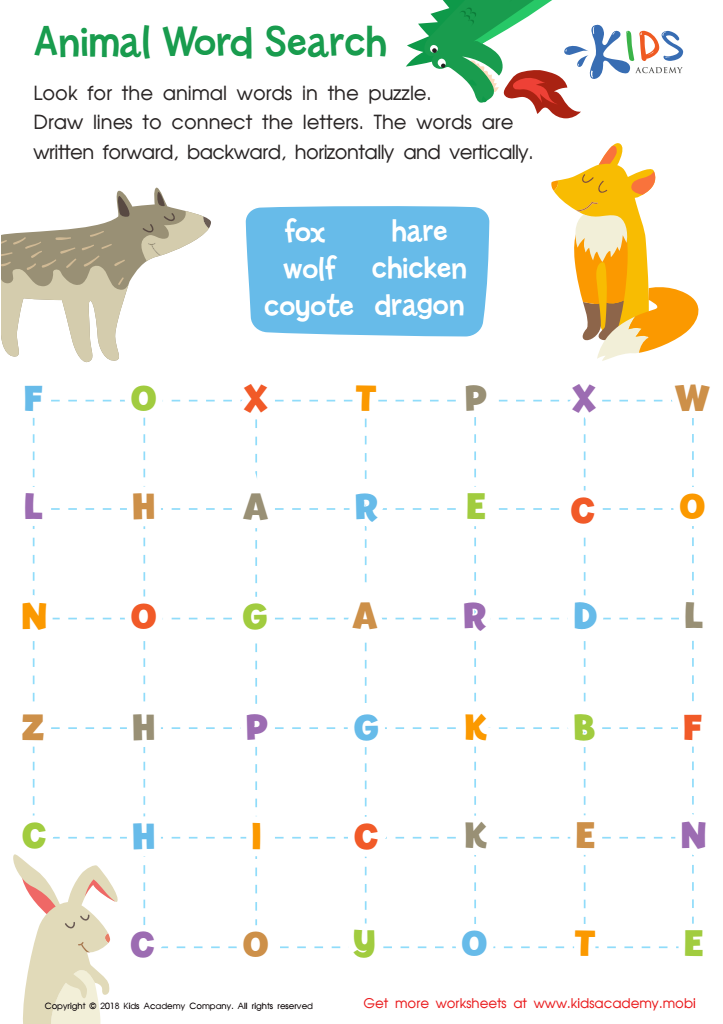
Animal Word Search Worksheet
 Assign to My Students











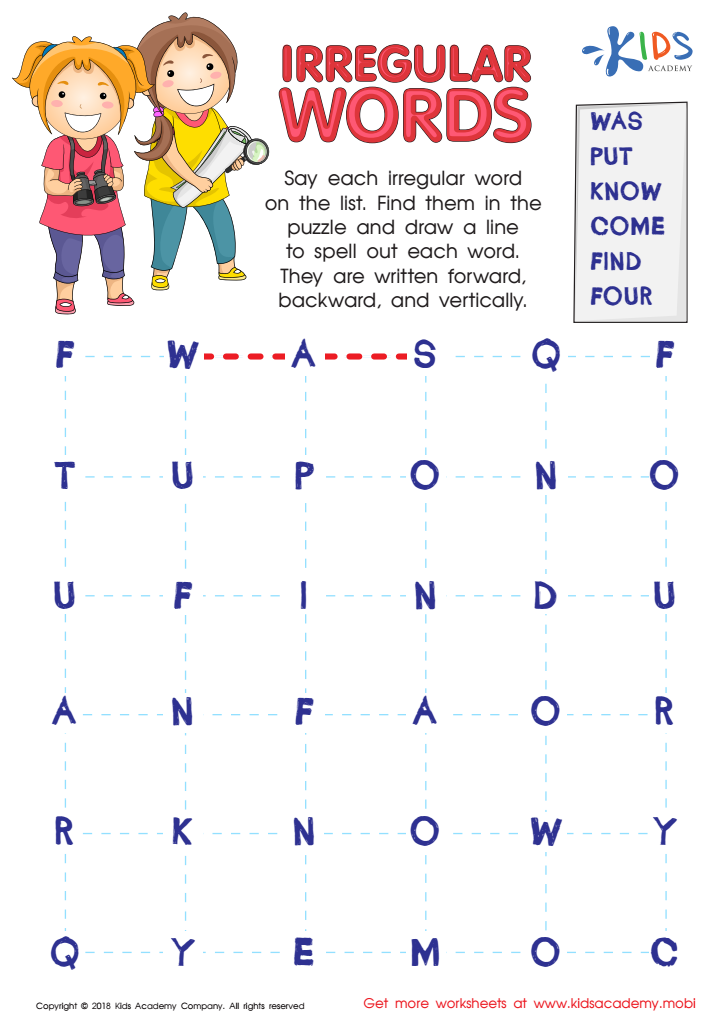
Irregular Words Worksheet






.jpg)
Spelling practice and vocabulary building are vital for children ages 7-8 because these years form a critical development stage that lays the foundation for future academic success and communication skills. During this period, kids typically transition from recognizing basic words to understanding more complex language structures. Mastery in spelling aids children in reading fluently and confidently, ensuring they can decipher unfamiliar words independently. Additionally, a robust vocabulary enhances their ability to express ideas clearly and creatively in both written and spoken forms.
When parents and teachers invest time in spelling practice, they ensure children develop strong phonemic awareness—understanding sound-letter relationships, which is crucial for reading proficiency. Moreover, enriching vocabulary at this age expands children's knowledge base, allowing them to understand a broader range of concepts and ideas in various subjects. This growth fosters improved comprehension skills, crucial for academic assessments and daily problem-solving scenarios.
Parental involvement and effective teaching strategies also build a child's self-esteem, motivating them to engage actively in learning activities. Recognizing and applying the correct spelling and appropriate vocabulary in different contexts can enhance a child's cognitive abilities and social interactions, making them better communicators and more curious learners. Investing in these areas early reinforces a lifelong love for language and learning.








