Critical thinking development Normal Reading Worksheets for Ages 7-8
3 filtered results
-
From - To
Enhance your child's critical thinking skills with our engaging Normal Reading Worksheets, specifically designed for ages 7-8. These worksheets integrate reading comprehension with analytical thinking exercises, allowing young learners to explore texts deeply and thoughtfully. Each activity encourages children to ask questions, make connections, and draw conclusions, fostering their ability to think critically in everyday situations. Parents and educators can easily access a variety of printable worksheets that feature vibrant imagery and age-appropriate content, ensuring that learning is both fun and effective. Empower your child’s development today and watch their confidence and critical thinking abilities flourish with our resources!
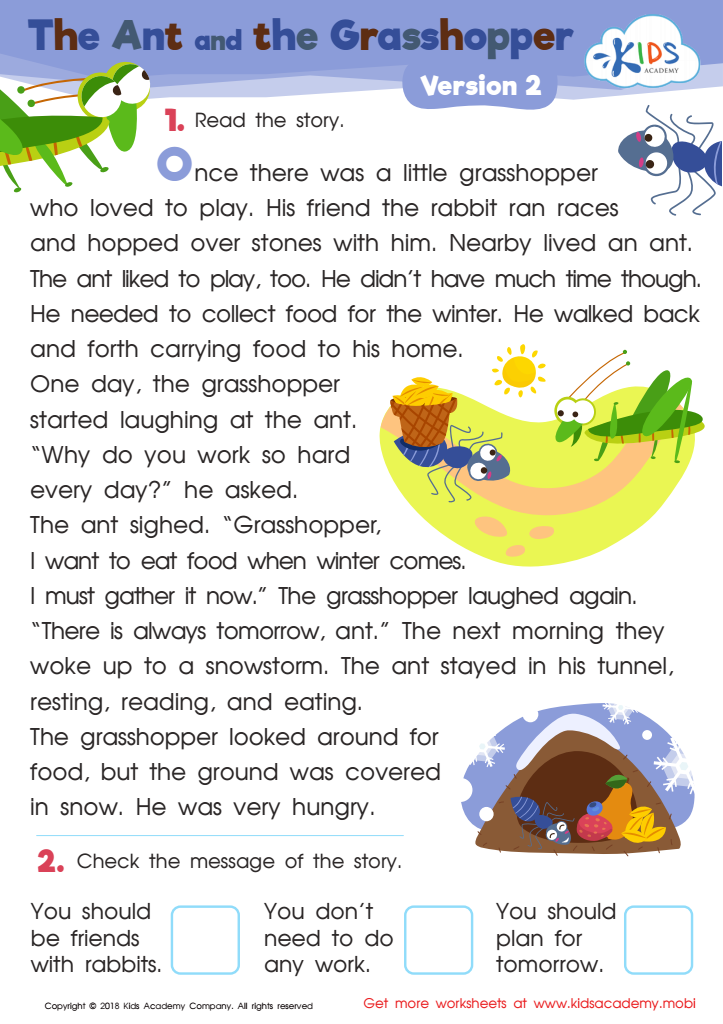
The Ant and The Grasshopper Version 2 Worksheet
 Assign to My Students
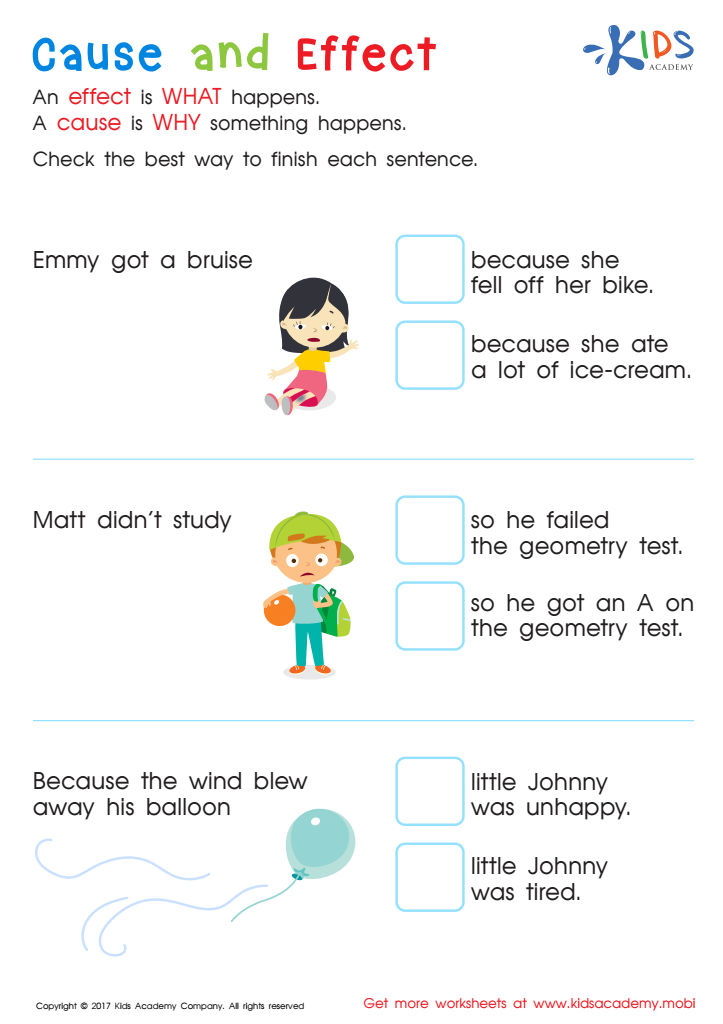
Cause and Effect Worksheet
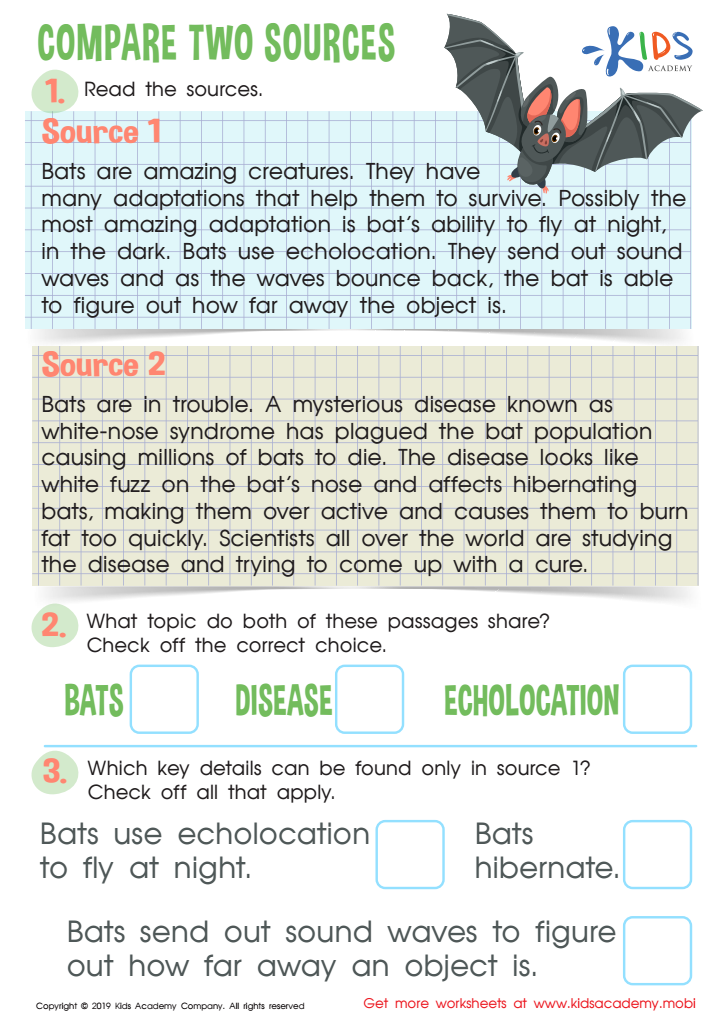
Compare Two Sources Worksheet








Critical thinking development is essential for children aged 7-8 as it forms the foundation for academic success and lifelong learning. This age group is typically in second to third grade, a pivotal time when they transition from learning to read to reading to learn. Supporting critical thinking during this phase can significantly enhance their comprehension skills and overall academic performance.
Parents and teachers should prioritize fostering critical thinking skills because it encourages children to analyze information, make connections, and apply knowledge to real-life situations. When children engage in critical thinking, they become more adept at questioning assumptions, evaluating evidence, and forming reasoned conclusions. These skills are not just crucial for academic achievements; they are vital for problem-solving and decision-making in everyday life.
Moreover, the development of critical thinking aids emotional intelligence and boosts confidence. As children articulate their thoughts and recognize multiple perspectives, they build resilience and adaptability. In a world filled with information and varying viewpoints, encouraging critical thinking equips children to navigate complex ideas and challenges. Thus, nurturing these skills is imperative for both parents and teachers, empowering children to become thoughtful, inquisitive, and active participants in their education.








