Moral lesson understanding Normal Reading Worksheets for Ages 7-8
5 filtered results
-
From - To
Enhance your child's reading comprehension with our engaging Moral Lesson Understanding Normal Reading Worksheets designed specifically for ages 7-8. These worksheets encourage young readers to explore essential moral themes through fun stories and relatable scenarios. As children practice their reading skills, they will also learn valuable life lessons about honesty, empathy, and responsibility. Each worksheet includes thoughtful questions that promote critical thinking and discussion, reinforcing the connection between literature and real-life morals. Perfect for classroom or home use, these resources make learning enjoyable while fostering important ethical understanding. Equip your child with the skills to navigate both literature and life’s complexities!
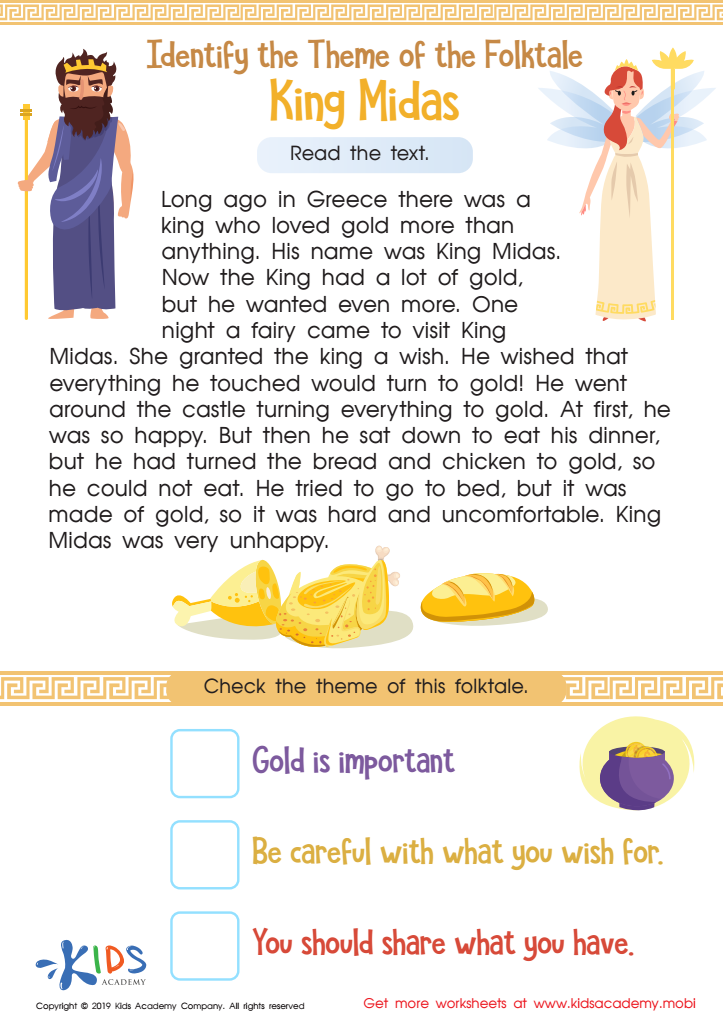
King Midas Worksheet
 Assign to My Students
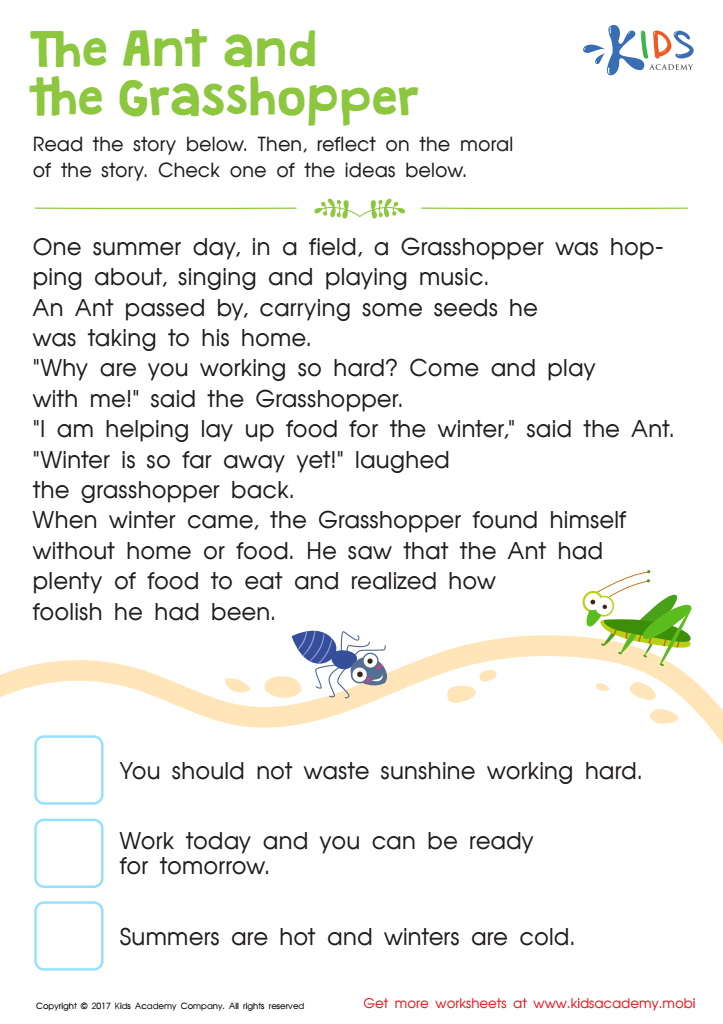
The Ant and The Grasshopper Printable
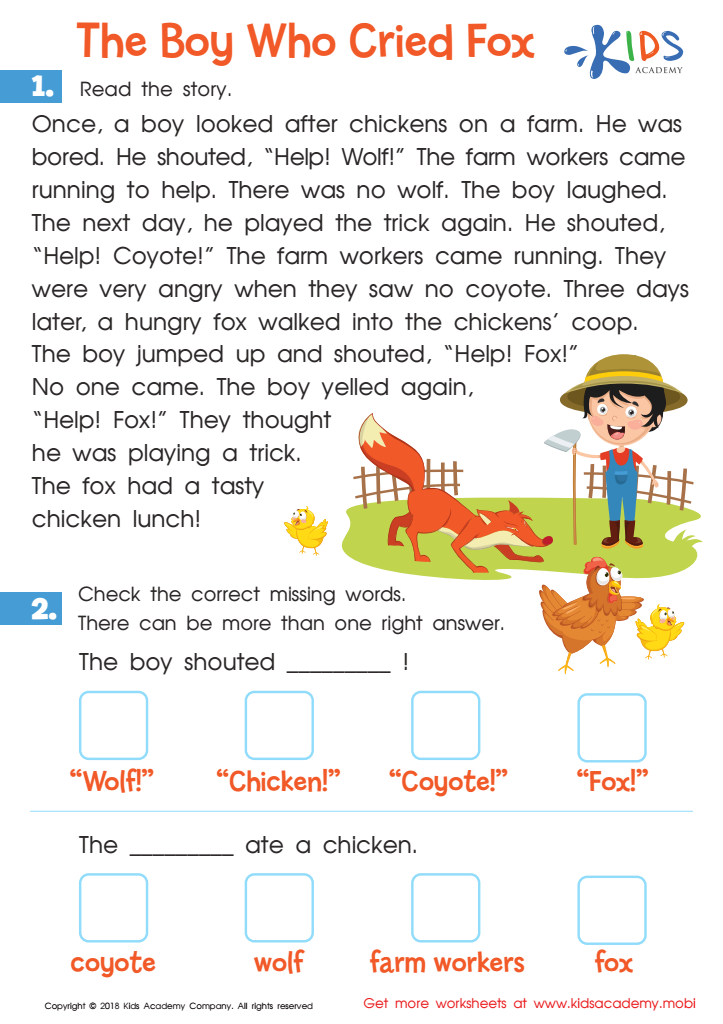
The Boy Who Cried Fox Worksheet
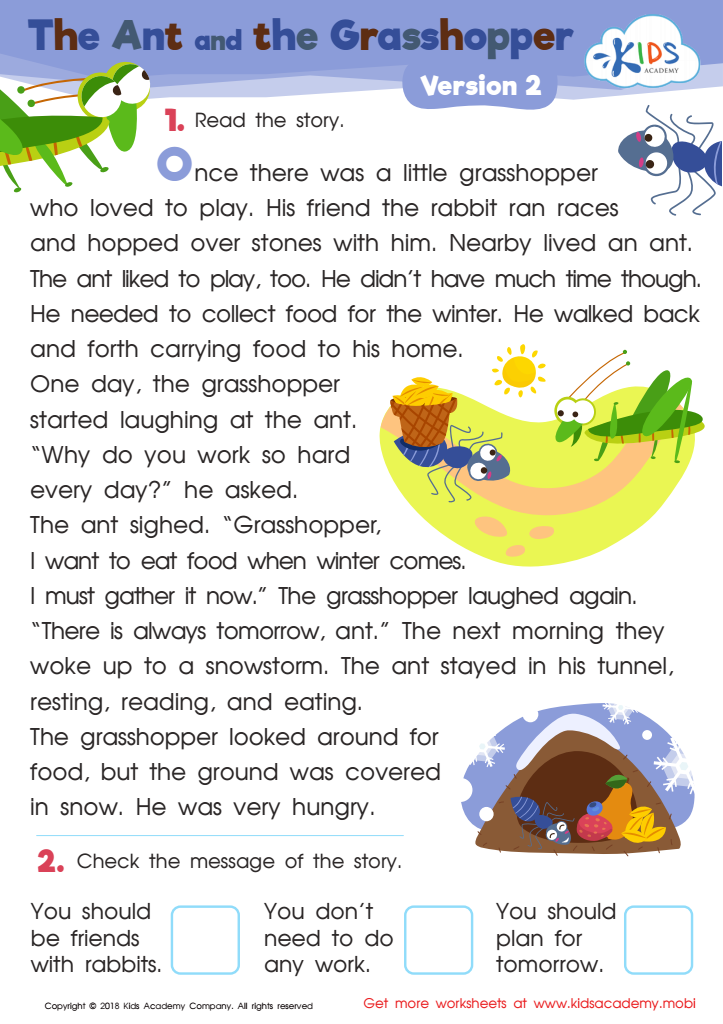
The Ant and The Grasshopper Version 2 Worksheet
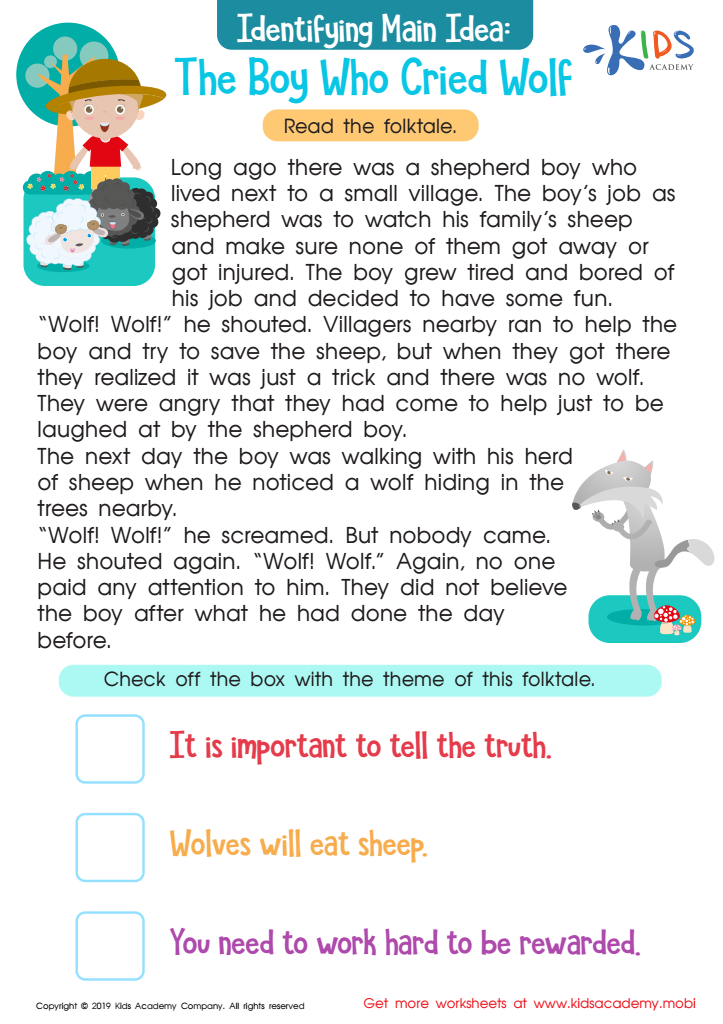
The Boy Who Cried Wolf Part 2 Worksheet








Understanding moral lessons in reading is crucial for children ages 7-8 as it plays a pivotal role in their emotional and social development. At this age, children are more capable of grasping complex concepts and beginning to form their own values and beliefs. Stories often present relatable scenarios that encourage them to reflect on right and wrong, empathy, and ethical decision-making.
Parents and teachers should care about this aspect of reading because it helps foster critical thinking skills. When children discuss and analyze the actions and consequences of characters, they learn to apply these moral lessons to their own lives. It nurtures their ability to navigate social situations with kindness and fairness. Additionally, discussions about moral lessons in stories can enhance communication skills as children articulate their thoughts and feelings.
Furthermore, instilling strong moral values during these formative years contributes to cultivating a sense of community and belonging. Children learn to appreciate diverse perspectives and understand the importance of character, paving the way for responsible and engaged citizenship. Ultimately, fostering moral understanding through reading enriches children's lives, shapes their identities, and prepares them for the complexities of the world around them.








