
Phonics skills improvement Normal Reading Worksheets for Ages 7-8
3 filtered results
Difficulty Level
Grade
Age
-
From - To
Subject
Activity
Standards
Enhance your child's reading proficiency with our Phonics Skills Improvement Worksheets designed specifically for ages 7-8. These engaging and interactive worksheets focus on fundamental phonics concepts, allowing young learners to develop their reading skills through various fun activities. Each worksheet addresses key phonetic sounds, blending, and word recognition, ensuring a strong foundation for literacy. Our accessible and visually appealing materials keep children motivated while reinforcing their understanding of phonics. Perfect for both classroom and home use, these worksheets are a great resource for parents and educators looking to boost reading confidence and competence in young learners. Start their phonics journey today!
Favorites
With answer key
Interactive
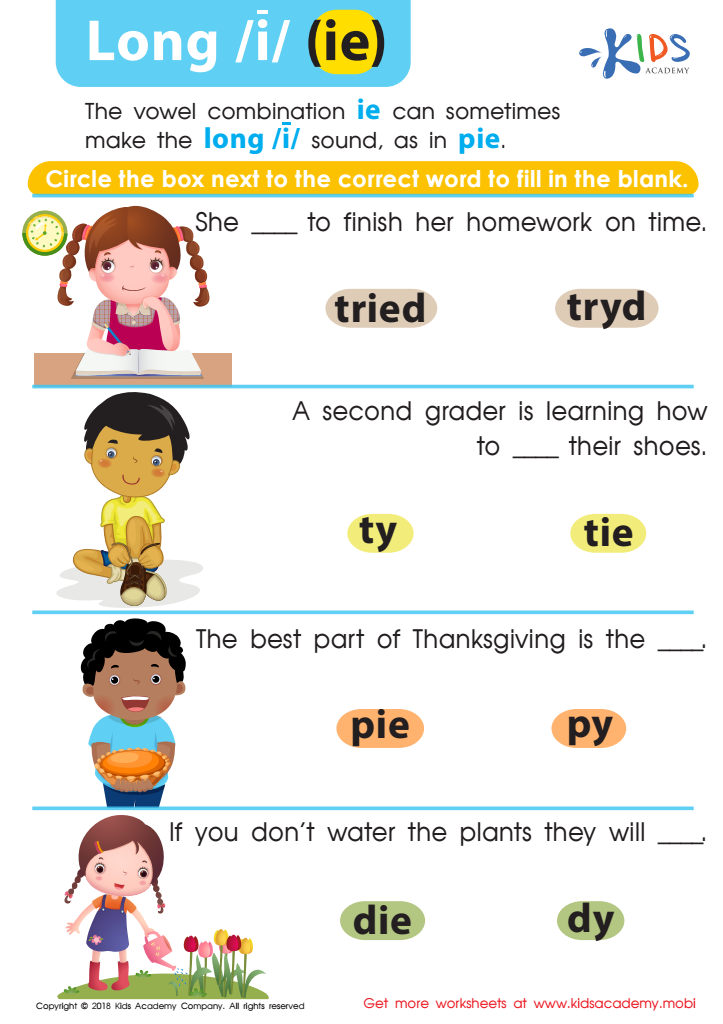
Reading: Long I and IE Worksheet
Have your child list words with the long /i/ sound (eg. 'pie'), and if needed, help them out with some examples. Read each word in the worksheet together and check their answer by having them circle the correct word.
Reading: Long I and IE Worksheet
Worksheet

Long and Short U Worksheet
Revised: Spice up your lesson on long and short vowels with this fun printout! Kids read the words "tube" and "tub," then reinforce the sound by coloring in the words and pictures. It's a great way to make phonics class enjoyable!
Download (PDF)
 Assign to My Students
Assign to My Students
Long and Short U Worksheet
Worksheet
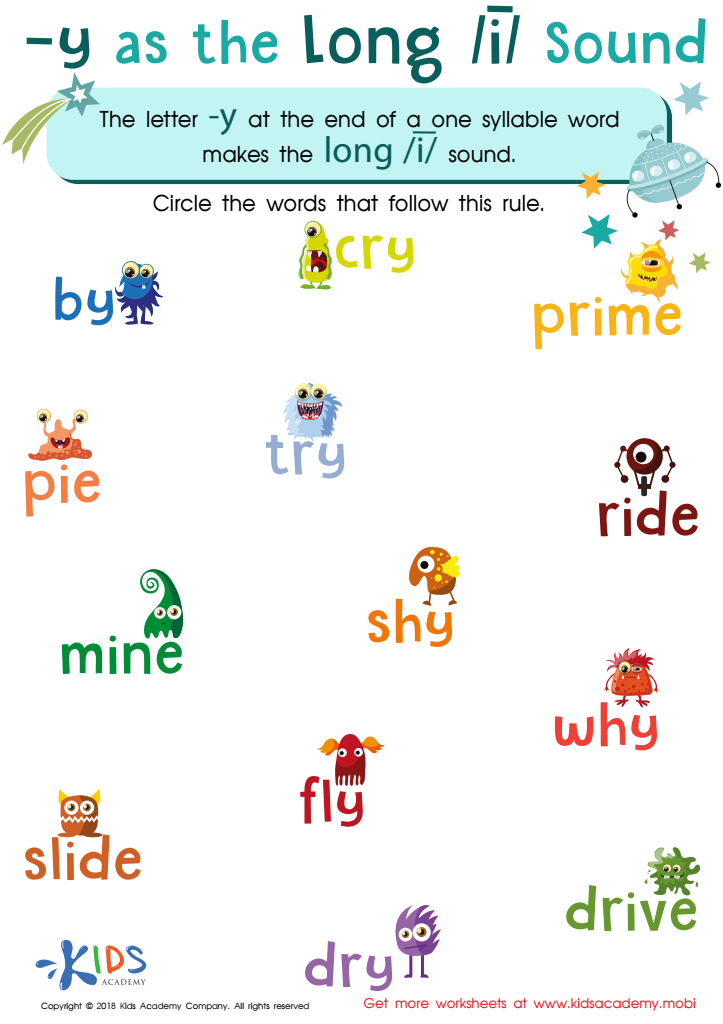
Reading: Y as Long I Worksheet
Students need practice and exposure to letters that make different sounds for decoding and reading success. This printable is a great resource for language arts classes: it explains that words ending with Y and having only one syllable make the long I sound. Students will circle all words with Y that have this sound.
Reading: Y as Long I Worksheet
Worksheet
Join Kids Academy for Free
Who is primarily going to use this learning content?






Phonics skills are essential for developing proficient reading abilities, particularly for children aged 7-8. At this age, students transition from learning to read to reading to learn, making a strong foundation in phonics crucial. Phonics involves understanding the relationships between letters and sounds, which empowers children to decode words independently and develop fluency.
Improving phonics skills enables children to tackle more complex texts, fostering comprehension and critical thinking. When students can efficiently decode words, they become more confident readers, enhancing their overall academic performance.
Moreover, a solid grasp of phonics can prevent future reading difficulties, promoting a lifelong love for reading and learning. Parents and teachers should recognize that these skills not only impact literacy but also correlate with social and emotional development, as proficient readers are more likely to engage in discussions and collaborative activities, boosting their self-esteem and motivation.
As educators and caregivers, investing time and effort into improving children’s phonics skills is essential. By doing so, they equip children with the necessary tools for academic success, nurturing their growth in all subjects and, ultimately, helping them to become informed and engaged individuals. Encouraging phonics proficiency is an investment in a child’s future.








