
Understanding adjectives Normal Reading Worksheets for Ages 7-8
3 filtered results
Difficulty Level
Grade
Age
-
From - To
Subject
Activity
Standards
Dive into the world of descriptive language with our "Understanding Adjectives" worksheets designed for ages 7-8! Perfectly tailored to enhance reading and learning skills, these fun and engaging activities help young learners identify and use adjectives effectively. Through a variety of exercises, kids will not only learn how adjectives add detail and depth to sentences but they'll also practice applying them in their writing. Boost your child's vocabulary and creativity with our expertly crafted resources, ensuring a strong foundation in essential language arts skills. Start exploring today and watch your child's confidence in reading and writing soar!
Favorites
With answer key
Interactive
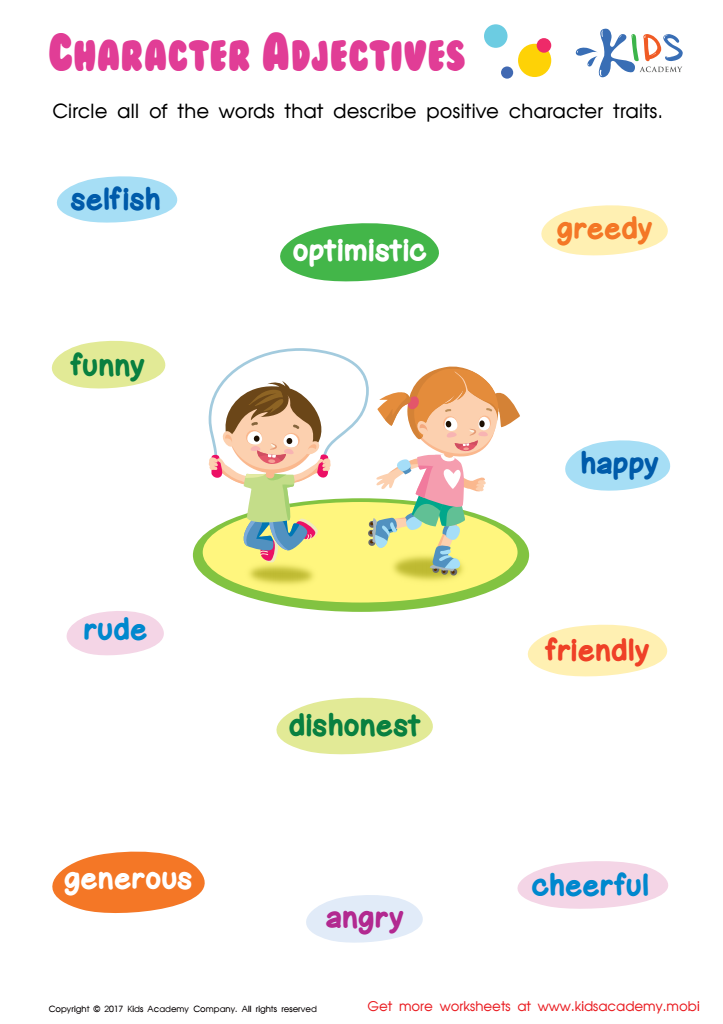
Character Adjectives Worksheet
Help your child express their feelings easily with this PDF worksheet! It focuses on character adjectives and increases their vocabulary, so they can confidently articulate positive emotions.
 Assign to My Students
Character Adjectives Worksheet
Worksheet
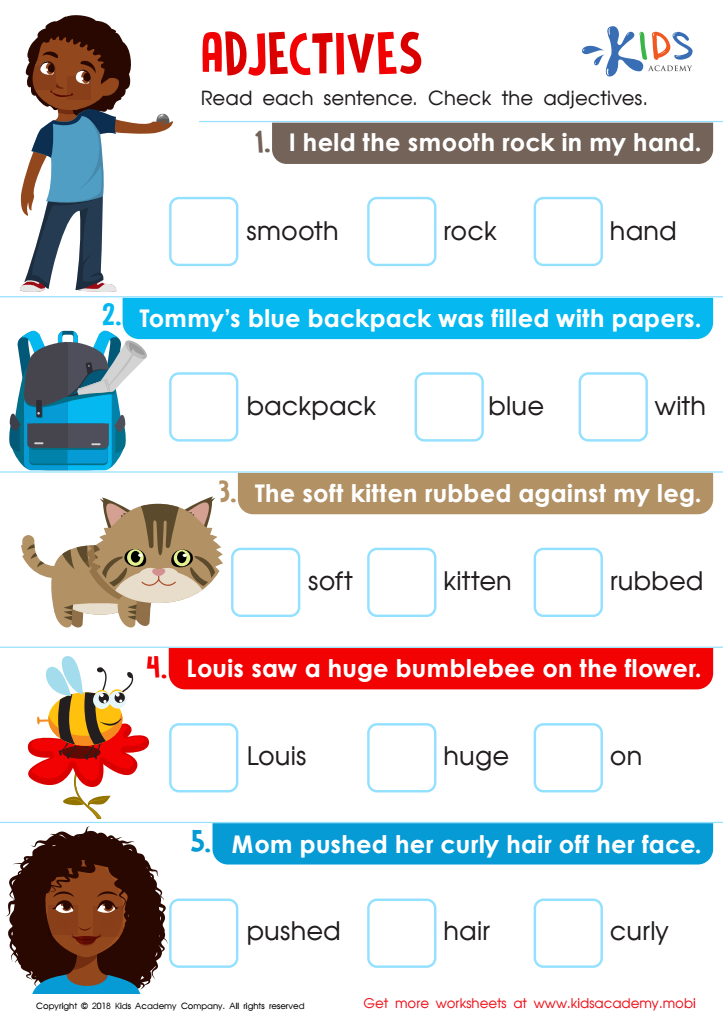
Adjectives Worksheet
Adjectives are words that describe a noun. Examples include "beautiful" and "good". Ask your students to use these adjectives in a sentence and have them identify the adjectives in five sentences on a worksheet. Point out that adjectives are essential to understand, and have them check their answers.
Adjectives Worksheet
Worksheet
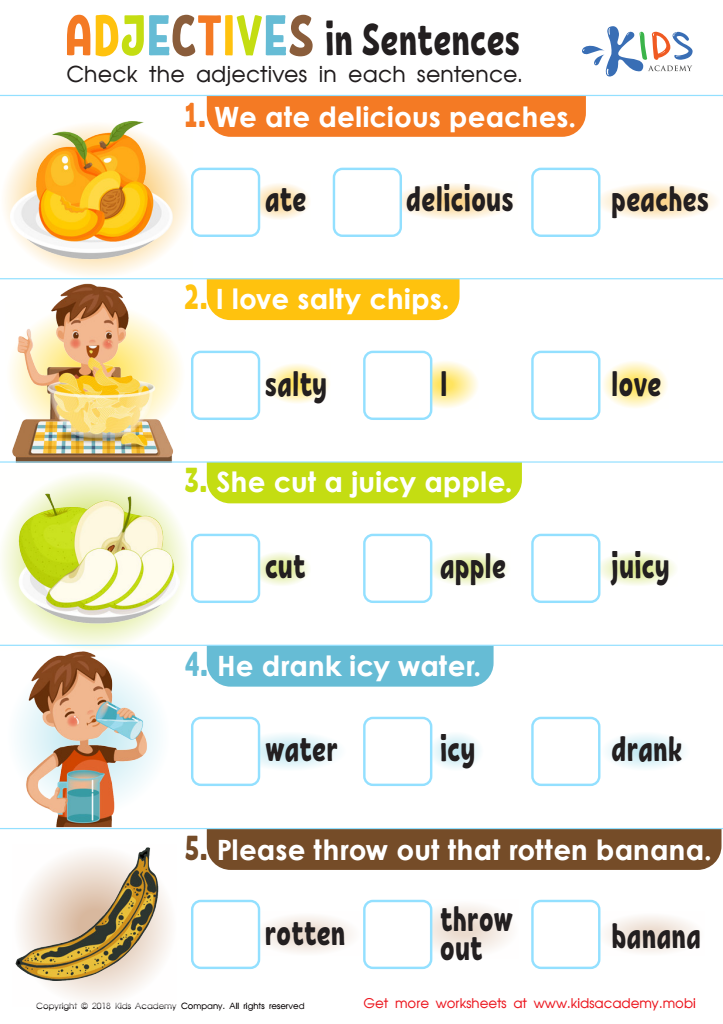
Adjectives in Sentences Worksheet
Our learners can find it hard to use writing to add detail, but adjectives can help. With this fun worksheet, kids can identify adjectives that describe food and drink. Guide them through each sentence, discussing the words and having them choose the one that gives information about the food/drink.
Adjectives in Sentences Worksheet
Worksheet
Join Kids Academy for Free
Who is primarily going to use this learning content?








Understanding adjectives is crucial for children aged 7-8 as it enhances both their reading and writing abilities. Adjectives provide vivid details and enrich the language, allowing young readers to visualize scenes clearly and comprehend texts more deeply. For example, a simple sentence like "The cat sat on the mat" becomes more engaging and descriptive as "The fluffy, orange cat sat on the soft, blue mat." This refinement in detail aids in building a more comprehensive mental image, which supports better retention and understanding of the material.
Furthermore, early mastery of adjectives equips children with the tools to express themselves more precisely and creatively in their writing. They learn to describe not just what they see, but also how things feel, sound, taste, and smell, enhancing their narrative skills and fostering their imaginative thinking. This kind of detailed expression is critical for effective communication, both in academics and everyday interactions.
For parents and teachers, focusing on adjectives helps support a child's overall linguistic development. It instills an appreciation for the richness of language and opens the door to developing strong, articulate, and confident communicators. Engaging children in activities and discussions about adjectives can make the learning process enjoyable and foster a lifelong love for reading and writing.








