Historical Knowledge Normal Reading Comprehension Worksheets for Ages 7-8
5 filtered results
-
From - To
Enhance your child's understanding of history with our engaging Historical Knowledge Reading Comprehension Worksheets designed for ages 7-8. Kids Academy offers these carefully crafted worksheets to develop crucial reading skills while igniting a love for history. Each worksheet features age-appropriate historical passages followed by comprehension questions that challenge and enhance critical thinking, vocabulary, and analytical skills. From ancient civilizations to significant events, these interactive activities ensure that young learners not only enjoy reading but also retain essential historical facts. Perfect for both classroom and home education, these worksheets seamlessly integrate education and fun, fostering a well-rounded historical knowledge foundation.
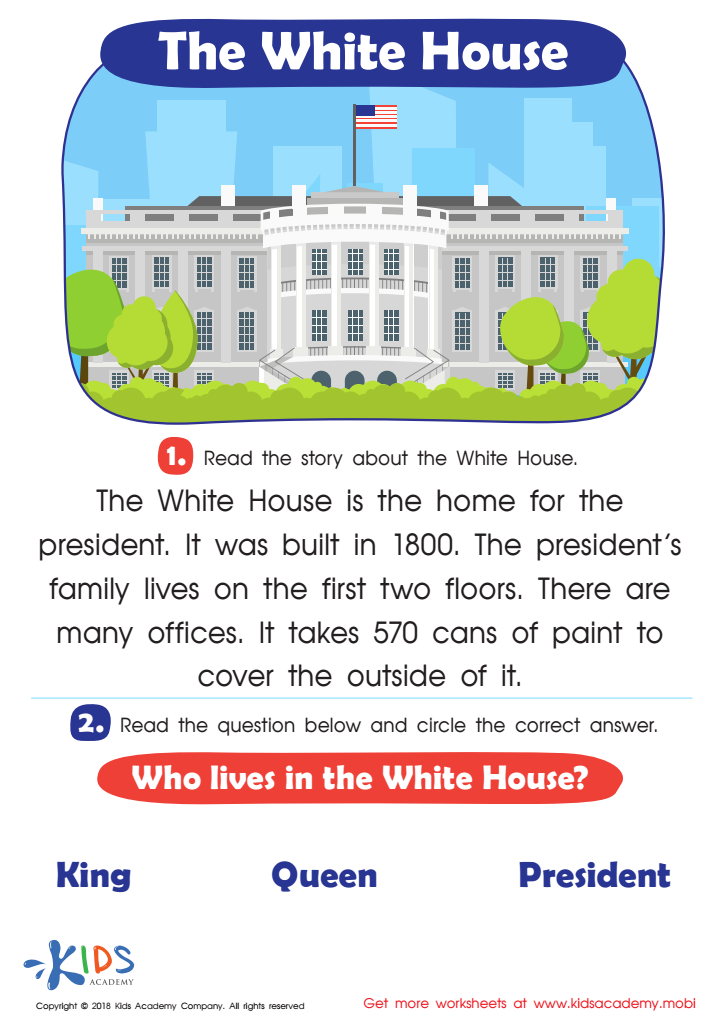
White House Worksheet
 Assign to My Students
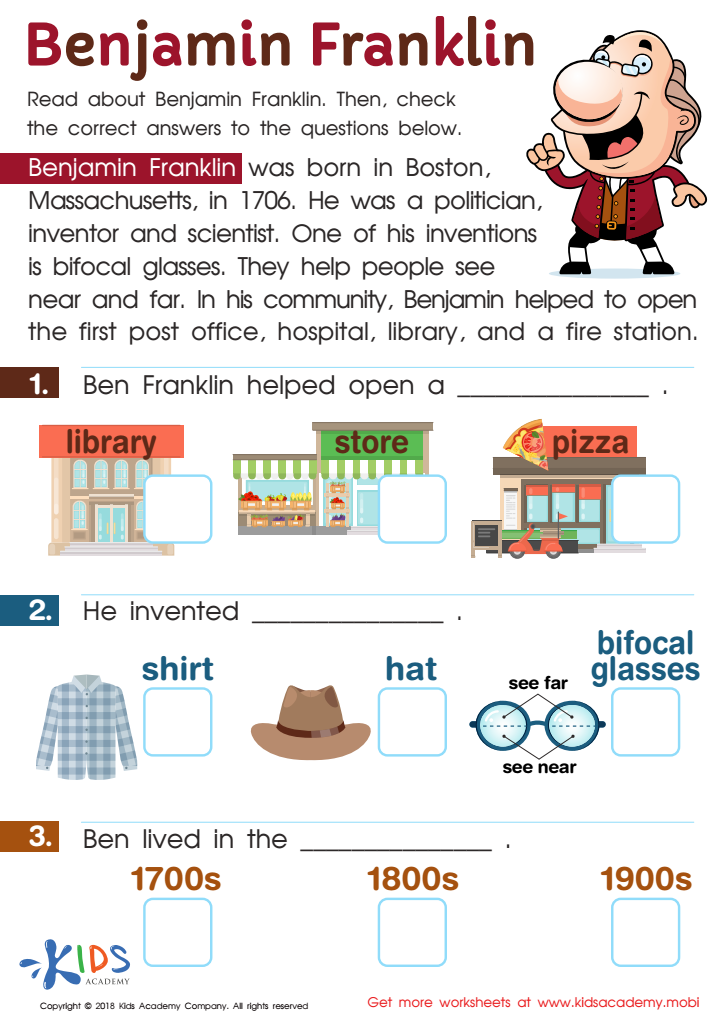
Benjamin Franklin Worksheet
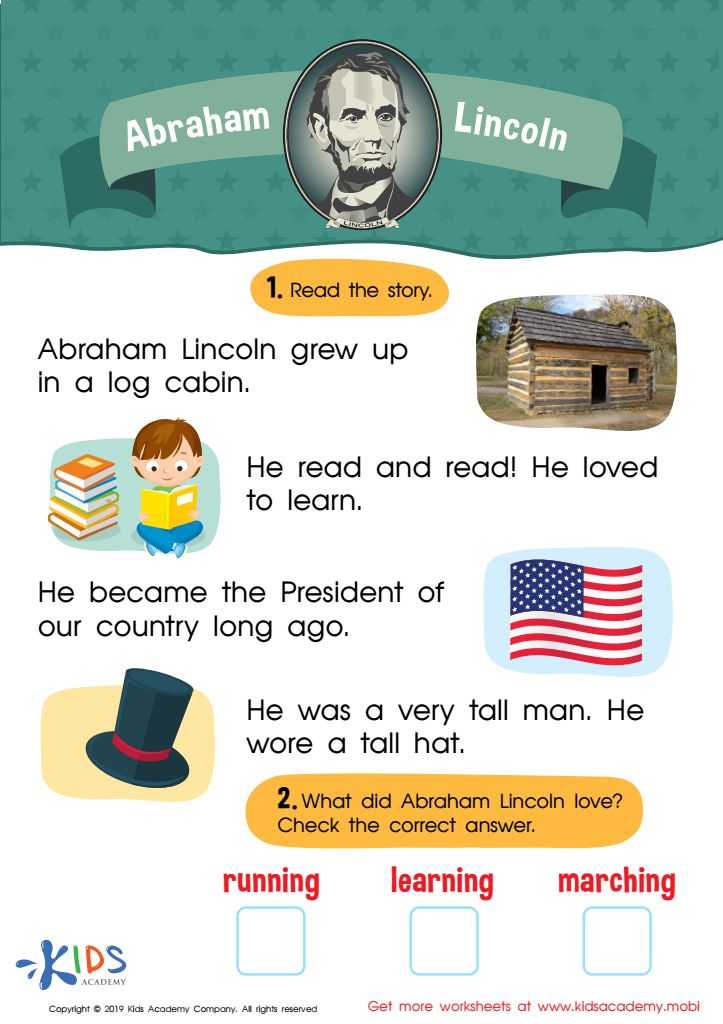
Abraham Lincoln Worksheet
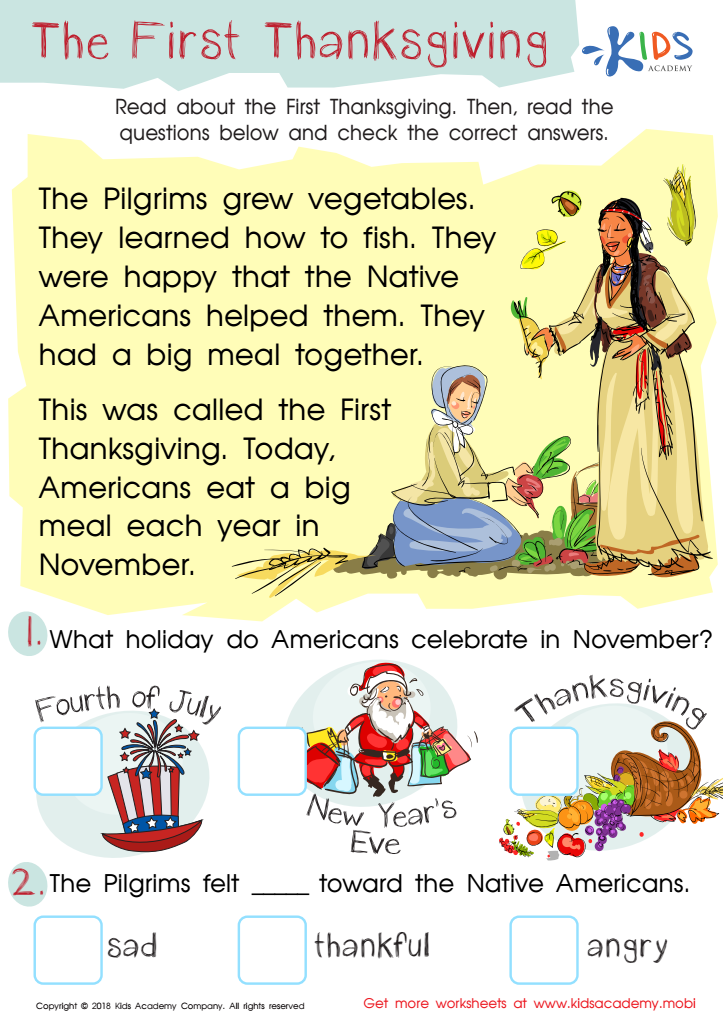
Assessment: First Thanksgiving Worksheet
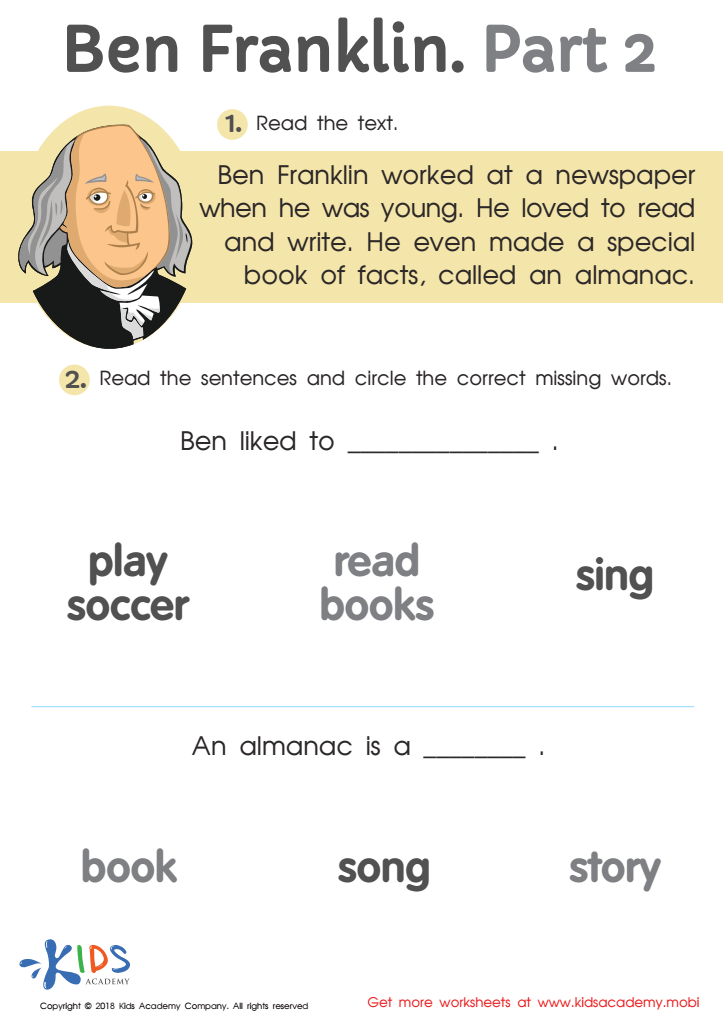
Ben Franklin Part 2 Worksheet




.jpg)



Understanding historical knowledge through reading comprehension is vitally important for children ages 7-8 for several reasons. At this developmental stage, kids are not only building foundational reading skills but also shaping their overall view of the world. Exposure to historical content offers them a rich context for where our societies and cultures stem from, enhancing their grasp of time and sequence, which is crucial for cognitive development.
Historical knowledge embedded in reading materials helps bolster critical thinking and the ability to make connections between past events and the present. It can spark curiosity, lead to valuable discussions, and aid in understanding the complexities of human decisions and actions.
Additionally, stories from history can serve as powerful examples that teach ethics, resilience, bravery, and empathy. When young students read about the diverse range of human experiences and historical milestones, they begin to appreciate different perspectives, fostering inclusivity and respect for others.
Crucially, early comprehension of history via engaging literature stimulates cognitive and linguistic growth. It enriches vocabulary, reinforces grammar skills, and aids in developing a stronger command of their own writing and oral expressions.
Therefore, prioritizing historical knowledge in children’s reading tasks is more than an educational endeavor—it's an essential tool in forming well-rounded, informed, and thoughtful individuals.








