
Identifying story elements Normal Reading Comprehension Worksheets for Ages 7-8
3 filtered results
Difficulty Level
Grade
Age
-
From - To
Subject
Activity
Standards
Welcome to our "Identifying Story Elements" worksheets designed for children ages 7-8! These engaging reading comprehension activities help young learners grasp the essential components of a story, including characters, settings, plots, and themes. Our thoughtfully crafted worksheets promote critical thinking, enabling kids to analyze and comprehend narratives effectively. With a variety of fun exercises, students will enhance their reading skills while enjoying the process. These worksheets are perfect for classroom use, homework, or supplementary learning at home. Start your child’s journey to becoming a confident reader today, as they explore the magic of storytelling through engaging and interactive content.
Favorites
With answer key
Interactive
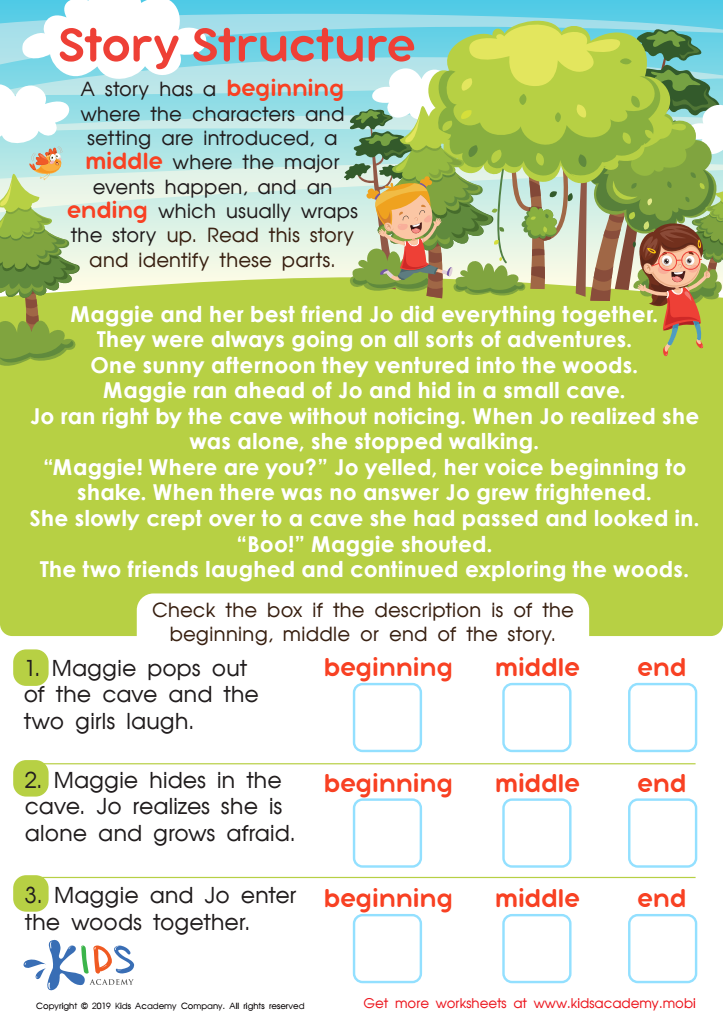
Story Structure Worksheet
Help your students read and identify the parts of the story in this worksheet: the beginning (characters and setting), middle (major events), and ending (events are resolved). Show them how to structure a story for clarity.
 Assign to My Students
Story Structure Worksheet
Worksheet
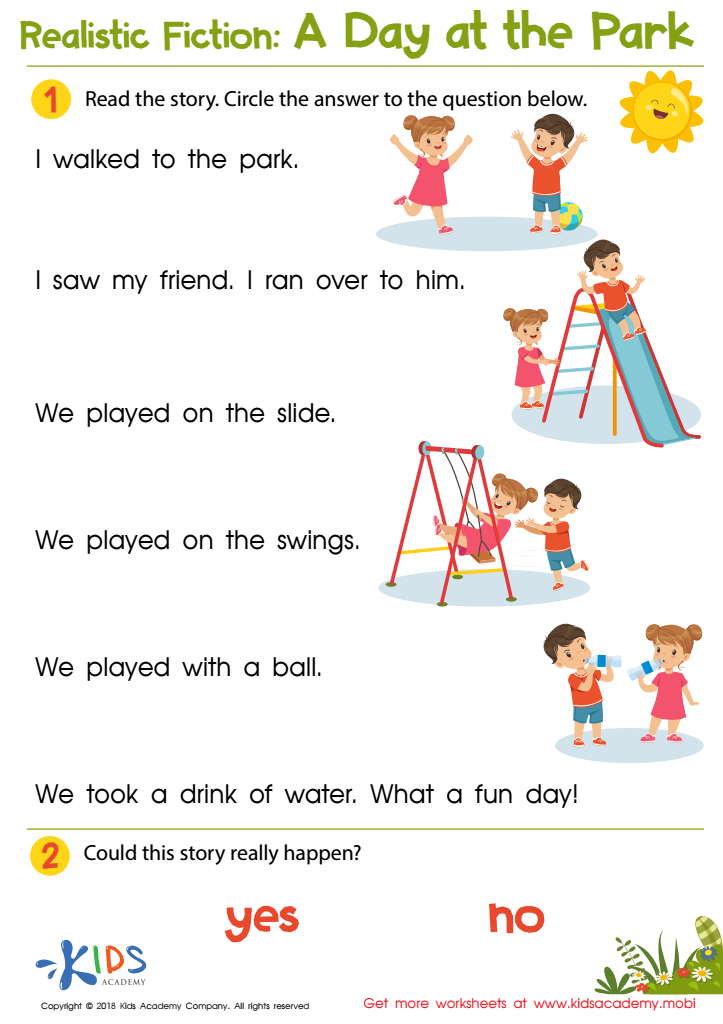
A Day at the Park Worksheet
Kids as young as preschool-age can be taught to evaluate stories! Use this fun worksheet about a day at the park. Read each sentence aloud, looking at the pictures. Ask your child if the events in the story could happen in real life - if yes, circle yes, otherwise circle no. When finished, discuss with them the genre, realistic fiction.
A Day at the Park Worksheet
Worksheet
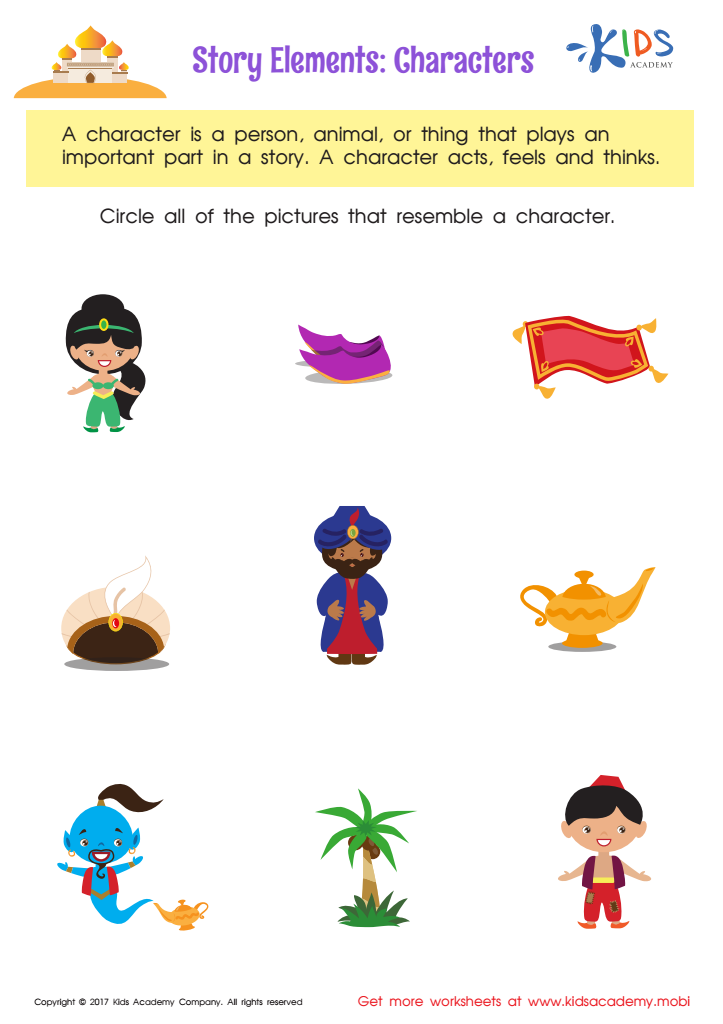
Story Elements Printable
Read the text and review the characters, settings and plot in a guided discussion.
Take your child on a journey to the Middle East and review the characters, settings and plot of their favorite childhood stories with this Aladdin-themed worksheet! It'll help them master early analysis skills and learn about characterization. Enjoy a fun, guided discussion with your child as you review important story elements.
Story Elements Printable
Worksheet
Join Kids Academy for Free
Who is primarily going to use this learning content?








Identifying story elements plays a crucial role in enhancing reading comprehension for children ages 7-8. At this developmental stage, children are beginning to grasp narrative structures, and understanding these elements—such as characters, settings, plots, conflicts, and resolutions—can profoundly impact their ability to comprehend and engage with texts.
When parents or teachers focus on identifying story elements, they empower children to connect more deeply with the stories they read. Recognizing character motivations or understanding the setting helps young readers form mental images, enhancing their ability to visualize and remember details. Moreover, knowing how to unpack the plot allows children to anticipate events, improving their prediction skills and facilitating deeper inferencing.
A strong foundation in story elements also enhances children's analytical abilities, enabling them to respond to literature critically and thoughtfully. This comprehension skill extends beyond fiction; children learn to analyze various forms of information, fostering skills they will use academically and socially.
Ultimately, by aiding in the identification of story elements, parents and teachers create a more enriching reading environment, nurturing a love for literature and bolstering overall educational achievement. This support lays the groundwork for lifelong reading habits and a greater appreciation for storytelling.








