Logical Reasoning Normal Reading Fiction Worksheets for Ages 7-8
5 filtered results
-
From - To
Enhance your child's reading and critical thinking abilities with our Logical Reasoning Normal Reading Fiction Worksheets for ages 7-8. Our expertly designed worksheets combine engaging fictional stories with thought-provoking questions to develop logical reasoning skills. Children will immerse themselves in captivating tales while honing their ability to analyze, infer, and draw conclusions. Perfect for both classroom and at-home learning, these worksheets are tailored to encourage young minds to think critically and deepen their comprehension of reading material. Boost your child's educational journey with resources that make learning enjoyable and intellectually stimulating. Explore our collection today!
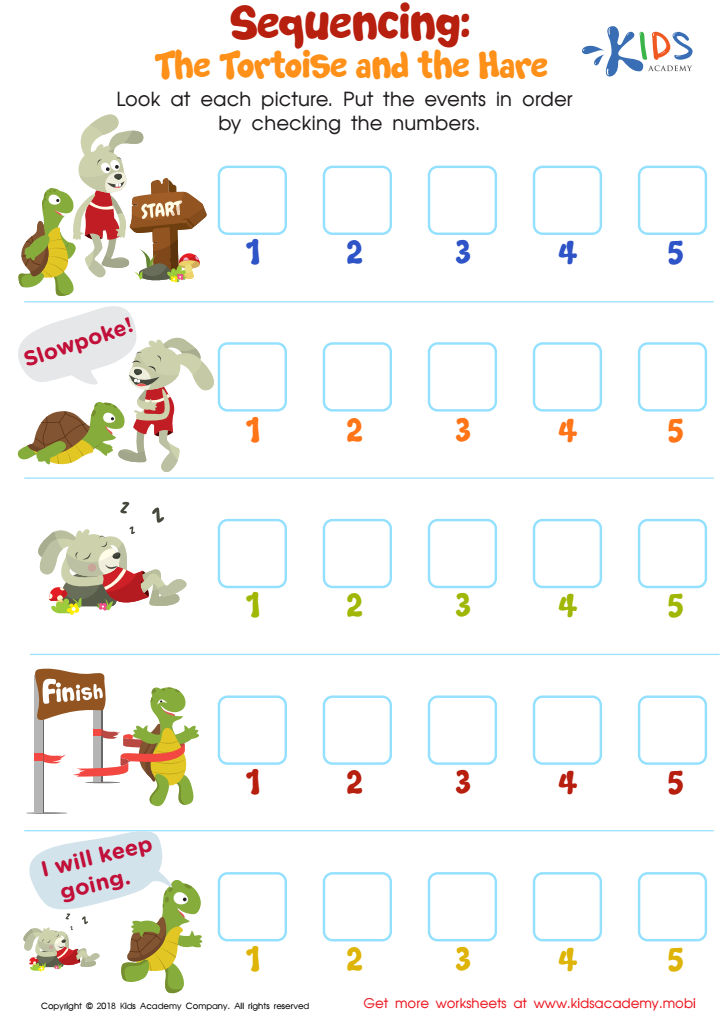
Sequencing: The Tortoise and the Hare Worksheet
 Assign to My Students
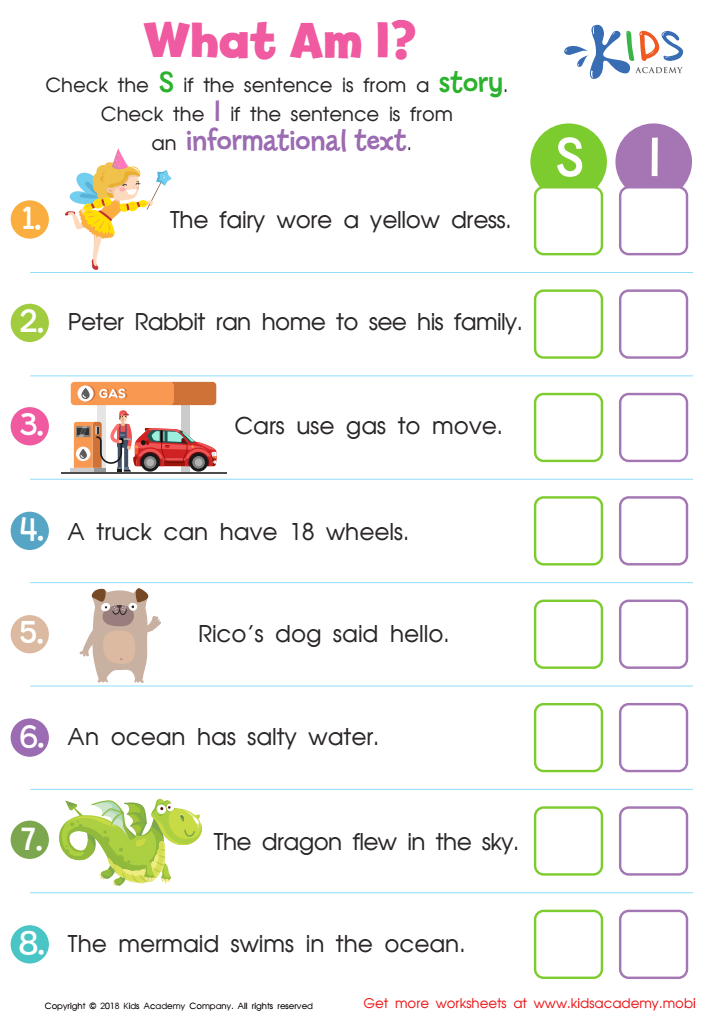
What Am I? Worksheet
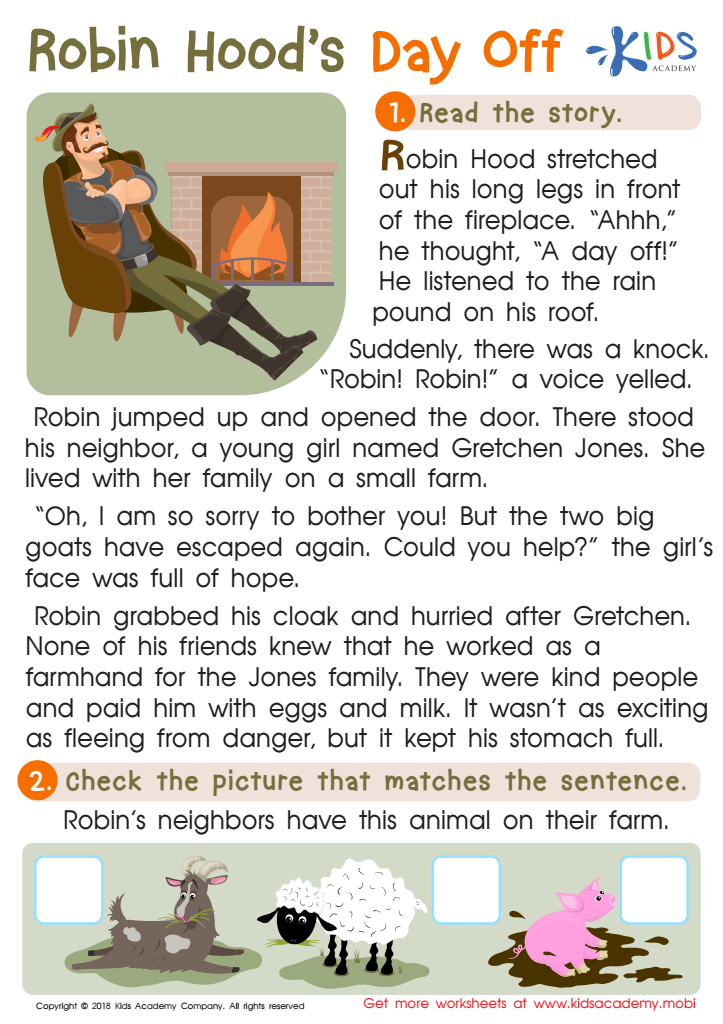
Robin Hood's Day Off Worksheet
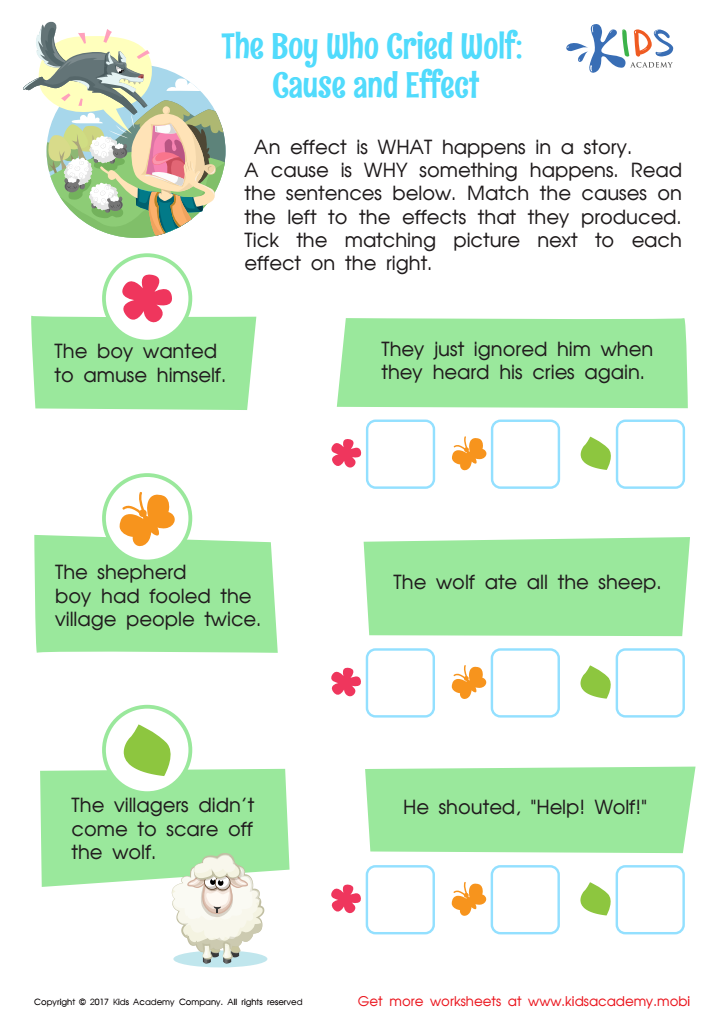
The Boy Who Cried Wolf: Cause and Effect Worksheet
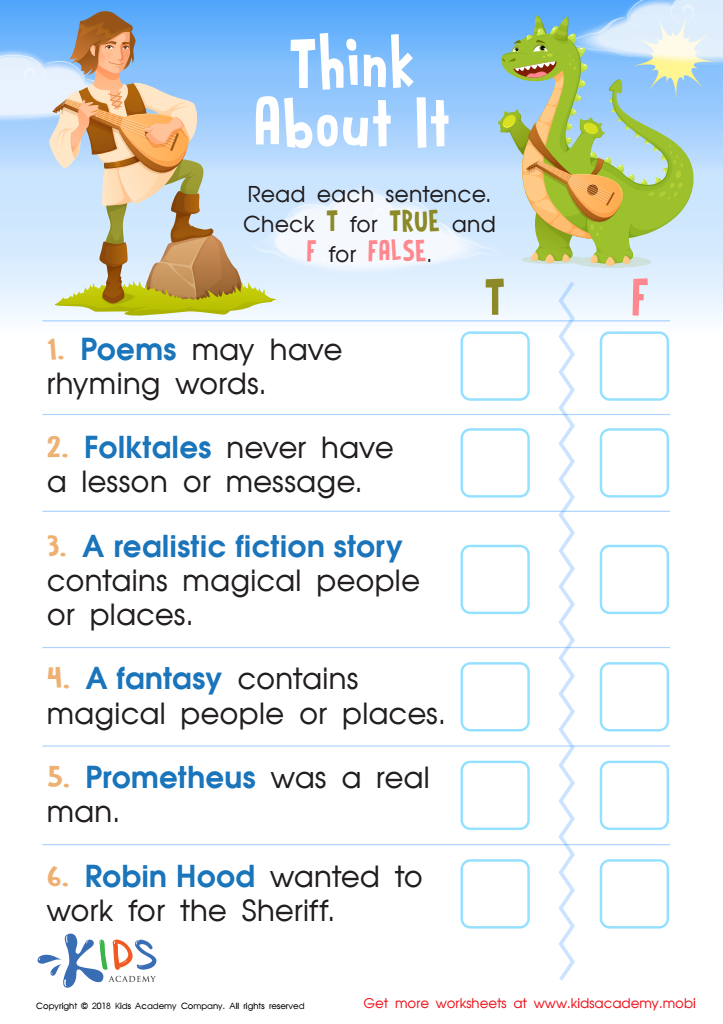
Think About It: Assessment Worksheet



.jpg)

.jpg)


Logical reasoning, normal reading, and exposure to fiction are fundamental in the cognitive and emotional development of children ages 7-8. At this stage, children are rapidly building vital skills that lay the groundwork for future academic and life success.
Logical reasoning enhances critical thinking and problem-solving abilities. It enables children to make connections, understand cause and effect, and make informed decisions. Fostering these skills early on can improve their mathematical reasoning and scientific inquiry, giving them a strong academic foundation.
Normal reading means students are engaging with texts appropriate for their age group and developing fluency. Proficient reading skills at this age are crucial as they impact all areas of learning. By mastering reading at an early stage, children can better comprehend educational content, follow instructions, and engage in self-guided learning.
Fiction specifically plays a unique role in expanding creativity and empathy. Through fictional stories, children explore diverse worlds, characters, and perspectives, which can significantly enhance their imagination and emotional intelligence. Engaging with fiction helps children understand complex human emotions and social situations, aiding their personal and social development.
In conclusion, focusing on these areas not only promotes academic success but also nurtures well-rounded, empathetic, and imaginative individuals. For parents and teachers, investing time and energy here can lead to enriched learning experiences and a brighter future for the children.







