Moral lesson understanding Normal Reading Fiction Worksheets for Ages 7-8
5 filtered results
-
From - To
Explore our collection of engaging Moral Lesson Understanding Normal Reading Fiction Worksheets designed for ages 7-8 at Kids Academy. These printable resources help young readers develop critical thinking while enjoying captivating stories. Each worksheet challenges children to identify and reflect on key moral lessons within the text, fostering both comprehension and ethical growth. Aimed at enhancing their reading skills, these activities support classroom learning and home practice. Empower your child with the ability to discern right from wrong through the joy of reading fiction, making learning meaningful and fun. Start enriching their educational journey with us today!
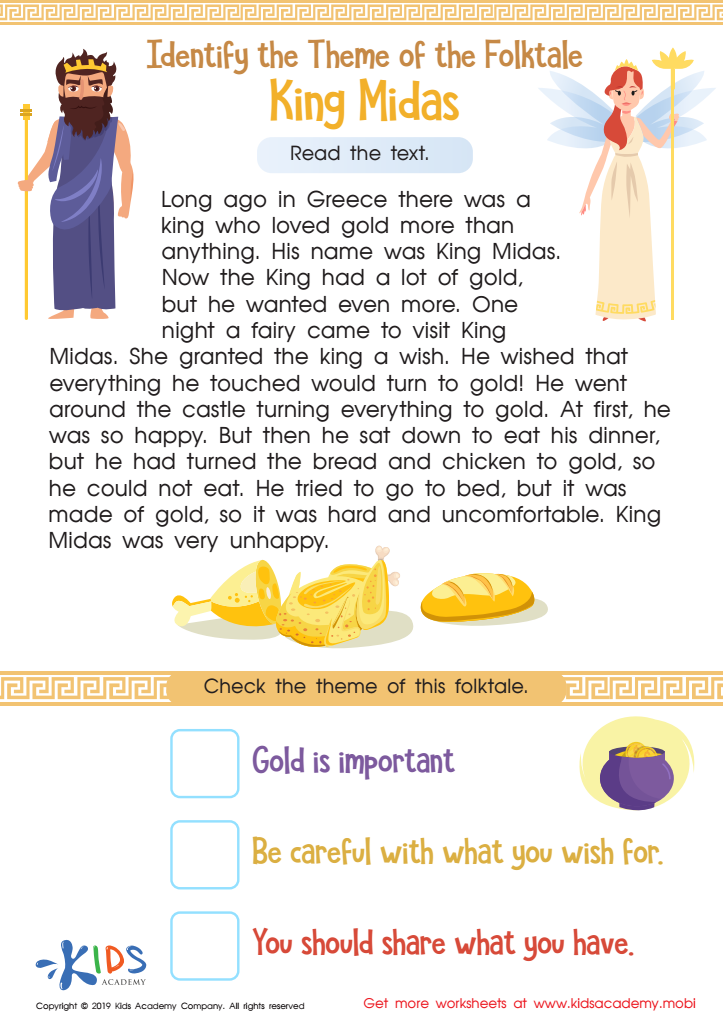
King Midas Worksheet
 Assign to My Students
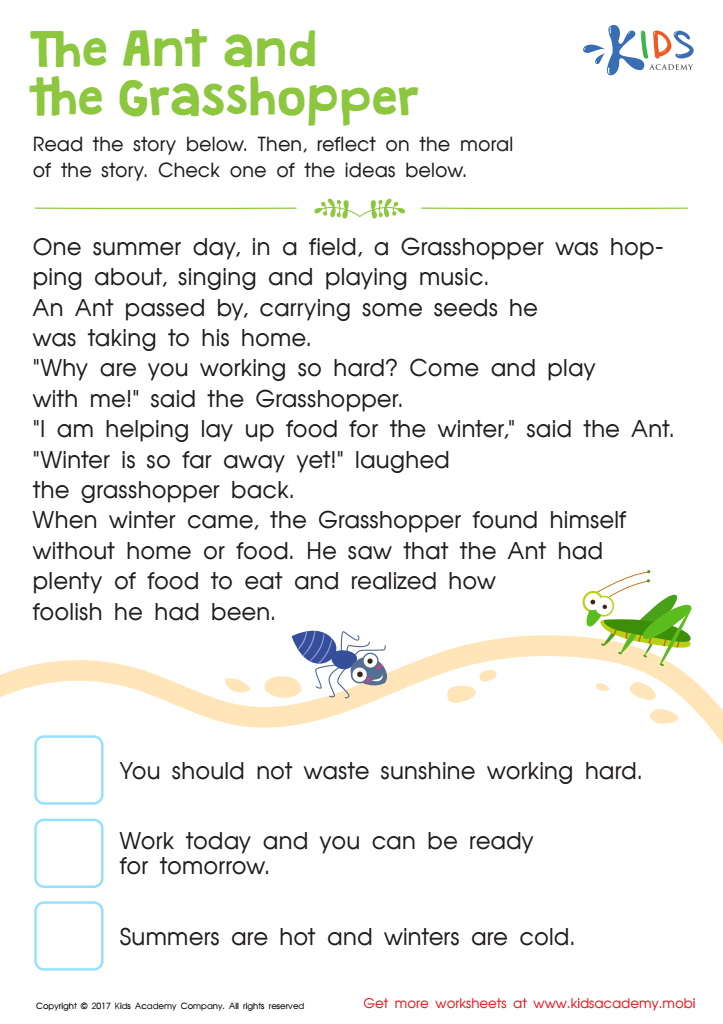
The Ant and The Grasshopper Printable
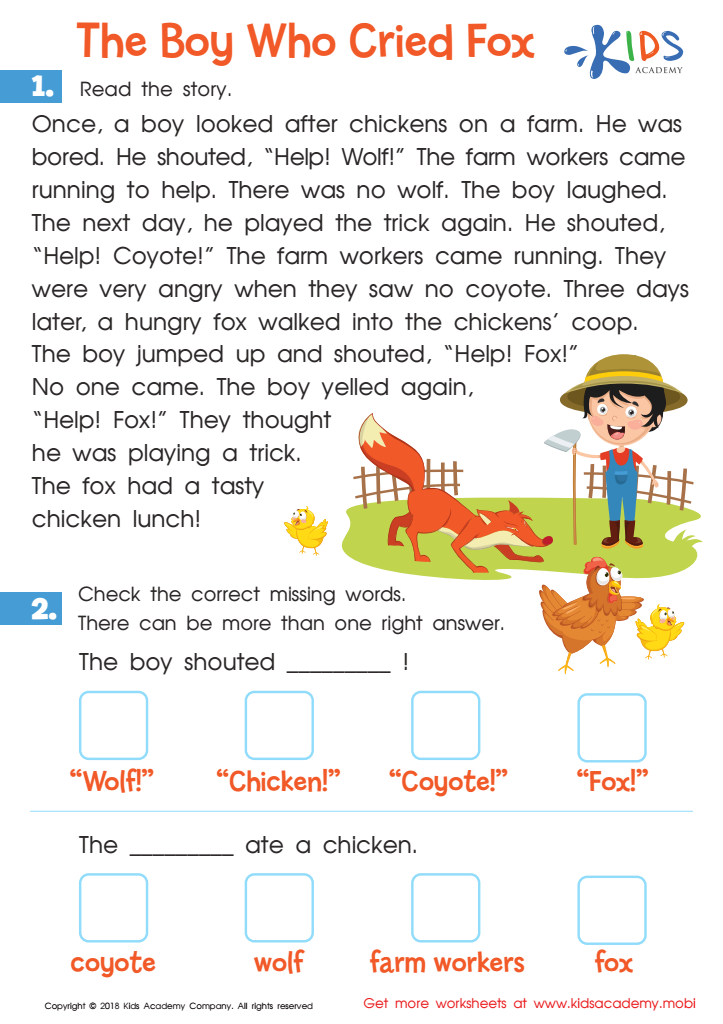
The Boy Who Cried Fox Worksheet
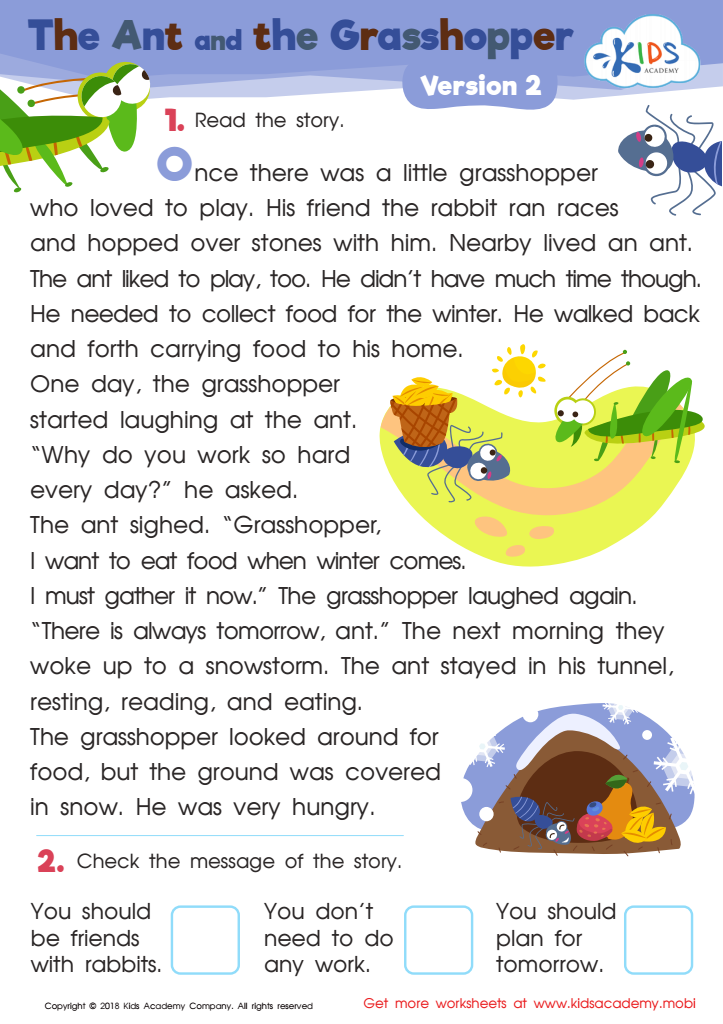
The Ant and The Grasshopper Version 2 Worksheet
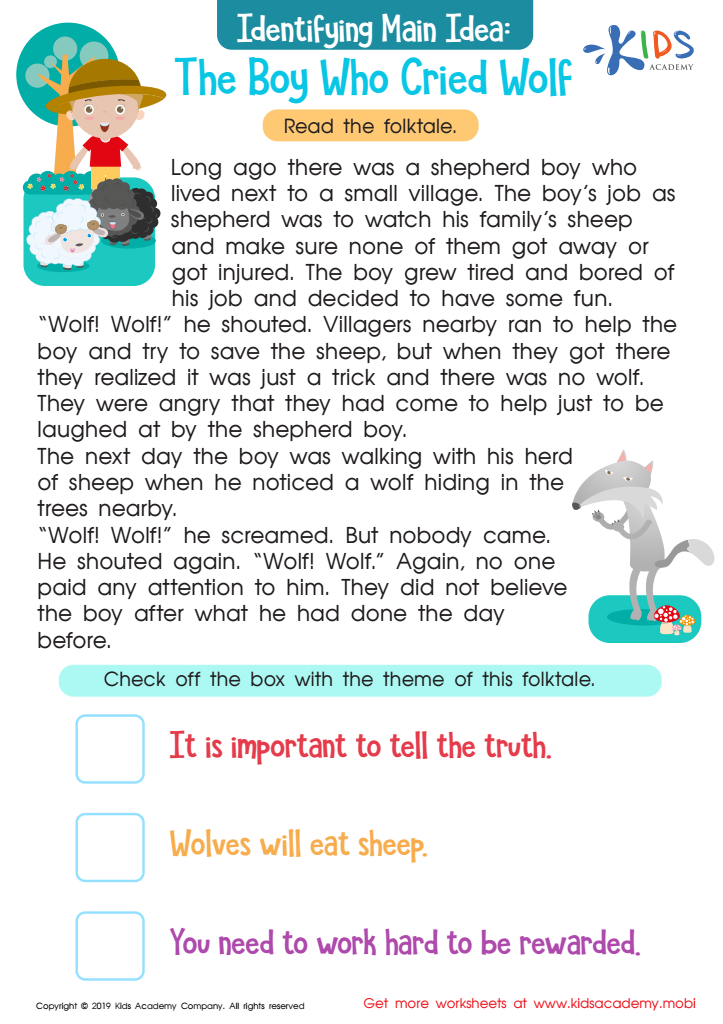
The Boy Who Cried Wolf Part 2 Worksheet






.jpg)

Understanding moral lessons in reading fiction is crucial for children aged 7-8, an age when they are rapidly developing their sense of right and wrong. Parents and teachers should prioritize this aspect of reading because moral lessons provide a foundation for ethical thinking and behavior. Stories that incorporate moral dilemmas allow children to see the consequences of different actions and understand the impact of their choices.
Fiction often serves as a safe space for experiencing complex emotions and situations. By reading about characters who face ethical decisions, children can better grasp abstract concepts like empathy, kindness, and fairness. These stories nurture emotional intelligence and help children recognize the value of virtues in real life.
Moreover, discussing the moral lessons in stories can strengthen critical thinking skills. Engaging kids in conversations about "why a character made a certain choice" or "what they would have done differently" encourages analytical thinking. It also prepares them to handle real-life situations with maturity and wisdom.
In summary, integrating moral lessons from fiction into reading for children aged 7-8 enriches their emotional and ethical development. It equips them with the tools needed to navigate an increasingly complex world, promoting well-rounded individuals who are capable of making thoughtful, considerate decisions.







