Problem-Solving Skills Normal Reading Fiction Worksheets for Ages 7-8
5 filtered results
-
From - To
Discover our engaging "Problem-Solving Skills Normal Reading Fiction Worksheets" designed specifically for children ages 7-8! These worksheets guide young learners through exciting fictional stories, helping them develop essential problem-solving skills while enhancing their reading comprehension. Each activity encourages critical thinking as students identify challenges faced by characters and devise solutions. With a variety of fun scenarios, children will not only enjoy reading but also learn how to approach problems creatively and analytically. Perfect for classroom use or at-home practice, our worksheets make learning enjoyable and impactful. Empower your child’s literacy and critical thinking today with our thoughtfully crafted resources!
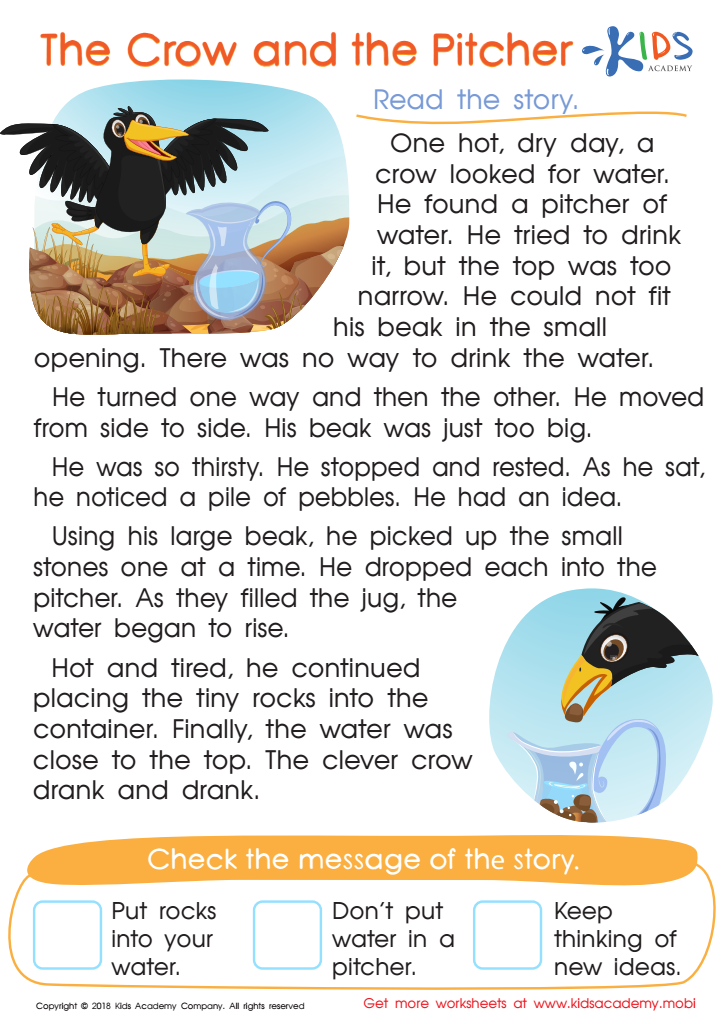
The Crow and the Pitcher Worksheet
 Assign to My Students
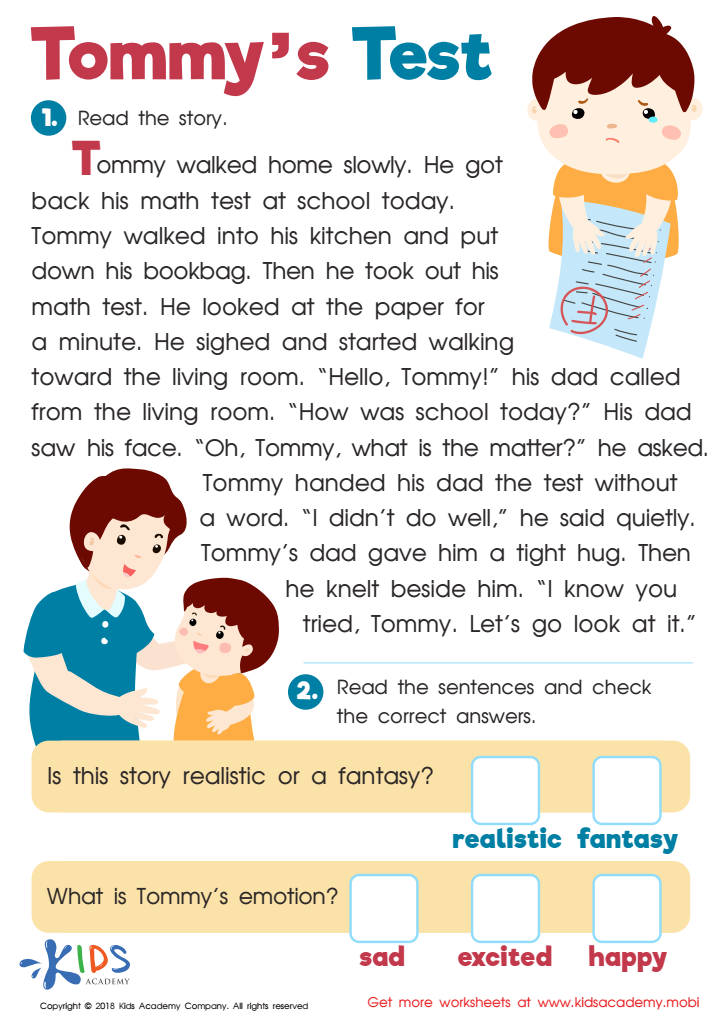
Tommys Test Worksheet
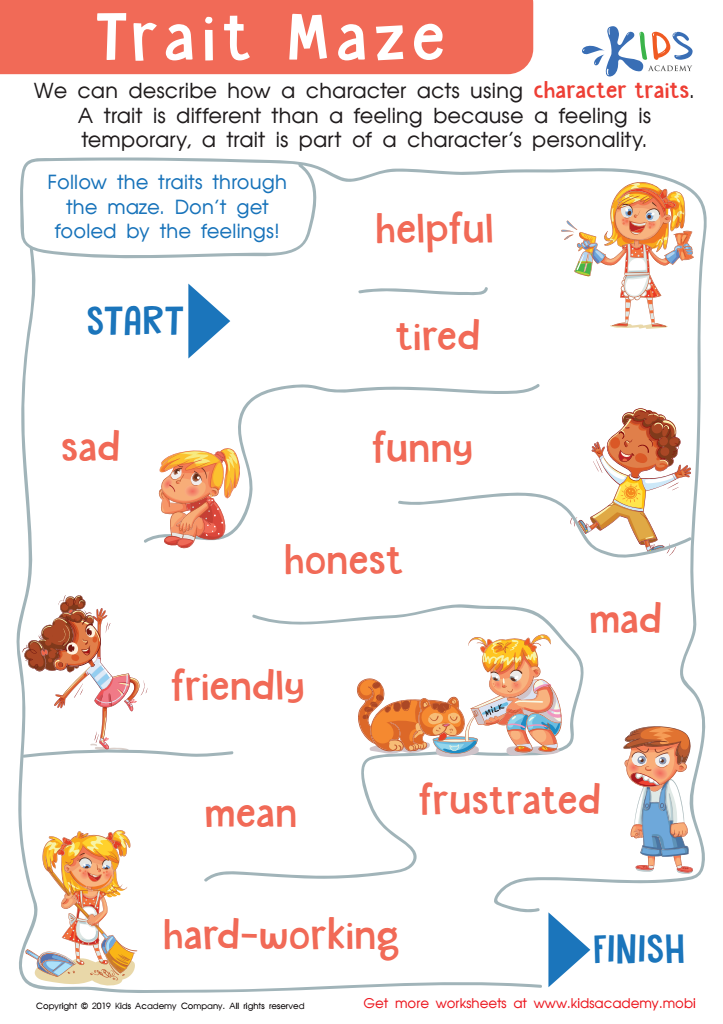
Trait Maze Worksheet
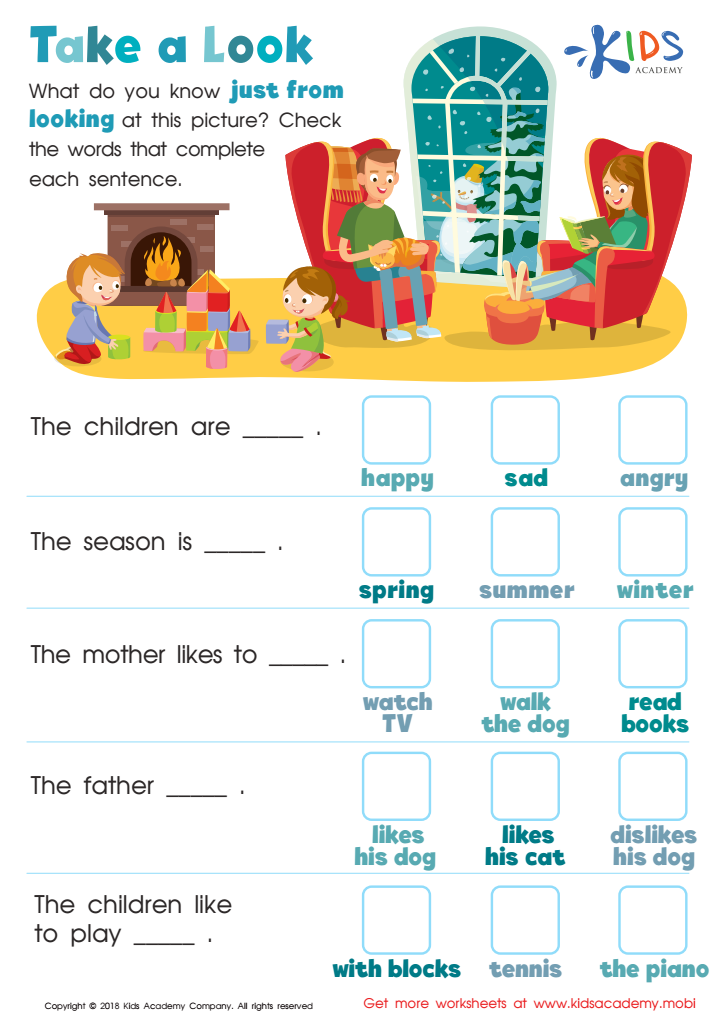
Take a Look - Part 1 Worksheet
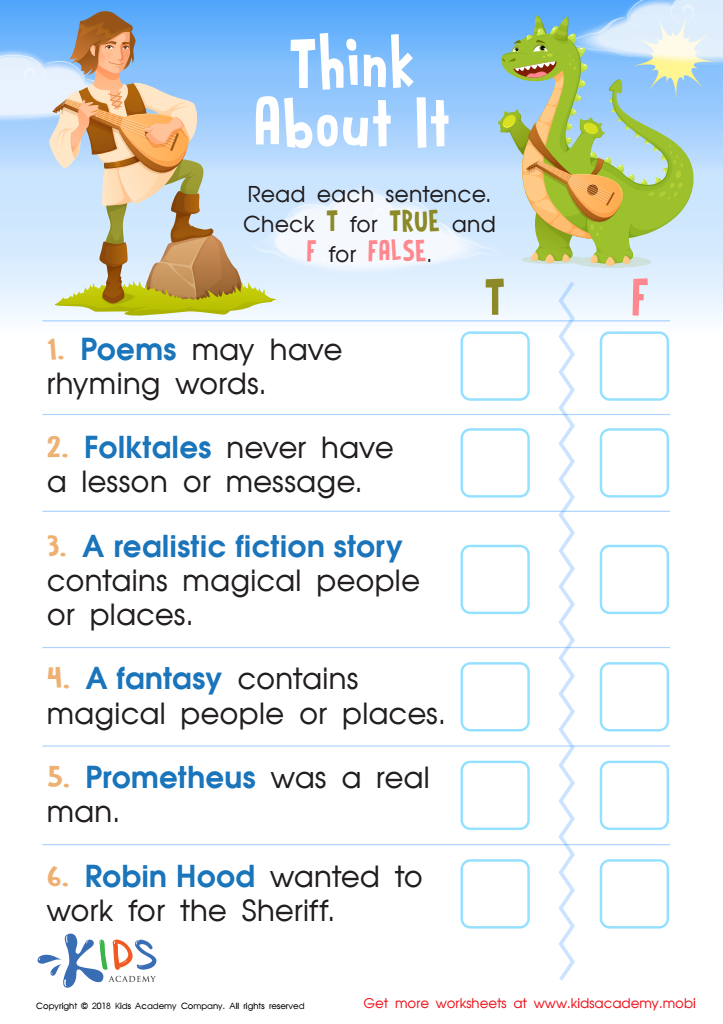
Think About It: Assessment Worksheet








Problem-solving skills are essential for young learners, particularly in the context of reading fiction for ages 7-8. At this age, children develop critical thinking abilities that will serve them throughout their educational journey and beyond. Engaging in storylines that involve conflicts or challenges allows children to think analytically and creatively about solutions.
When children read fiction, they are often presented with characters who face various problems; analyzing these situations fosters empathy and understanding. A parent or teacher can guide children to think through characters’ decisions and outcomes, promoting discussions on alternative solutions and moral dilemmas. This not only enhances comprehension but also develops valuable problem-solving strategies they can apply in real-life situations.
Furthermore, reading fiction nurtures imagination and inspires a love for storytelling—both crucial for cognitive development. As children learn to navigate fictional challenges, they simultaneously grow more resilient and adaptable, equipped to tackle their own life obstacles.
By fostering these skills through engaging narratives, parents and teachers lay a foundation for lifelong learning, helping children become critical thinkers and effective problem solvers, essential attributes for future academic and social success.







