Understanding perspectives Normal Reading Fiction Worksheets for Ages 7-8
3 filtered results
-
From - To
Discover our "Understanding Perspectives" Normal Reading Fiction Worksheets tailored for ages 7-8, designed to enhance young readers' comprehension skills. These engaging worksheets encourage children to explore different viewpoints in stories, fostering empathy and critical thinking. Through fun activities and thought-provoking questions, students will learn to identify characters' feelings, motivations, and experiences, allowing them to connect more deeply with the text. Perfect for classroom use or at-home learning, these worksheets provide valuable practice in exploring how perspectives shape narratives. Enrich your child's reading journey and help them develop essential analytical skills with our interactive resources!
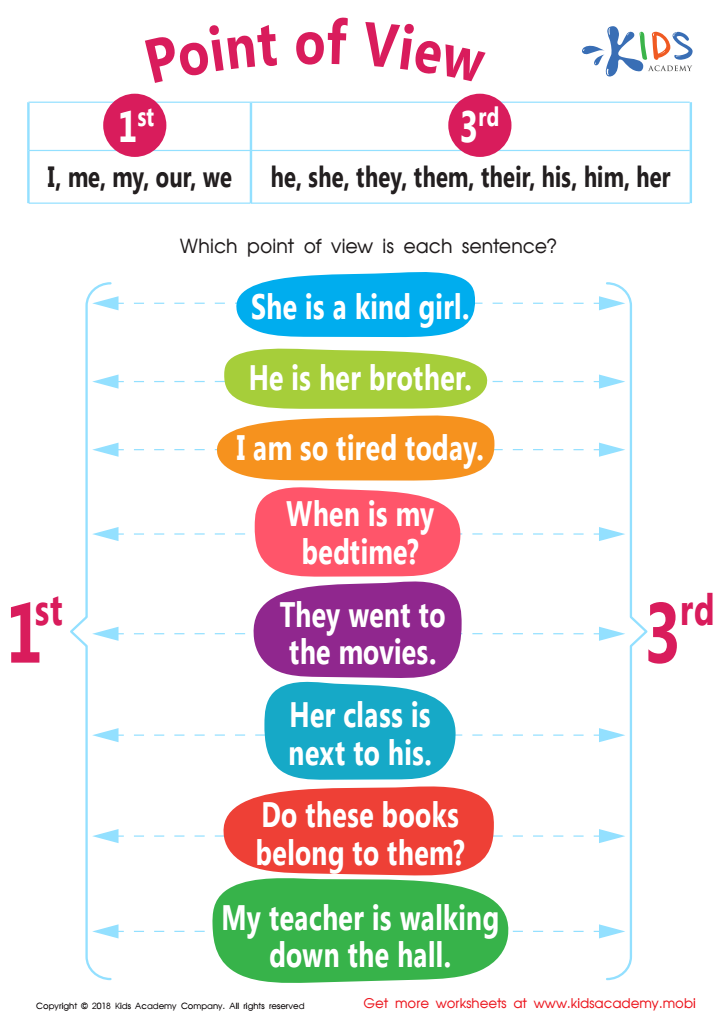
Point of View Worksheet
 Assign to My Students
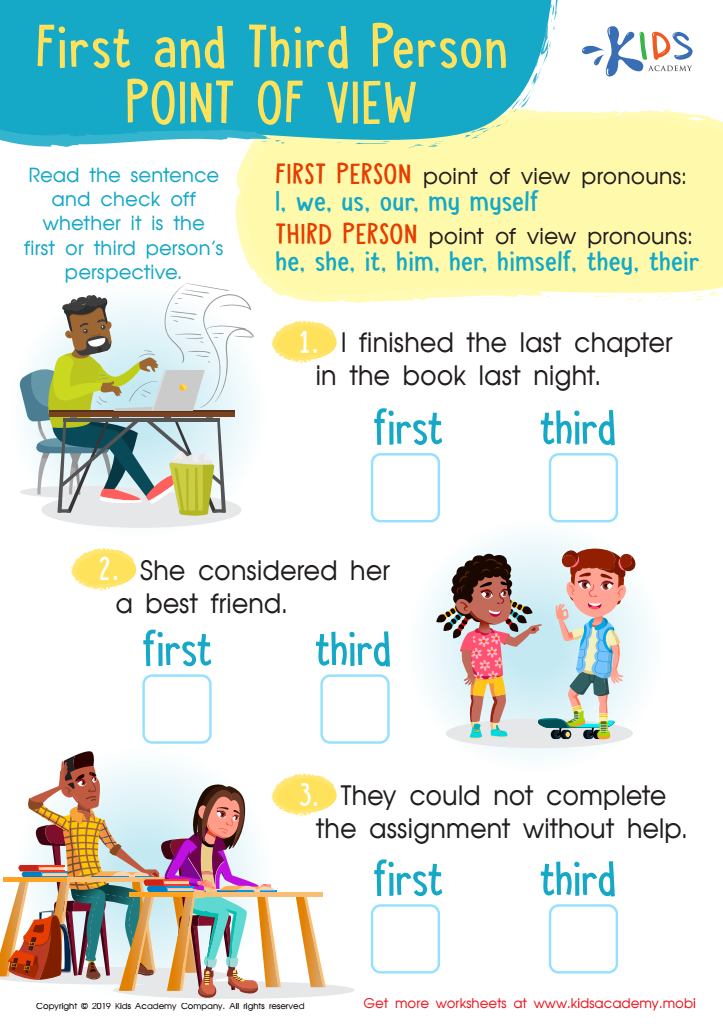
First and Third Person Point of View Worksheet
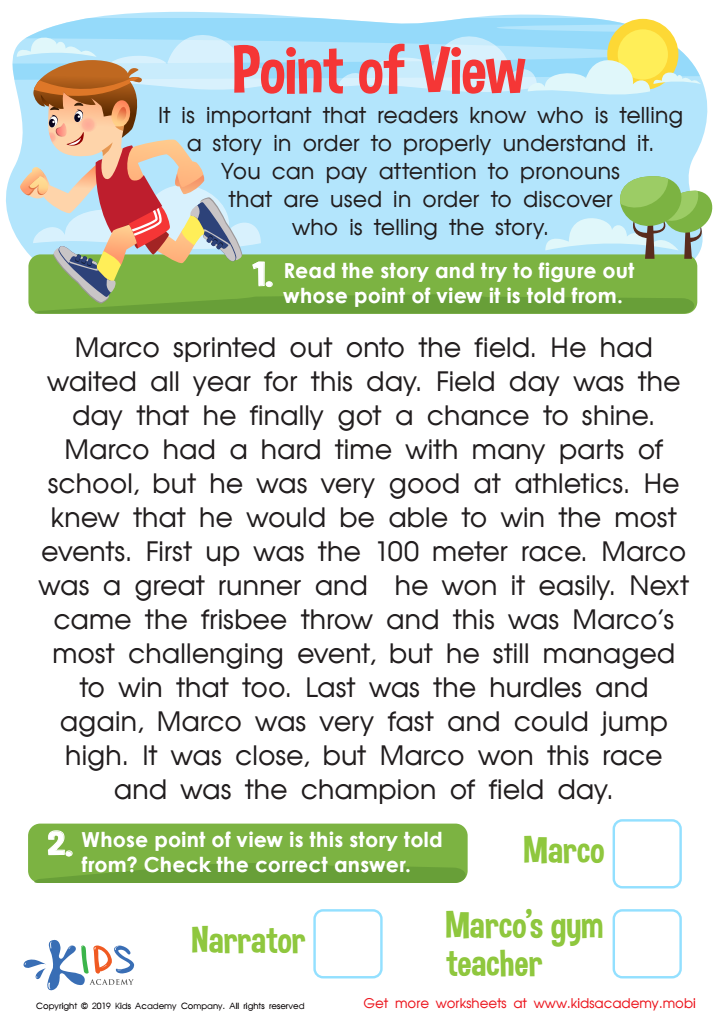
Point of View Worksheet








Understanding perspectives in reading fiction is a crucial skill for children aged 7-8, as it fosters empathy, critical thinking, and deeper comprehension. At this age, children are developing their ability to recognize and appreciate different viewpoints, which contributes to their social interactions and emotional intelligence. When students engage with stories, they are not just absorbing information; they are exploring a variety of characters and scenarios that may differ significantly from their own experiences.
Parents and teachers should encourage this skill because it enhances a child's ability to analyze narratives and articulate their thoughts. By understanding characters' motivations and feelings, children learn to relate to others, which can reduce conflicts and promote kindness. Additionally, exposure to diverse perspectives through fiction broadens their understanding of the world, helping them become more informed and compassionate individuals.
Moreover, engaging with different viewpoints aids literacy development. It encourages discussions that refine vocabulary and communication skills, vital tools for academic success. By investing time in teaching children to understand perspectives in their reading, parents and teachers are equipping them with skills that will serve them far beyond the classroom, fostering a generation of empathetic and critical thinkers.







