Reading comprehension Normal Rhyming Words Worksheets for Ages 7-8
5 filtered results
-
From - To
Enhance your child's reading skills with our "Reading Comprehension Normal Rhyming Words Worksheets" designed specifically for ages 7-8. These engaging worksheets focus on helping young learners identify and understand rhyming words, fostering phonemic awareness and vocabulary development. Each activity encourages critical thinking and enhances comprehension through fun, interactive exercises. Children will explore various rhymes, complete sentences, and engage in colorful illustrations that make learning enjoyable. Our carefully crafted worksheets cater to diverse learning styles, ensuring a comprehensive grasp of reading concepts. Give your little ones the tools they need to succeed in reading with our easy-to-use and effective worksheets!
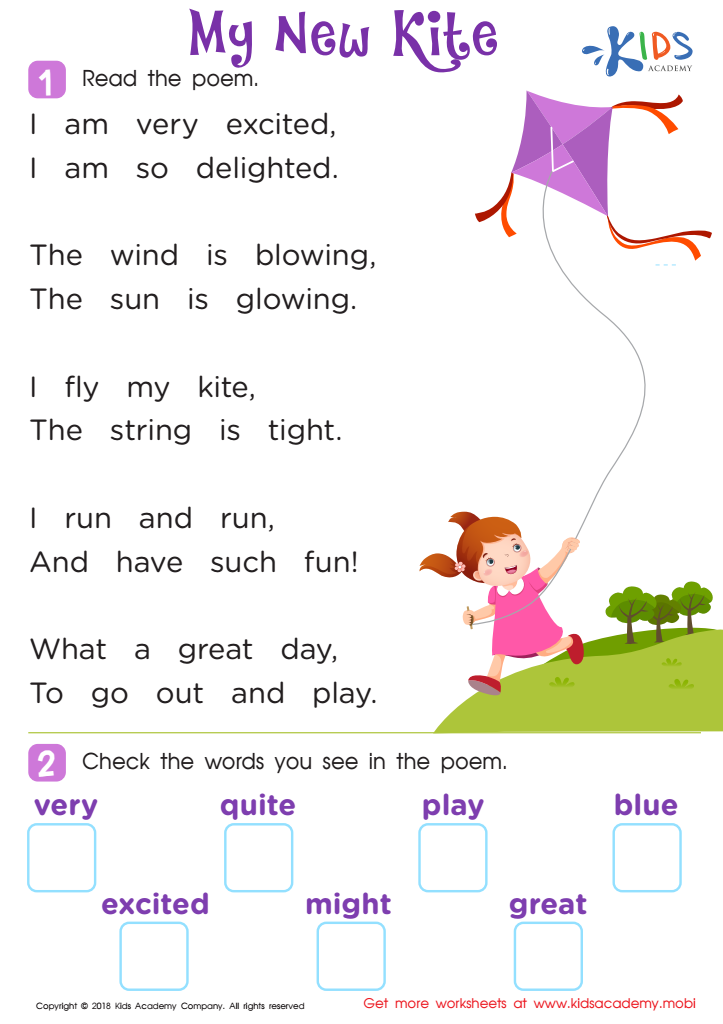
Poem: My New Kite Worksheet
 Assign to My Students
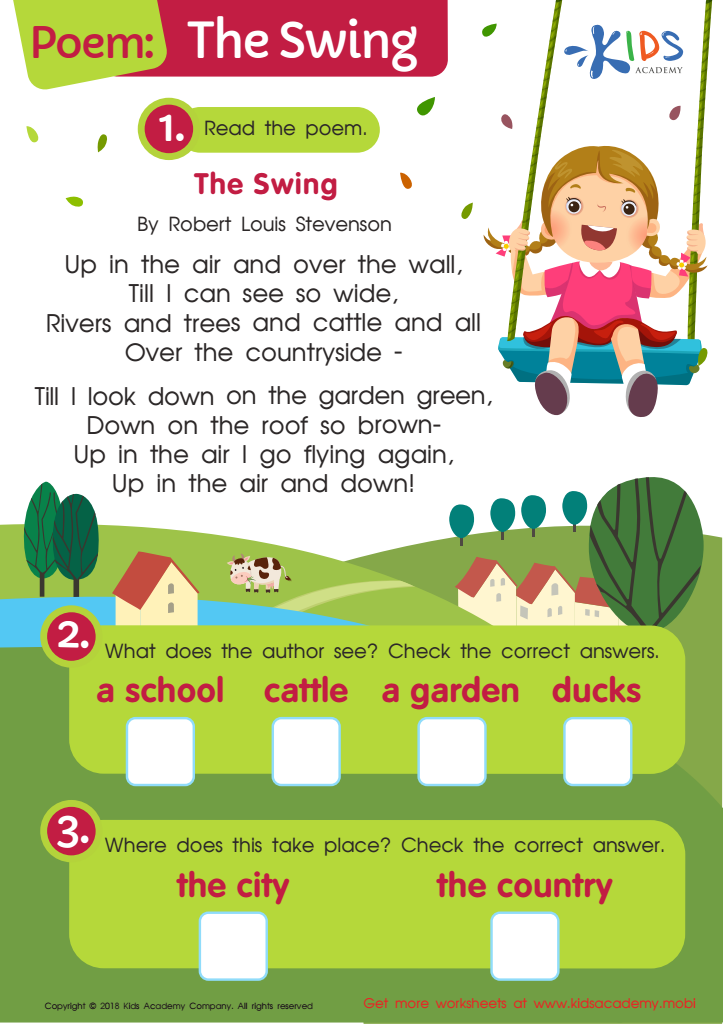
Poem: The Swing Worksheet
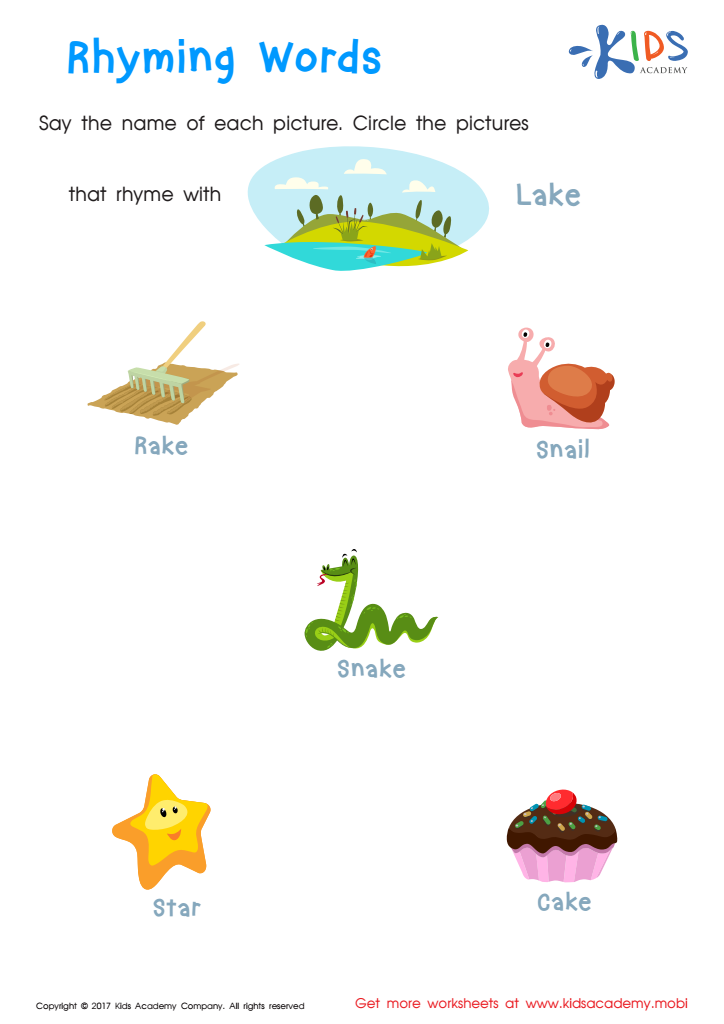
Rhyming Words Rhyming Worksheet
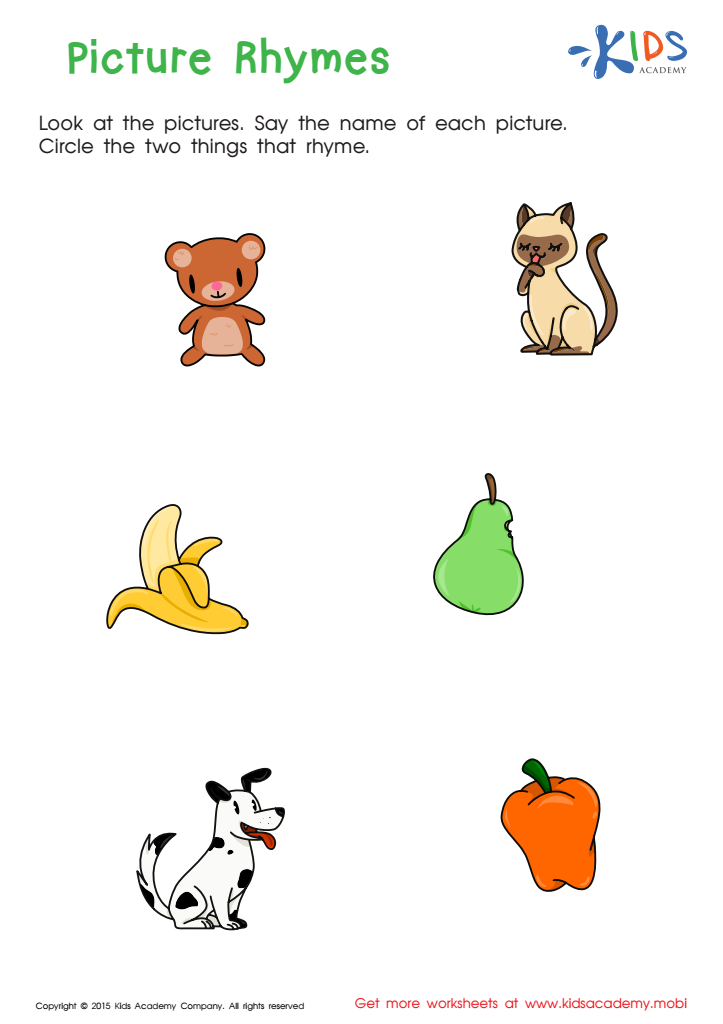
First Words: Picture Rhymes Worksheet
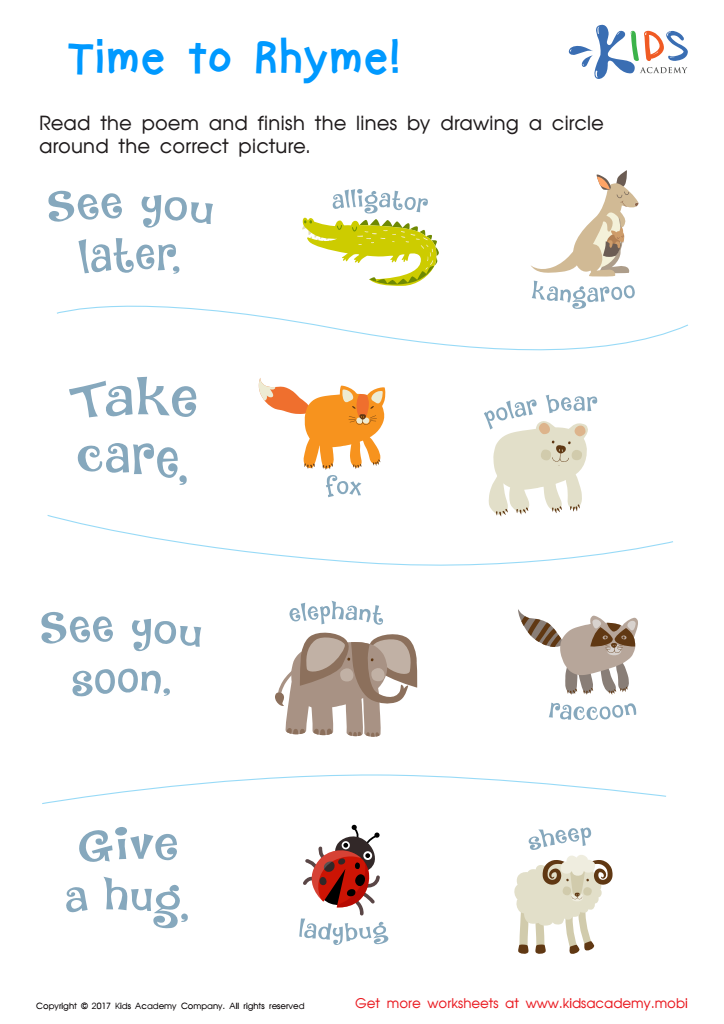
Time to Rhyme Rhyming Worksheet







Reading comprehension and understanding normal rhyming words are vital for children ages 7-8 as they form foundational skills for literacy development. At this age, children are transitioning from learning to read to reading to learn, making it essential for them to grasp the meaning of the text. Good reading comprehension helps kids interpret, analyze, and engage with stories, enhancing their creativity and critical thinking.
Rhyming words play a crucial role in this process, as they introduce children to phonemic awareness—the ability to hear, recognize, and manipulate sounds in spoken language. Rhyming helps improve vocabulary and spelling skills, making it easier for children to tackle more complex texts later on. By engaging with rhymes, kids can develop their oral language skills, catch the rhythm of language, and boost their memory.
Parents and teachers should therefore prioritize reading comprehension and rhyming word exercises in everyday learning. Regardless of the teaching methods employed, fostering a love for reading and an understanding of language can significantly influence a child's academic journey. Encouraging children to read various texts, sing rhyming songs, and engage in storytelling can create a rich literacy environment and set them on a path towards lifelong learning and success.








