Basic astronomy knowledge Normal Science Worksheets for Ages 7-8
3 filtered results
-
From - To
Explore the wonders of the universe with our Basic Astronomy Knowledge Worksheets, designed specifically for children aged 7-8! These engaging, printable resources help young learners to understand key astronomical concepts, such as the solar system, planets, and stars. With fun illustrations and approachable language, these worksheets serve as an excellent tool for teachers and parents to spark curiosity and encourage critical thinking. Perfect for classroom or at-home learning, each worksheet includes various activities that foster a love for science while enhancing fine motor skills. Get ready to inspire your budding astronomers and ignite their imagination about the cosmos!
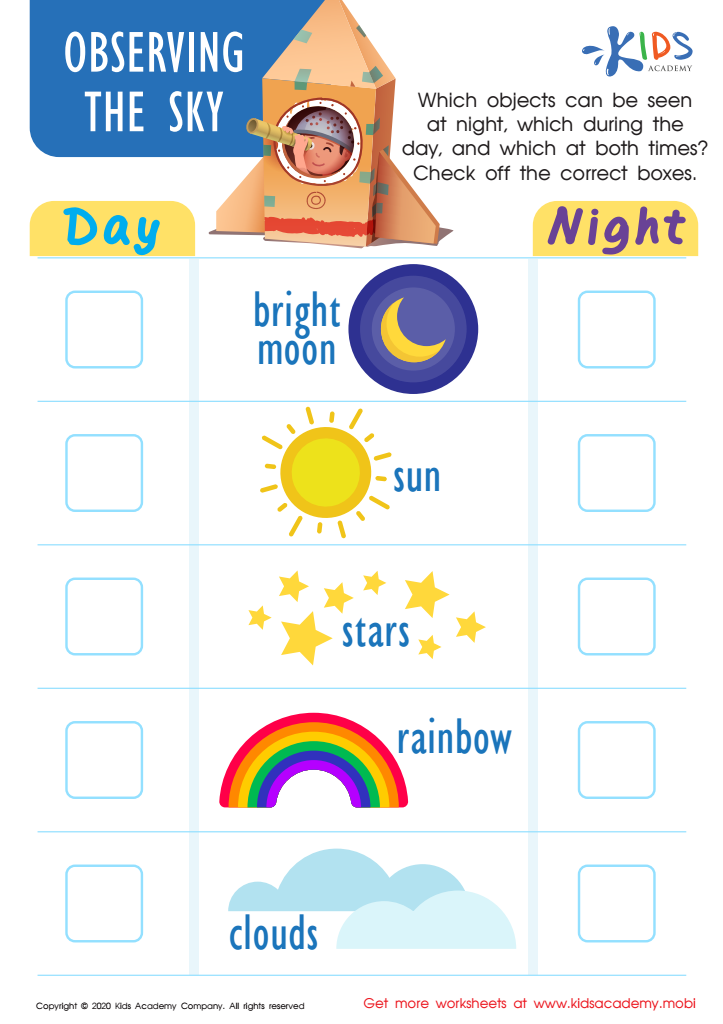
Observing the Sky Worksheet
 Assign to My Students
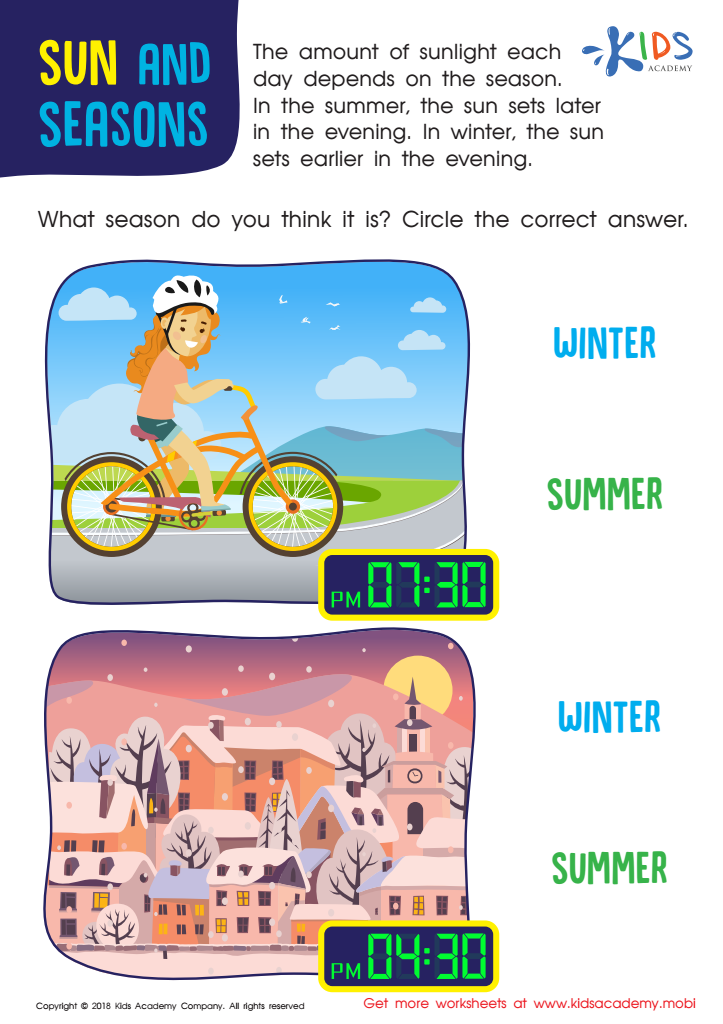
Sun and Seasons Worksheet
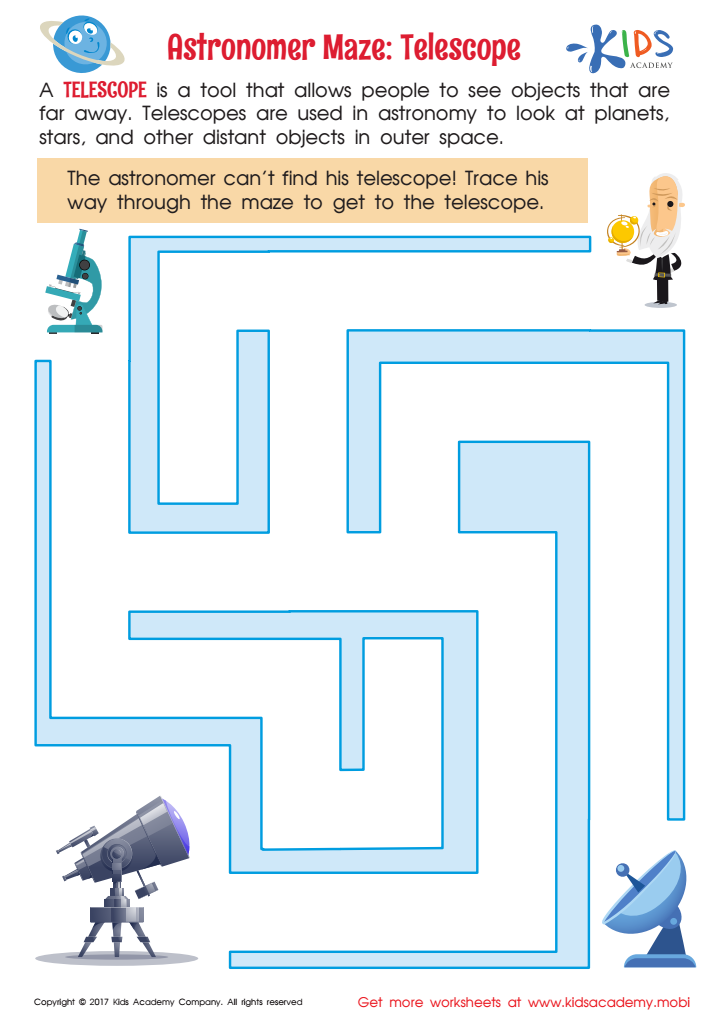
Astronomer Maze: Telescope Worksheet








Parents and teachers should care about basic astronomy knowledge for children aged 7-8 because it fosters curiosity and imagination, essential components of early learning. At this age, children are naturally inquisitive about their environment, and astronomy provides an engaging way to explore scientific concepts. Understanding celestial bodies, such as the sun, moon, and stars, introduces basic scientific principles like gravity, motion, and light, laying the groundwork for further scientific education.
Moreover, astronomy can enhance observational skills. Children learn to recognize patterns, such as the phases of the moon or the constellations, which sharpens their ability to observe and interpret the world around them. This learning also promotes critical thinking as they ask questions about celestial phenomena.
Furthermore, astronomy often unites core subjects like math, geography, and even mythology, making learning interdisciplinary and relevant. Engaging lessons can nurture a lifelong passion for science, encouraging children to explore STEM (science, technology, engineering, and mathematics) fields as they grow.
Finally, discussing topics related to space encourages imagination and creativity, allowing children to dream about possibilities beyond Earth. By investing in basic astronomy knowledge, parents and teachers can inspire a new generation of thinkers and explorers.







