Understanding constellations Normal Science Worksheets for Ages 7-8
3 filtered results
-
From - To
Explore the wonders of the night sky with our "Understanding Constellations" Normal Science Worksheets designed for ages 7-8! These engaging worksheets introduce young learners to the fascinating world of constellations, helping them identify, understand, and appreciate various star patterns and their significance. Featuring interactive activities, illustrations, and fun facts, these resources encourage critical thinking and creativity while reinforcing essential science concepts. Ideal for classroom use or homeschooling, our worksheets make astronomy exciting and accessible for young minds. Stimulate your child's curiosity and expand their scientific knowledge with these innovative learning tools today! Get started on your cosmic adventure!
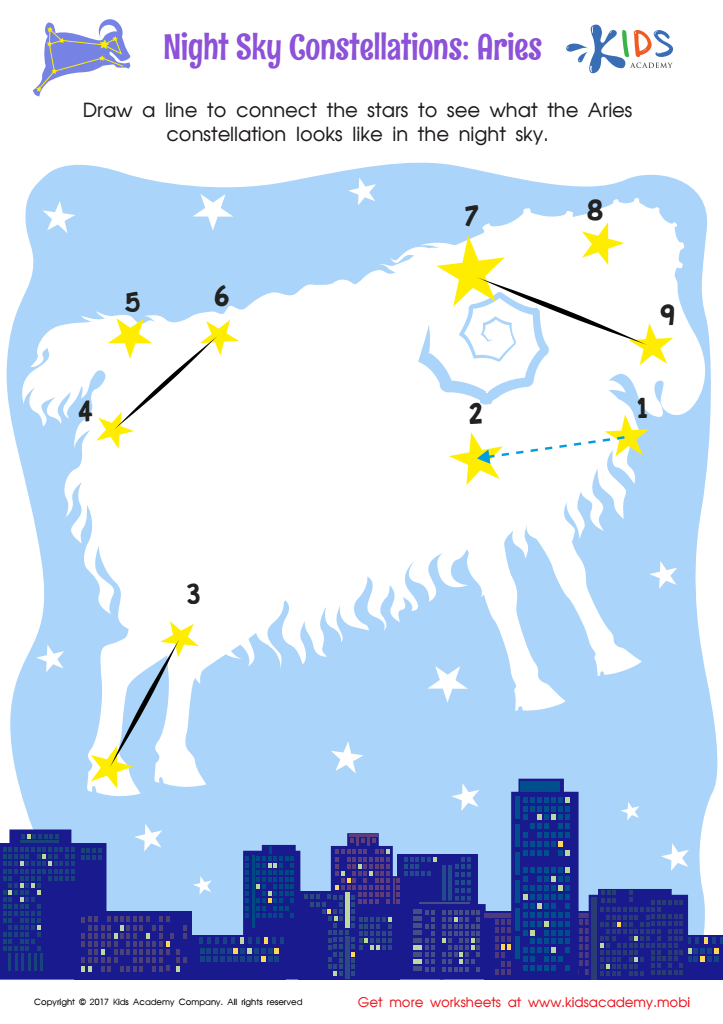
Night Sky Constellations: Aries Worksheet
 Assign to My Students
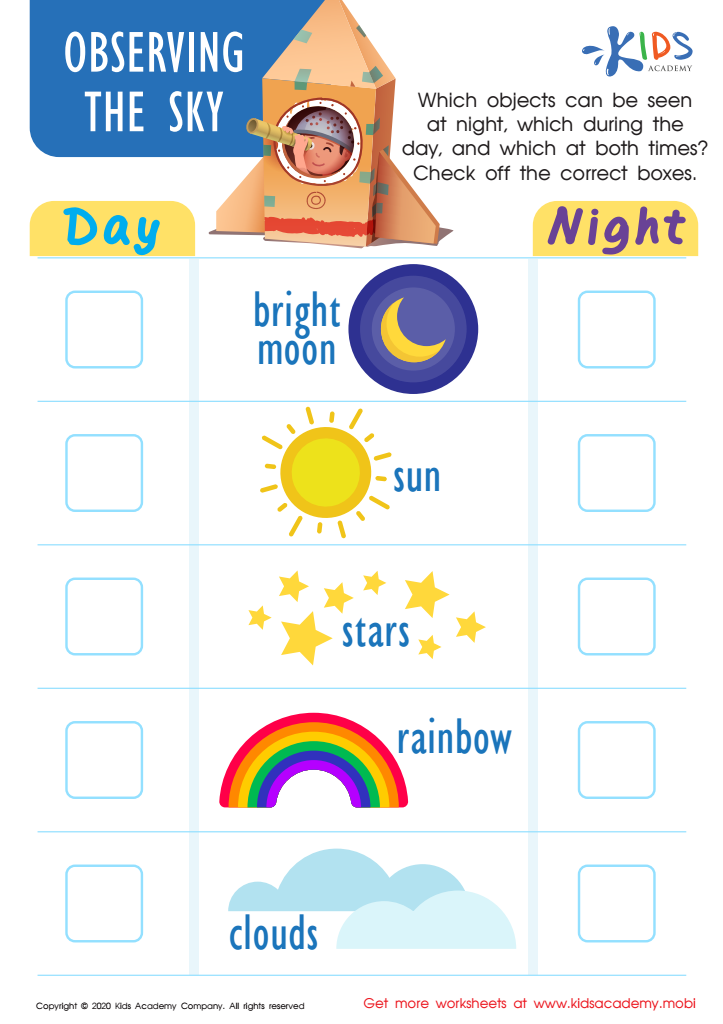
Observing the Sky Worksheet
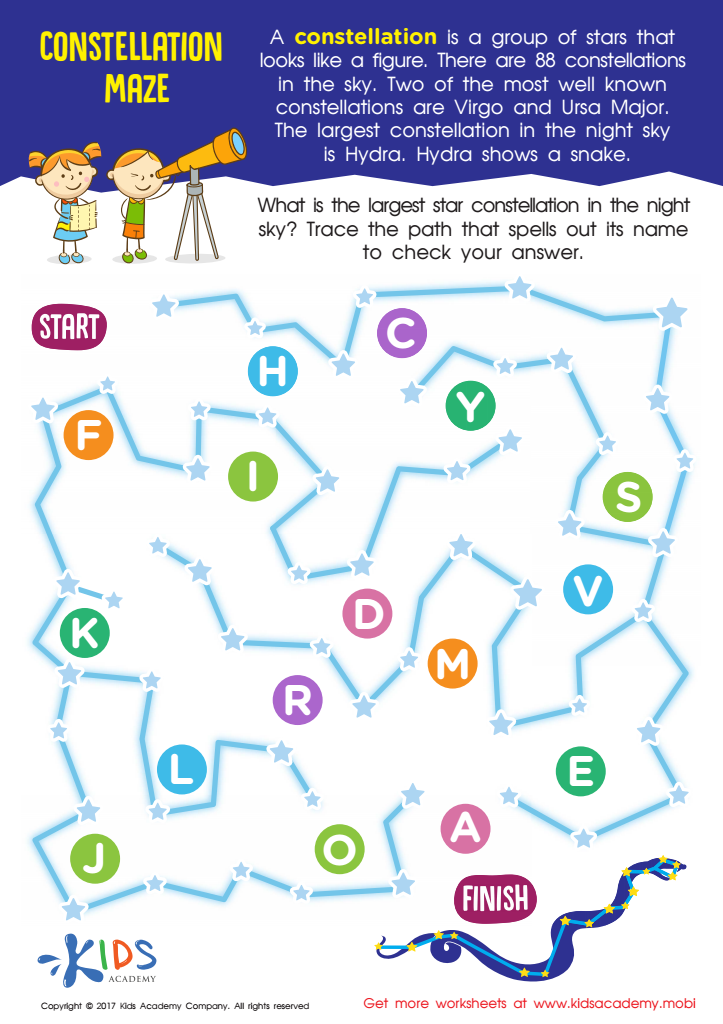
Constellations Worksheet







Parents and teachers should care about teaching children about constellations, particularly through the lens of "Normal Science," because it fosters curiosity and a love for learning. At ages 7-8, children are naturally inquisitive and begin to form connections between the planets, stars, and our place in the universe. By understanding constellations, children can explore storytelling, gain insights into different cultures, and learn scientific principles in astronomy.
Understanding constellations can also enhance critical skills. It encourages observational skills as children learn to spot patterns in the night sky, promoting both inquiry and imaginative thinking. Moreover, discussions about constellations can bridge subjects like math—measuring distances in space—and history, examining how ancient cultures utilized constellations for navigation and timekeeping.
In a broader context, topics like constellations nurture scientific literacy essential for navigating global challenges, collaboration, and innovation. Engaging with astronomy themes can inspire students to seek careers in STEM fields, contributing to a knowledgeable and skilled future workforce.
Interestingly, integrating art and mythology related to constellations can cultivate creativity, ensuring a well-rounded educational approach. In summary, understanding constellations isn't just about astronomy; it shapes informed, creative, and curious individuals.







