
Logical Reasoning Normal Plants and Animals Worksheets for Ages 7-8
3 filtered results
Difficulty Level
Grade
Age
-
From - To
Subject
Activity
Standards
Discover our engaging "Logical Reasoning: Normal Plants and Animals Worksheets" tailored for children aged 7-8! These worksheets are specially designed to enhance critical thinking and reasoning skills through fun, interactive activities featuring various plants and animals. Topics include identifying characteristics, understanding habitats, and comparing different species, all aimed at fostering curiosity about the natural world. Each worksheet encourages kids to apply logical reasoning to solve problems, making learning both enjoyable and effective. Ideal for home study or classroom use, our resources support young learners in developing foundational science concepts and reasoning abilities. Start exploring the wonders of nature today!
Favorites
With answer key
Interactive
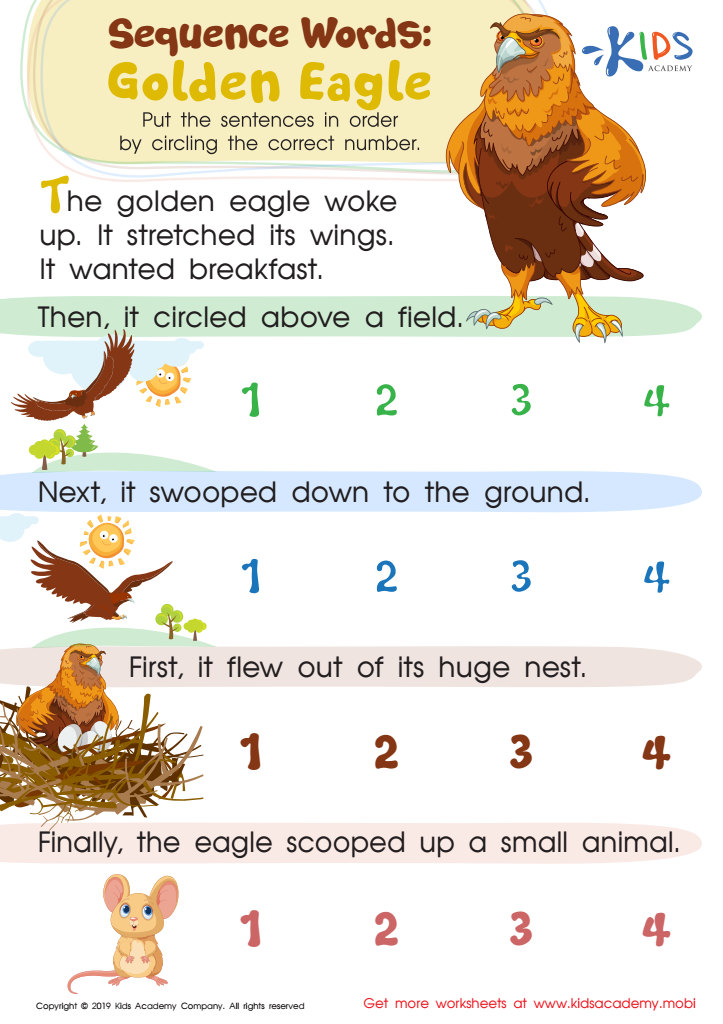
Sequence Word Eagle Worksheet
Help your child brush up on reading and writing with this fun worksheet. Read the story of the golden eagle's day, then have the child circle the numbers in the right order. Point out the sequence words that tell the order of events. This helps learners understand how to make their writing clear and understandable to others.
 Assign to My Students
Sequence Word Eagle Worksheet
Worksheet











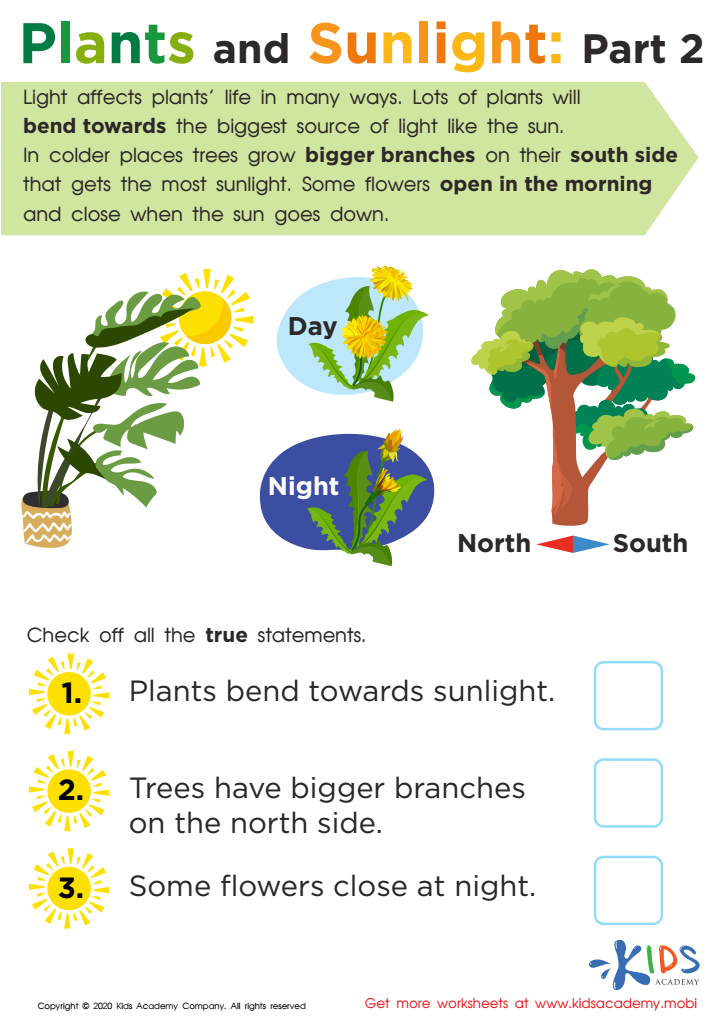
Plants and Sunlight: Part 2 Worksheet
Place a houseplant near the window and observe how it bends to get more sunlight! The sun's effects on plants and trees are amazing - flowers opening and closing, trees growing stronger branches on the south side. Let your child learn with this free Kids Academy printable science worksheet!
Plants and Sunlight: Part 2 Worksheet
Worksheet
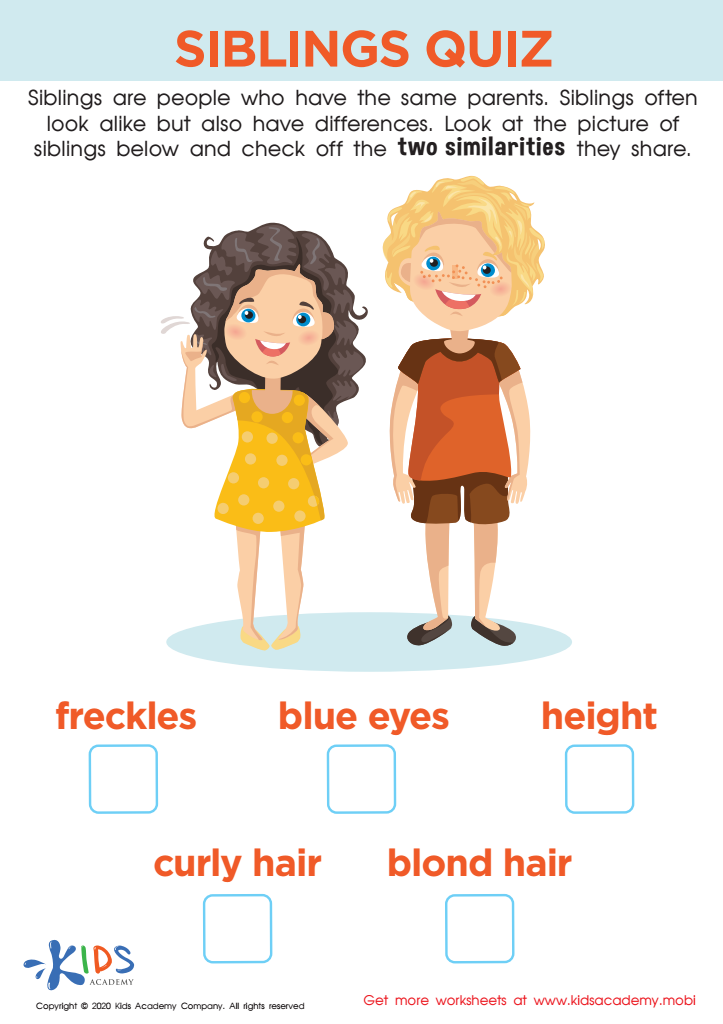
Siblings Quiz Worksheet
Your children may know a sibling is a sister or brother, but not realize what it means to be one. Siblings share the same parents, which means they share many genes. They are alike in many ways, but also have their own unique traits. Help your future scientist understand this early biology concept with this fun worksheet. They'll be tasked with finding similarities between two siblings on the page.
Siblings Quiz Worksheet
Worksheet
Join Kids Academy for Free
Who is primarily going to use this learning content?







Parents and teachers should care about focusing on Logical Reasoning in relation to plants and animals for children aged 7-8 because this foundational skill plays a critical role in their cognitive development. At this age, children are naturally curious and eager to explore the world around them, making it an ideal time to enhance their critical thinking abilities. Engaging with logical reasoning helps them understand concepts of classification, habitats, ecosystems, and the relationships between different organisms.
Incorporating logical reasoning into lessons about plants and animals promotes analytical thinking and problem-solving skills. For instance, distinguishing between herbivores and carnivores encourages children to think about food chains and the interdependence of species. This approach not only solidifies their understanding of scientific concepts but also nurtures their ability to reason logically, leading to improved academic performance across subjects.
Moreover, fostering these skills at an early age sets the stage for lifelong learning and encourages a respect for nature, instilling values of environmental stewardship. Ultimately, combining logical reasoning with subjects like plants and animals cultivates inquisitive, informed, and responsible young learners who are equipped to understand and engage with the natural world around them.







