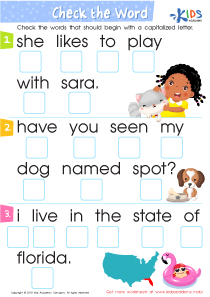
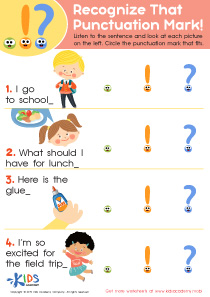
Spelling practice Normal Grammar Worksheets for Ages 7-8 - Page 2
28 filtered results
-
From - To
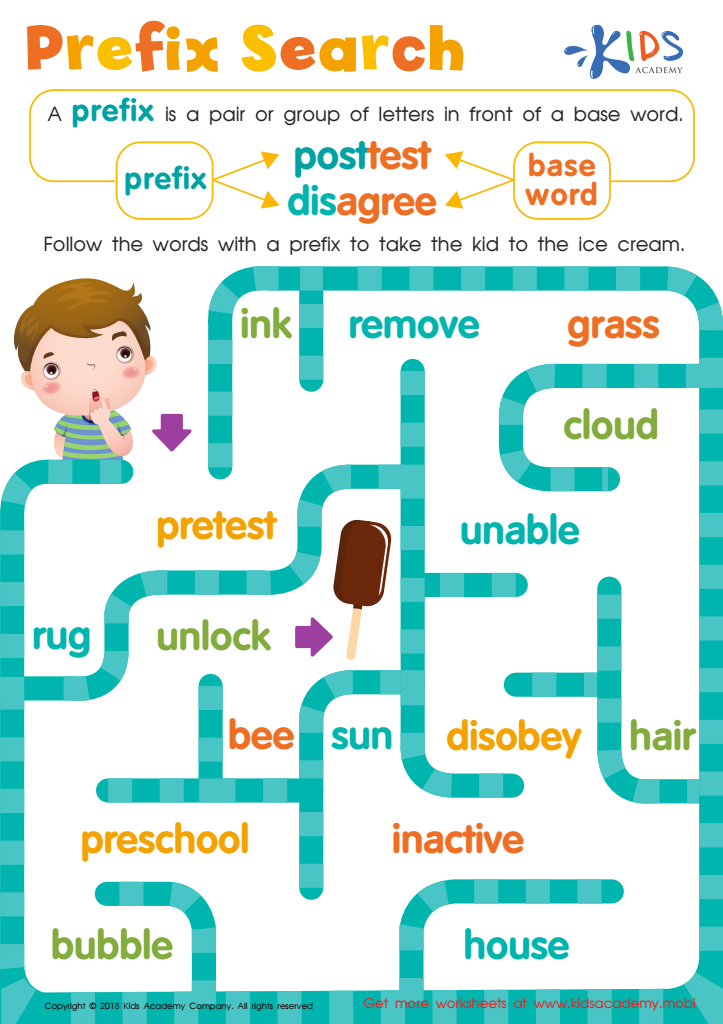
Reading: Prefix Search Worksheet
 Assign to My Students
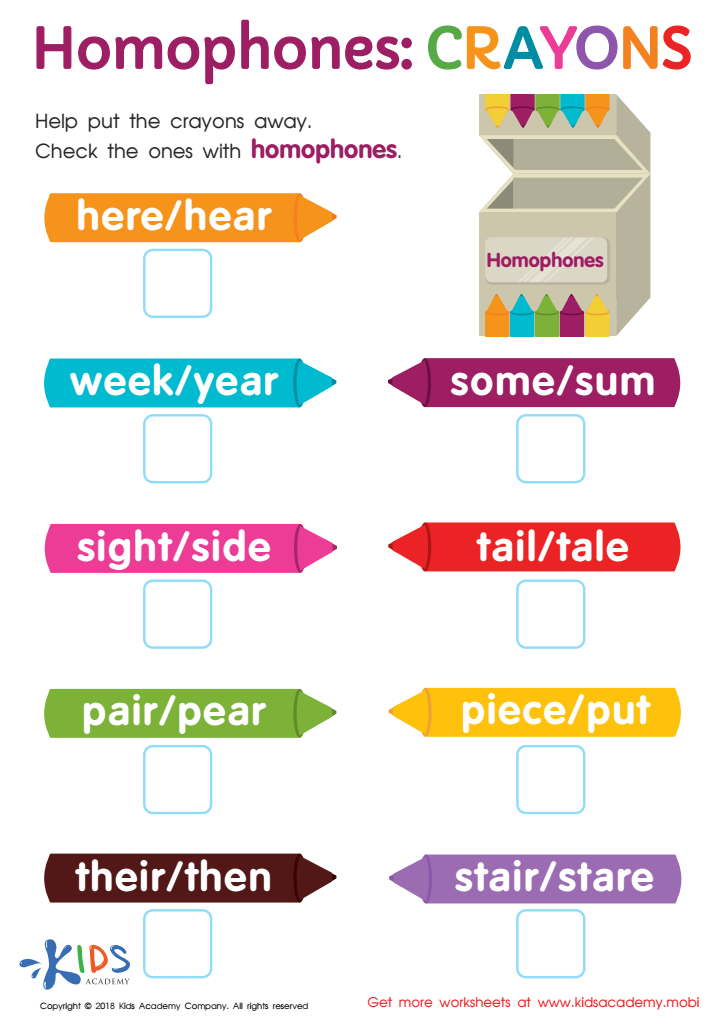
Homophones: Crayons Worksheet
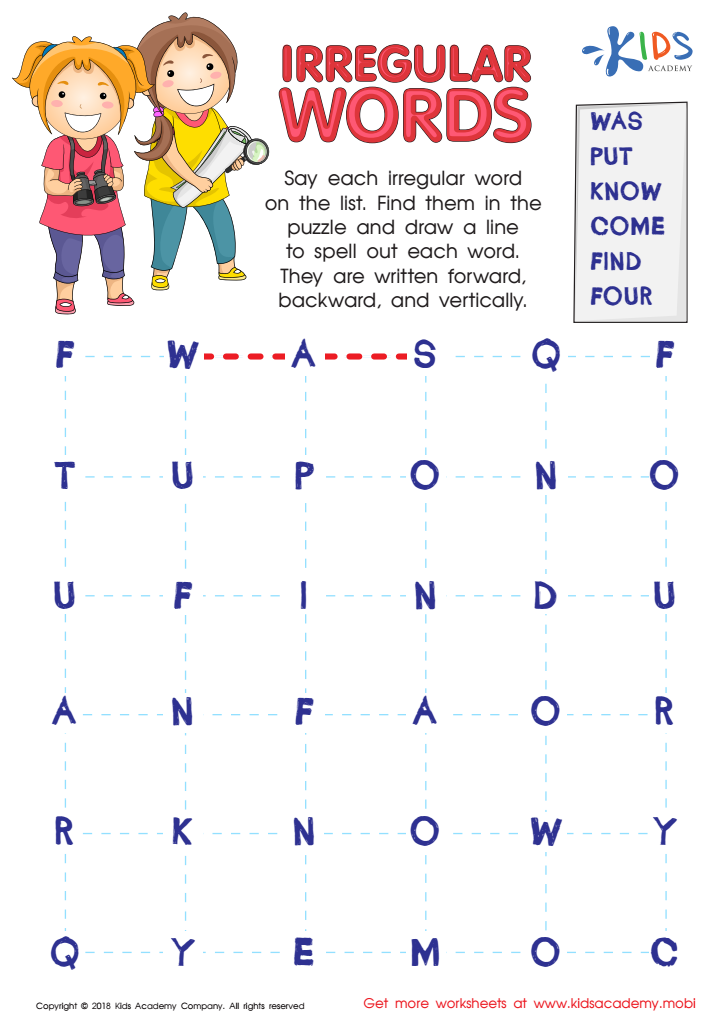
Irregular Words Worksheet







Spelling practice is crucial for children aged 7-8, as it serves as a foundational skill for effective communication. At this stage, children's cognitive abilities and language skills are rapidly developing, making it essential for parents and teachers to emphasize the importance of spelling. Mastering spelling not only enhances reading fluency but also builds confidence in writing. Children who can spell correctly are more likely to express their thoughts clearly and engage actively in classroom discussions.
Moreover, poor spelling can lead to misunderstandings and can hinder academic performance across subjects. For instance, in mathematics or science, the ability to spell terms correctly can make a significant difference in following instructions and completing assignments accurately.
Additionally, consistent spelling practice helps develop memory and cognitive skills. It engages children in phonics, enhancing their understanding of the connection between sounds and letters. This is essential for future literacy, as it lays the groundwork for reading comprehension and vocabulary expansion.
Ultimately, prioritizing spelling practice creates a positive feedback loop, where improved spelling leads to better writing and reading skills, reinforcing lifelong learning. Parents and teachers play a vital role in creating a supportive environment that encourages regular spelling activities, fostering a love for language in children.