Writing practice Normal Alphabet Coloring Pages Worksheets for Ages 7-9
3 filtered results
-
From - To
Enhance your child's writing skills with our engaging Alphabet Coloring Pages Worksheets tailored for ages 7-9. These fun, educational worksheets combine alphabet mastery with creative coloring to keep young minds interested and inspired. Perfect for at-home practice or classroom use, each page features diverse writing exercises to develop handwriting proficiency alongside fine motor skills. From tracing capital and lowercase letters to writing full sentences, our worksheets offer comprehensive practice for budding writers. Ideal for homework, additional practice, or skill reinforcement, these colorful pages make learning to write a delightful experience for children. Download now to start your child's writing adventure!
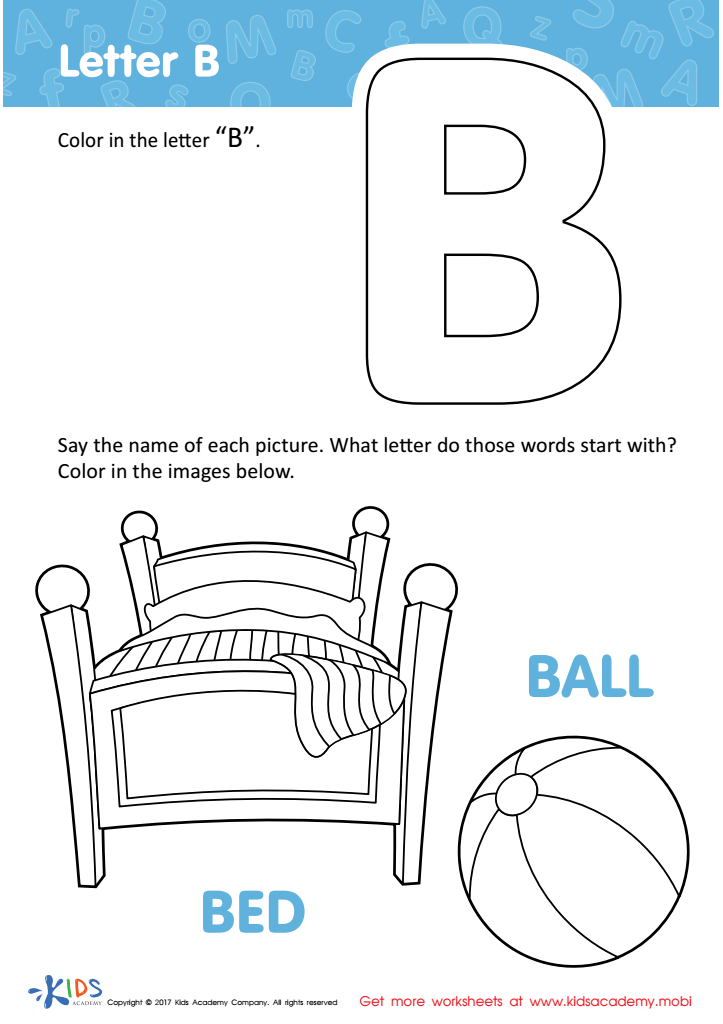
Letter B Coloring Sheet
 Assign to My Students
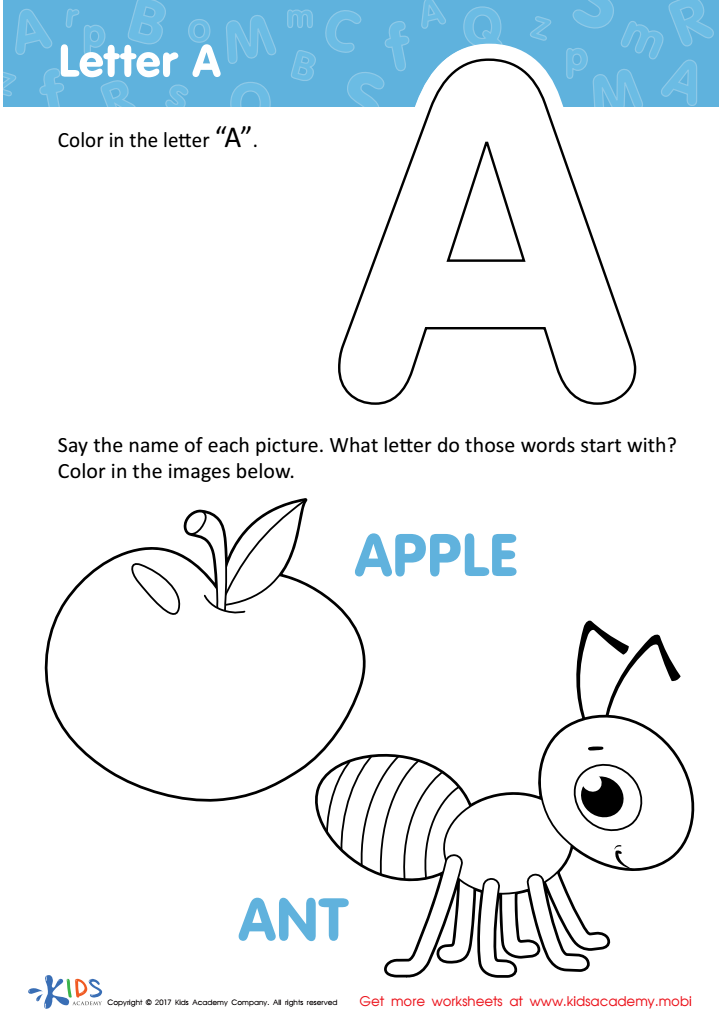
Letter A Coloring Sheet
Assign to My Students
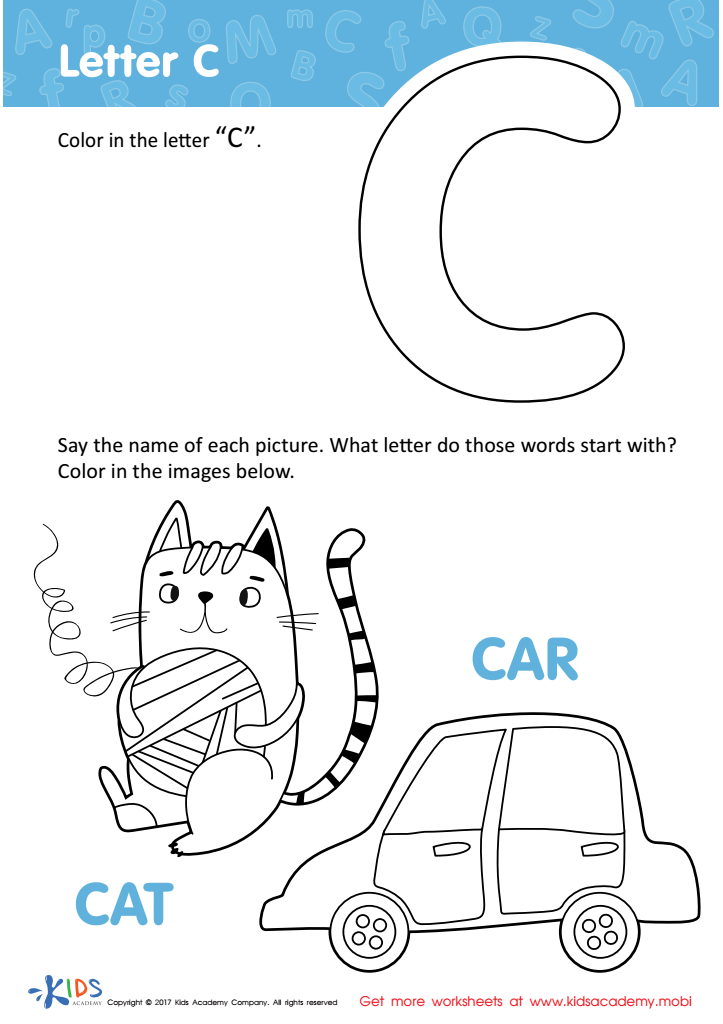
Letter C Coloring Sheet
Assign to My Students





Parents and teachers should care about using normal alphabet coloring pages for writing practice for children ages 7-9 because it provides a multi-sensory approach to learning that enhances literacy skills. Coloring pages that incorporate letters help reinforce the shapes and features of each letter in a fun and engaging way. By associating the creative task of coloring with letter recognition, children are more likely to stay interested and motivated to practice writing.
At this age, children are developing their fine motor skills, and the precise movements required for coloring within the lines can significantly improve their hand-eye coordination and dexterity. These are critical skills for writing neatly and legibly. Integrating writing practice with coloring can make writing less daunting and more enjoyable, thus encouraging regular practice.
Furthermore, coloring alphabet pages can also aid in letter recognition and memory. By continuously seeing and engaging with the letters in various forms, children can better remember the alphabet, which is crucial for both reading and writing development. It altogether supports phonemic awareness as children often discuss the sounds letters make while engaging with them. Combining visual, auditory, and kinesthetic learning experiences in this manner can help solidify foundational literacy concepts and prepare children for more advanced reading and writing tasks.







