Motor skills development Normal Letter Recognition Worksheets for Ages 7-9
3 filtered results
-
From - To
Enhance your child's motor skills and letter recognition with our engaging worksheets tailored for ages 7-9. Designed to promote both physical and cognitive development, these normal letter recognition worksheets encourage precise movements while familiarizing children with the alphabet. Each activity creatively combines writing practice and letter identification, ensuring a fun and effective learning experience. As children color, trace, and write, they strengthen their fine motor skills, setting the foundation for successful handwriting and overall academic achievement. Perfect for use at home or in the classroom, our worksheets make learning enjoyable and interactive. Foster your child's growth today with Kids Academy!
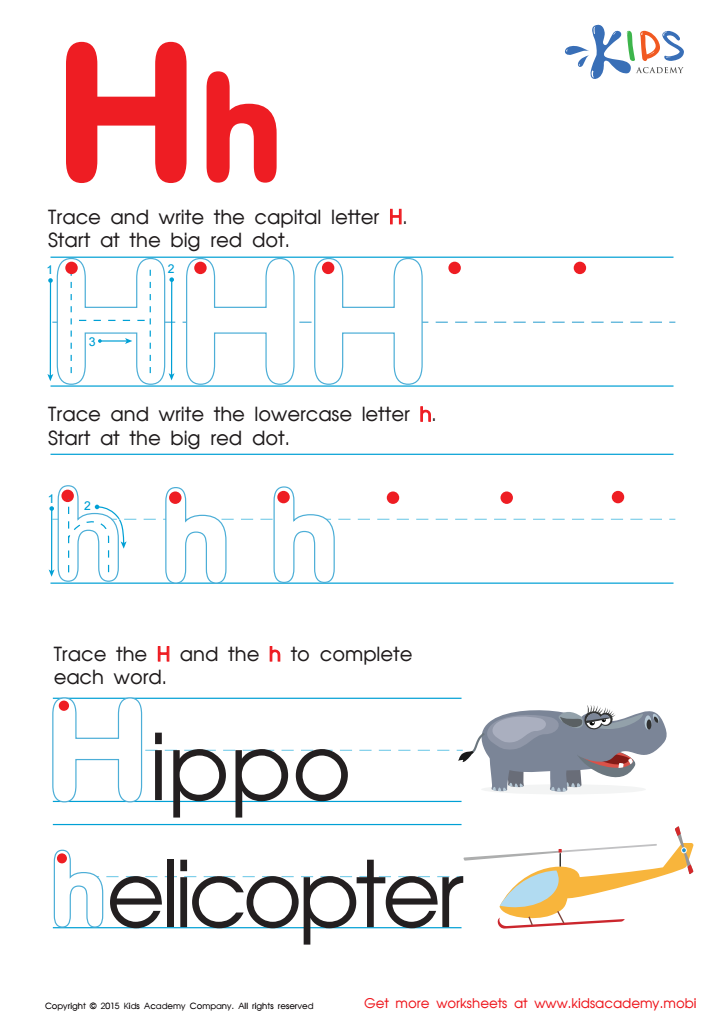
Letter H Tracing Page
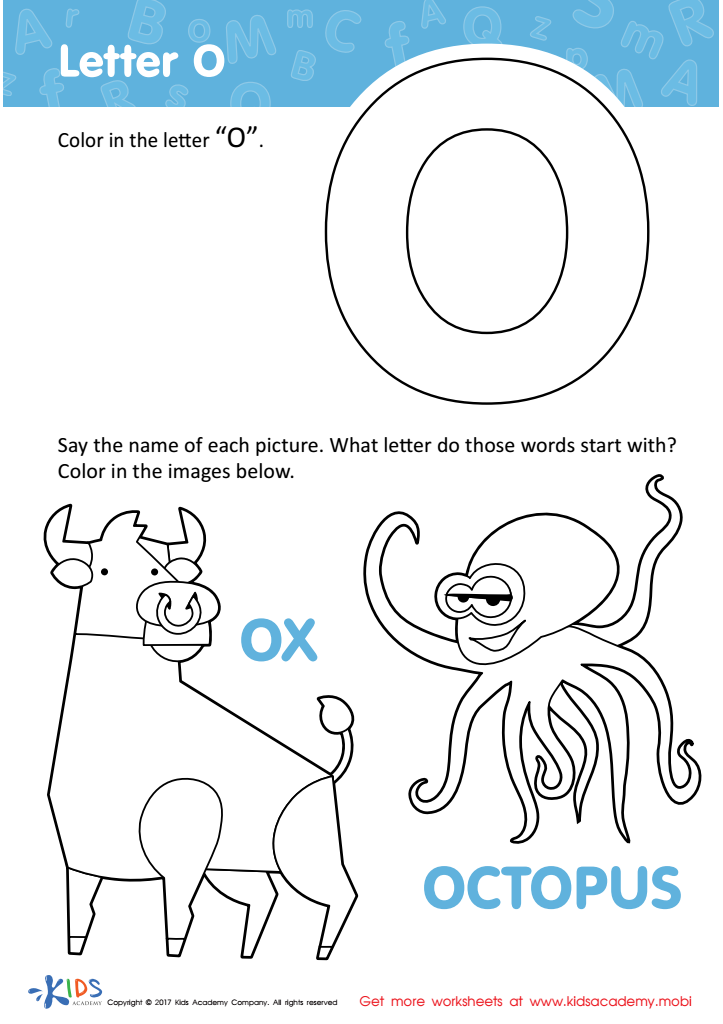
Letter O Coloring Sheet
 Assign to My Students
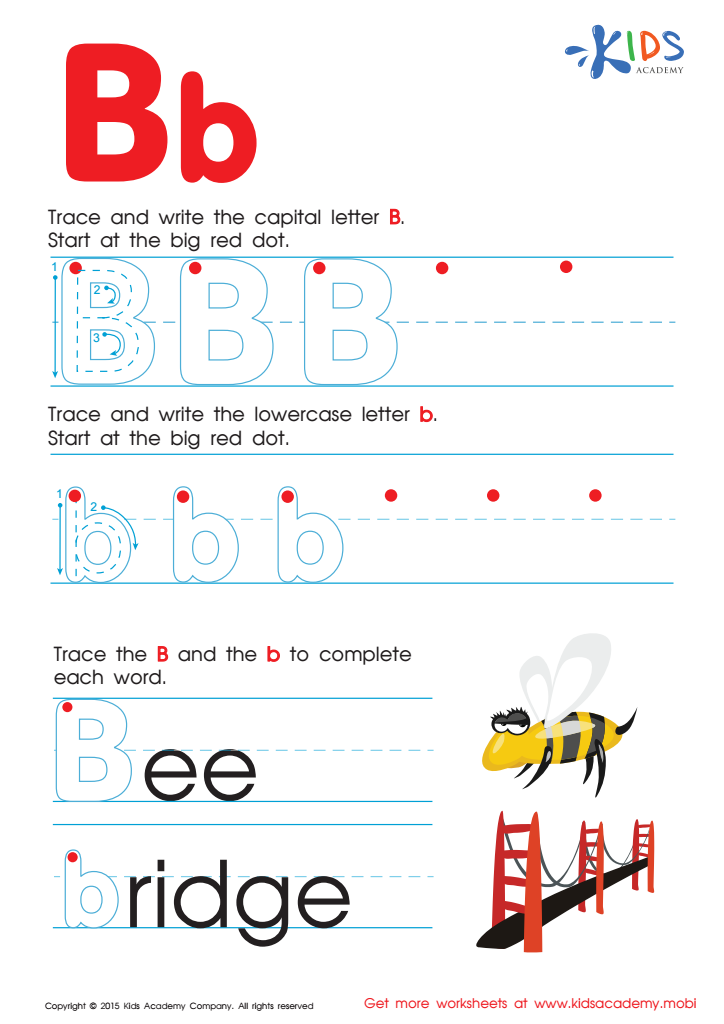
Letter B Tracing Page








Motor skills development, particularly in the realm of letter recognition for ages 7-9, is crucial for several reasons. This stage marks a significant transition in a child's literacy journey. Strong motor skills enable children to engage in activities that reinforce letter recognition, such as writing and drawing. As they develop fine motor skills through activities like cutting, coloring, and handwriting, they become more adept at recognizing and forming letters, which are foundational for reading and writing proficiency.
Parents and teachers should care about this phase because it directly affects a child's academic performance and self-esteem. Mastery of letter recognition contributes to reading fluency, which is critical for understanding complex texts encountered in later grades. Furthermore, children who struggle with motor skills may also face challenges in their overall learning experience, leading to frustration and a reluctance to participate in school activities.
By prioritizing motor skills development, parents and educators can create a more supportive learning environment. Encouraging engaging and fun activities that promote fine motor skills and letter recognition can foster a love for reading and writing, laying the groundwork for lifelong learning and academic success.








