Phonics recognition Normal Letter Sounds Worksheets for Ages 7-9
3 filtered results
-
From - To
Enhance your child’s reading skills with our Phonics Recognition Normal Letter Sounds Worksheets designed for ages 7-9. These worksheets, available at Kids Academy, combine fun and effective learning methods to teach the essential sounds of the alphabet. Through engaging activities, students improve their phonemic awareness, letter-sound correspondence, and overall reading proficiency. Ideal for young learners, our resources build a strong foundational knowledge that promotes reading confidence and comprehension. Download today and support your child's literacy journey with high-quality, expertly-crafted materials specifically tailored for phonics recognition and letter sounds mastery.
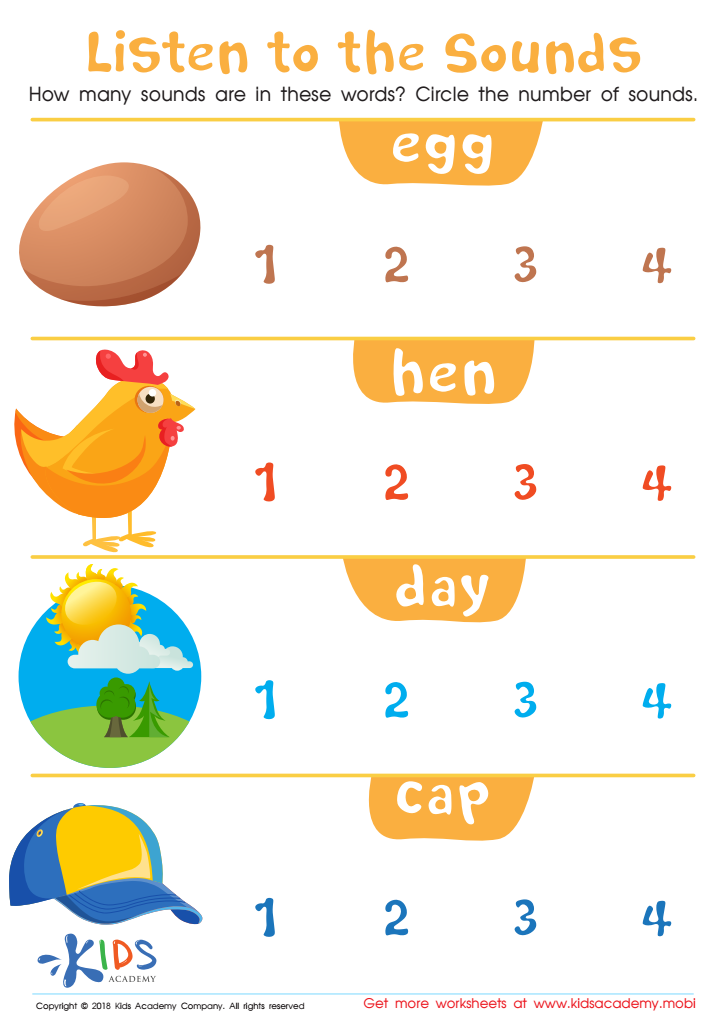
Listen to the Sounds Worksheet
 Assign to My Students
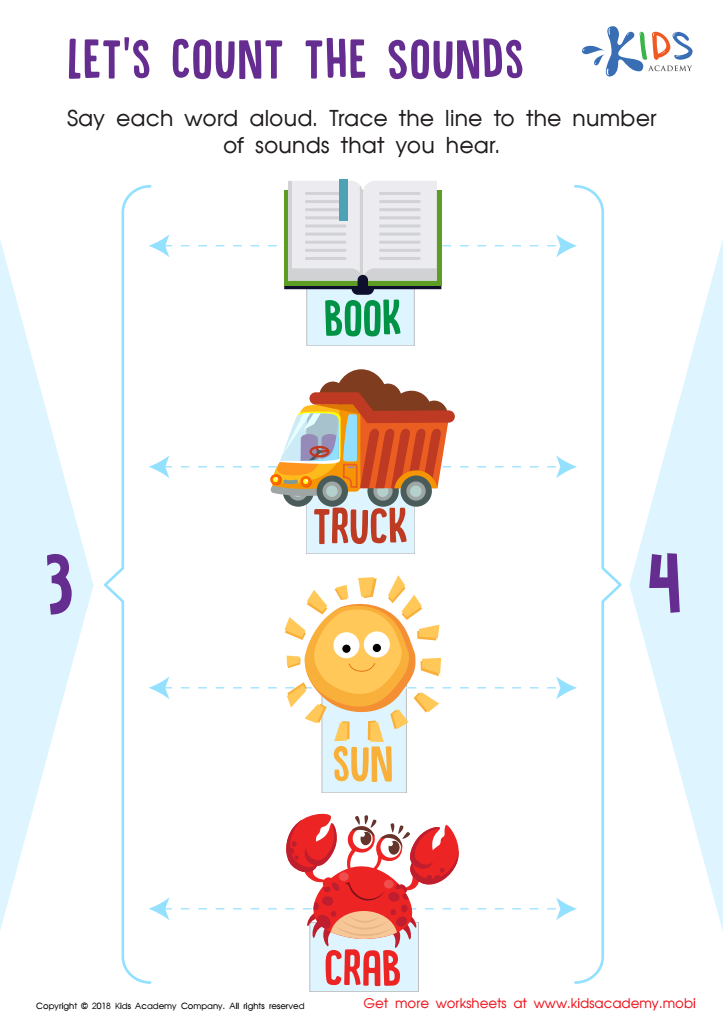
Let's Count the Sounds Worksheet
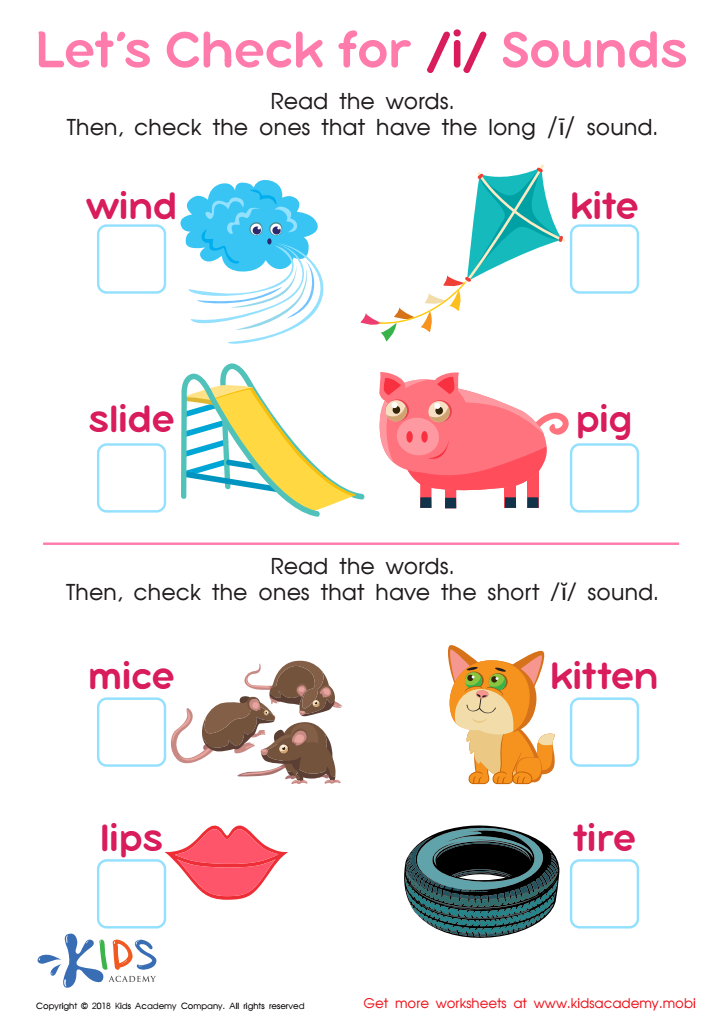
Let's Check for «i» Sounds Worksheet








Phonics recognition and decoding of normal letter sounds play a vital role in early childhood literacy, impacting both reading proficiency and overall academic success for children aged 7-9. At this developmental stage, children transition from learning to read to reading to learn, making phonics skills foundational for their education.
First, mastering phonics enables children to efficiently decode words, facilitating smoother, more confident reading experiences. When children recognize standard letter sounds and patterns, they can tackle unfamiliar words with greater ease, enhancing comprehension and fostering a love for reading.
Second, proficient phonics skills support writing and spelling. Understanding the relationship between letters and sounds helps children spell words correctly, express themselves more clearly, and enrich their vocabulary. Strong literacy skills are linked to academic achievement across subjects, not just language arts.
Lastly, phonics knowledge builds self-esteem and independence. Children who struggle with basic reading skills may feel frustrated or incompetent. By mastering phonics, they gain confidence, increase participation in class activities, and exhibit a positive attitude toward learning.
In essence, prioritizing phonics for ages 7-9 lays a crucial foundation for literacy, boosts academic performance, and nurtures positive attitudes toward continual learning and curiosity, essential traits for lifelong success.






