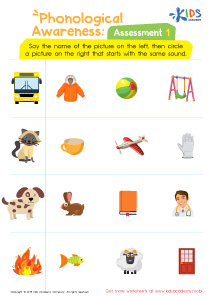
Reading comprehension Normal Rhyming Worksheets for Ages 7-9
6 filtered results
-
From - To
Enhance your child’s literacy skills with our Reading Comprehension Normal Rhyming Worksheets designed specifically for children ages 7-9. These engaging worksheets combine fun rhyming exercises with comprehension questions, helping young learners improve their reading and critical thinking abilities. Using familiar rhythmic patterns, children easily grasp new vocabulary, aiding memory retention and literacy development. Suitable for classroom use or at-home practice, our worksheets provide varied activities to suit all learning styles. Build your child’s confidence and proficiency in reading with Kids Academy’s expertly designed educational resources. Explore our wide range of printable rhyming worksheets today!
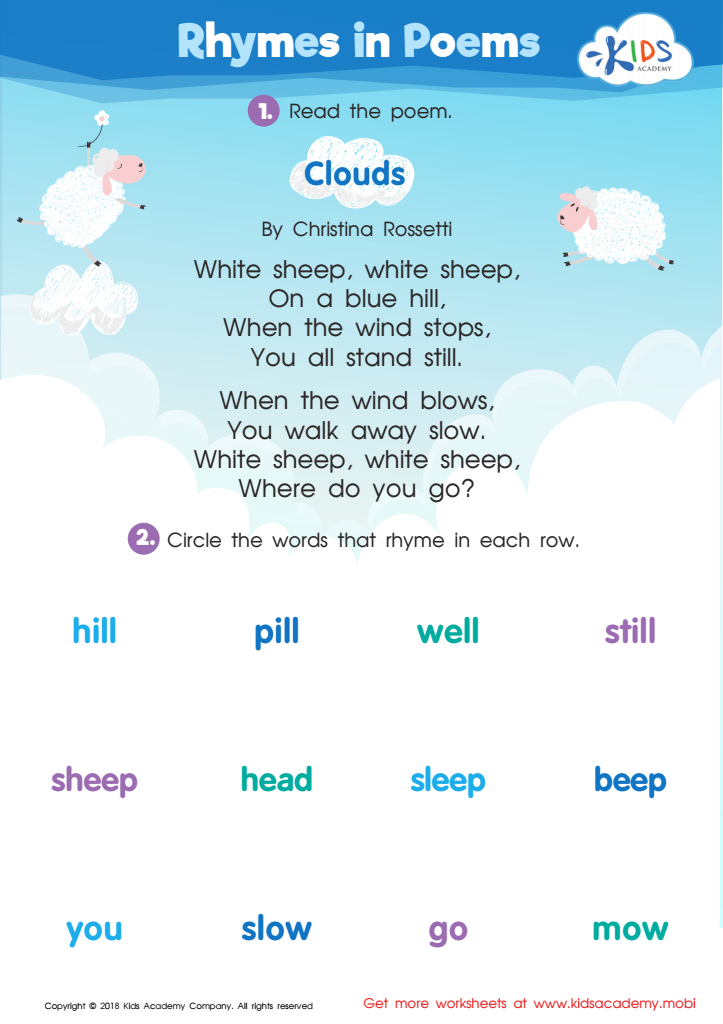
Rhymes in Poems Worksheet
 Assign to My Students
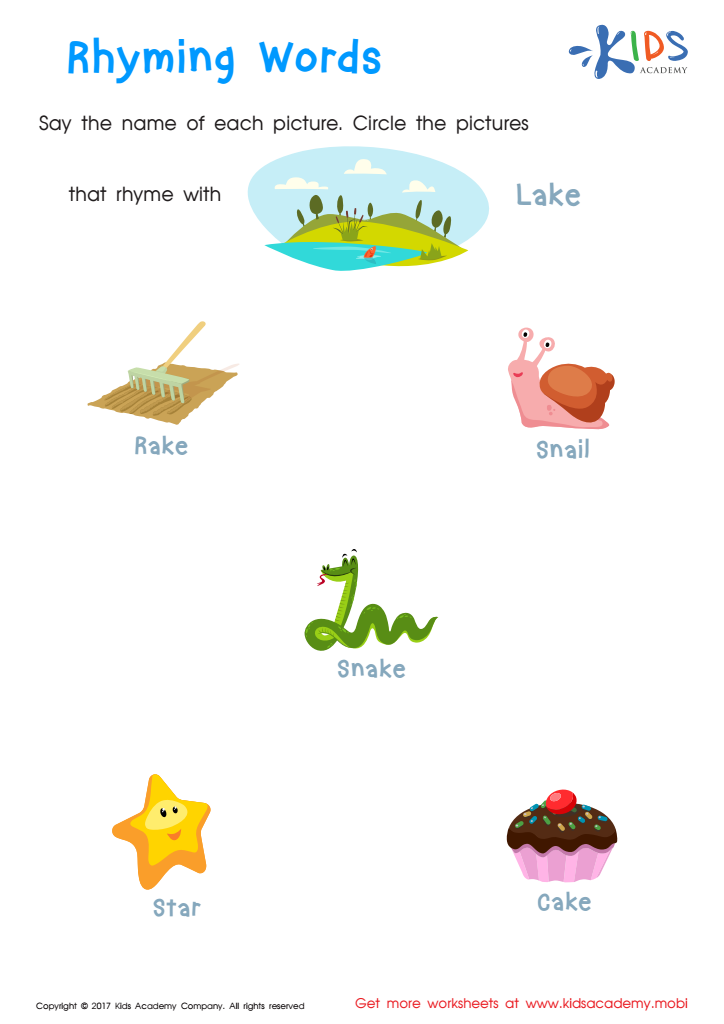
Rhyming Words Rhyming Worksheet
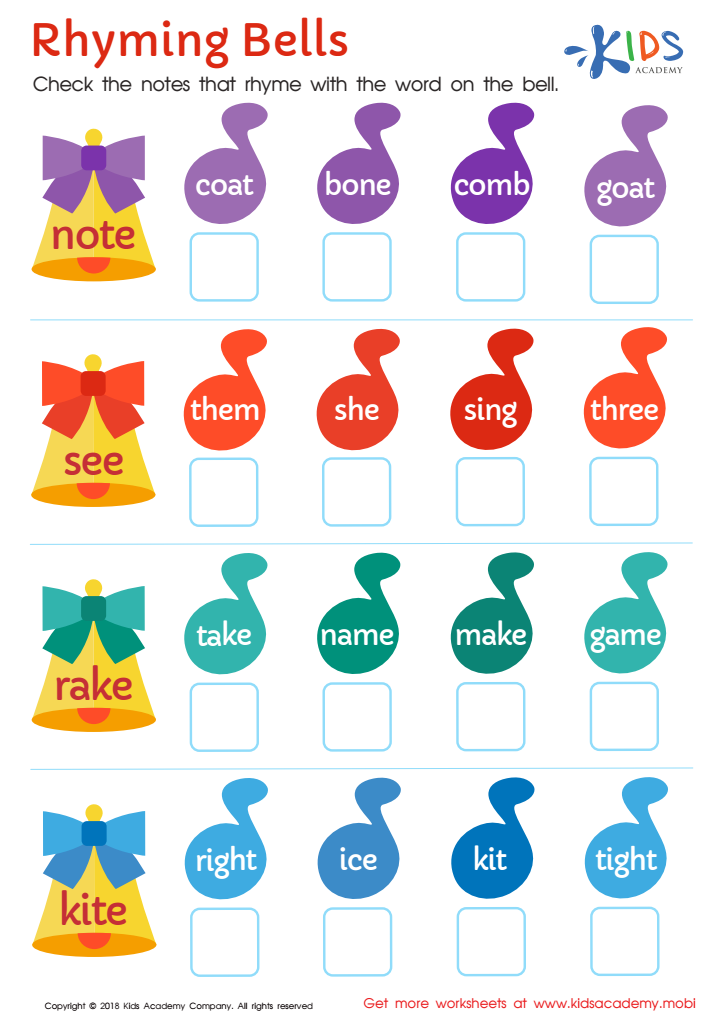
Rhyming Bells Worksheet
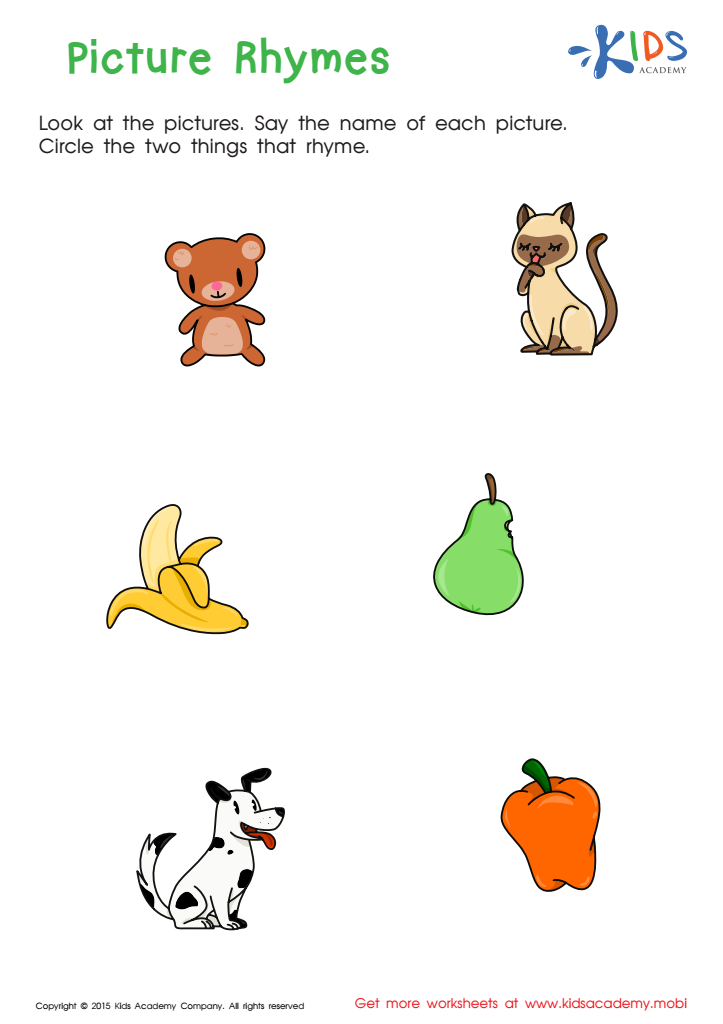
First Words: Picture Rhymes Worksheet
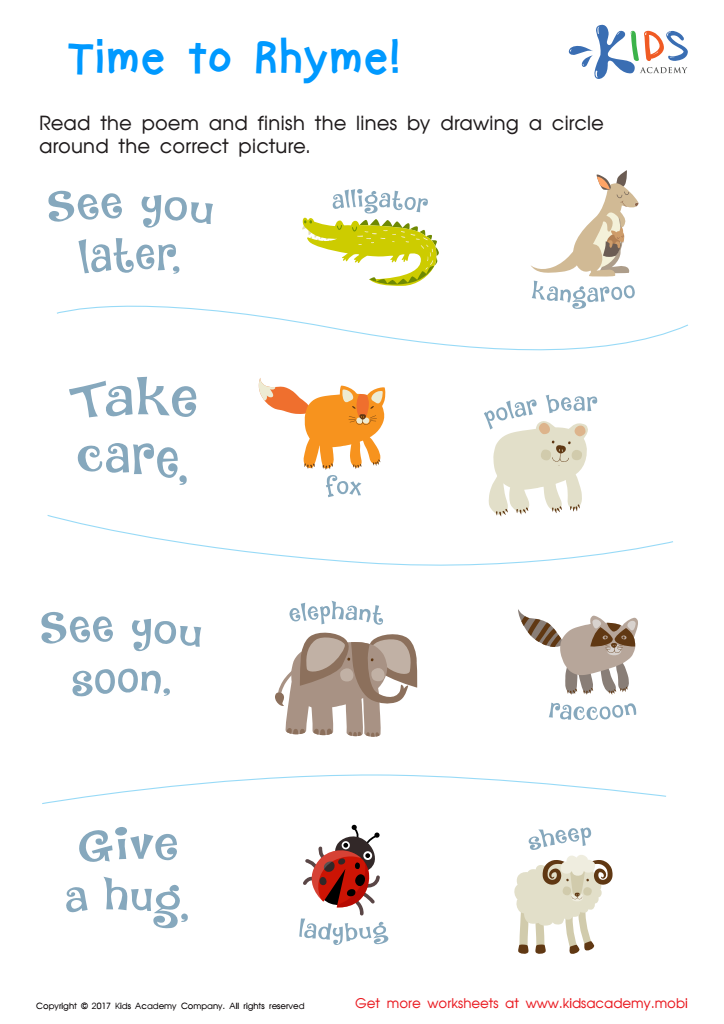
Time to Rhyme Rhyming Worksheet
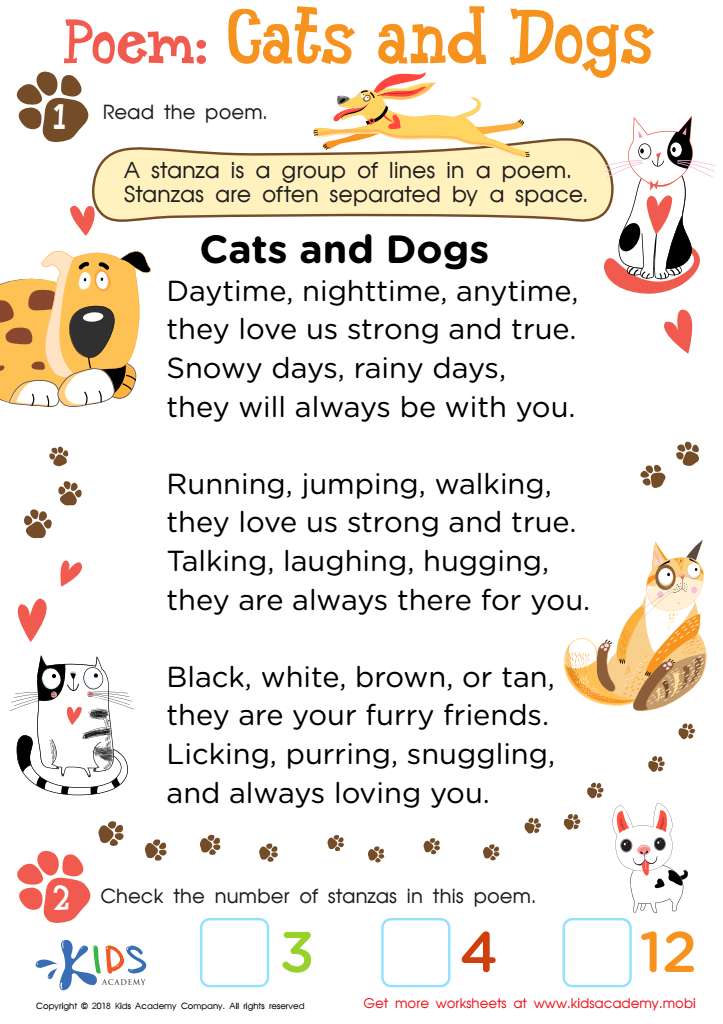
Poem: Cats and Dogs Worksheet








Reading comprehension is crucial for children ages 7-9 as it lays the foundation for their academic success and lifelong learning. At this stage, children transition from learning to read to reading to learn. Proficiency in reading comprehension ensures that they can absorb and interpret the information presented to them across all subjects. Moreover, normal rhyming helps kids recognize patterns in language, enhancing their phonemic awareness, which is pivotal for decoding new words and improving fluency.
Caring about reading comprehension and rhyming also fosters creativity and imagination. Rhyming stories and poems engage young minds, making reading appealing and enjoyable. This engagement is essential in cultivating a love for reading, which directly impacts a child’s motivation to read more and explore new texts.
Furthermore, strong reading skills support overall cognitive development. They enhance memory, attention, thought processes, and even critical thinking and problem-solving capabilities. Teachers and parents who emphasize these skills contribute to a child’s ability to understand and process information effectively, leading to better academic performance.
Lastly, reading comprehension builds self-confidence. As children become more capable readers, they are more likely to participate actively in class discussions, complete assignments with ease, and approach learning challenges with grit and resilience. Thus, investing in reading comprehension and rhyming for young children offers significant long-term benefits.