Reading skills development Normal Building Vocabulary Worksheets for Ages 7-9
3 filtered results
-
From - To
Enhance your child’s reading skills with our engaging Building Vocabulary Worksheets, crafted specifically for ages 7-9. Designed to develop essential vocabulary and comprehension skills, these worksheets provide a fun and interactive way for kids to learn new words and their meanings. By exploring a variety of activities, including matching words to definitions and filling in missing letters, your child will build a solid foundation for effective reading. Each worksheet is aligned with age-appropriate learning objectives, ensuring that your little ones grasp crucial concepts while enjoying the process. Help them become confident readers today with our comprehensive vocabulary resources!
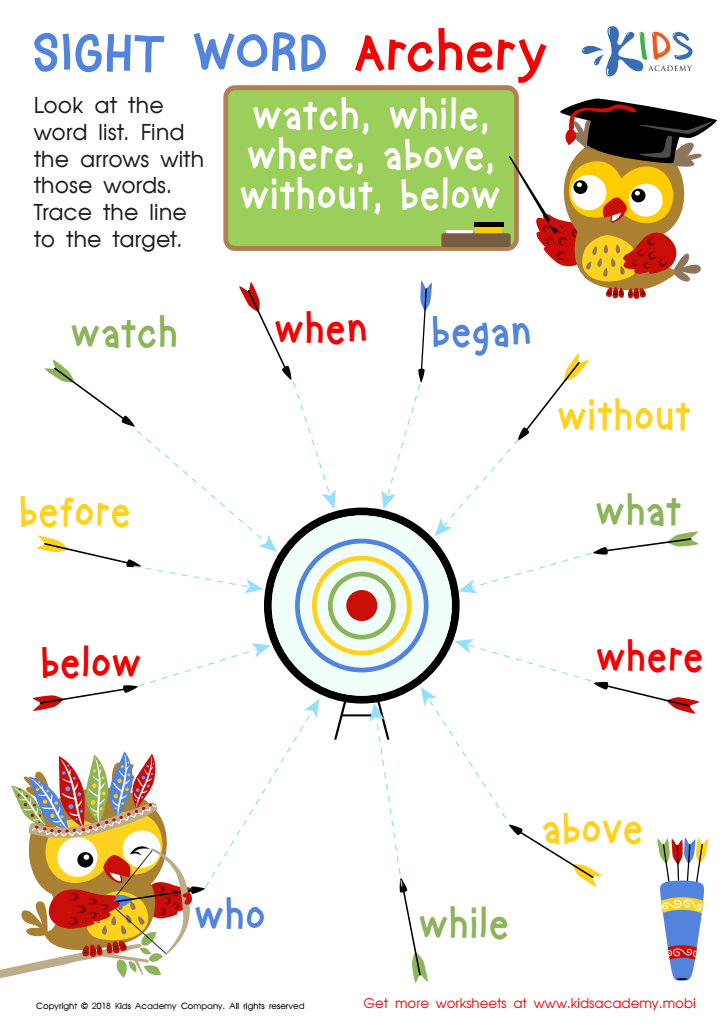
Sight Word Archery Worksheet
 Assign to My Students











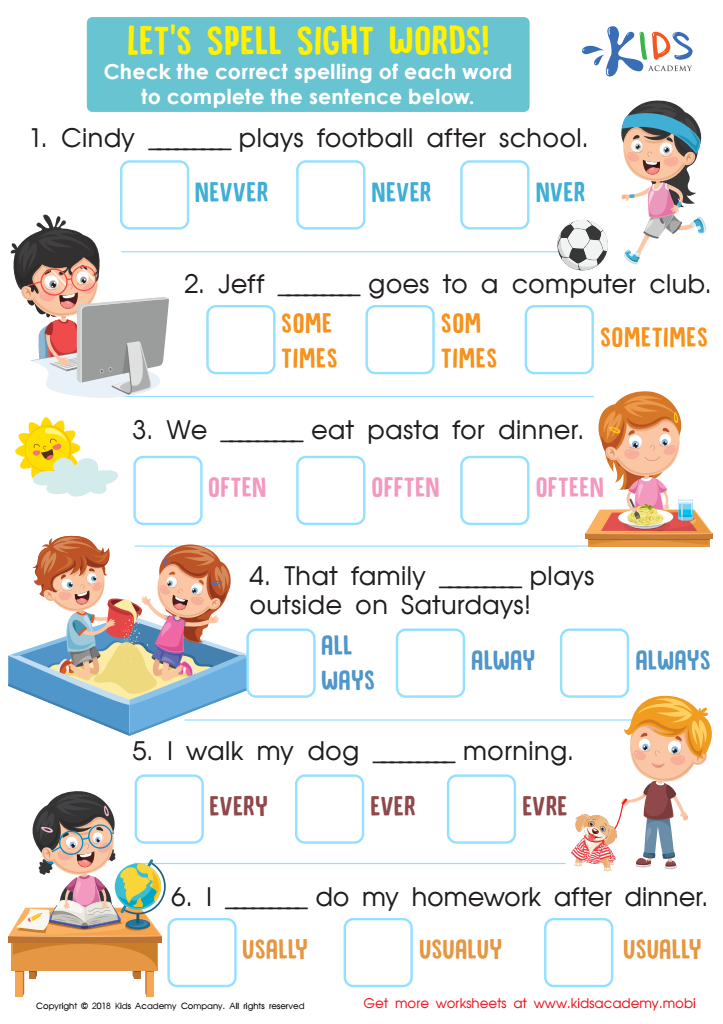
Let's Spell Sight Words Worksheet
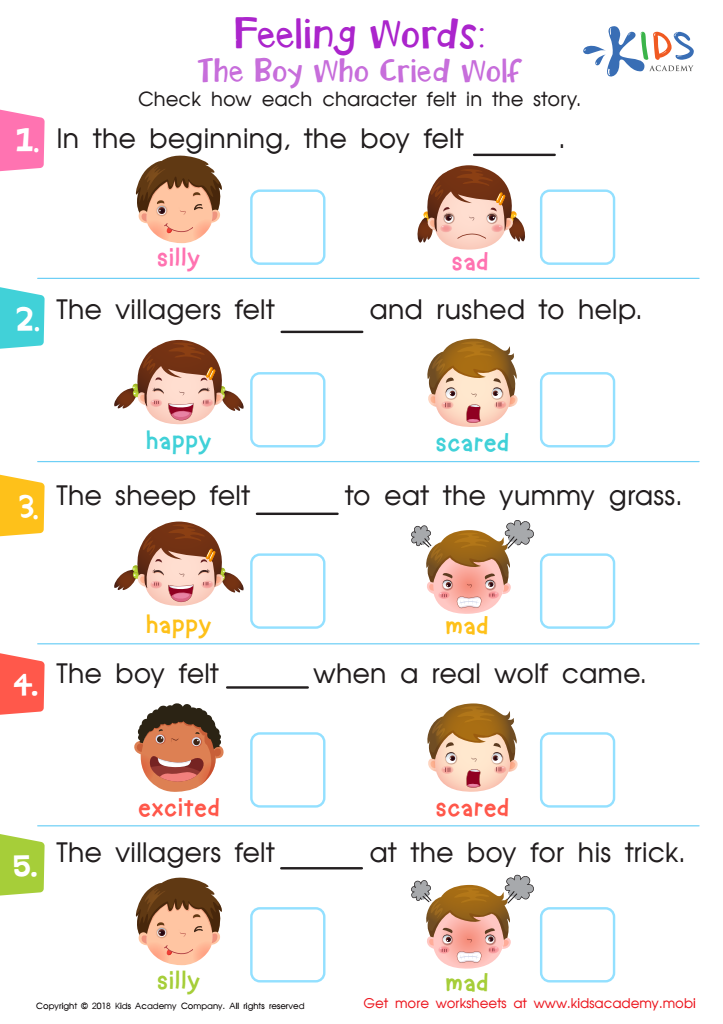
Feeling Words: The Boy Who Cried Wolf Worksheet








Reading skills development and vocabulary building are crucial for children aged 7-9 for several reasons. First, this is a pivotal age when children transition from learning to read to reading to learn. A strong foundation in reading enables them to access a wider range of knowledge, which is essential for academic success.
The ability to understand and use a diverse vocabulary enhances their comprehension and expression. It allows them to articulate their thoughts clearly and engage more meaningfully in conversations. As they encounter new words, they cultivate cognitive skills like critical thinking and problem-solving, which are foundational for later learning.
Moreover, reading improves children's confidence and enthusiasm for learning. As they become more proficient readers, they are more likely to explore various genres and subjects, fostering a lifelong love for reading. Parents and teachers play a key role in supporting this development by providing access to read-aloud sessions, engaging reading materials, and encouraging discussions about books.
In summary, prioritizing reading and vocabulary skills for children aged 7-9 not only enhances their literacy but also nurtures overall cognitive and emotional growth, helping them become well-rounded learners. Investing in these skills now lays the groundwork for future academic and personal success.








