Critical thinking development Normal Reading Worksheets for Ages 7-9
3 filtered results
-
From - To
Boost your child's reading skills and foster critical thinking with our engaging worksheets designed specifically for ages 7-9. These Normal Reading Worksheets help young learners analyze stories, identify main ideas, and draw conclusions. Each worksheet encourages comprehension development while promoting curiosity and thoughtful questioning. With a variety of entertaining exercises, children will enhance their abilities to think critically about texts and develop a deeper understanding of reading materials. Perfect for home or classroom use, these worksheets ensure that kids not only improve their literacy skills but also cultivate an important lifelong habit of critical thinking! Explore our collection today!
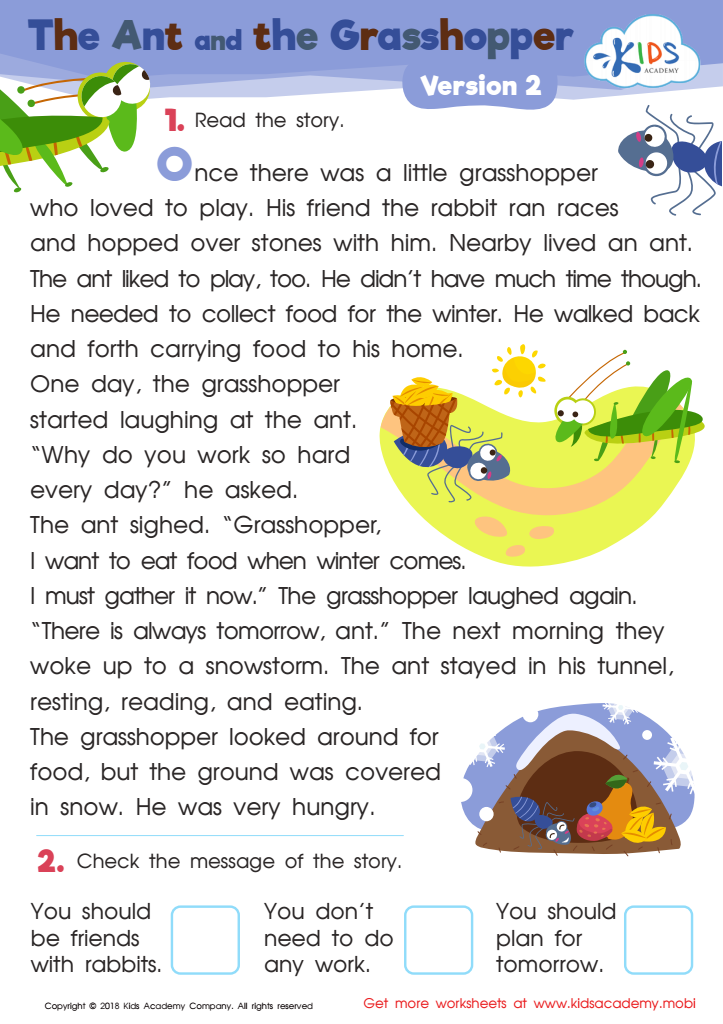
The Ant and The Grasshopper Version 2 Worksheet
 Assign to My Students
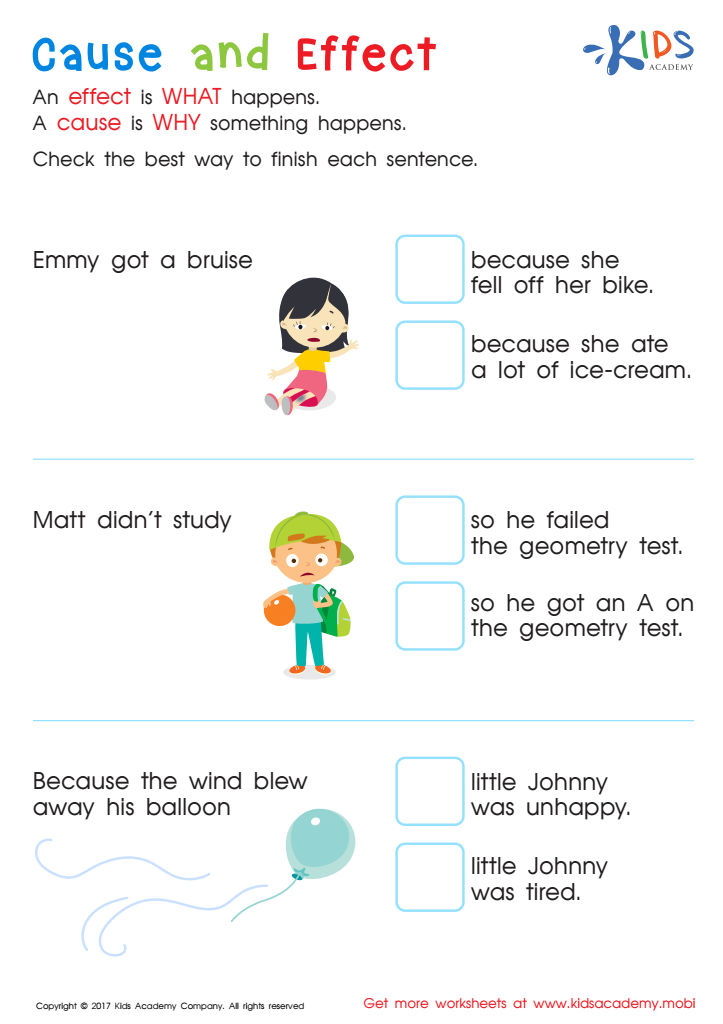
Cause and Effect Worksheet
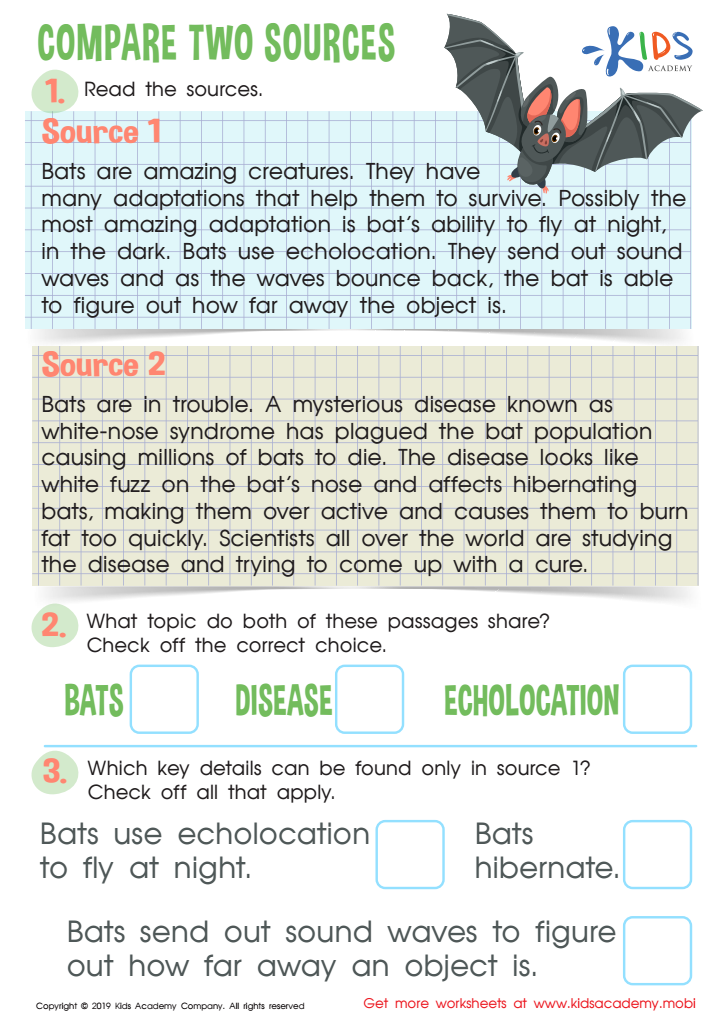
Compare Two Sources Worksheet



.jpg)



Critical thinking is essential for children aged 7-9 as they navigate both academic challenges and social interactions. At this age, children are developing the cognitive skills necessary to analyze information, solve problems, and understand complex concepts. Parents and teachers should prioritize critical thinking development because it lays the groundwork for future learning and decision-making skills.
When children are encouraged to think critically, they expand their ability to ask questions, evaluate different viewpoints, and engage in meaningful discussions. This empowers them to not only grasp academic content but also to process emotions and conflicts in their everyday lives. For instance, during reading activities, a child who employs critical thinking can infer motives behind characters' actions, predict outcomes, and assess moral dilemmas, fostering deeper comprehension and empathy.
Moreover, cultivating critical thinking at this stage helps counteract rote memorization and passive learning approaches, promoting creativity and independence. By nurturing these skills, parents and teachers equip children to tackle increasingly complex problems in the future, both in their studies and in real-world situations. Overall, supporting critical thinking development enriches a child's educational experience and prepares them for lifelong learning.








