Analytical thinking Normal Reading Comprehension Worksheets for Ages 7-9
6 filtered results
-
From - To
Enhance your child's reading and analytical skills with our age-appropriate reading comprehension worksheets designed for ages 7-9! These engaging activities promote critical thinking and enable young learners to analyze, synthesize, and interpret texts effectively. Each worksheet features captivating stories and questions that challenge children to think deeply about characters, settings, and plot developments. Perfect for homeschooling or classroom use, our resources encourage independent learning and strengthen comprehension abilities. Foster a love for reading while developing essential analytical skills—explore our collection and empower your child to excel academically through fun, interactive learning experiences! Start their educational journey today with Kids Academy's thoughtfully designed worksheets.
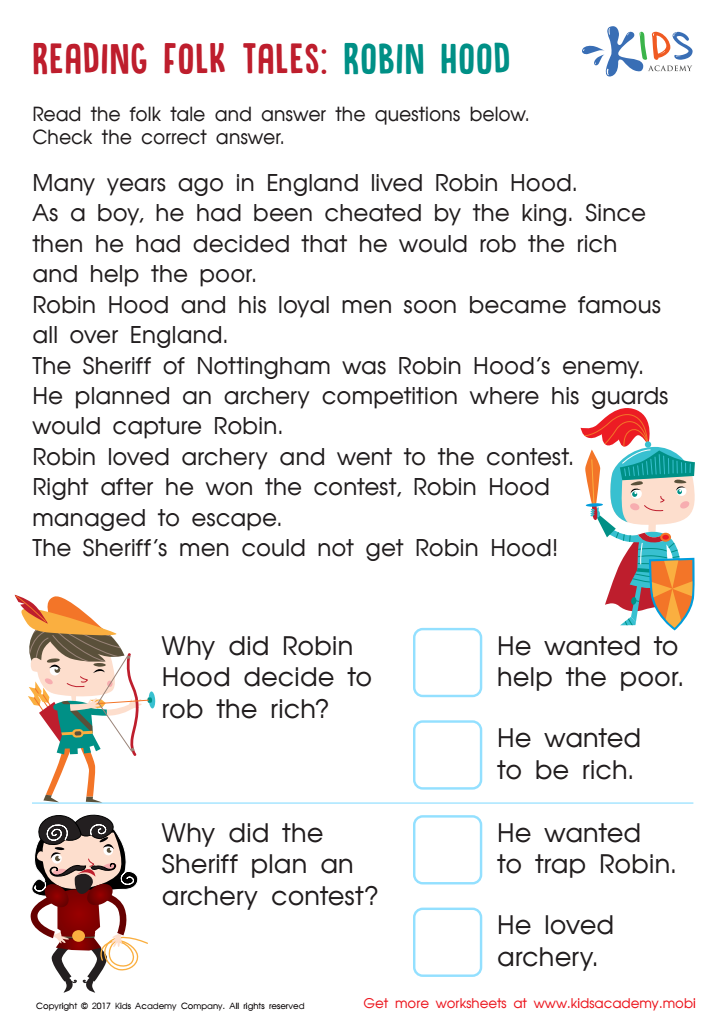
Robin Hood Folktale Worksheet
 Assign to My Students
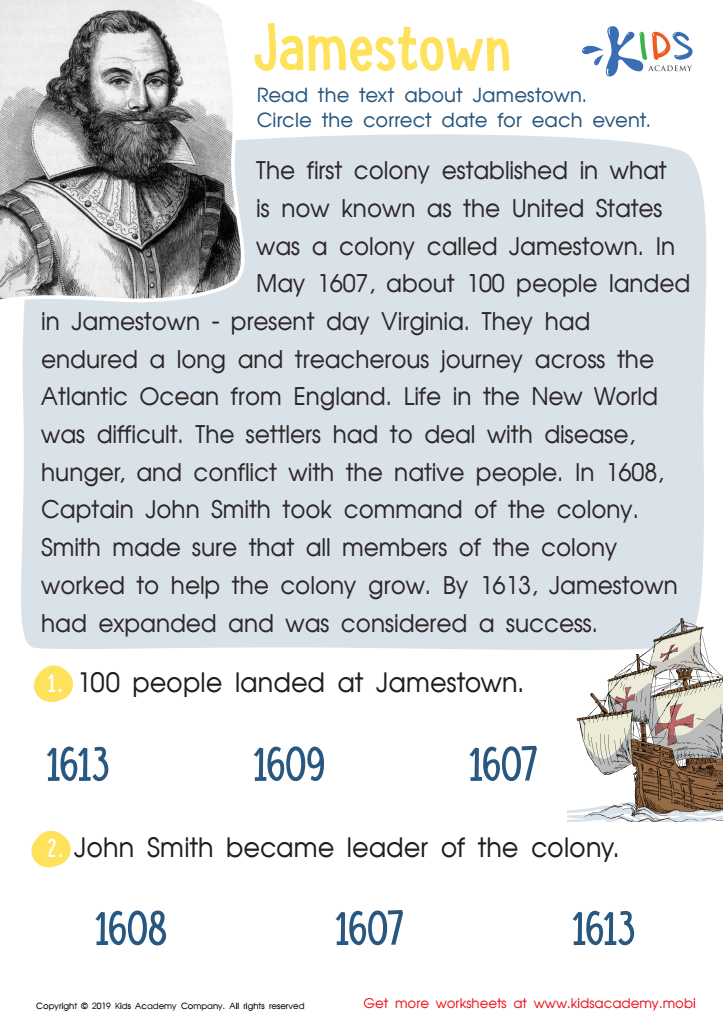
Jamestown Worksheet
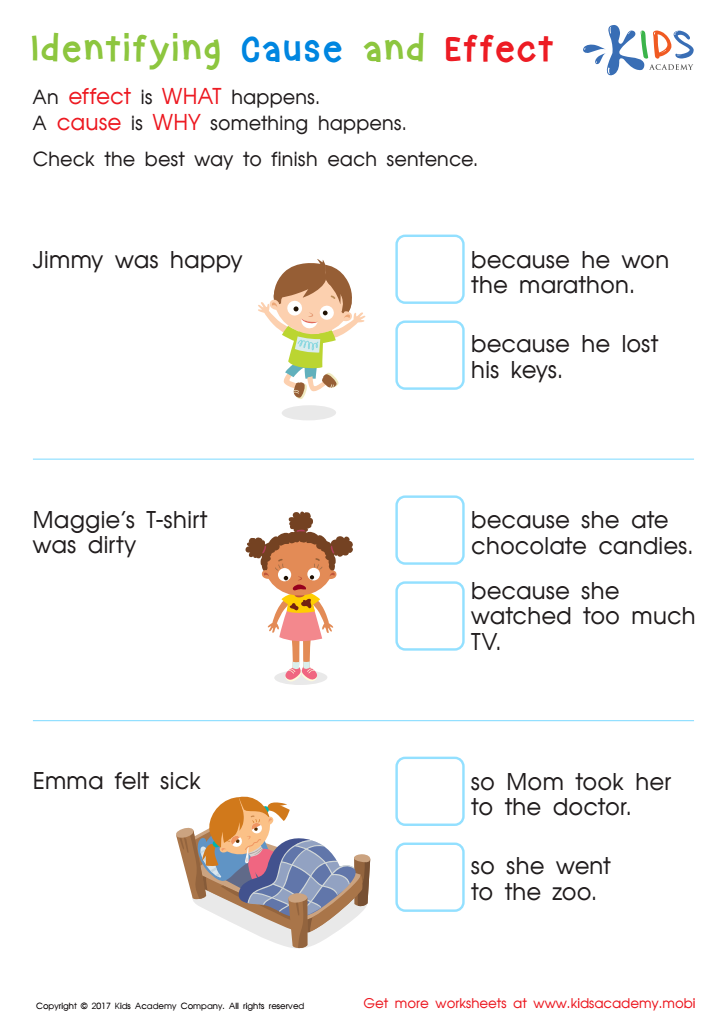
Indentifying Cause and Effect Worksheet
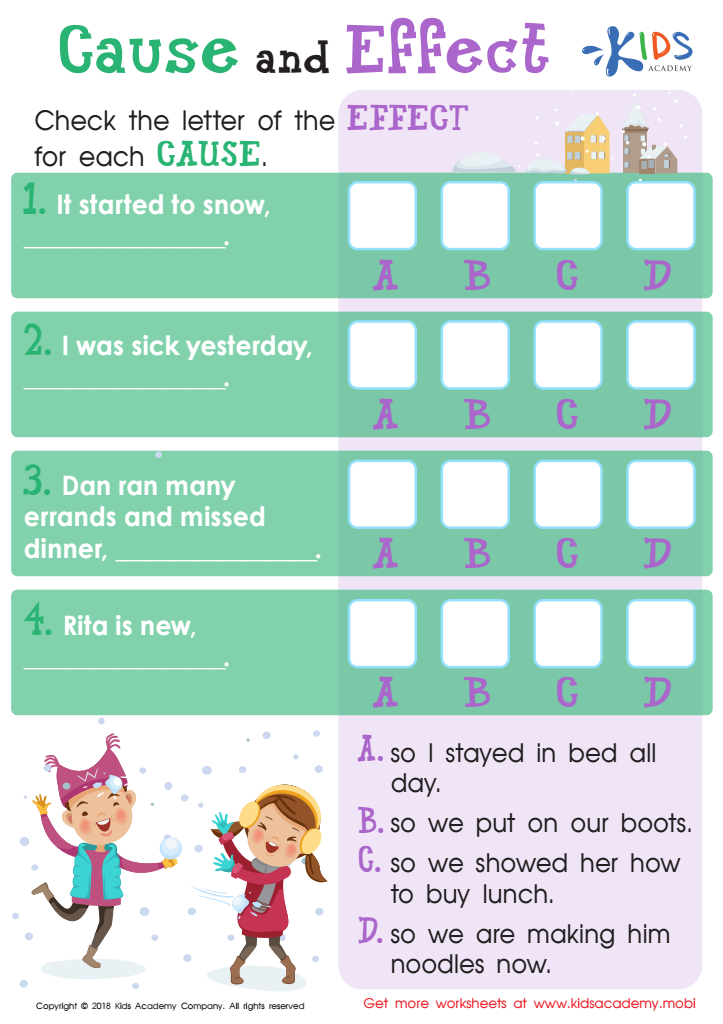
Cause and Effect Worksheet
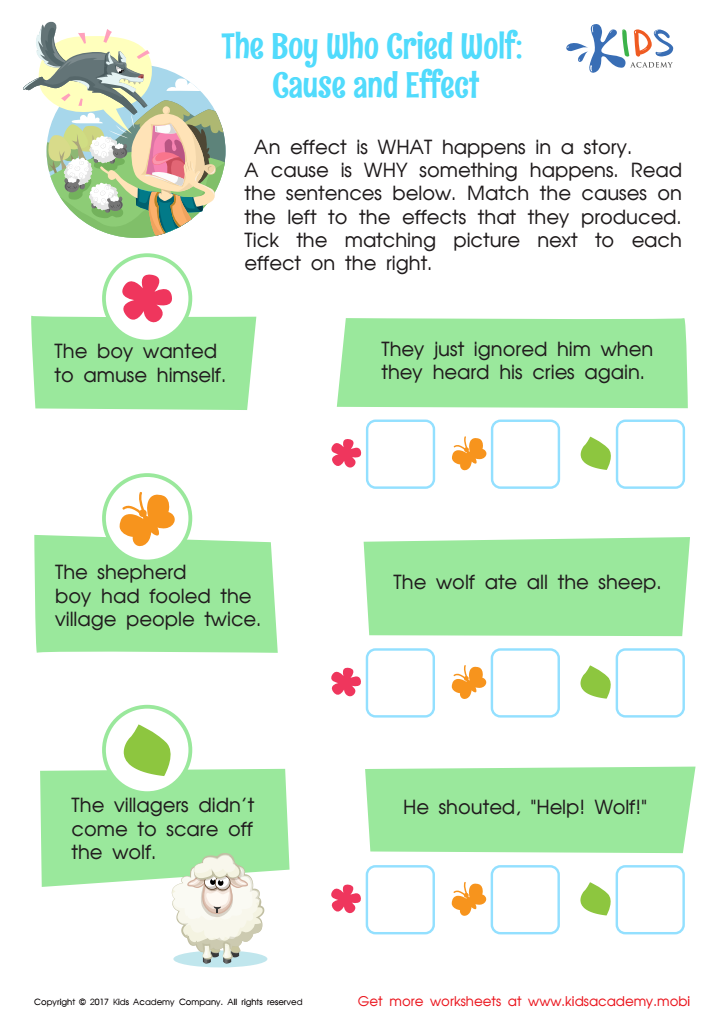
The Boy Who Cried Wolf: Cause and Effect Worksheet
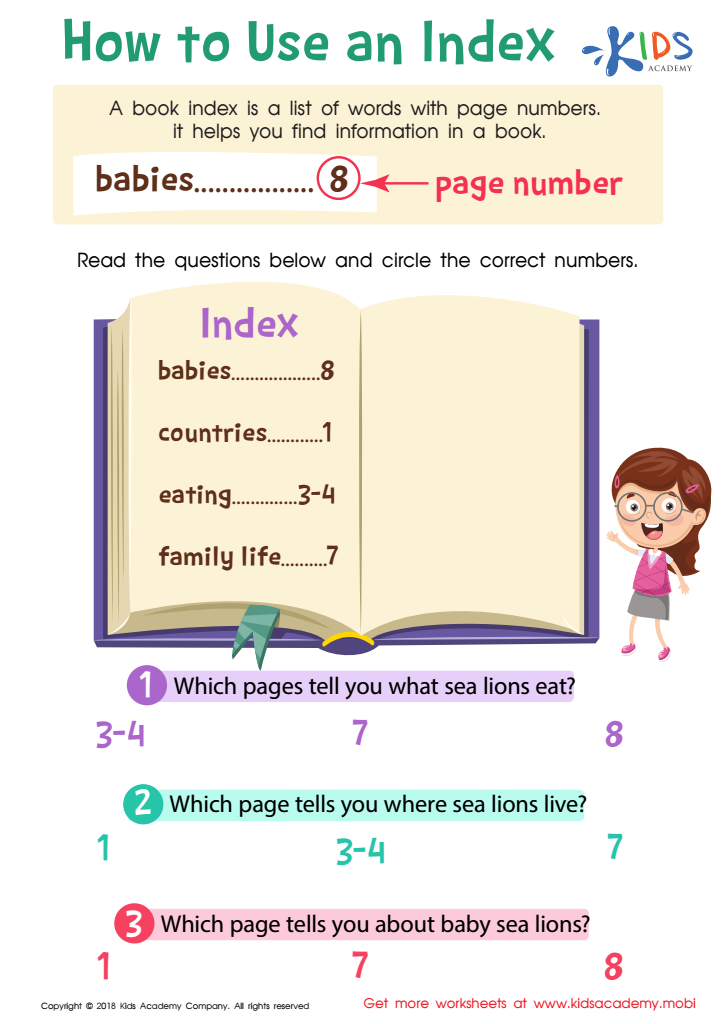
How Use Index Worksheet








Analytical thinking and reading comprehension are crucial skills for children aged 7-9, and parents or teachers should prioritize them for several reasons. At this developmental stage, children's brains are highly receptive to learning complex concepts and processes. Enhancing analytical thinking encourages them to evaluate information critically, solve problems systematically, and make informed decisions. This foundational skill set fosters creativity and independence, equipping kids to navigate challenges both in academics and life.
Moreover, reading comprehension is vital for academic success. Strong comprehension skills enable children to understand, interpret, and critically analyze texts, which is essential across subjects like math, science, and social studies. When children grasp what they read, they can connect ideas, make predictions, and draw conclusions, ultimately enriching their overall learning experience.
Moreover, these skills impact self-esteem and motivation—the more adept children become at thinking analytically and understanding what they read, the more confident they will feel in their abilities. This contributes to a lifelong love for learning and prepares them for future academic endeavors. Thus, fostering these skills early can create a strong foundation for their educational journey and personal growth.








