
Critical thinking skills Normal Science Worksheets for Ages 7-9
7 filtered results
Difficulty Level
Grade
Age
-
From - To
Subject
Activity
Standards
Enhance your child's critical thinking abilities with our engaging Normal Science Worksheets designed specifically for ages 7-9. These worksheets incorporate fun, interactive exercises that challenge young learners to think analytically and creatively about scientific concepts. Each activity encourages students to explore, hypothesize, and draw conclusions, fostering a deeper understanding of the world around them. Ideal for classroom use or at-home learning, our worksheets combine essential science education with skill-building activities that promote curiosity and problem-solving. Start cultivating your child's critical thinking skills today and watch their confidence and academic performance soar! Perfect for homeschooling families and traditional classroom settings.
Favorites
With answer key
Interactive
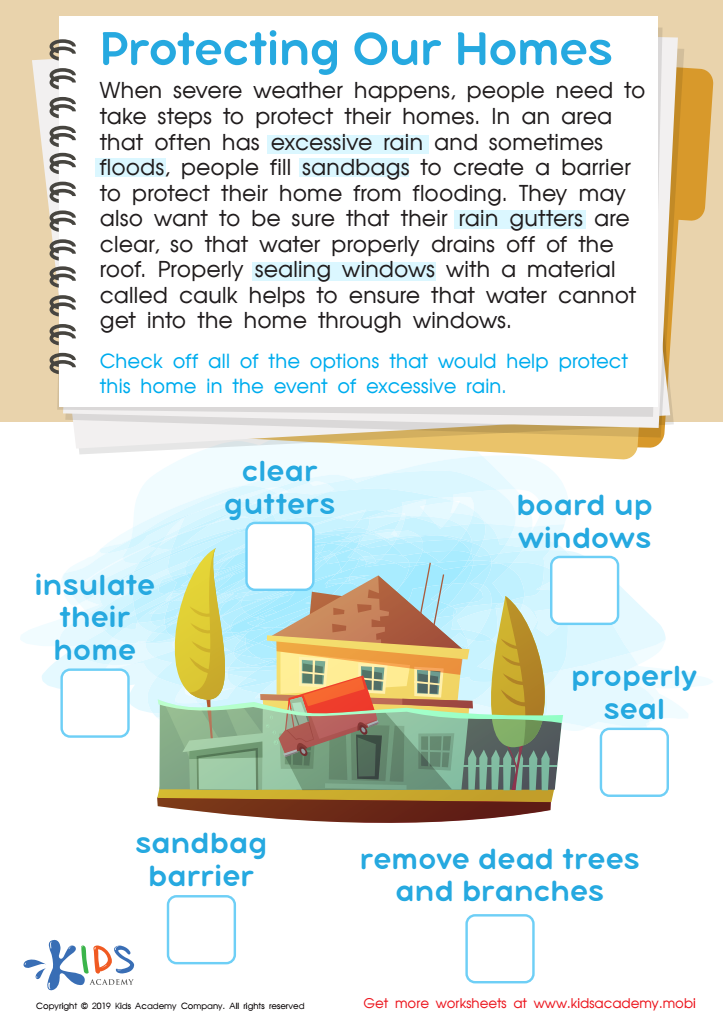
Protecting Our Homes Worksheet
Teach kids about severe weather with this free worksheet. It helps them learn how to protect their home from excessive rain, as well as what not to do. Check the given actions to make the damage from weather events less devastating.
 Assign to My Students
Protecting Our Homes Worksheet
Worksheet
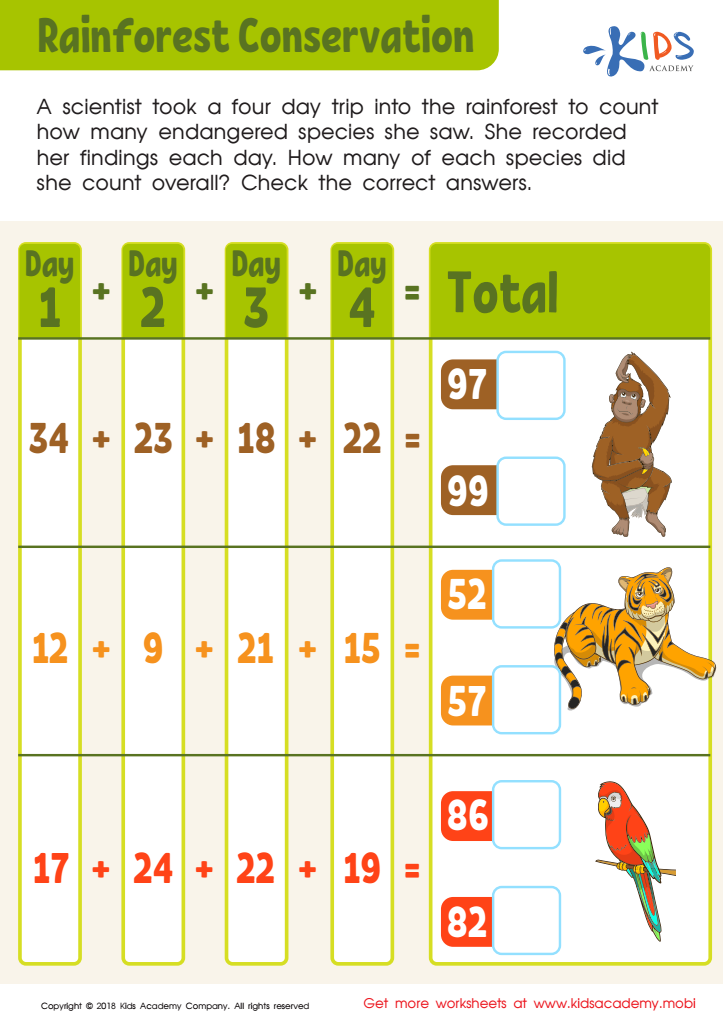
Rainforest Conservation Worksheet
Explain to your child what a rainforest is and why it's important. A scientist took a four-day trip to count endangered species. Let your child count how many of each species were seen in total. Check the answers and help them understand.
Rainforest Conservation Worksheet
Worksheet
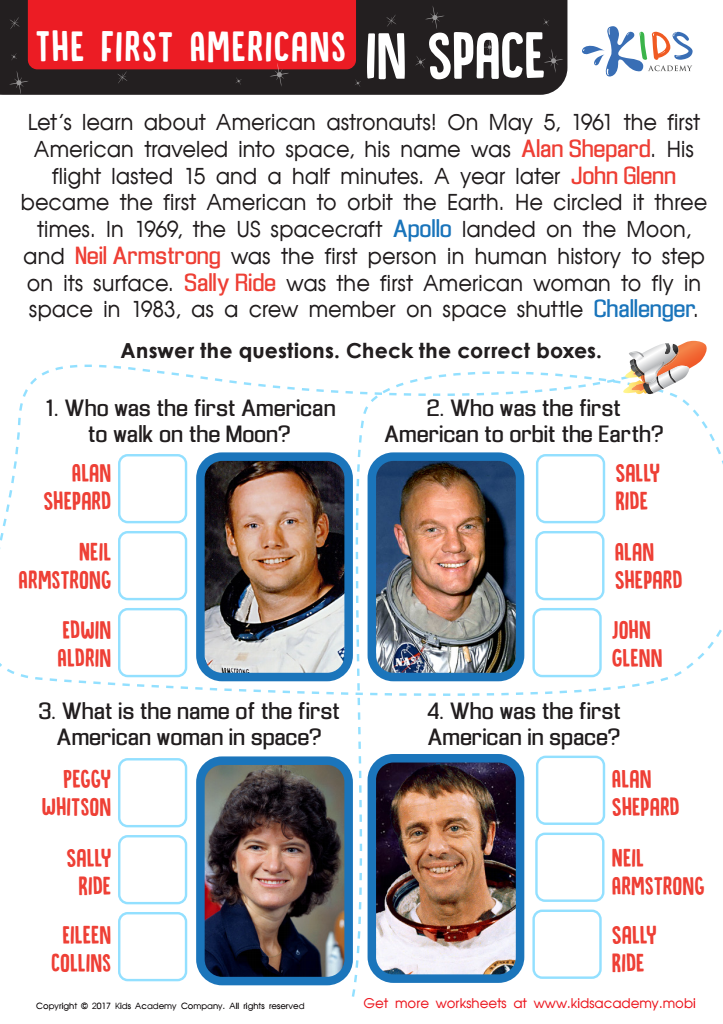
First Americans in Space Worksheet
Delve into space history with your child! Learn about the first astronauts and their impact on U.S. space exploration. Our captivating worksheet features real photos and facts about these famous individuals. Spark your kid’s interest in space today!
First Americans in Space Worksheet
Worksheet
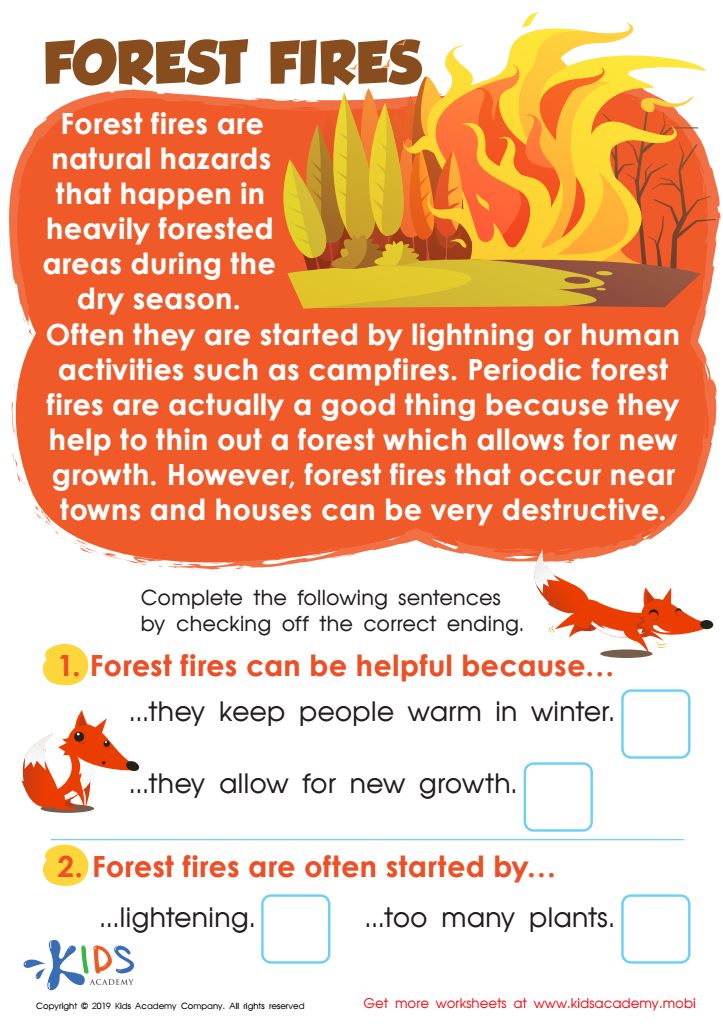
Forest Fires Worksheet
This free worksheet helps kids learn about forest fires. It encourages critical thinking by allowing them to answer multiple-choice questions. It is an important opportunity for children to develop reading skills, as understanding text is essential for further academic success. Download the PDF to give them the chance to practice comprehension and strengthen their knowledge.
Forest Fires Worksheet
Worksheet
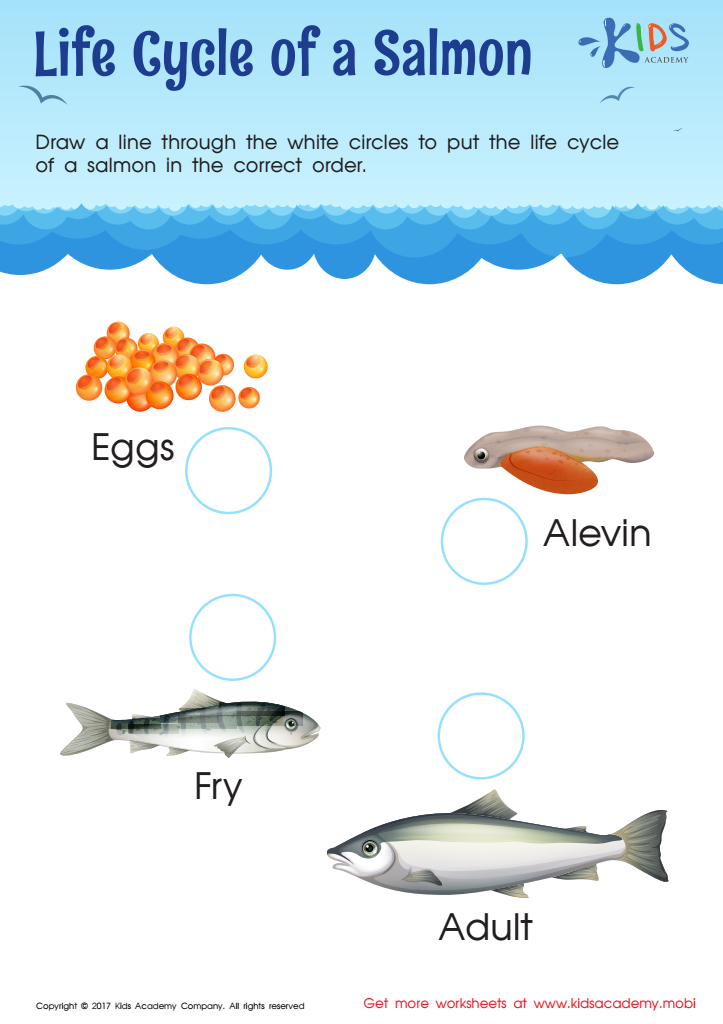
Cycle Of Salmon Worksheet
Explore the life cycle of a salmon with this grade 2 worksheet! Kids will learn by arranging the stages of the salmon's lifecycle in order. Science activities in this set cover a wide range of lifecycles in nature.
Cycle Of Salmon Worksheet
Worksheet
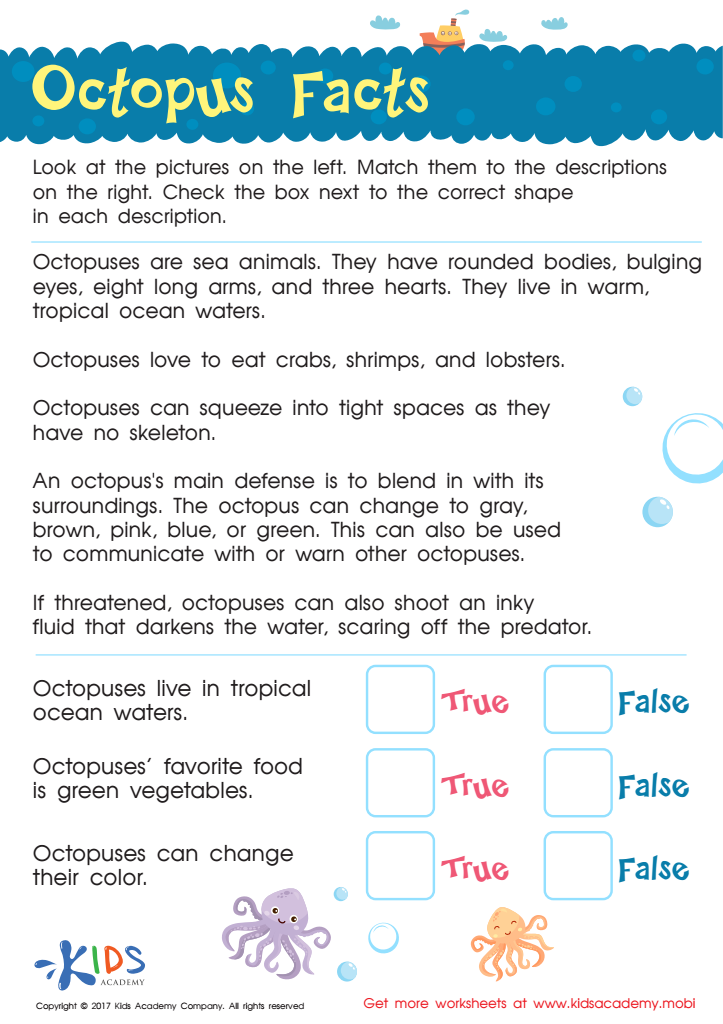
Octopus Facts Worksheet For Kids
Let your child dive into the world of octopuses with this fun worksheet. It offers invaluable practice in reading non-fiction texts, while they learn interesting facts about these strange sea creatures. It's a great way to help them hone their skills in reading comprehension.
Octopus Facts Worksheet For Kids
Worksheet
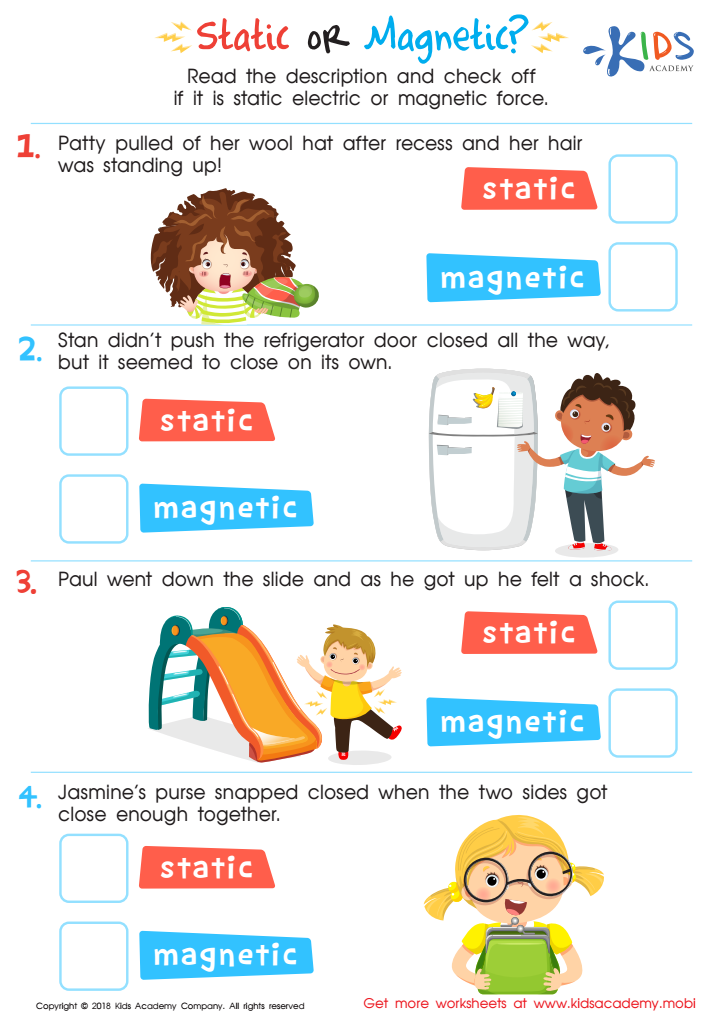
Static or Magnetic Printable Worksheet
Ever wondered if a situation involved static or magnetic force? This printable worksheet has the answer! Read the scenarios and check out the illustrations to decide which force is in play for each. Learn about these two amazing forces with this fun activity!
Static or Magnetic Printable Worksheet
Worksheet
Join Kids Academy for Free
Who is primarily going to use this learning content?




.jpg)
Critical thinking skills are essential for children aged 7-9, especially in understanding normal science concepts. At this developmental stage, children are naturally curious and eager to explore the world around them. Engaging them in critical thinking helps foster their inquiry-based learning, allowing them to scrutinize evidence, ask questions, and draw conclusions based on scientific reasoning.
Teaching critical thinking in the context of normal science enables children to differentiate between fact and opinion, encouraging them to rely on logic while also fostering creativity. This approach nurtures a mindset where children feel empowered to hypothesize, experiment, and analyze results, which forms the backbone of the scientific method.
Moreover, parents and teachers play a pivotal role in encouraging these skills. By nurturing a critical thinking environment, adults can guide children toward becoming active learners who can tackle problems systematically and collaboratively, skills that are invaluable not just in science but in everyday life. This foundation sets the stage for lifelong curiosity and the ability to navigate information critically in an increasingly complex world.
Ultimately, equipping children with critical thinking skills in science lays the groundwork for informed citizenship, enabling them to make decisions that can impact their lives and society.







