
Handwriting improvement Normal Alphabet Worksheets for 7-Year-Olds
3 filtered results
Difficulty Level
Grade
Age
-
From - To
Subject
Activity
Standards
Boost your child’s handwriting skills with our Handwriting Improvement Normal Alphabet Worksheets for 7-Year-Olds! Designed to foster fine motor skills and enhance letter formation, these engaging worksheets provide interactive exercises tailored for young learners. Each worksheet offers clear guidance on proper letter strokes, helping children practice uppercase and lowercase letters effectively. Our user-friendly format ensures that kids remain motivated and thrive as they progress. As they complete these activities, they'll gain confidence in their writing abilities, setting a solid foundation for academic success. Download these printable worksheets today and watch your child's handwriting transform!
Favorites
With answer key
Interactive
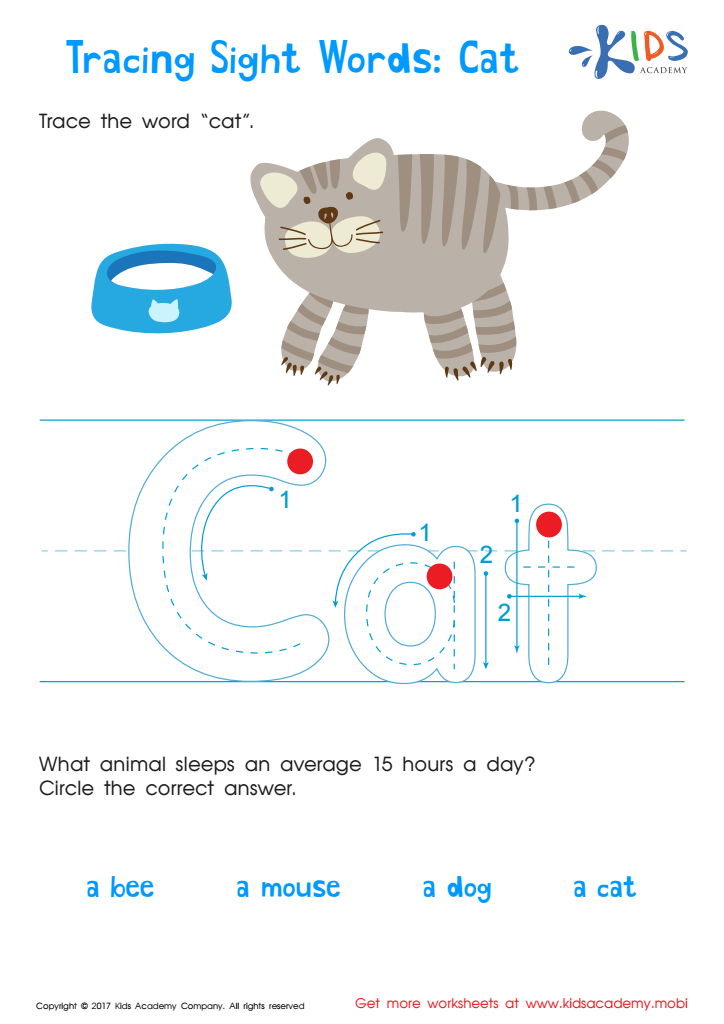
Cat Printable Sight Words Worksheet
Encourage your child's literacy with this fun sight words worksheet: cat PDF! It helps build a solid foundation for reading, featuring activities such as reading and tracing the word cat, and finding it amongst other sight words. With its cute cat, Kids Academy makes learning to read a delight!
 Assign to My Students
Cat Printable Sight Words Worksheet
Worksheet
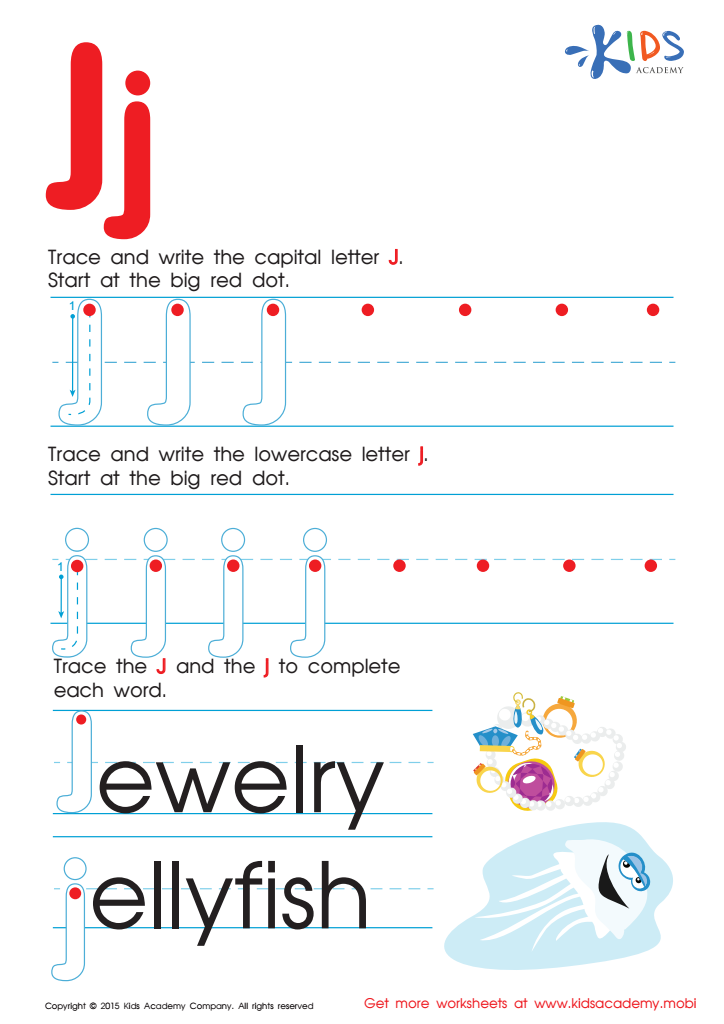
Letter J Tracing Page
Trace and write the letter "J" with our ABC worksheet - start at the big red dot! Have fun completing words like jewelry, jellyfish and more. Check out our kindergarten activities for more alphabet practice.
Letter J Tracing Page
Worksheet
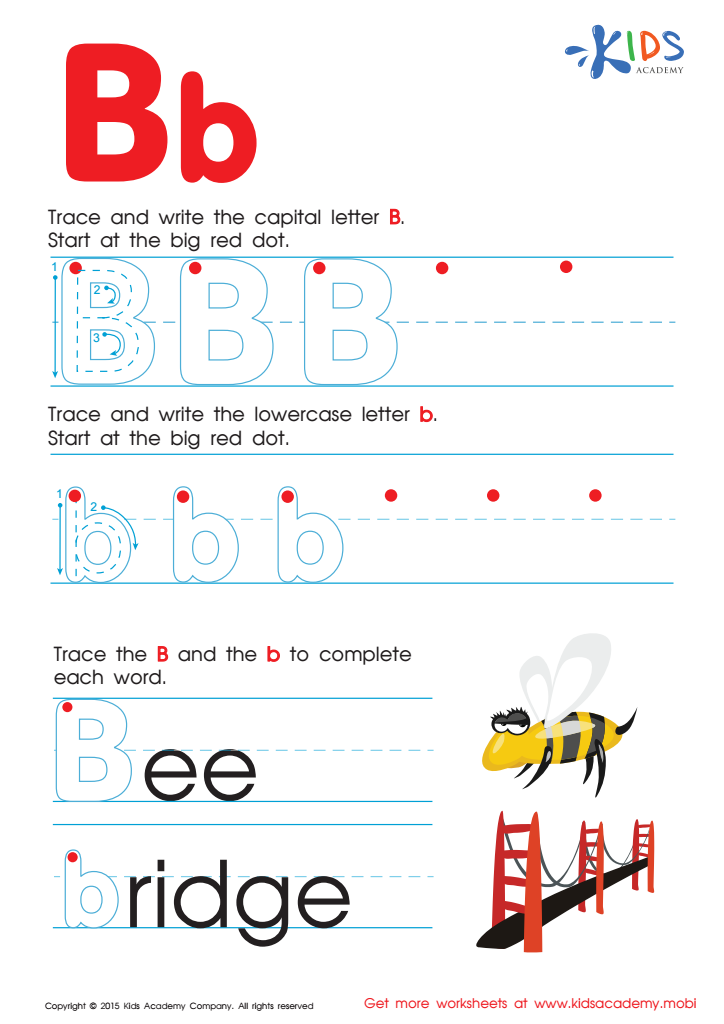
Letter B Tracing Page
Ready to learn the Alphabet? Put your pencil on the red dot and trace & write both capital & lowercase "B". Then have a look at the pictures. Catch the bee, cross the bridge & write the letters to complete the words. More ABC worksheets for kindergarten available!
Letter B Tracing Page
Worksheet
Join Kids Academy for Free
Who is primarily going to use this learning content?








Handwriting improvement is crucial for 7-year-olds as it plays a significant role in their overall development. At this age, children are refining their fine motor skills, and developing legible handwriting boosts their confidence and sense of accomplishment. Legible handwriting facilitates easier communication; if children struggle to form letters correctly, it can lead to frustration and hinder their ability to express thoughts and ideas effectively.
Furthermore, the skill of handwriting supports academic performance. Many assessments still require written answers, and children with established handwriting habits are more likely to focus on content rather than being hindered by the mechanics of writing. Additionally, good handwriting can enhance reading skills, as it deepens the understanding of letter formation and spelling.
For teachers and parents, fostering handwriting improvement aids in the creation of lifelong skills. Children who learn proper techniques early are better equipped to tackle more complex writing tasks later on. Moreover, engaging with handwriting practice can provide opportunities for bonding and involvement in a child’s education. By prioritizing handwriting improvement, we enable children to cultivate confidence and competence in a skill that is foundational for their academic and personal success.







