Filters

7 filtered results

Clear all filters
Favorites
With answer key
Interactive

7 filtered results

Difficulty Level

Grade


Enhance your 7-year-old's vocabulary with our Normal Long Vowels Worksheets designed specifically for young learners! These engaging, printable activities help children master long vowel sounds while enriching their word knowledge. Crafted by educational experts, the worksheets focus on fun exercises that boost reading comprehension and spelling skills. Perfect for classroom and at-home learning, these resources provide a solid foundation in phonics, essential for early literacy. Watch as your child’s confidence grows alongside their vocabulary with our expertly designed worksheets. Try our Normal Long Vowels Worksheets today and make learning an enjoyable adventure!

Check out this FREE Trial Lesson on Long Vowels for age 7!

Short and Long Vowel Sort

Favorites
With answer key
Interactive
  • 7
  • Vocabulary enhancement
  • Long Vowels
  • Normal
Long Vowel Review Worksheet

Long Vowel Review Worksheet

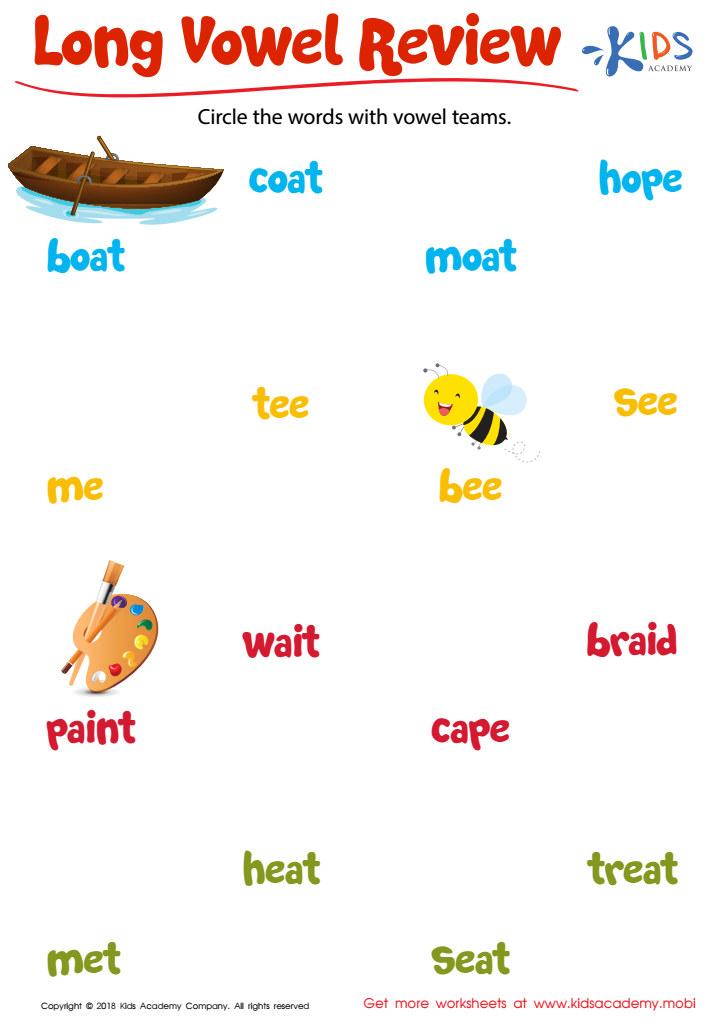
Vowel teams like "ea" and "ai" help us make words, and understanding these patterns aids emerging readers in becoming more fluent. This review worksheet has students finding words with vowel teams that make the long vowel sound, and helps them recognize high-frequency words.
Long Vowel Review Worksheet
Worksheet
Let's Check Long Vowels: Assessment Worksheet

Let's Check Long Vowels: Assessment Worksheet

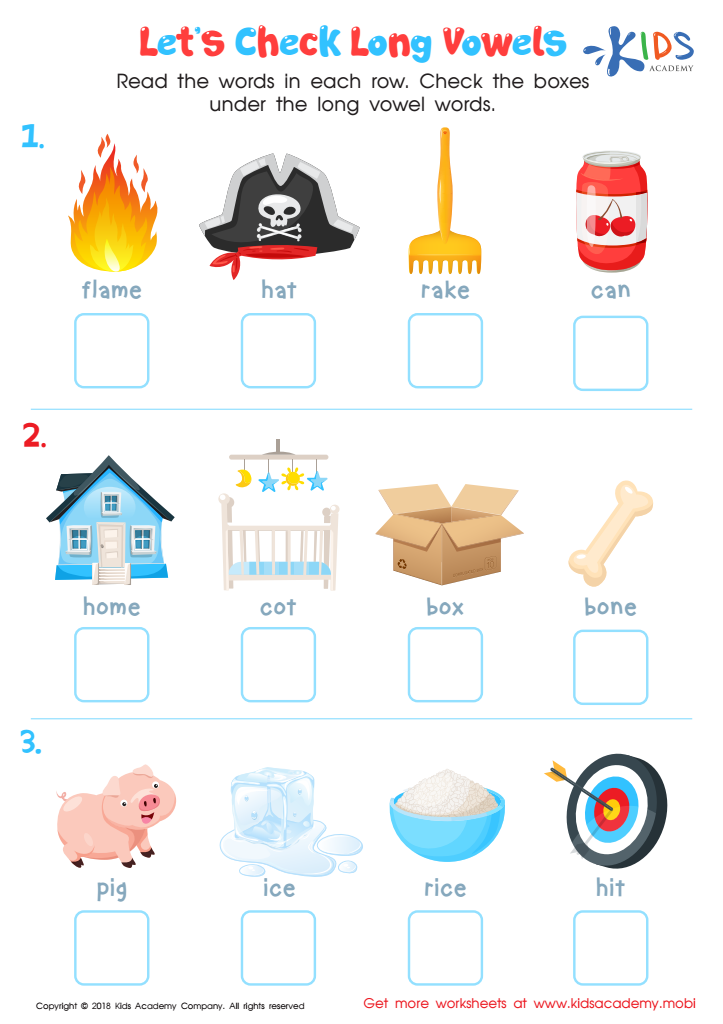
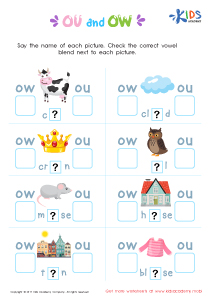
This worksheet helps your child identify objects and learn long vowel sounds. Ask them to say the names of the four objects in each row. Then, help them check the boxes to confirm they know the long vowel sounds. This will help them develop their reading skills.
Let's Check Long Vowels: Assessment Worksheet
Worksheet
Reading: Long I and IE Worksheet

Reading: Long I and IE Worksheet

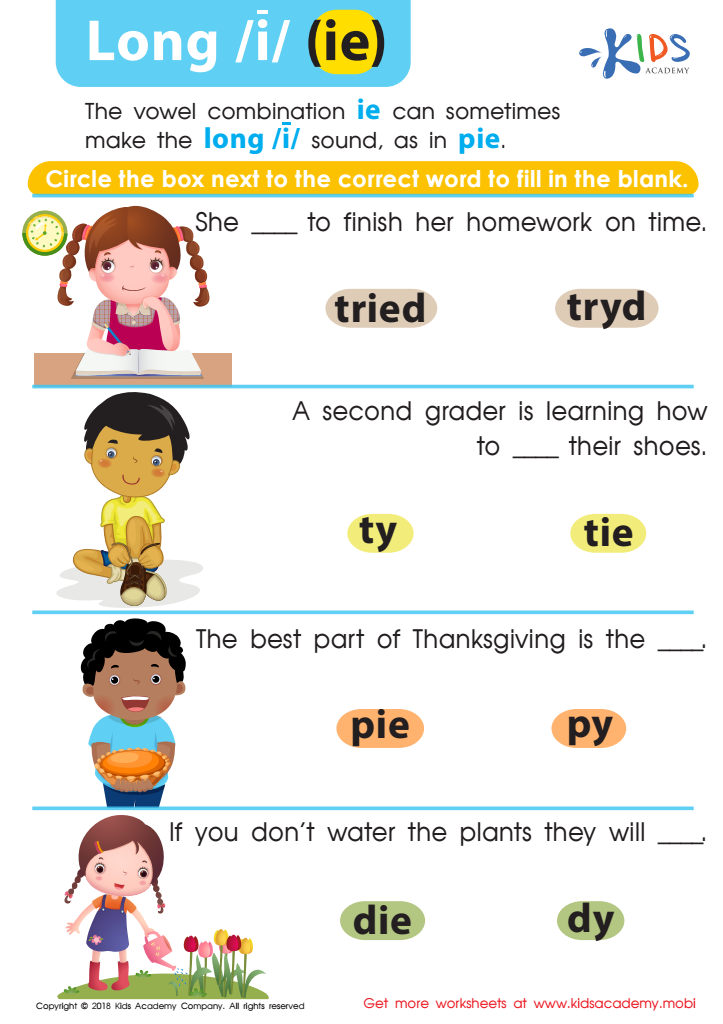
Have your child list words with the long /i/ sound (eg. 'pie'), and if needed, help them out with some examples. Read each word in the worksheet together and check their answer by having them circle the correct word.
Reading: Long I and IE Worksheet
Worksheet
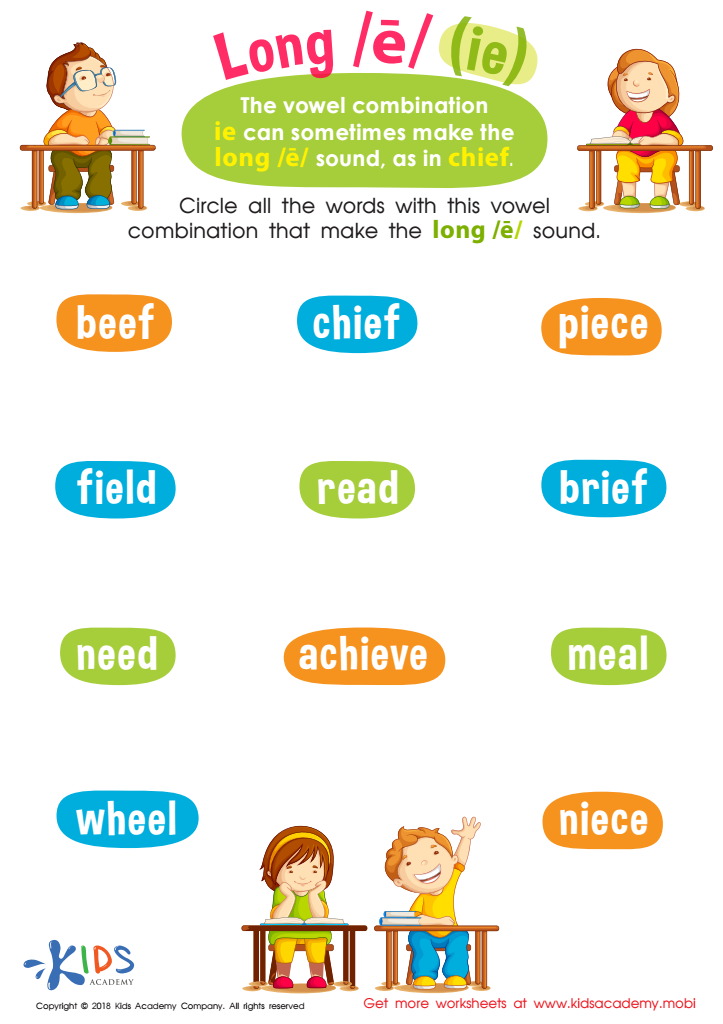
Reading: Long E and IE Worksheet

Reading: Long E and IE Worksheet

Ask your child to name some words with the long /e/ sound they hear every day. Then, read aloud all the words in the worksheet with them. Ask them to circle the words containing ie that make this sound.
Reading: Long E and IE Worksheet
Worksheet
Long /u/ Words Worksheet

Long /u/ Words Worksheet

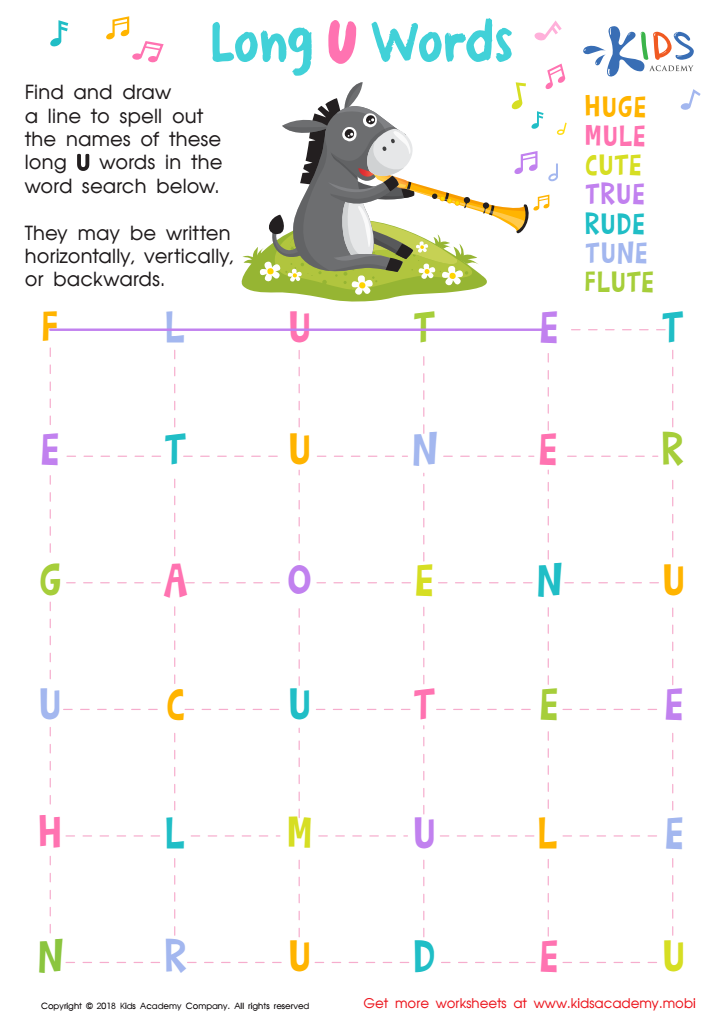
Your child needs to learn phonetics to enunciate and differentiate words. This fun worksheet encourages them to find and draw lines connecting the long 'U' words in the word search. Help them read the words on the right side of the picture, then look for them in the word search (horizontally, backwards or vertically).
Long /u/ Words Worksheet
Worksheet
Reading: Vowel Team EE Worksheet

Reading: Vowel Team EE Worksheet

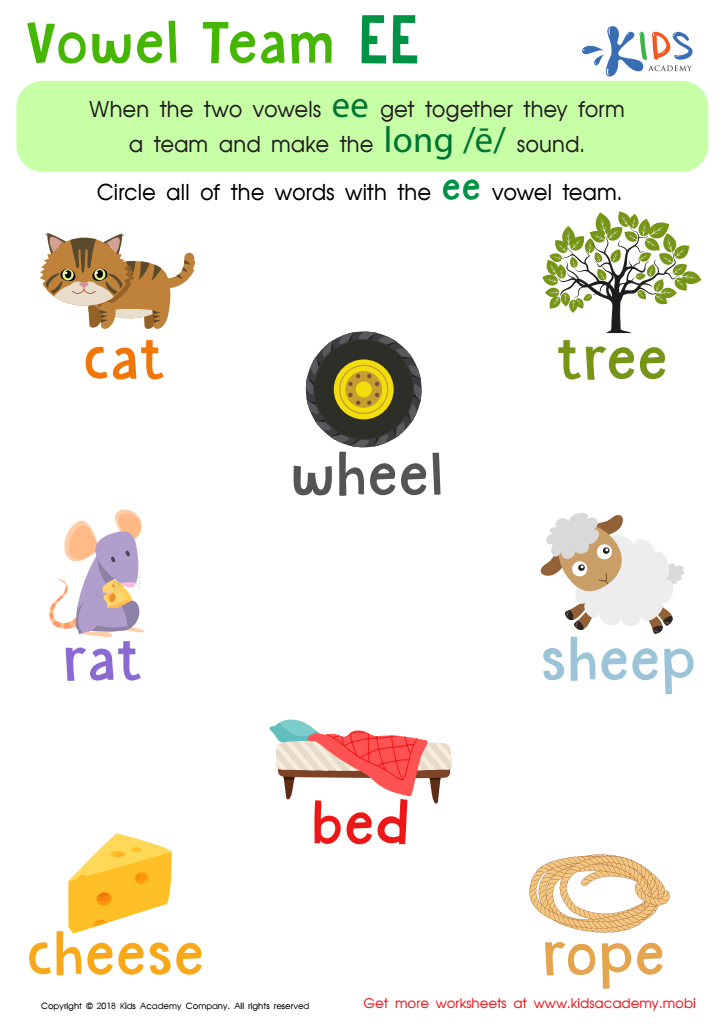
This worksheet is perfect for helping young learners master the /ee/ vowel team. It shows the first vowel with a long sound and the second vowel silent. It also provides pictures for unfamiliar words for readers of all levels. It's an ideal resource for teaching phonics skills.
Reading: Vowel Team EE Worksheet
Worksheet
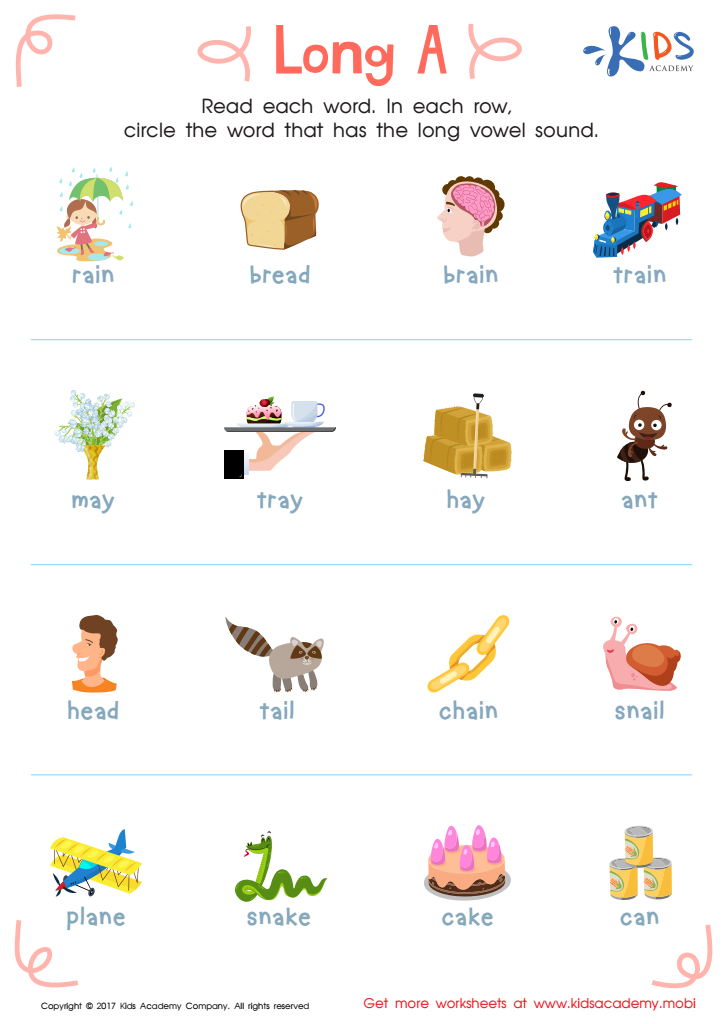
Long Vowel A Printable Worksheet

Long Vowel A Worksheet

Long Vowel A Worksheet
Worksheet


Ensuring that 7-year-olds grasp vocabulary enhancement and normal long vowels is crucial for their academic and overall language development. At this pivotal age, children are transitioning from learning to read to reading to learn. Strong vocabulary skills form the bedrock for understanding increasingly complex texts, enhancing cognitive development and critical thinking. When children learn long vowels, they gain key phonetic tools that help them decode and pronounce new words accurately, fostering independent reading skills.

For parents and teachers, prioritizing vocabulary and phonetic awareness translates into better communication and literacy outcomes. A rich vocabulary allows children to express themselves more clearly and to understand others with greater nuance. It correlates with improved writing, listening, and speaking skills, all essential for success in academics and beyond. Engaging with diverse vocabulary also enriches a child's worldview, promoting curiosity and a lifelong love of learning.

Moreover, early enhancement of these skills can bridge educational gaps and support those who may struggle with reading due to learning differences or lack of exposure at home. Therefore, both parents and teachers play an indispensable role in scaffolding these foundational literacy skills, setting children up for a brighter and more successful future.