
Phonics recognition Normal Phonics Worksheets for 7-Year-Olds
6 filtered results
Difficulty Level
Grade
Age
-
From - To
Subject
Activity
Standards
Unlock the potential of young readers with our "Phonics Recognition Normal Phonics Worksheets for 7-Year-Olds." Designed to solidify foundational reading skills, these worksheets enhance phonics understanding through engaging activities. Tailored for optimal learning, they help children recognize letter sounds, blend phonemes, and improve word-decoding abilities. By combining fun exercises with educational content, our worksheets provide a balanced approach to phonics practice, catering specifically to the learning needs of 7-year-olds. Give your child the tools needed to excel in reading, boost confidence, and foster a love for language with our expertly crafted phonics worksheets.
Favorites
With answer key
Interactive
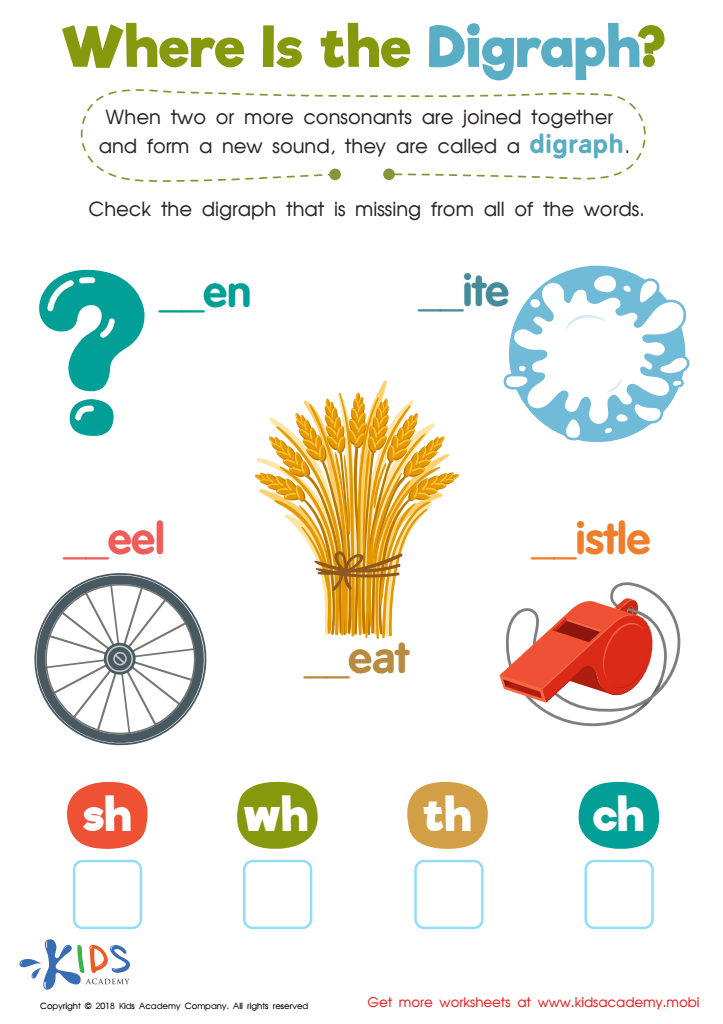
Where Is the Digraph? Worksheet
Teach your child about digraphs - two or more consonants that form one sound, like /wh/, /sh/, and /ch/. Show them words with these sounds and use this worksheet to help. Ask them which digraph is missing from the words and point out the pictures. 80 words.
 Assign to My Students
Where Is the Digraph? Worksheet
Worksheet
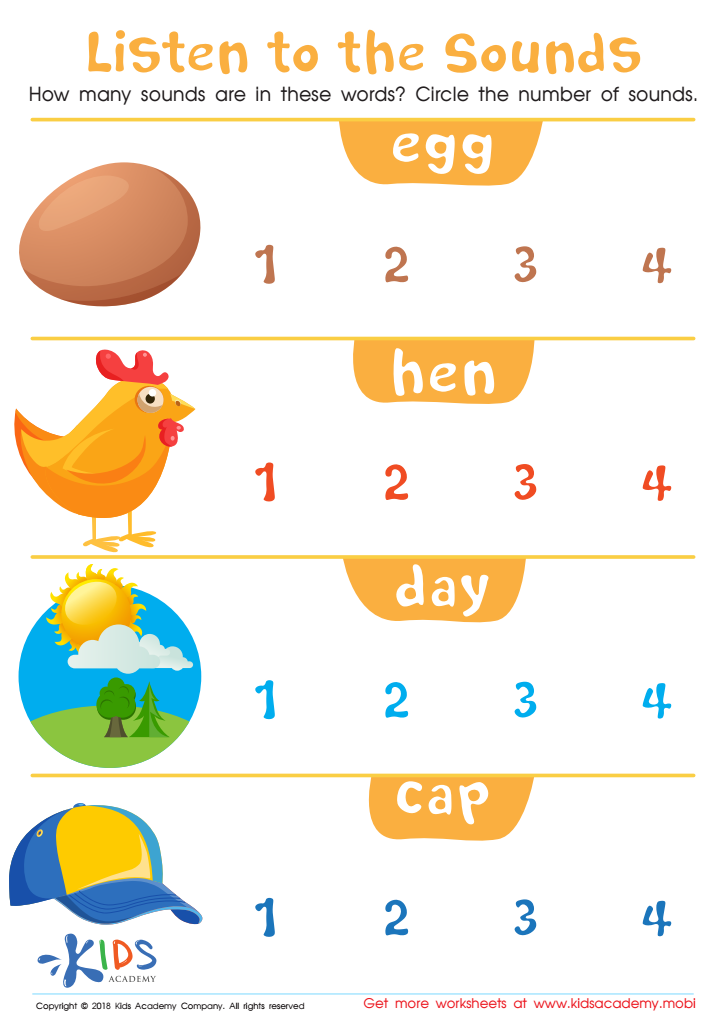
Listen to the Sounds Worksheet
This worksheet builds emerging readers' skills in using sounds for reading and spelling. It helps strengthen auditory processing by having them count the sounds in each word, then trace the corresponding number. Fun and cheerful!
Listen to the Sounds Worksheet
Worksheet
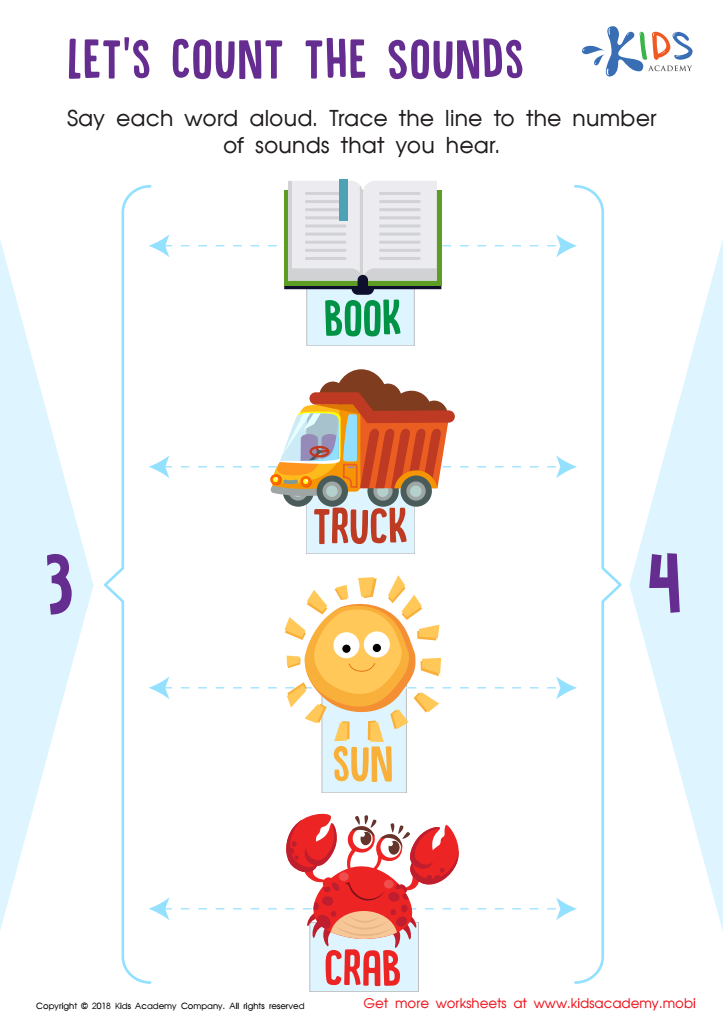
Let's Count the Sounds Worksheet
This bright and cheery traceable worksheet encourages children to practice auditory discrimination and phonological awareness. Using picture clues, they read each word and trace the line that represents the number of sounds heard. This builds decoding skills and helps them become successful readers.
Let's Count the Sounds Worksheet
Worksheet
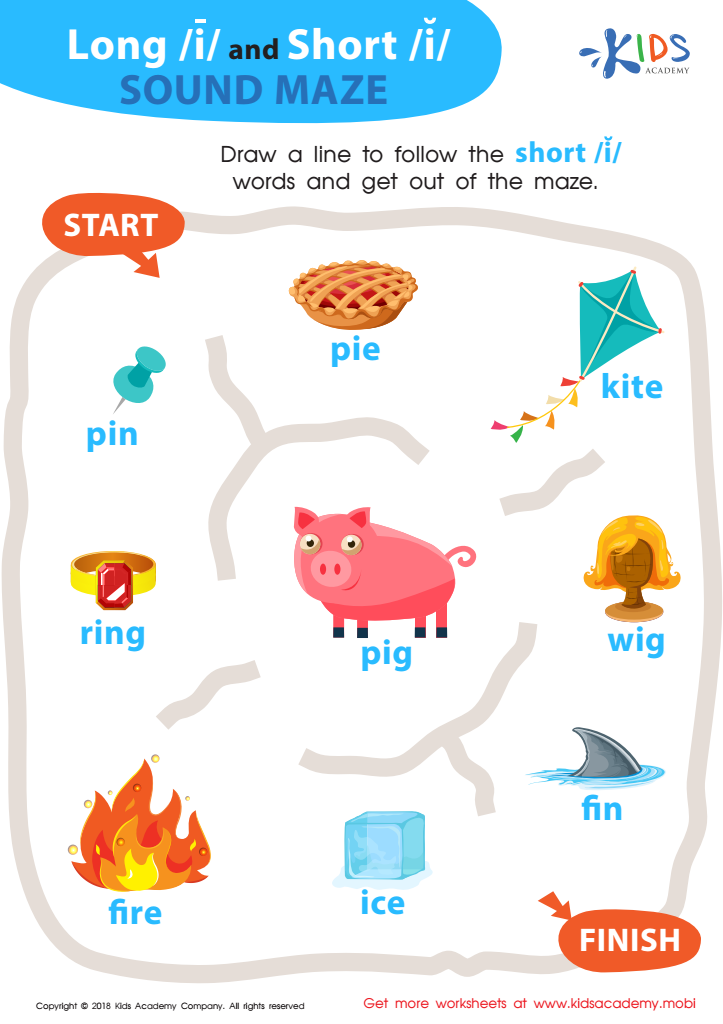
Reading: Long I and Short I Sound Maze Worksheet
Question your students if the worksheet is entertaining. They may respond negatively! Nonetheless, this activity will bring satisfaction while learning the distinction between a long and short I sound. Students read the words in the maze and only follow the words with the short I sound to finish the exercise. Grasping the difference between long and short vowels is demanding, but this worksheet helps students understand this reading skill.
Reading: Long I and Short I Sound Maze Worksheet
Worksheet
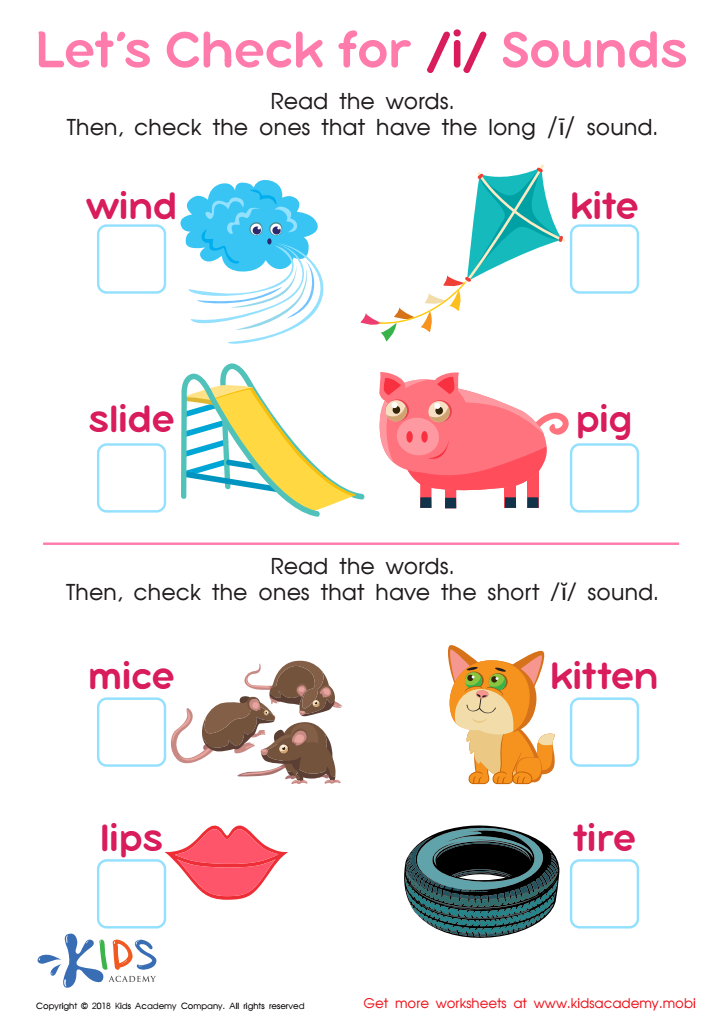
Let's Check for «i» Sounds Worksheet
This fun worksheet with pictures boosts phonics skills - differentiating between long «ī» and short «i» sounds in 1- and 2-syllable words. Kids use picture clues to read words, then check off the correct ones. It's a great way for new readers to practice early reading skills and find success on their own.
Let's Check for «i» Sounds Worksheet
Worksheet
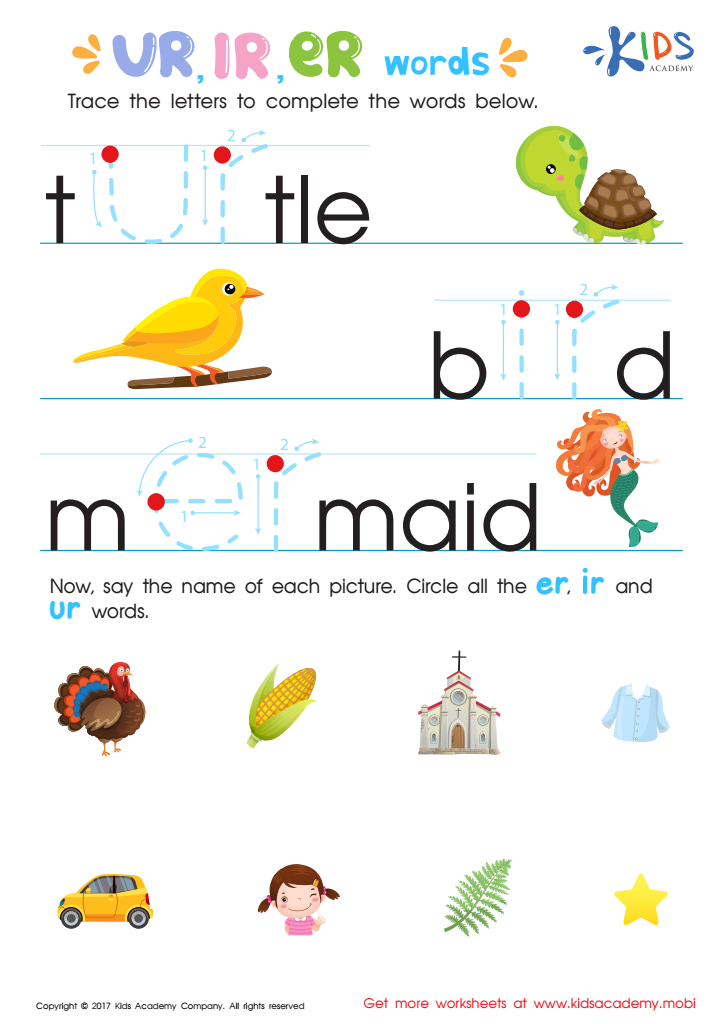
IR UR ER Words Worksheet
Trouble spelling words with the same initial vowel sound? Our worksheet is here to help! With its exercises to help your child learn to read and spell turtle, bird, and mermaid, it'll make differentiating these tricky digraphs a snap.
IR UR ER Words Worksheet
Worksheet
Join Kids Academy for Free
Who is primarily going to use this learning content?








Phonics recognition is a crucial foundation for reading development in 7-year-olds. By understanding the relationship between letters and their sounds, children can more easily decode words, which is essential for fluent reading. Phonics helps children break down the complex code of written language and makes it accessible, aiding them in recognizing patterns in word formation. This skill enhances their reading confidence, promotes better reading comprehension, and fosters a lifelong love of reading.
Parents and teachers should care because early mastery of phonics can prevent future reading difficulties and contribute to overall academic success. A strong grasp of phonics enables children to independently tackle new and challenging words, enriching their vocabulary and opening up a world of knowledge through books. Furthermore, phonics also improves spelling by reinforcing letter-sound correspondences, allowing children to spell words correctly and communicate more effectively in writing.
Supporting phonics instruction at this pivotal age also addresses varied learning needs. These foundational skills are particularly beneficial for learners who might be struggling and require extra support to keep pace with their peers. By prioritizing phonics recognition, parents and teachers ensure that every child is equipped with the essential tools needed for ongoing educational success and enjoyment in reading.







