Vocabulary expansion Normal Phonics Worksheets for 7-Year-Olds - Page 2
28 filtered results
-
From - To
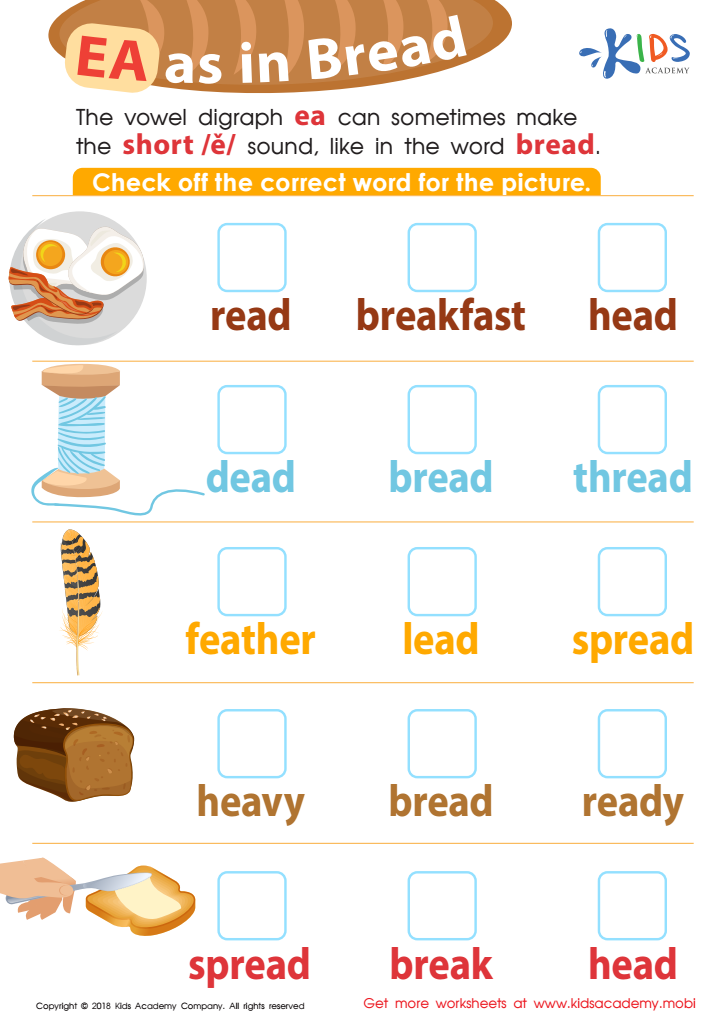
Reading: EA as in Bread Worksheet
 Assign to My Students
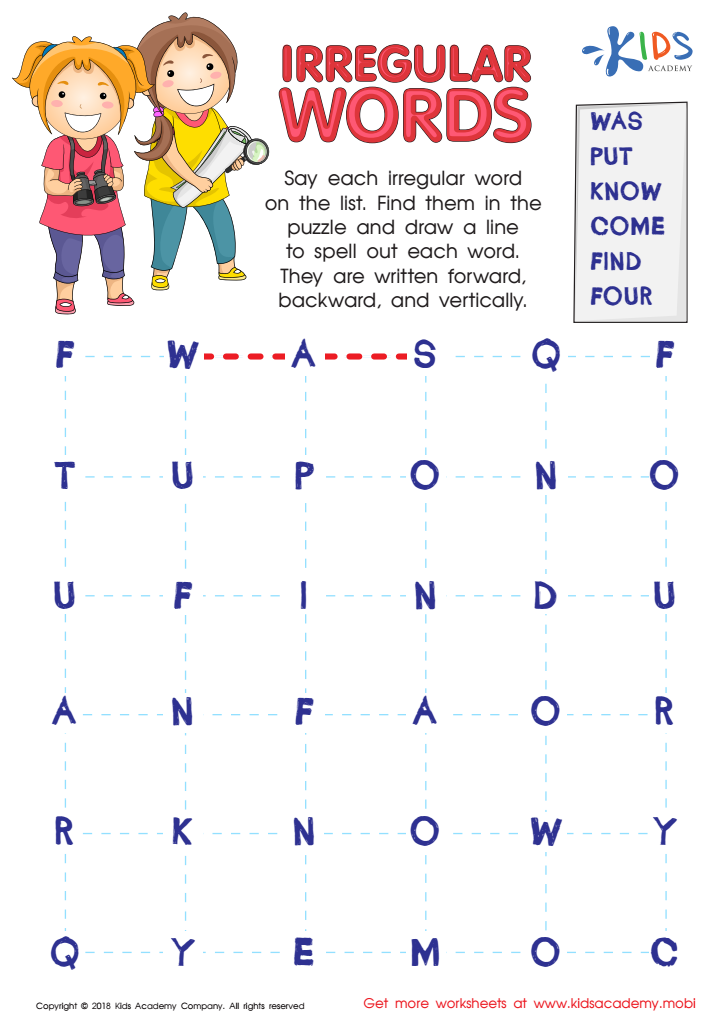
Irregular Words Worksheet
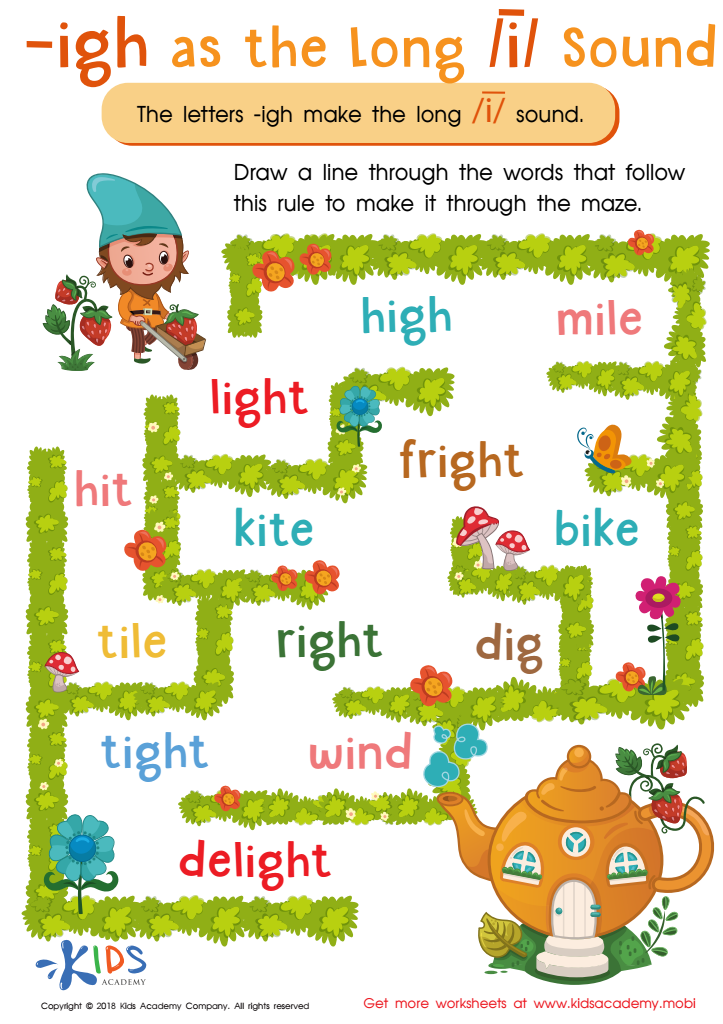
Reading: IGH as Long I Worksheet
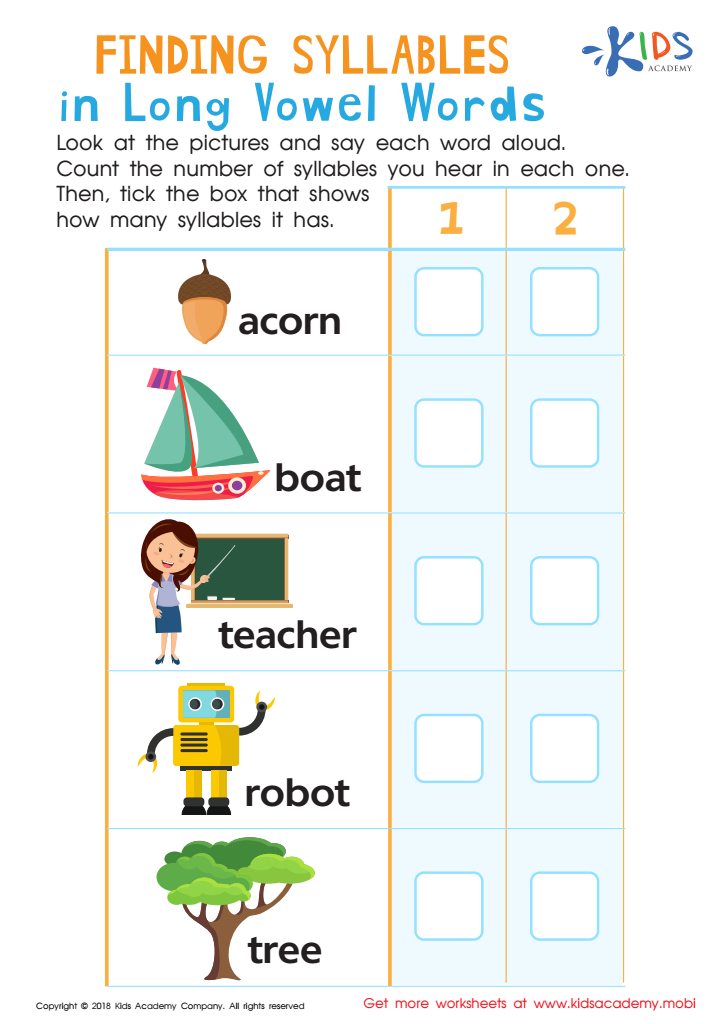
Finding Syllables in Long Vowel Words Worksheet








Vocabulary expansion and understanding phonics are critical elements in a young child's education, particularly around the age of seven. At this stage, children are developing foundational language skills that will impact their academic performance and communication abilities for the rest of their lives.
Firstly, vocabulary expansion enhances comprehension. A broader vocabulary enables children to understand more complex texts, fostering a love for reading. It is well-established that children who enjoy reading often excel across various subjects, as they can easily access and interpret information.
Secondly, phonics is essential for reading proficiency. Phonics instruction helps children recognize the relationship between letters and sounds, which is crucial for decoding new words. This lays the groundwork for fluent reading, where children can read smoothly and automatically without needing to pause to decipher each word.
Combining vocabulary expansion with phonics ensures that children not only read words correctly but also understand their meanings. This synergistic approach supports better communication skills, as well-rounded vocabulary allows children to express themselves more clearly and accurately.
Parents and teachers should prioritize these areas to build a robust educational foundation, setting up children for future success. Investing in vocabulary and phonics at this early stage pays dividends, enhancing not just literacy, but overall cognitive and academic development.







