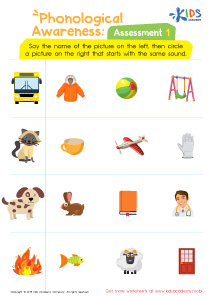
Reading comprehension Normal Rhyming Worksheets for 7-Year-Olds
5 filtered results
-
From - To
Discover our engaging Reading Comprehension Normal Rhyming Worksheets for 7-year-olds, designed to enhance literacy skills while making learning fun! These worksheets incorporate colorful visuals and relatable rhymes that captivate young minds, fostering a love for reading. Each activity focuses on improving comprehension through rhyming texts, encouraging children to identify patterns, predict outcomes, and answer questions based on their understanding. Ideal for home or classroom use, our resources support early reading development and promote critical thinking. Help your child master essential reading skills with these interactive worksheets that make learning an enjoyable adventure!
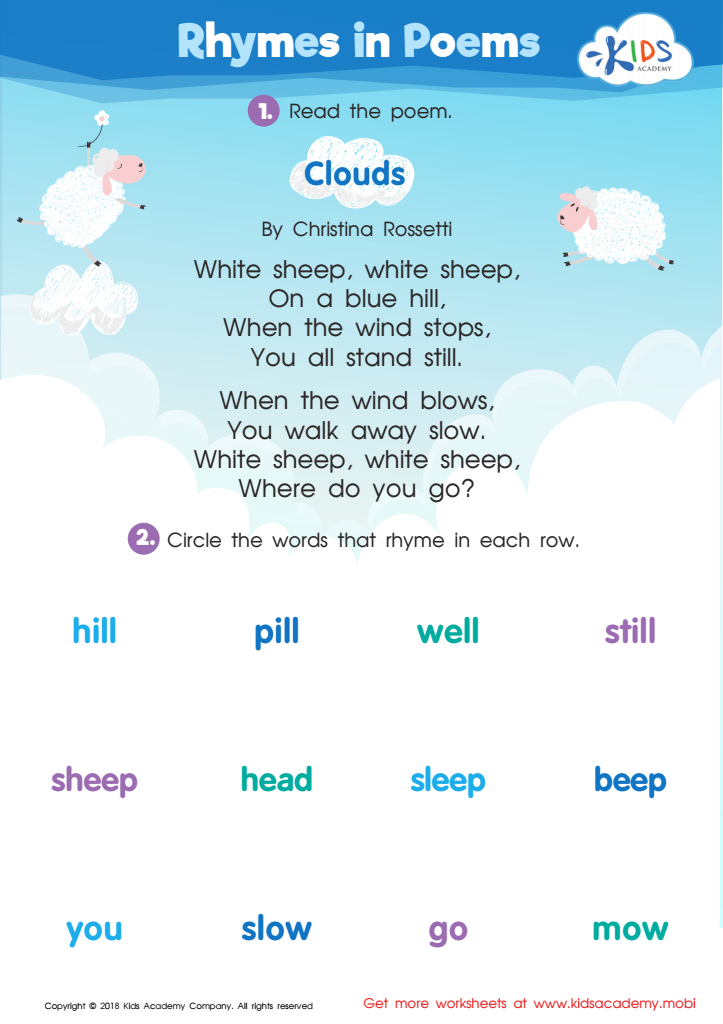
Rhymes in Poems Worksheet
 Assign to My Students
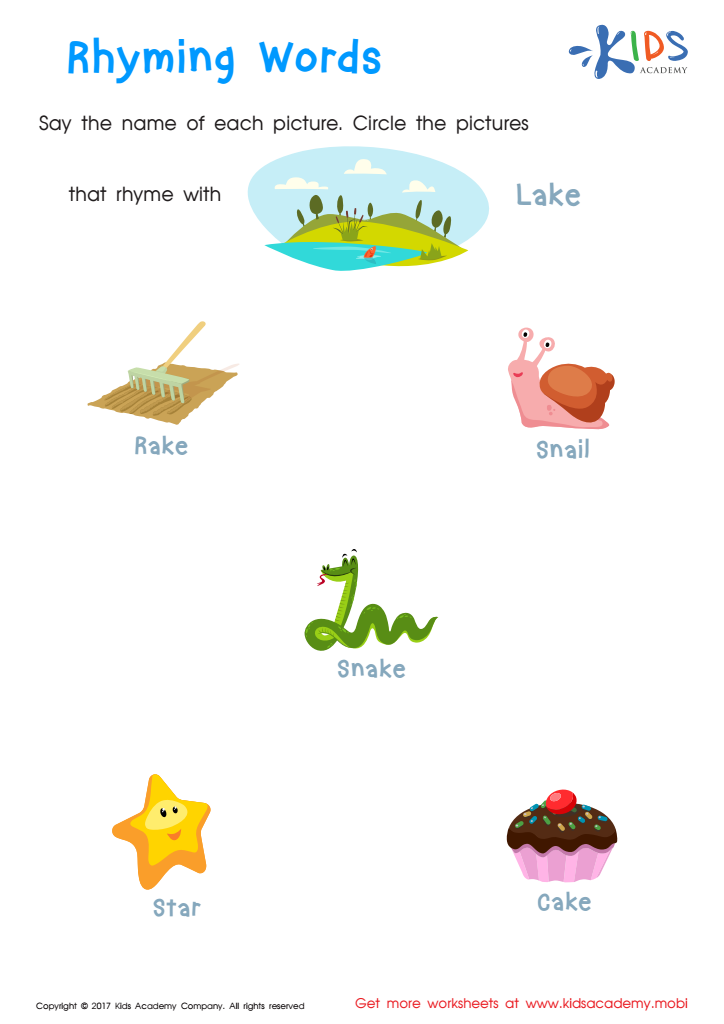
Rhyming Words Rhyming Worksheet
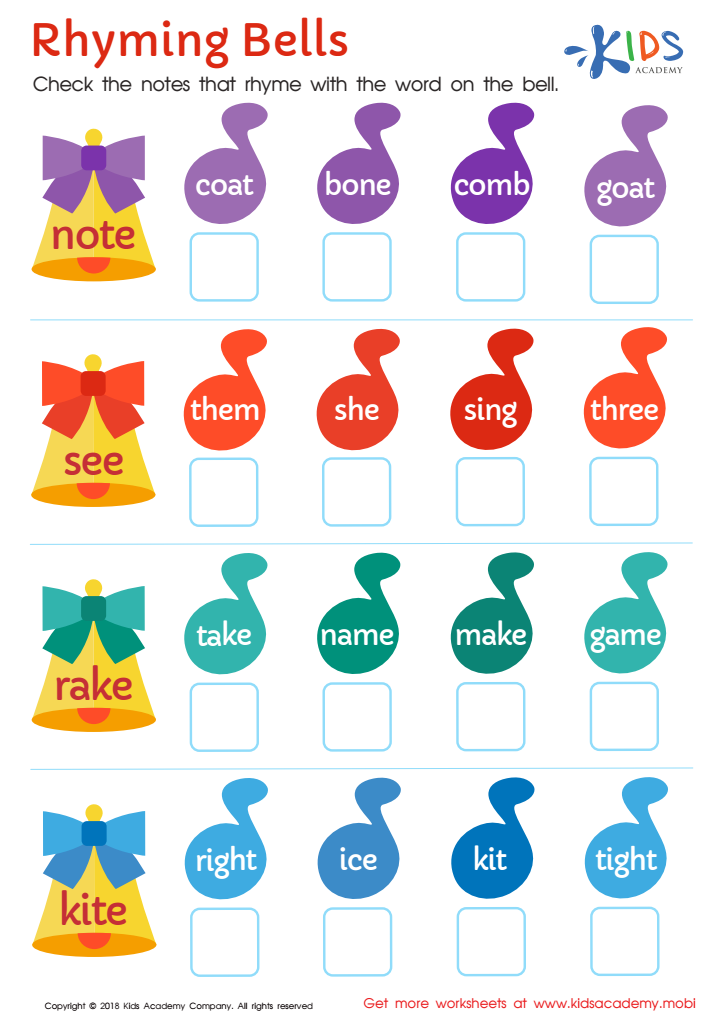
Rhyming Bells Worksheet
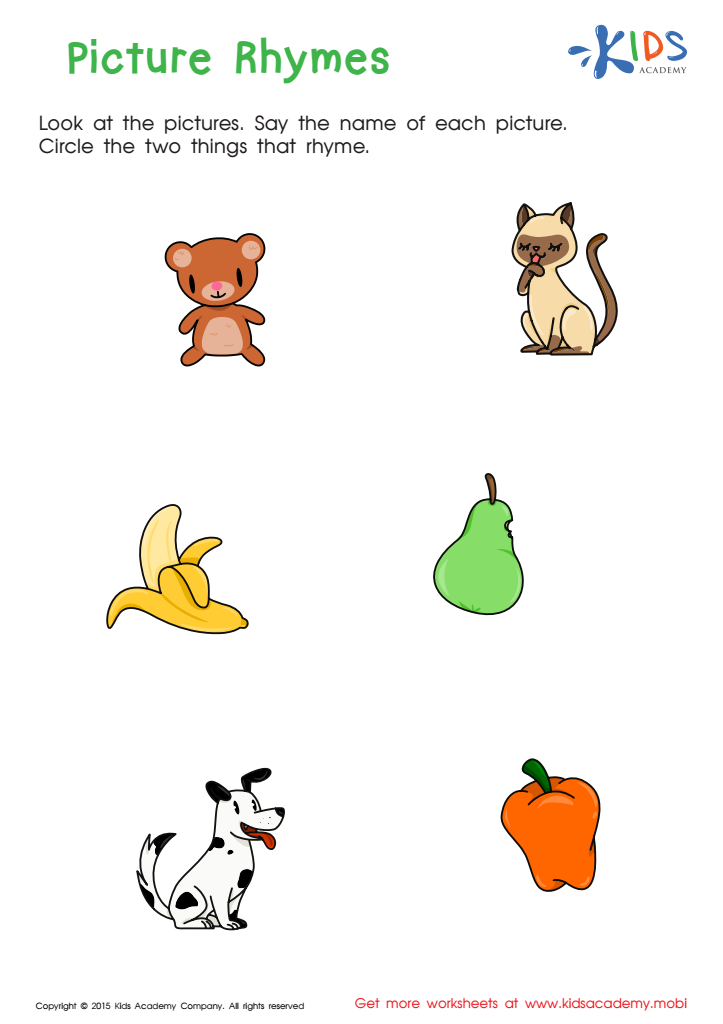
First Words: Picture Rhymes Worksheet
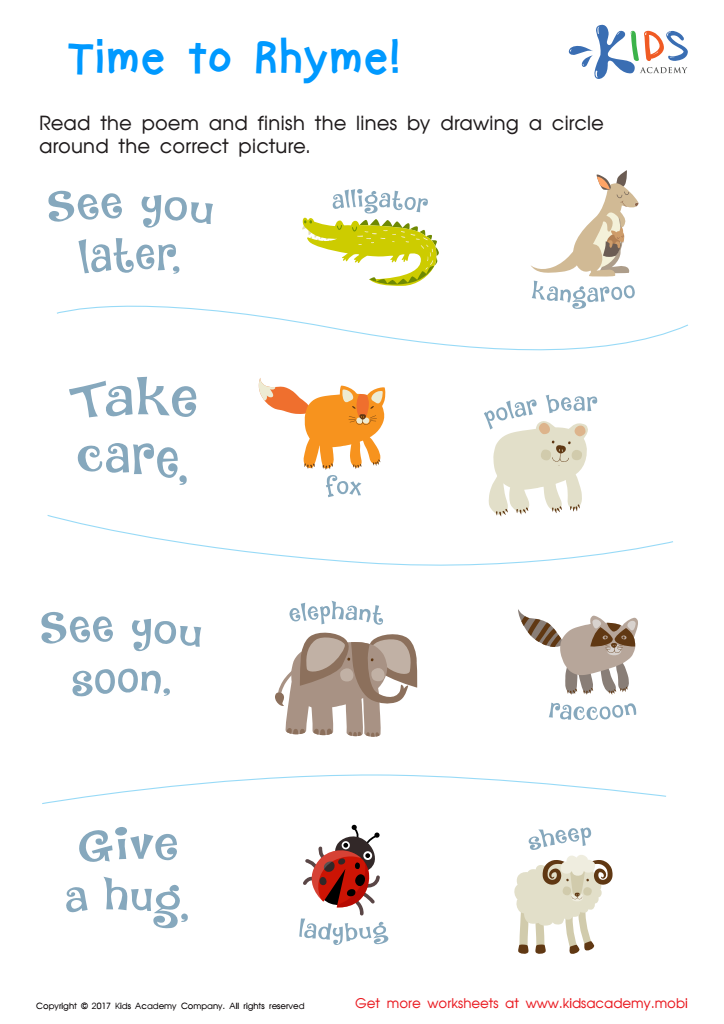
Time to Rhyme Rhyming Worksheet








Reading comprehension is a critical skill that establishes the foundation for a child’s educational journey. For 7-year-olds, integrating normal rhyming into reading comprehension activities can significantly enhance their learning experience.
First, children are naturally drawn to rhythm and sound, making rhymes engaging and memorable. Rhyming patterns help them recognize phonetic structures, aiding in their ability to decode unfamiliar words, enhancing their vocabulary, and reinforcing spelling concepts. When students understand how words fit within a rhythmic context, they can better grasp sentence structure and overall meaning.
Moreover, normal rhyming fosters imaginative thinking and creativity, as children visualize the playful language. This vivid engagement enhances their ability to infer and predict, essential components of comprehension. Through interactive activities, like reading poems or nursery rhymes, children practice summarizing content and discussing themes and emotions.
Additionally, it builds critical thinking skills. Performative elements, such as acting out stories or joining in chant-like readings, make the experience interactive and fun. This familiarity boosts confidence in their reading abilities.
In essence, by focusing on reading comprehension through normal rhyming, parents and teachers create a rich, captivating environment that nurtures essential literacy skills while fostering a lifelong love for reading.