
Vocabulary expansion Normal Short Vowels Worksheets for 7-Year-Olds
6 filtered results
Difficulty Level
Grade
Age
-
From - To
Subject
Activity
Standards
Enhance your child's vocabulary with our engaging Normal Short Vowels Worksheets designed specifically for 7-year-olds! These worksheets focus on short vowel sounds, helping young learners master phonics while expanding their word knowledge. Filled with fun activities, including matching words, fill-in-the-blanks, and coloring exercises, these resources make learning enjoyable and interactive. Our curriculum aligns with educational standards, targeting vocabulary development vital for reading fluency. Perfect for classroom or home use, these worksheets will boost your child's confidence in language skills. Discover the fun of learning with our delightful range of activities that turn vocabulary expansion into an exciting adventure!
Favorites
With answer key
Interactive
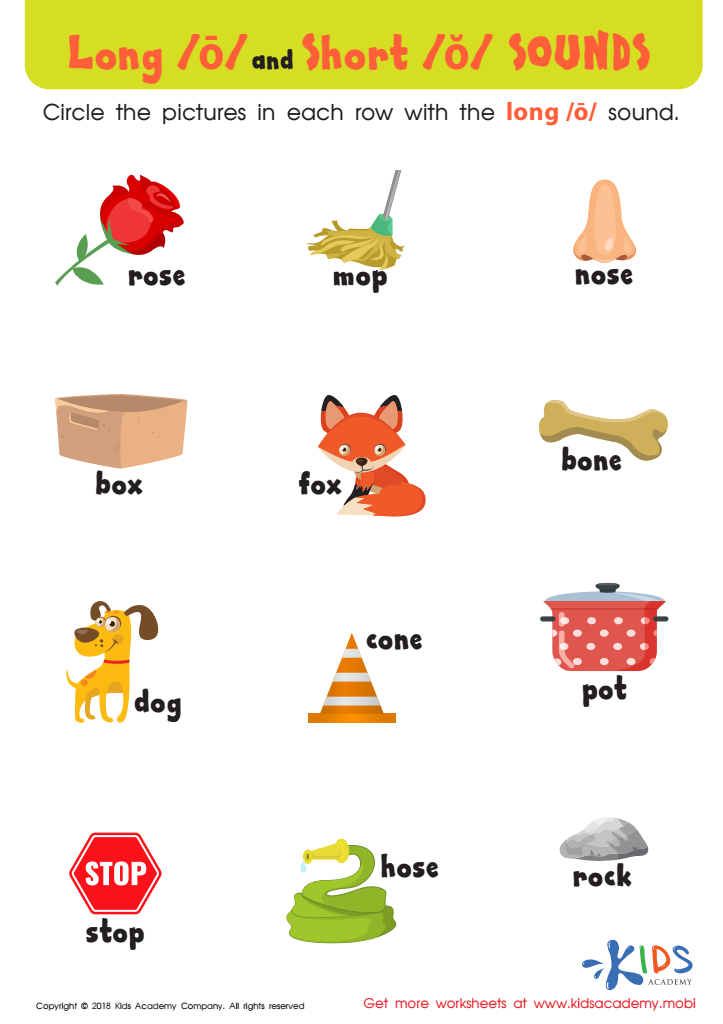
Reading: Long O and Short O Sounds Worksheet
Students practice distinguishing between short and long O sounds with this reading worksheet. They sound out each word, then circle the pictures with the long O sound. Perfect for individual practice or to work with peers! Improves understanding of this skill and helps avoid confusion.
Reading: Long O and Short O Sounds Worksheet
Worksheet

Short Vowels /e/, /i/, and /u/ Worksheet
Your emergent reader can have fun while practicing their short vowel sounds with this free, brightly colored worksheet. They'll identify one-syllable words by their pictures, then match the correct ending for each. They'll gain an understanding of how short vowel sounds vary in closed syllables with different endings, without even realizing it!
Short Vowels /e/, /i/, and /u/ Worksheet
Worksheet

Long and Short U Worksheet
Revised: Spice up your lesson on long and short vowels with this fun printout! Kids read the words "tube" and "tub," then reinforce the sound by coloring in the words and pictures. It's a great way to make phonics class enjoyable!
Download (PDF)
 Assign to My Students
Assign to My Students
Long and Short U Worksheet
Worksheet
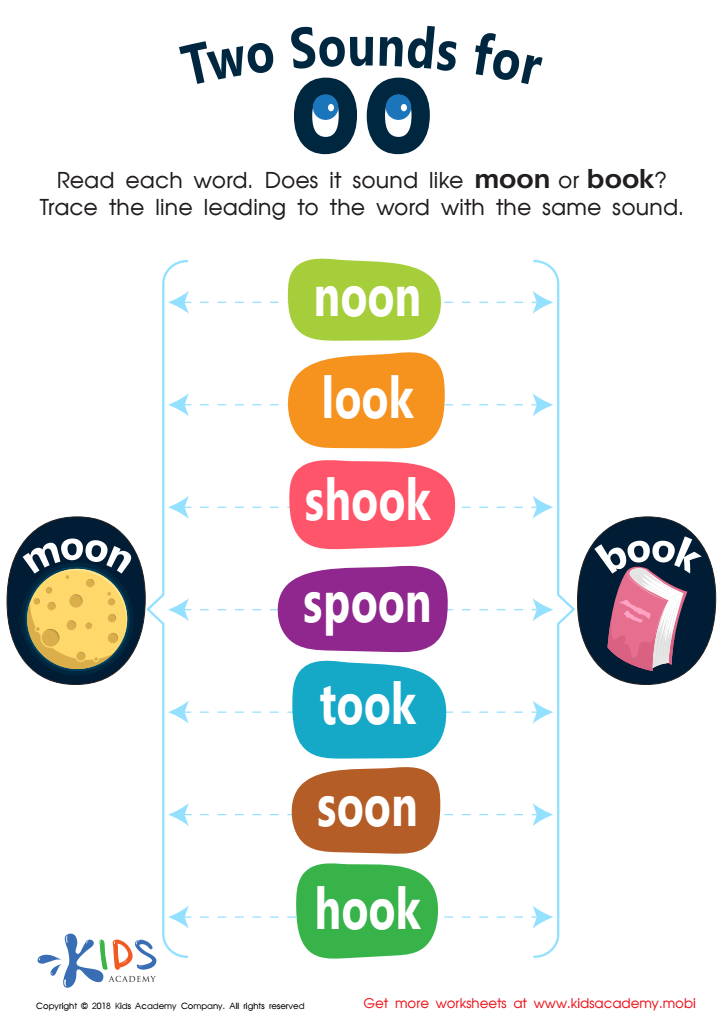
Two Sounds for OO Worksheet
This worksheet helps kids learn the different sounds of the -oo digraph. They match words based on whether they sound like moon or book, plus practice fine motor skills tracing lines. Fun and educational!
Two Sounds for OO Worksheet
Worksheet
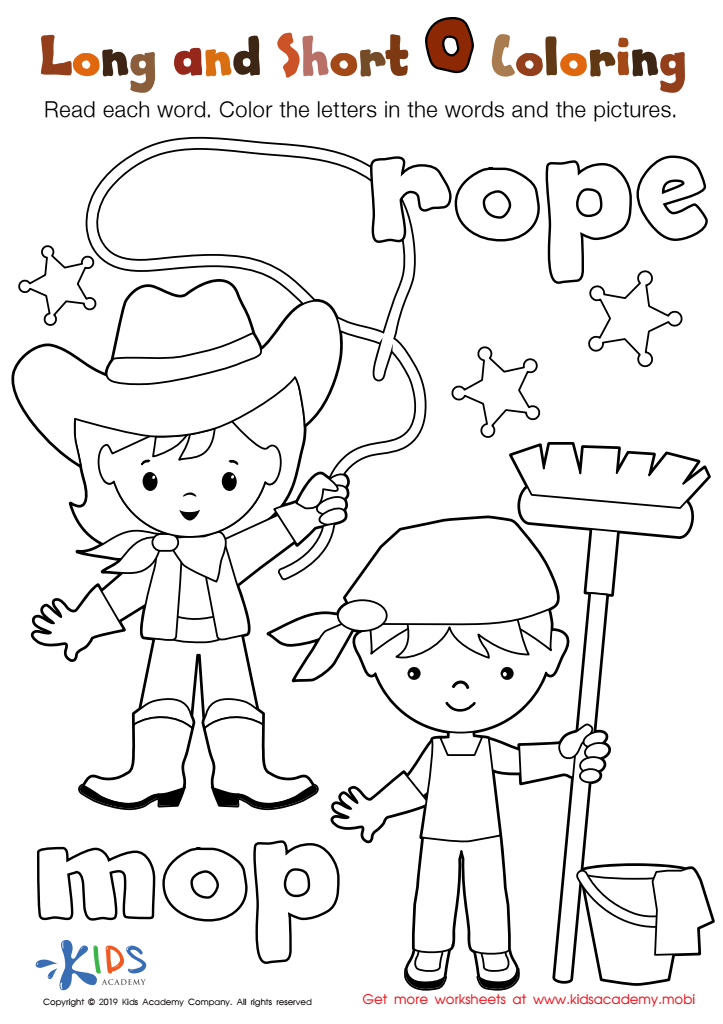
Long and Short O Worksheet
Help your students recognize the difference between long and short «Os» with this fun printout. Let them read and color-in "rope" and "mop" simultaneously. Listen to the different sounds, then color the words and pictures. Great for classes, it'll make your phonics lesson memorable and enjoyable.
Download (PDF)
Assign to My Students
Assign to My Students
Long and Short O Worksheet
Worksheet
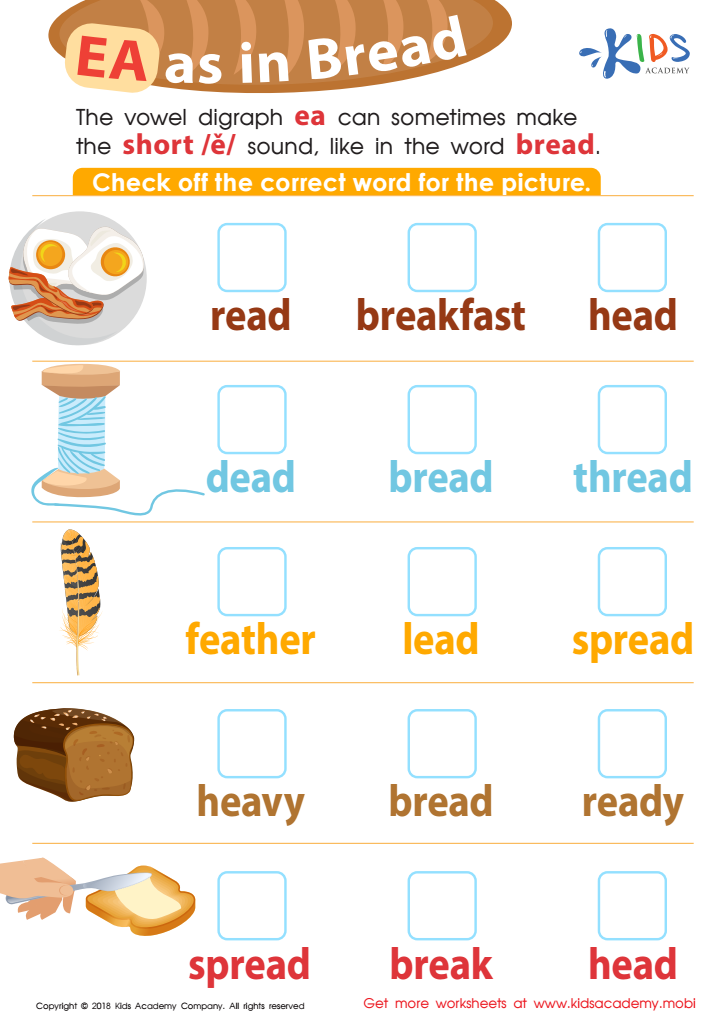
Reading: EA as in Bread Worksheet
The vowel digraph ea can be read in two ways. Examples of the long sound are "read" and "lead"; examples of the short sound are "bread" and "head". Ask your kids to give you more examples and then have them check off the correct word for the pictures on this worksheet. This will help them understand the ea sound.
Reading: EA as in Bread Worksheet
Worksheet
Join Kids Academy for Free
Who is primarily going to use this learning content?



Vocabulary expansion is crucial for 7-year-olds, as it lays the foundation for effective communication and literacy skills. At this age, children's brains are particularly receptive to language development, making it the perfect opportunity to enrich their vocabulary, especially with words that feature normal short vowels.
Understanding short vowels is fundamental for reading. By mastering these sounds, children can decode words better, improving their reading fluency and comprehension. A strong vocabulary helps them express their thoughts clearly, enhancing their ability to participate in conversations and discussions. It also boosts self-confidence, as they can articulate what they want to say more easily.
Parents and teachers play a pivotal role in this process by creating a language-rich environment. Engaging in conversations, reading diverse stories, and playing word games can naturally introduce new vocabulary. Additionally, exposure to varied contexts enables children to understand how to use words appropriately, deepening their comprehension and retention.
By actively investing time in vocabulary expansion with a focus on short vowels, adults not only support their child's academic success but also foster essential social skills and critical thinking capabilities that will benefit them throughout their lives. Recognition of this developmental stage can make a meaningful difference in a child's educational journey.








