Introduce your 7-year-old to the fun world of alphabet recognition with our printable normal tracing letters worksheets! Designed specifically for young learners, these engaging worksheets help children practice tracing both uppercase and lowercase letters, reinforcing their letter formation skills while boosting confidence. Each worksheet features vibrant illustrations and interactive activities that make learning enjoyable and effective. Through consistent practice, kids will not only enhance their fine motor skills but also solidify their understanding of the alphabet. Perfect for home or classroom use, our worksheets are a fantastic resource for teachers and parents aiming to enhance literacy skills in a playful way.

Check out this FREE Trial Lesson on Tracing Letters for age 7!

J

Favorites
With answer key
Interactive
  • 7
  • Alphabet Recognition
  • Tracing Letters
  • Normal
Letter O worksheets
Letter O worksheets

Letter O Tracing Page

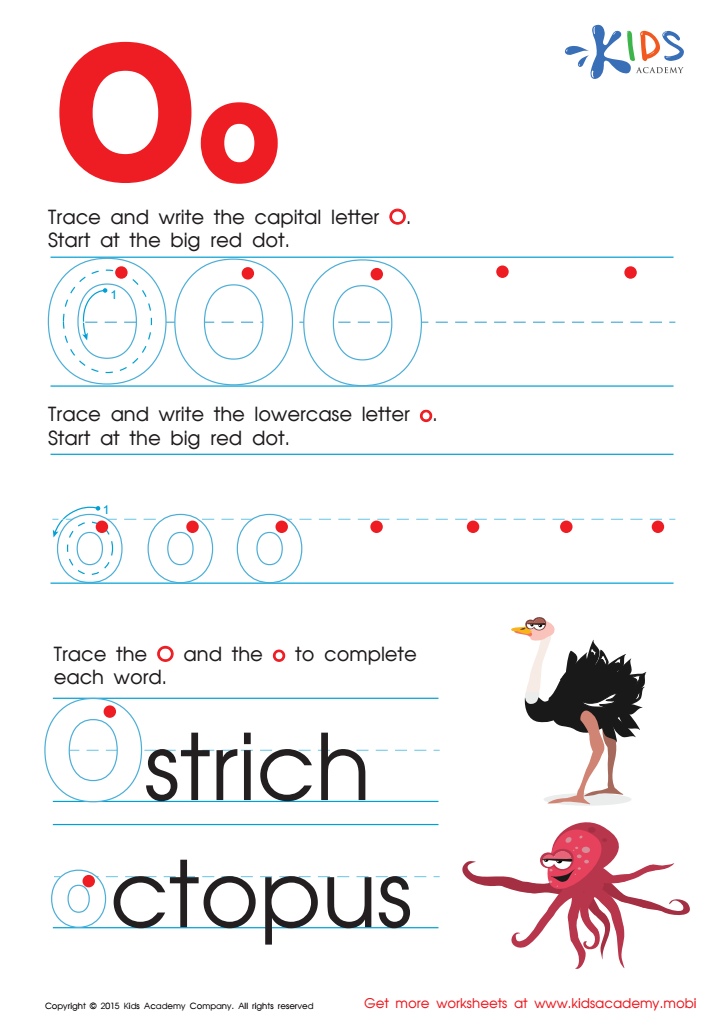
Practice writing the letter "O" with our new worksheet. Trace and write the letter several times, starting at the red dot. First do the uppercase letter, then the lowercase. Use the pictures to complete the words "Ostrich" and "octopus". Kids Academy offers more fun alphabet worksheets.
Letter O Tracing Page
Worksheet
Letter I worksheets
Letter I worksheets

Letter I Tracing Page

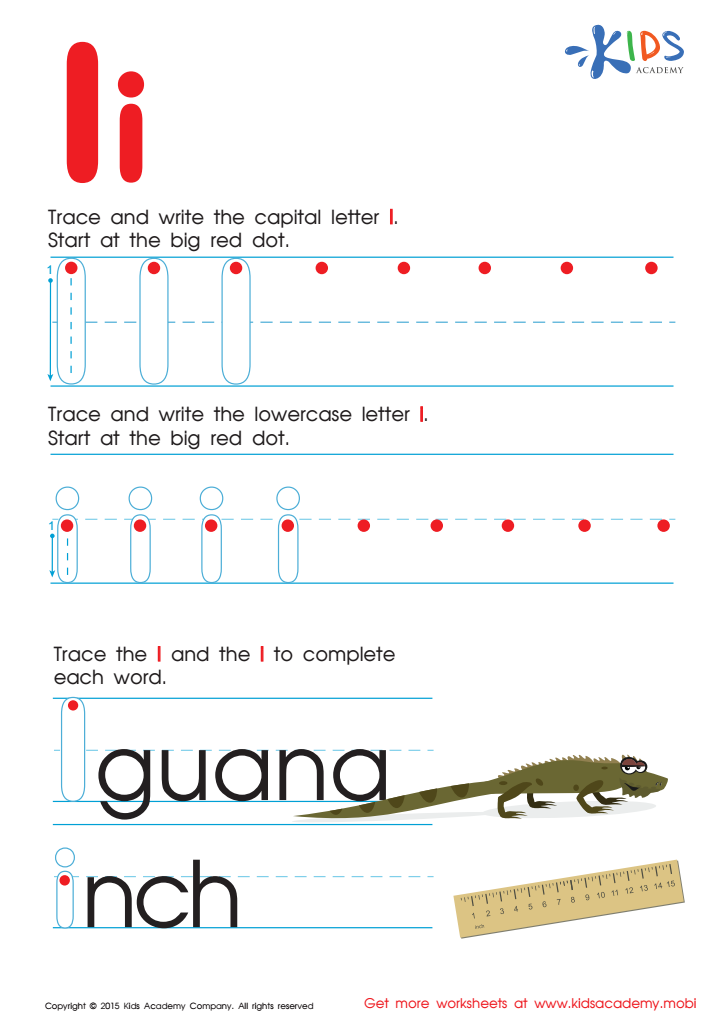
Trace and write "I" uppercase and lowercase. An iguana's tail looks like the uppercase "I" and the lowercase "i" is as small as an inch. Make learning fun with Kids Academy worksheets.
Letter I Tracing Page
Worksheet
letter C worksheets
letter C worksheets

Letter C Tracing Page

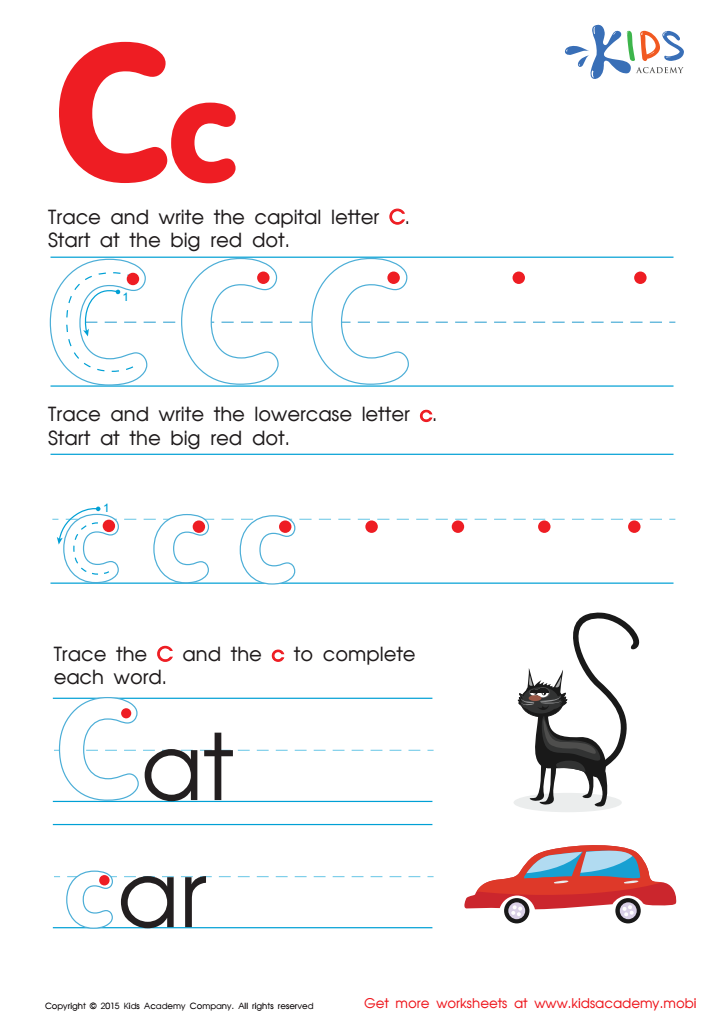
Trace and write the letter 'C'! Put the pencil at the red dot then follow the lines – the capital letter first then the lowercase one. Cats love it and so will you! Get more free printables to practice tracing and writing.
Letter C Tracing Page
Worksheet
Letter М worksheets
Letter М worksheets

Letter M Tracing Page

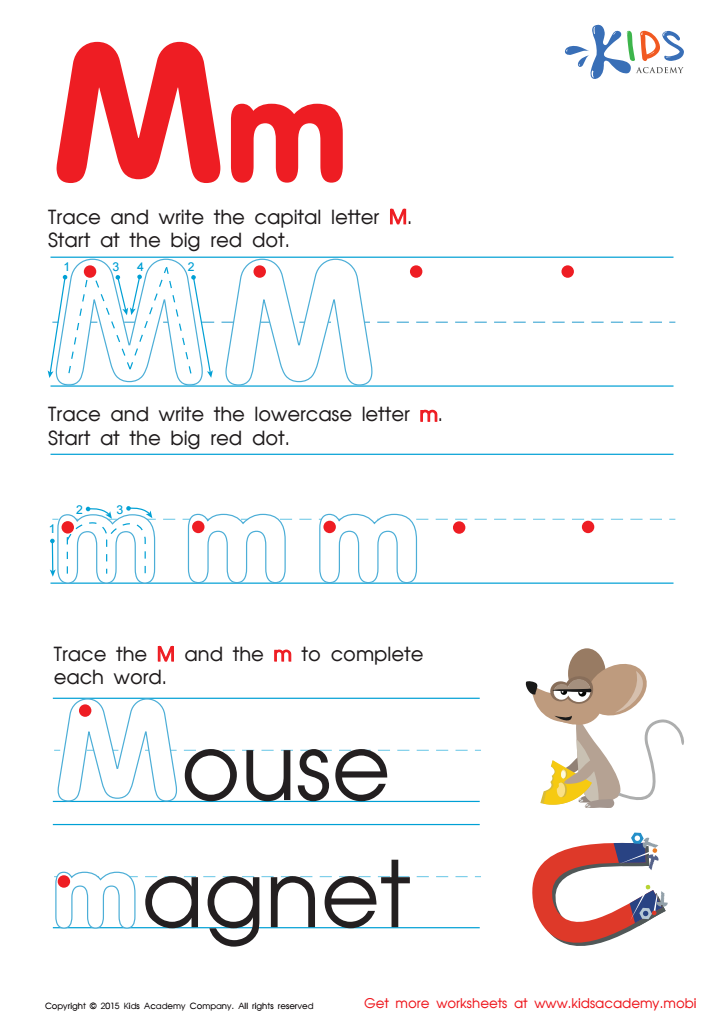
Trace and write the letter "M" to help kids learn the alphabet. Start at the red dot and practice several times. Trace the capital letter first, then move on to the lowercase. Complete words like "mouse" and "magnet" in the further exercise. Get more free printables here.
Letter M Tracing Page
Worksheet
Letter J worksheets
Letter J worksheets

Letter J Tracing Page

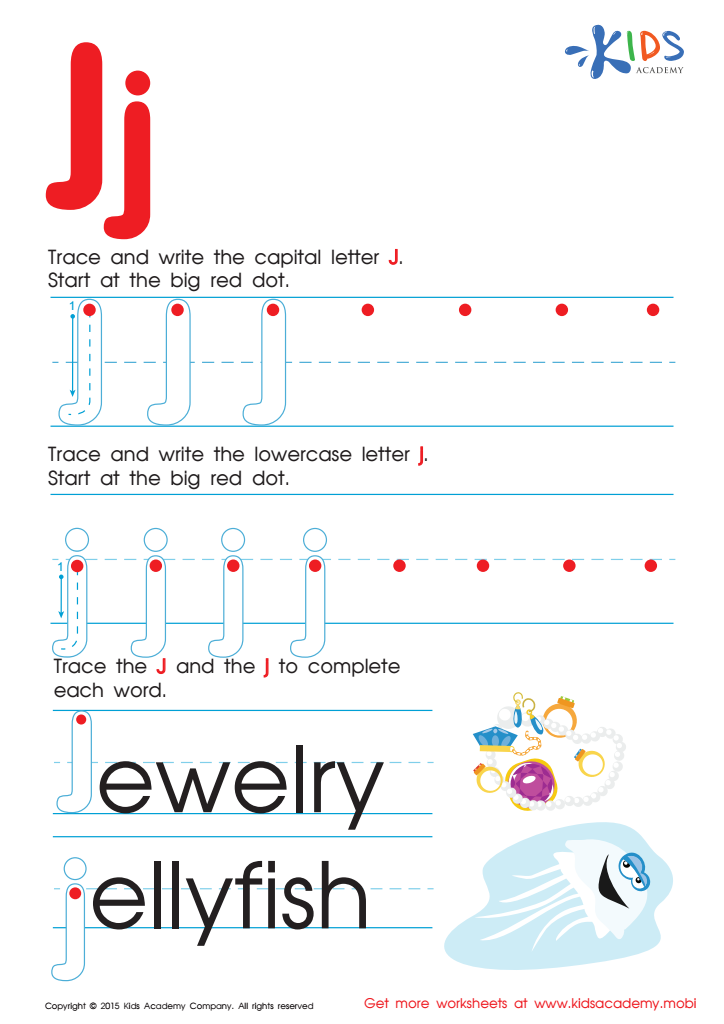
Trace and write the letter "J" with our ABC worksheet - start at the big red dot! Have fun completing words like jewelry, jellyfish and more. Check out our kindergarten activities for more alphabet practice.
Letter J Tracing Page
Worksheet
Letter E Tracing Worksheet Preview

Letter E Tracing Worksheet

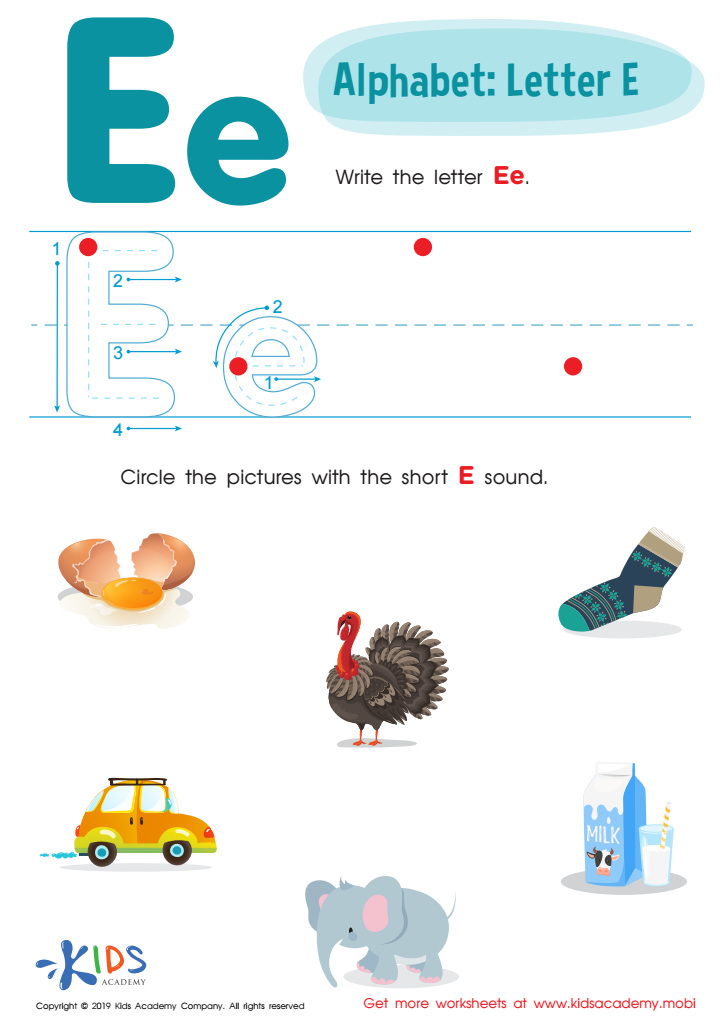
Students trace and write uppercase and lowercase letter E. They sound out "E" words, choosing those with short "E" sounds. Preschoolers identify the difference between the 'E' sounds in words like "egg" and "turkey." A tracing sheet helps them to understand.
Letter E Tracing Worksheet
Worksheet
Letter N worksheets
Letter N worksheets

Letter N Tracing Page

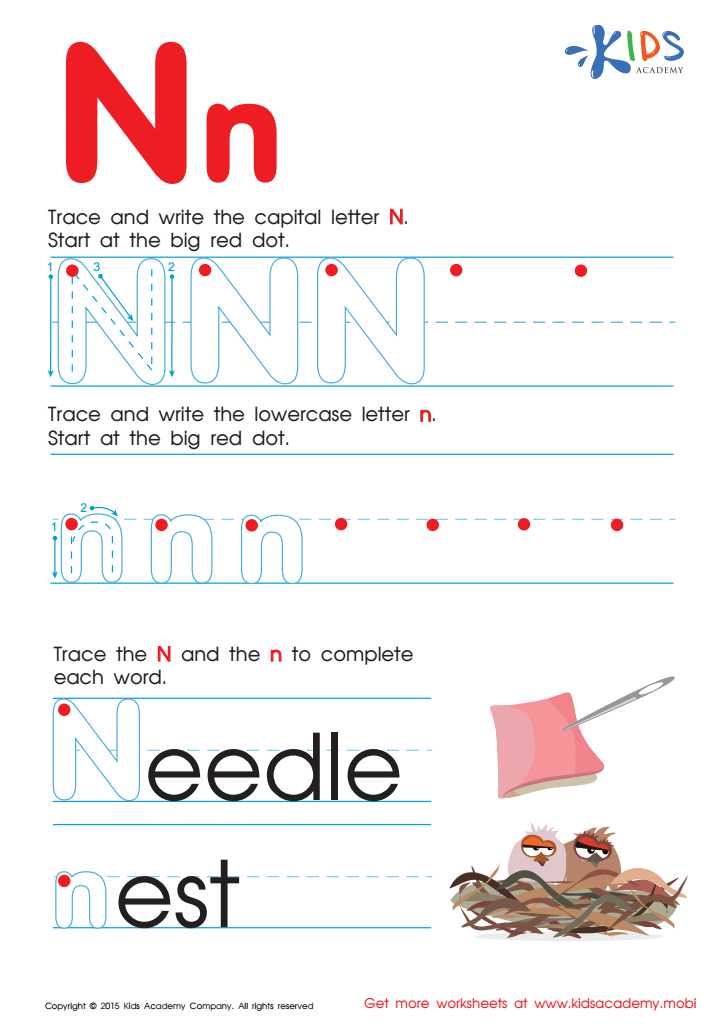
Trace and write capital "N" and lowercase "n" several times. Then try forming words like "needle" and "nest". Master letter writing with Kids Academy's collection of ABC worksheets for kindergarten.
Letter N Tracing Page
Worksheet
letter b worksheets
letter b worksheets

Letter B Tracing Page

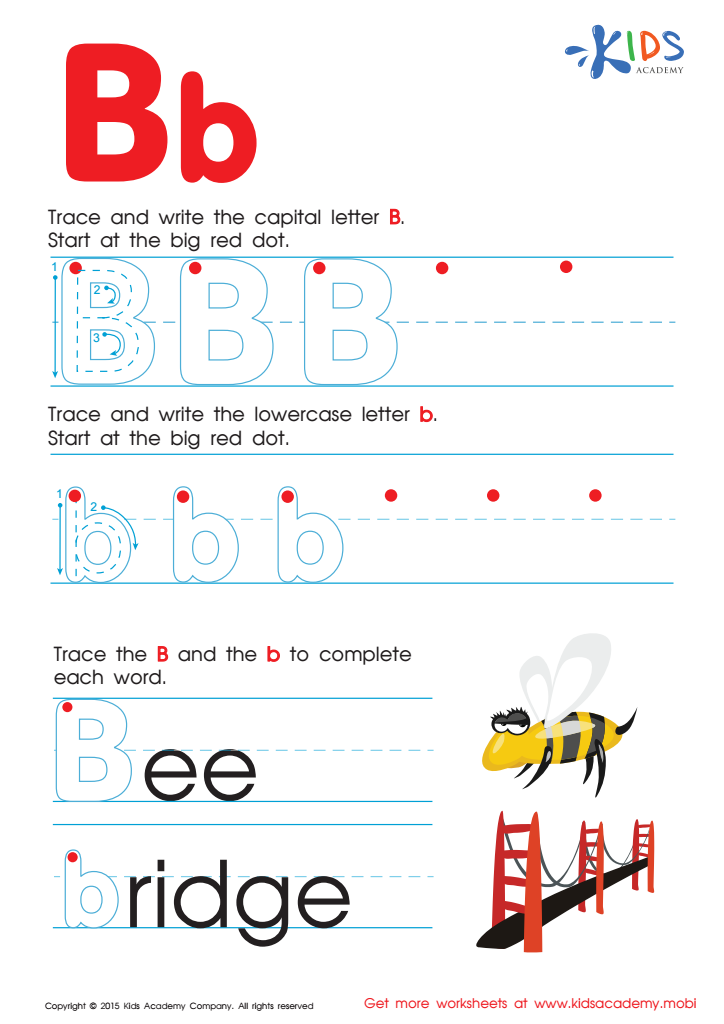
Ready to learn the Alphabet? Put your pencil on the red dot and trace & write both capital & lowercase "B". Then have a look at the pictures. Catch the bee, cross the bridge & write the letters to complete the words. More ABC worksheets for kindergarten available!
Letter B Tracing Page
Worksheet
letter e worksheets
letter e worksheets

Letter E Tracing Page

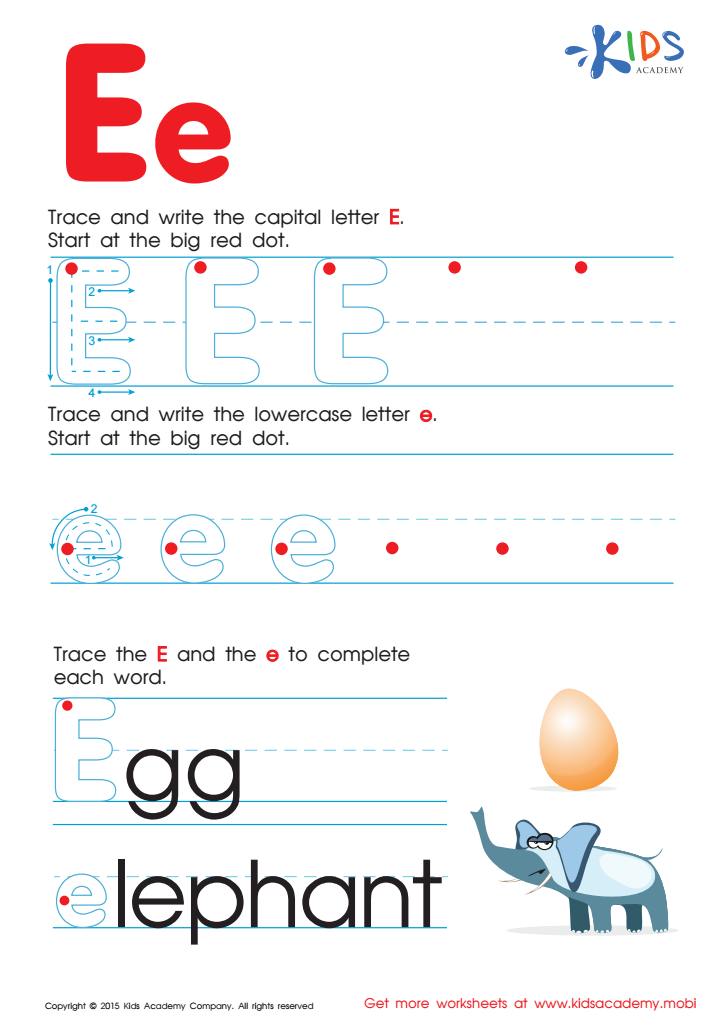
Trace and write the uppercase and lowercase "E" starting at the big red dot. Complete words to perfect letter writing. Egg and Elephant must be written carefully. More alphabet worksheets for kindergarten are available for download to spend more time with your children learning.
Letter E Tracing Page
Worksheet


Alphabet recognition and letter tracing are crucial skills for 7-year-olds, significantly influencing their literacy development. At this age, children transition from learning to read to reading to learn. Recognizing letters enables them to identify words, leading to improved reading fluency and comprehension, which are foundational for academic success.

Normal tracing letters aids fine motor skills, enhancing hand-eye coordination, which is essential for writing. Establishing the ability to write letters correctly helps boost children's confidence and willingness to communicate through writing. Moreover, tracing reinforces the connection between sounds and their corresponding letters, aiding phonemic awareness and spelling skills.

Additionally, engaging in alphabet recognition and tracing can be a fun and interactive process, allowing parents and teachers to be involved in promoting literacy. This interaction strengthens the child’s learning experience while also fostering a supportive learning environment.

When parents and teachers encourage these skills, they play a pivotal role in laying a solid foundation for future academic success. By nurturing letter recognition and motor skills, they help foster a love for reading and writing, which can last a lifetime. Thus, prioritizing these activities is imperative for the overall development of 7-year-olds.