Vocabulary expansion Normal Vowels and Consonants Worksheets for 7-Year-Olds
5 filtered results
Difficulty Level
Grade
Age
-
From - To
Subject
Activity
Standards
Enhance your 7-year-old's vocabulary with our engaging Normal Vowels and Consonants Worksheets! Tailored specifically for young learners, these worksheets focus on expanding vocabulary through interactive activities that introduce and reinforce essential phonetic concepts. By exploring normal vowels and consonants, children will build language skills crucial for reading and communication. Our fun and creative exercises make learning enjoyable, helping kids recognize and understand word patterns. Foster a love for words with vibrant illustrations and relatable examples that capture their imagination. Join us in providing a solid foundation for language development, and watch as your child’s vocabulary flourishes with each worksheet completed!
Favorites
With answer key
Interactive
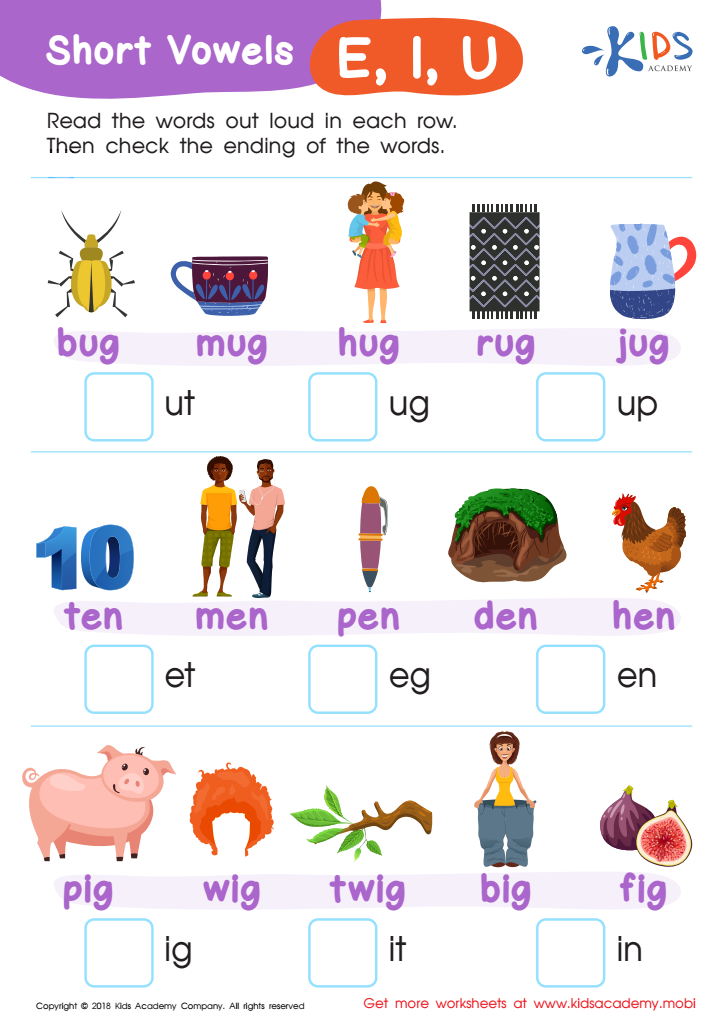
Short Vowels /e/, /i/, and /u/ Worksheet
Your emergent reader can have fun while practicing their short vowel sounds with this free, brightly colored worksheet. They'll identify one-syllable words by their pictures, then match the correct ending for each. They'll gain an understanding of how short vowel sounds vary in closed syllables with different endings, without even realizing it!
 Assign to My Students
Short Vowels /e/, /i/, and /u/ Worksheet
Worksheet
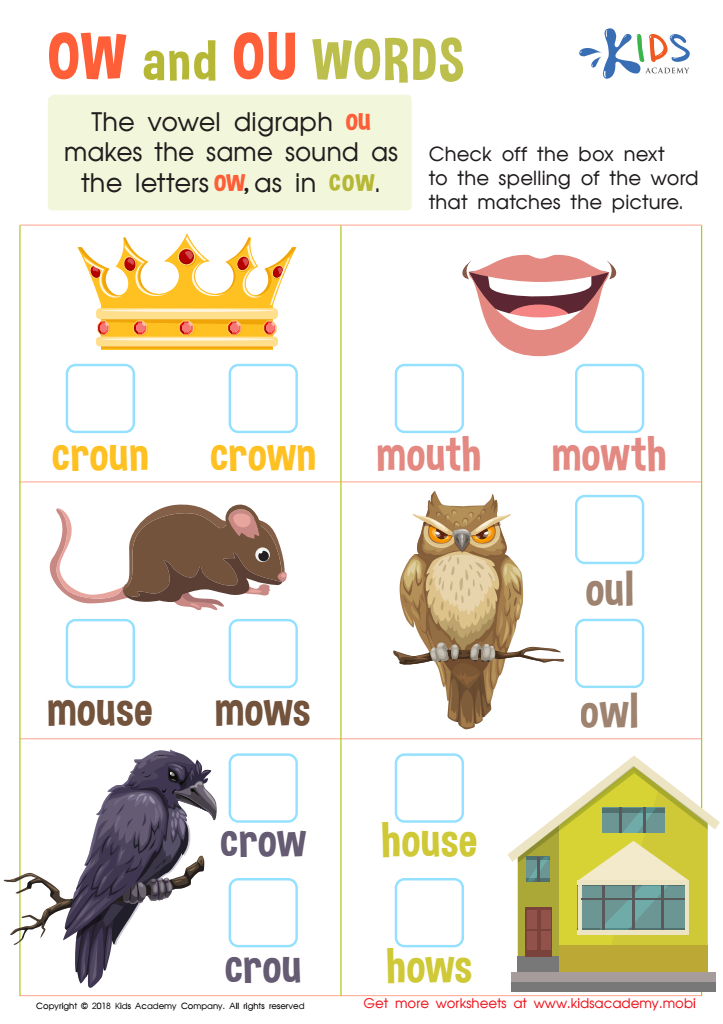
Reading: OW and OU Words Worksheet
Help your kids learn phonetics! Explain the different sounds and long/short variations. Emphasize that some vowel sounds are the same, e.g. ou = ow in cow. For practice, have them read aloud the words in the worksheet and check the box next to the spelling that matches the picture.
Reading: OW and OU Words Worksheet
Worksheet
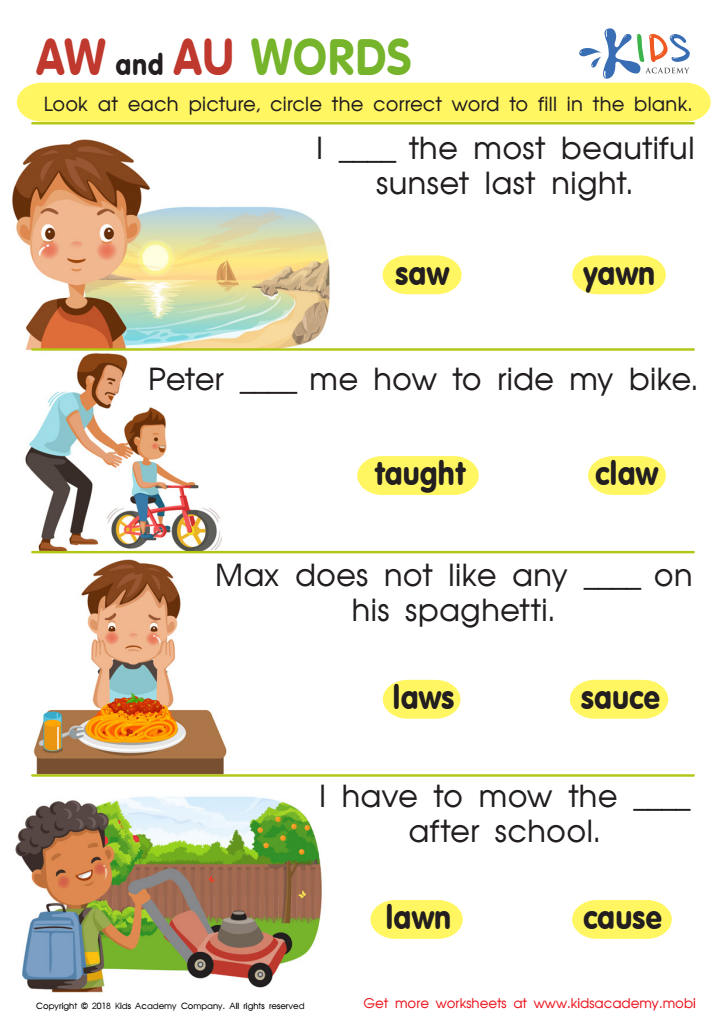
Reading: AW and AU Words Worksheet
This worksheet helps kids recognize that /au/ and /aw/ can make the same sound. Students read sentences and pick the correct word with one of the digraphs. Understanding digraphs improves decoding and reading fluency. Perfect for reading and phonics classes.
Reading: AW and AU Words Worksheet
Worksheet
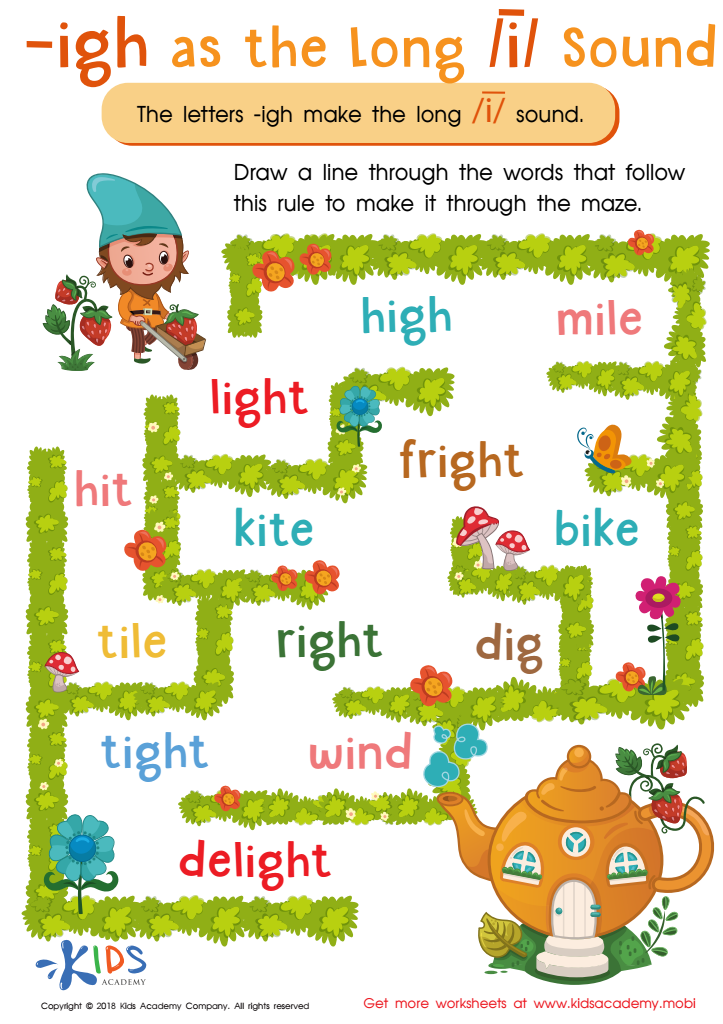
Reading: IGH as Long I Worksheet
Kids can have fun and learn with this maze! They'll look for and read words with the 'long I' sound spelled 'igh'. Most words ending with 'T' have this spelling. Decode words while learning about long vowel sounds and their spellings.
Reading: IGH as Long I Worksheet
Worksheet
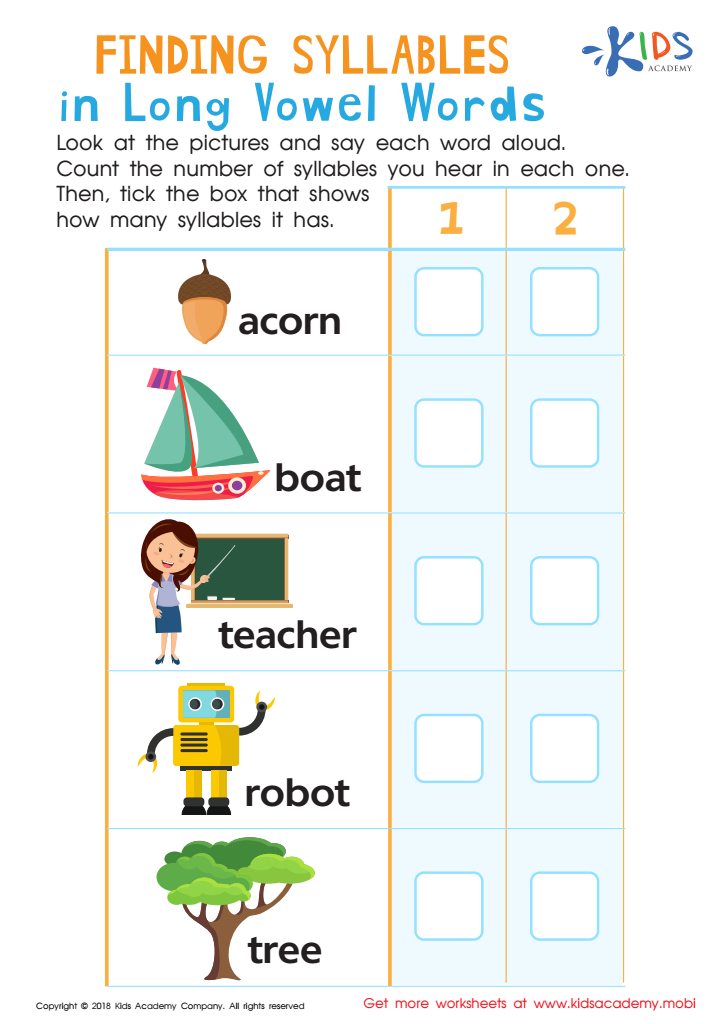
Finding Syllables in Long Vowel Words Worksheet
Help your kids identify objects and better count syllables in words. Look at the printout images with them and have them say each word out loud. Ask them to count syllables and tick the box with the correct number. With this worksheet, your kids will become more skilled.
Finding Syllables in Long Vowel Words Worksheet
Worksheet
Join Kids Academy for Free
Who is primarily going to use this learning content?



Expanding vocabulary through the understanding of normal vowels and consonants is crucial for 7-year-olds as it lays the foundation for effective communication and literacy skills. At this age, children are developing their reading and writing abilities rapidly, making vocabulary expansion essential. A robust vocabulary enhances their comprehension of texts, enabling them to grasp more complex stories and concepts.
Furthermore, a strong vocabulary encourages self-expression. When children can articulate their thoughts and feelings accurately, it boosts their confidence and social interactions. Understanding how vowels and consonants form words also strengthens phonemic awareness, a critical skill for reading fluency.
Additionally, vocabulary plays a vital role in academic success across subjects. Children who possess a rich vocabulary can better understand math word problems, science terms, and social studies concepts, leading to a more well-rounded education.
Finally, fostering vocabulary expansion encourages a lifelong love for learning. Children are more inclined to engage with books and educational materials when they recognize and understand the language, paving the way for future academic pursuits. Thus, parents and teachers have a profound responsibility to focus on vocabulary development in young learners, ensuring their readiness for the challenges of higher learning and communication.