Addition Practice Normal Worksheets for 7-Year-Olds - Page 2
27 filtered results
-
From - To
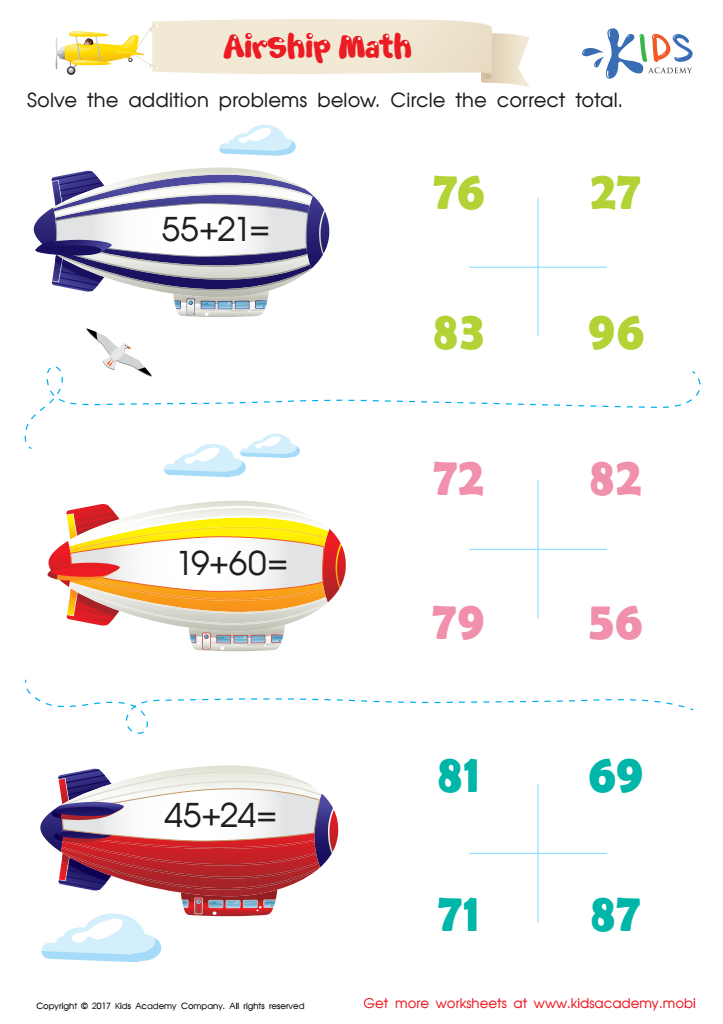
Airship Math Addition Printable
 Assign to My Students
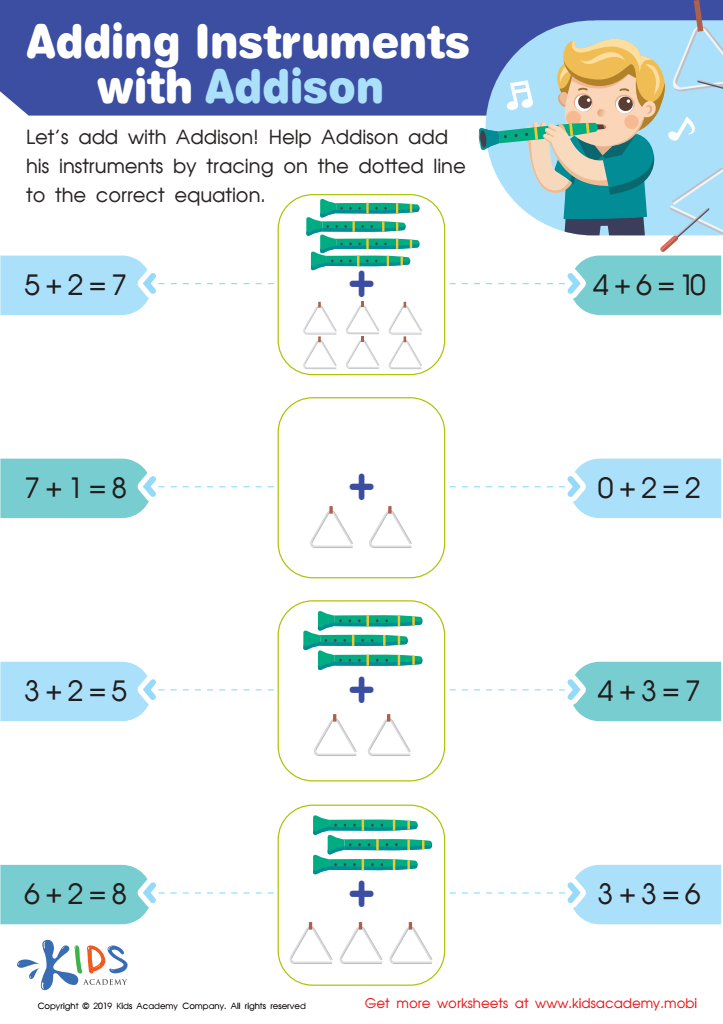
Adding Instruments with Addison Worksheet
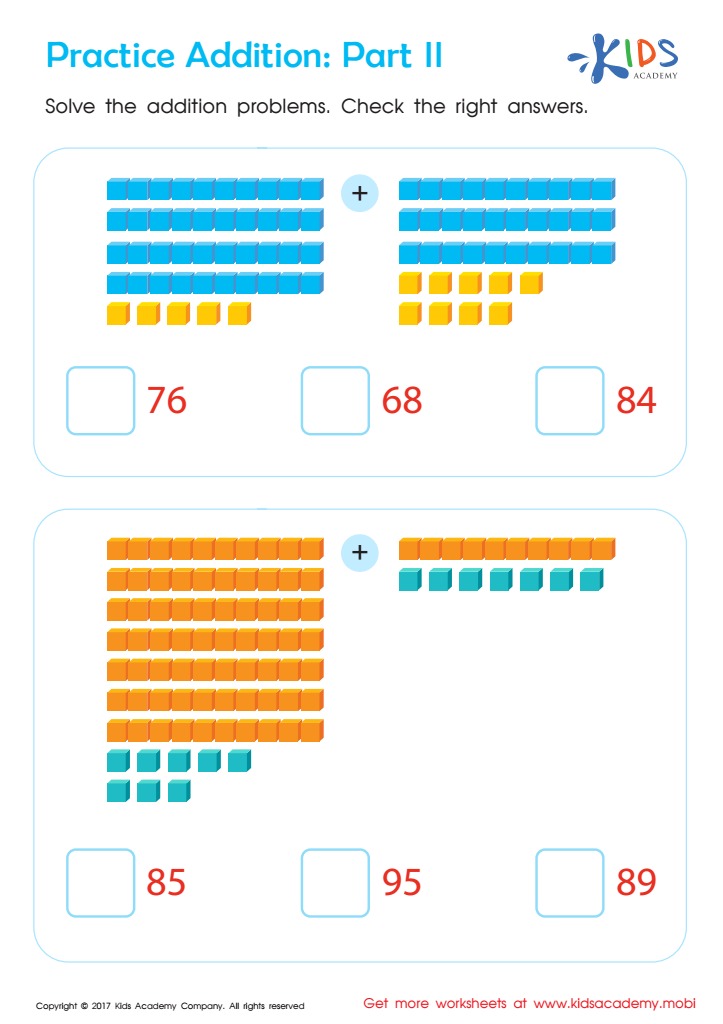
Practice Addition: Part 2 Worksheet



.jpg)
.jpg)



Addition practice is crucial for 7-year-olds as it lays the foundation for their mathematical understanding. At this age, children are transitioning from basic number recognition to more advanced arithmetic, which will be pivotal throughout their education. Practicing addition enhances cognitive skills, fosters problem-solving abilities, and promotes critical thinking.
Moreover, addition practice allows children to develop confidence in their mathematical skills. As they become proficient in addition, they are more likely to engage positively with math overall. This confidence encourages a love for learning and exploration in other subjects as well, creating a well-rounded educational experience.
For parents and teachers, consistent addition practice also provides opportunities for bonding. Engaging children through fun activities, games, or puzzles can make math enjoyable, transforming what could be a daunting task into an exciting challenge. Additionally, monitoring progress in addition skills can help identify areas where a child might need extra support early on, paving the way for targeted interventions.
Ultimately, fostering strong addition skills not only aids academic success but also equips children with essential life skills, making it imperative for teachers and parents to prioritize this practice in their daily routines.








