
Animal recognition Normal Worksheets for 7-Year-Olds
3 filtered results
Difficulty Level
Grade
Age
-
From - To
Subject
Activity
Standards
Discover our engaging Animal Recognition Normal Worksheets designed specifically for 7-year-olds. These fun and educational resources help young learners identify different animals and enhance their visual recognition skills. Each worksheet is thoughtfully crafted to engage children through vibrant images and intriguing activities that promote both learning and creativity. As they match, trace, and color various animals, kids will build essential knowledge about wildlife while developing fine motor skills. Perfect for teachers and parents seeking to support their child's education, our worksheets encourage exploration of the animal kingdom in an enjoyable and interactive way. Help your child discover the animal world today!
Favorites
With answer key
Interactive
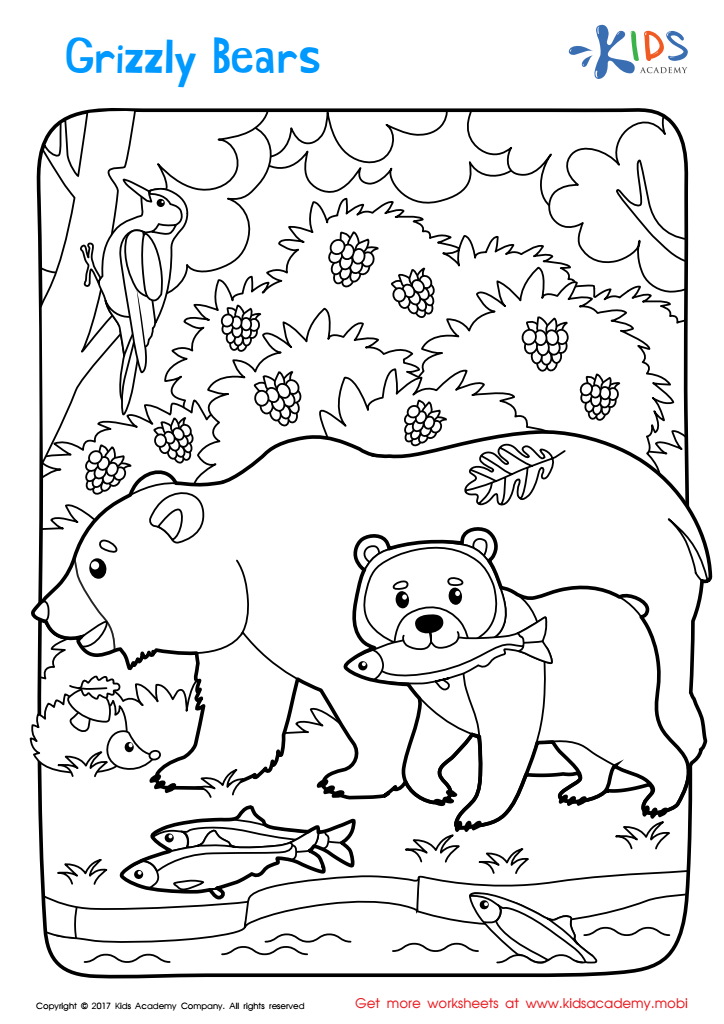
Free Printable Grizzly Bear Coloring Page
Today we're exploring the Great Plains and its most popular inhabitant: the grizzly bear! Our free printable coloring page introduces kids to the bear's natural habitat and food, like salmon and berries. Join us for a fun and educational experience!
Download (PDF)
 Assign to My Students
Assign to My Students
Free Printable Grizzly Bear Coloring Page
Worksheet
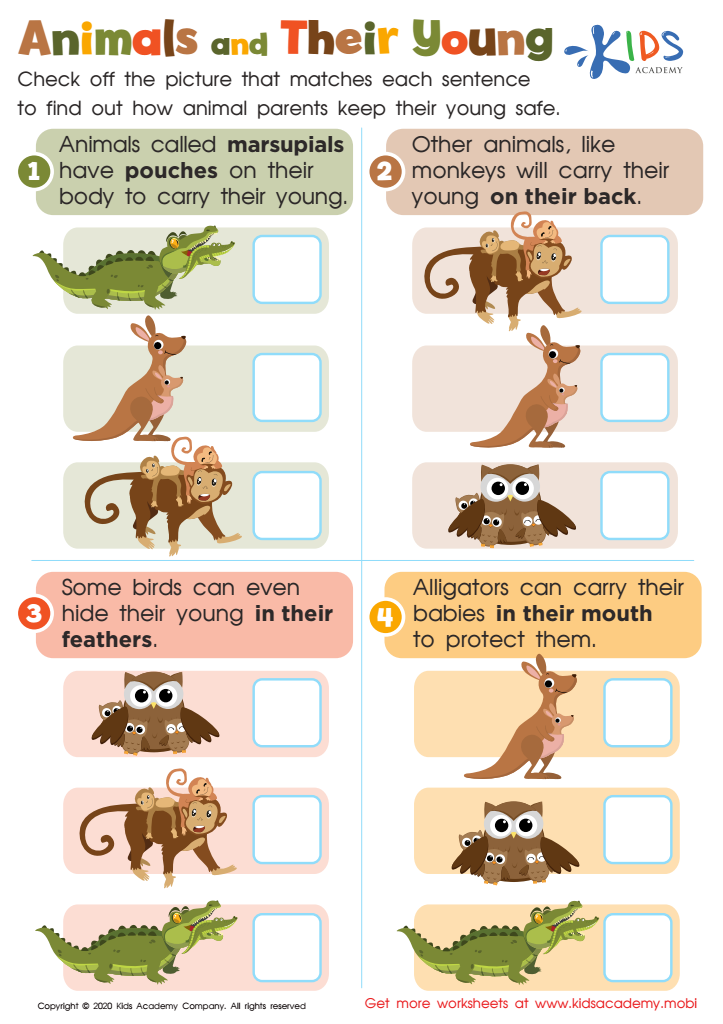
Animals and Their Young Worksheet
Help your child learn more about the animal kingdom with this cute science worksheet! They'll find out how animals protect and keep their babies close. From pouches to hitching a ride on mama’s back, they'll read the sentence above each illustration and select the description that fits. Check off the correct description as they go - a fun and educational activity!
Animals and Their Young Worksheet
Worksheet
Join Kids Academy for Free
Who is primarily going to use this learning content?







Animal recognition is crucial for 7-year-olds as it plays a significant role in their cognitive and emotional development. At this age, children are naturally curious, and engaging with animals helps foster their observational skills and critical thinking. Recognizing different animals enhances their understanding of biodiversity, a fundamental concept in science, leading to a greater appreciation of the environment.
Additionally, learning to identify animals can improve literacy skills as children explore new vocabulary related to animal names, habitats, and behaviors. This connection between language and observation promotes cognitive engagement, making learning more dynamic and fun.
From an emotional perspective, interacting with animals can teach empathy and responsibility. Children who learn about various animals often develop compassion towards them, which encourages a sense of caretaking. This emotional growth is crucial for developing social skills and understanding the broader circle of life.
Moreover, recognizing animals can be a gateway to discussing environmental issues, such as conservation efforts, fostering a sense of stewardship in young learners. When parents and teachers prioritize animal recognition, they not only enhance children's education but also cultivate a more thoughtful and caring generation, prepared to engage with the world around them.








