
Capitalization rules Normal Worksheets for 7-Year-Olds
3 filtered results
Difficulty Level
Grade
Age
-
From - To
Subject
Activity
Standards
Discover engaging capitalization rules worksheets designed specifically for 7-year-olds! Our printable resources on Kids Academy make mastering capitalization fun and easy. These worksheets help children understand when to capitalize letters in sentences, including proper nouns, the beginning of sentences, and more. Developed to enhance learning skills, these activities are perfect for both classroom and home use. Boost your child's writing confidence and accuracy with our expertly crafted capitalization worksheets, ensuring they develop strong foundational grammar skills. Visit Kids Academy today, and explore our collection of capitalization rules resources for young learners!
Favorites
With answer key
Interactive
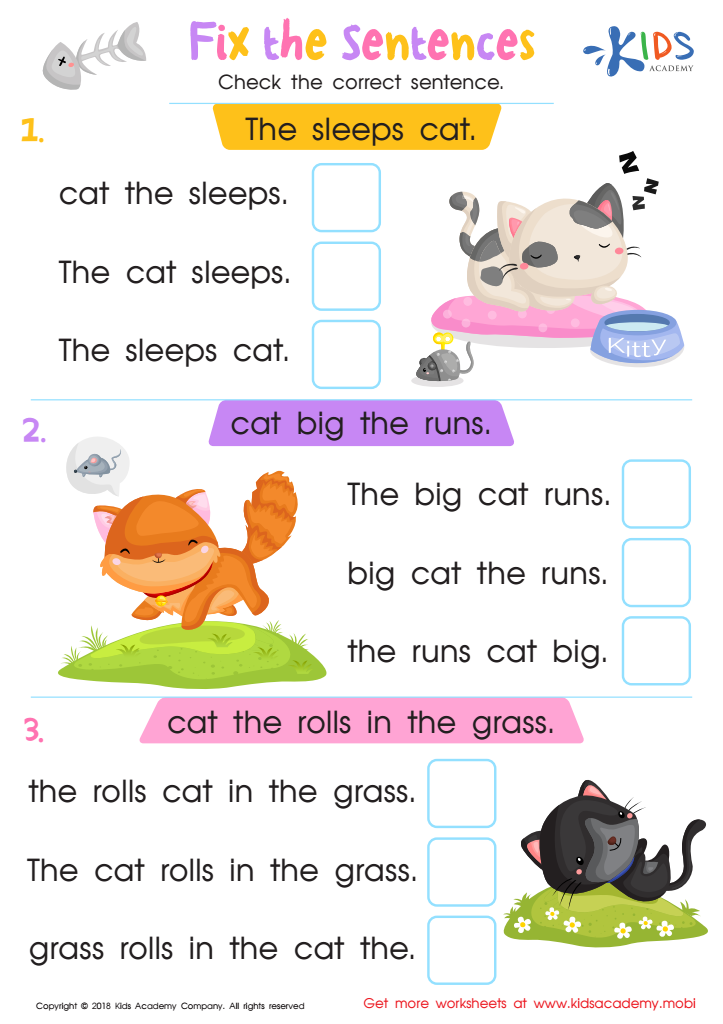
Fix the Sentences Worksheet
Once your students know the alphabet, teach them words. Then move on to constructing sentences. If they have a handle on sentence structure, give them this worksheet. Ask them to read the sentences and check the correct one.
 Assign to My Students
Fix the Sentences Worksheet
Worksheet
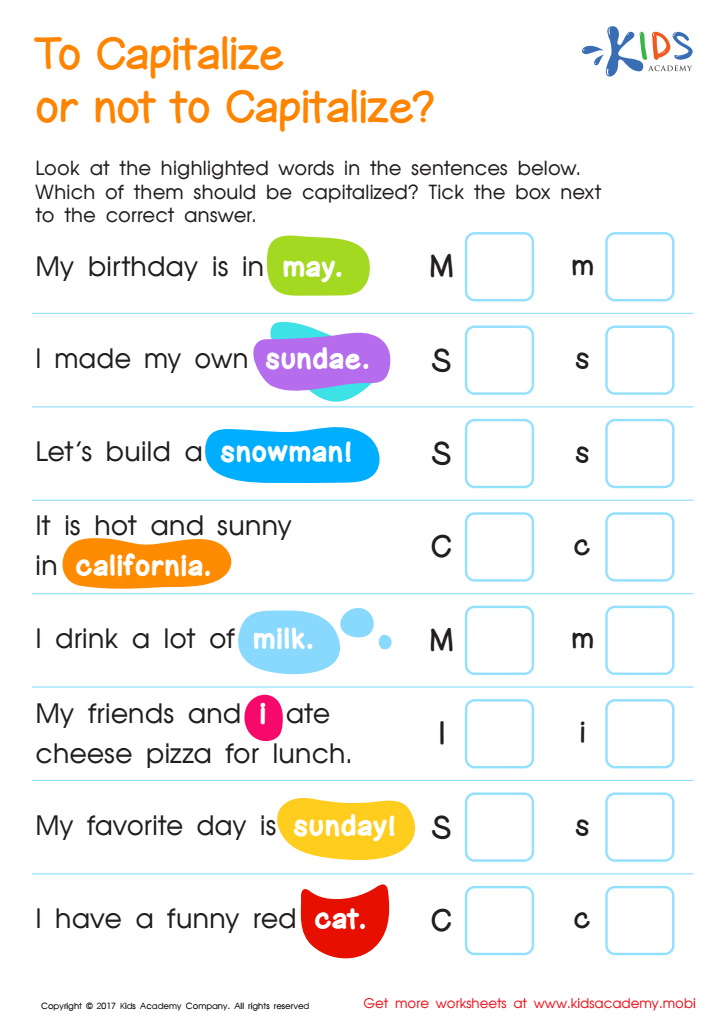
Capitalization: To Capitalize or Not? Printable
Have them answer the questions in "To Capitalize or Not to Capitalize" to check their understanding.
Capitalization: To Capitalize or Not? Printable
Worksheet
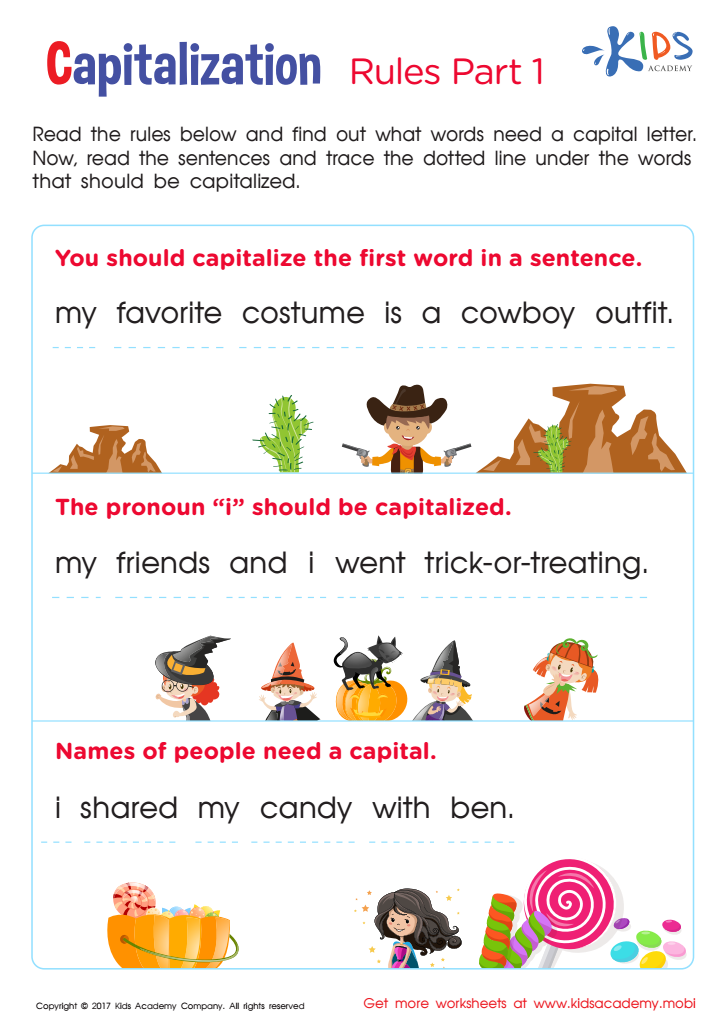
Capitalization Rules: Part 1 Worksheet
Kids entering high school with poor capitalization skills? Equip your 1st grader with the tools to combat this now! This capitalization worksheet will give them the knowledge they need to understand the importance of proper grammar rules and get their writing up to scratch.
Capitalization Rules: Part 1 Worksheet
Worksheet
Join Kids Academy for Free
Who is primarily going to use this learning content?








Proper capitalization is a fundamental aspect of writing that parents and teachers should emphasize for 7-year-olds because it forms the foundation of good communication skills. Learning when to capitalize letters helps young students recognize the structure and organization of written language, making their writing clearer and more professional.
First and foremost, capitalization marks the beginning of sentences, signifying a new thought or statement, and helping to organize text logically. This is crucial for both reading comprehension and writing cohesiveness. Secondly, capitalizing proper nouns—such as names of people, places, and specific objects—enables students to distinguish between general and specific entities, enhancing their understanding of context and detail.
Furthermore, correct capitalization fosters early attention to detail, which can benefit learning across all subjects. In the digital age, proficiency in written communication remains essential, extending from school assignments to future workplace skills. Improper capitalization can render texts confusing and can detract from the credibility of the author.
By teaching children capitalization rules early on, parents and teachers set the stage for effective communication, instilling habits that students will carry throughout their educational journey and into adulthood. This early foundation helps build a sense of pride in their writing and fuels overall academic confidence.








