Counting skills Normal Worksheets for 7-Year-Olds - Page 3
50 filtered results
-
From - To
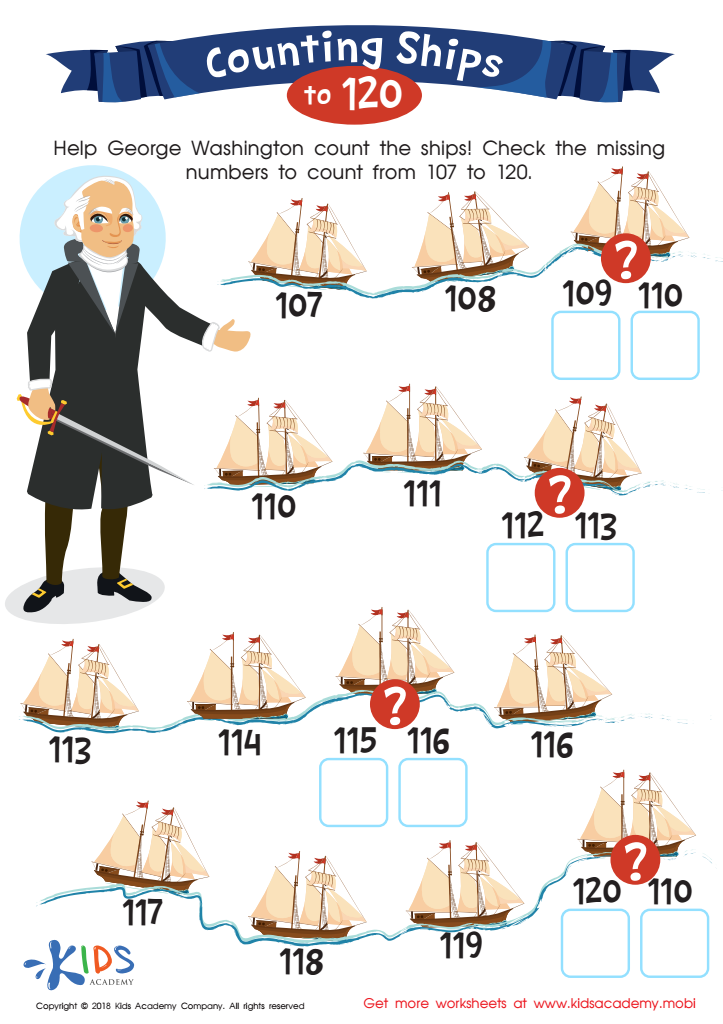
Counting Ships to 120 Worksheet
 Assign to My Students
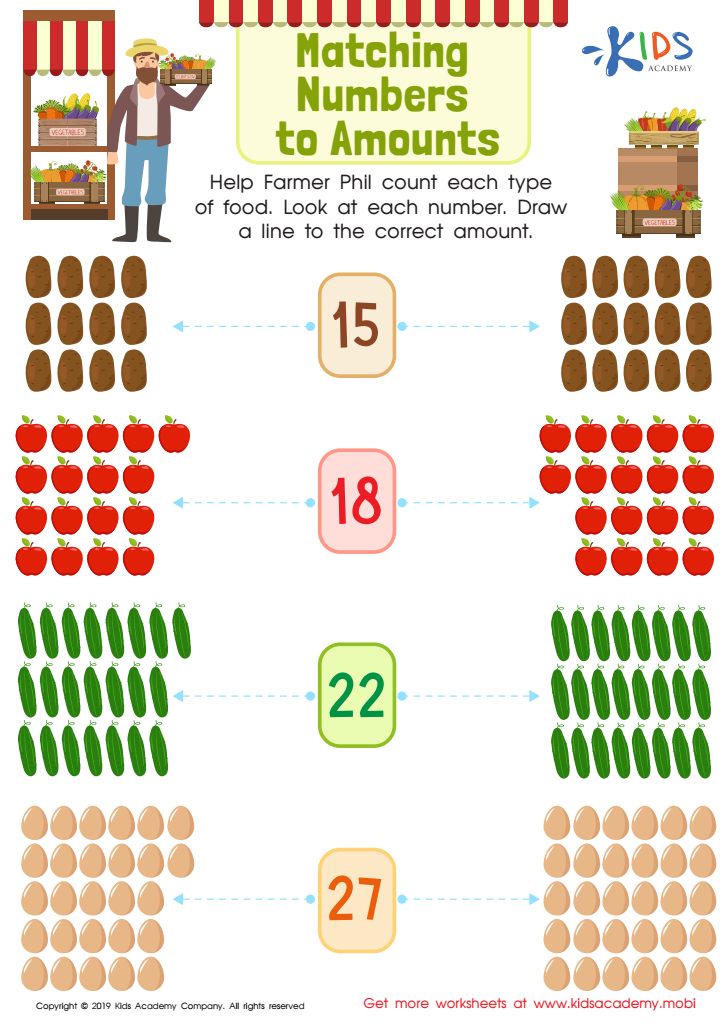
Matching Numbers to Amounts Worksheet






Counting skills are fundamental building blocks for a child's mathematical development. At the age of seven, children are typically in the first or second grade and are expected to have foundational counting skills that will enable them to comprehend more advanced mathematical concepts. Parents and teachers should care about this milestone for several reasons.
Firstly, mastering counting skills encompasses more than just reciting numbers. It involves understanding number sequences, recognizing patterns, and grasping the concept of quantity. These skills form the bedrock for more complex operations like addition, subtraction, multiplication, and division.
Secondly, counting proficiency is critical for practical everyday tasks. From sorting objects to understanding time and money, counting is woven into daily activities. Skilled counters can navigate these tasks more confidently and competently.
Thirdly, numeracy skills are strongly correlated with overall academic performance. Research suggests that early math skills are predictive of later academic success, not only in mathematics but across numerous subjects. Robust counting skills help children perform better academically, thus enhancing their self-esteem and enthusiasm for learning.
Moreover, early difficulties with counting can indicate underlying learning challenges. By monitoring and supporting children’s counting abilities, parents and teachers can identify and address potential issues early on, offering necessary interventions to ensure every child stays on track academically.
In sum, counting skills are crucial for a 7-year-old's academic success and future learning potentials, fostering both practical abilities and a confident, capable learner.








