
Mathematical reasoning Normal Worksheets for 7-Year-Olds
9 filtered results
Difficulty Level
Grade
Age
-
From - To
Subject
Activity
Standards
Unlock your child's potential with our Mathematical Reasoning Normal Worksheets for 7-Year-Olds. Carefully designed to challenge young minds, these engaging materials help build critical thinking and problem-solving skills in fun, accessible ways. Our worksheets cover a diverse range of essential math concepts, encouraging your child to explore patterns, understand relationships, and apply logical reasoning in various contexts. Ideal for daily practice or supplemental learning, these worksheets foster a love of math, boosting confidence and competence. Perfect for home or classroom use, help your 7-year-old develop a strong mathematical foundation with Kids Academy today!
Favorites
With answer key
Interactive
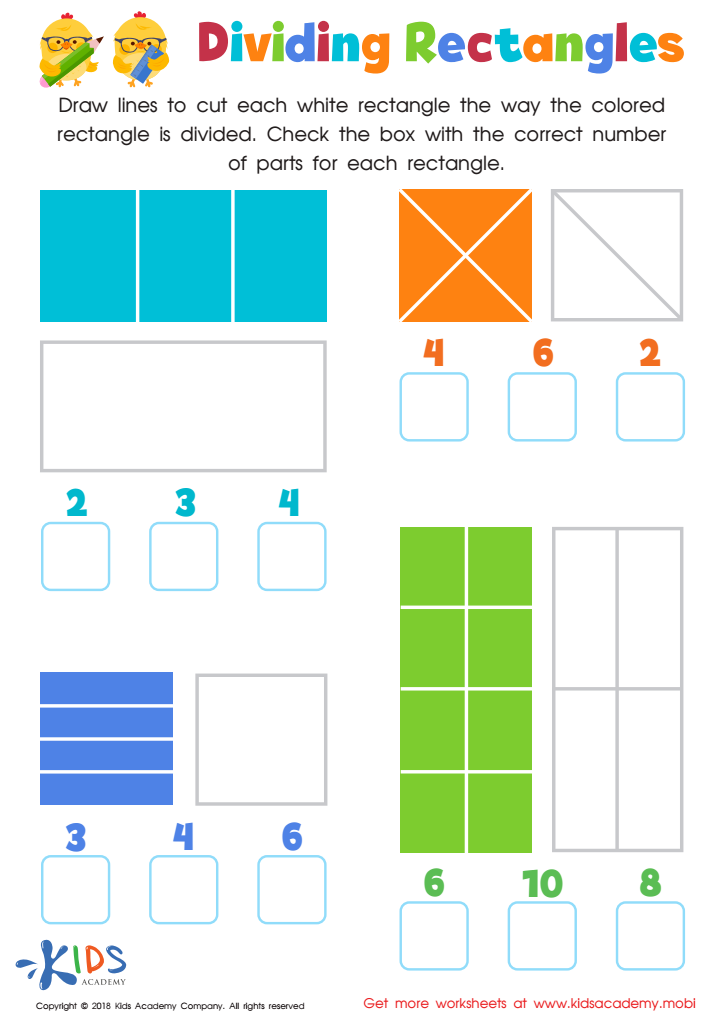
Dividing Rectangles Worksheet
Ask your child to draw lines to divide the white rectangles like the colored ones. Then, have them count the parts in each and choose the correct number. This worksheet will help them practice counting and dividing.
 Assign to My Students
Dividing Rectangles Worksheet
Worksheet
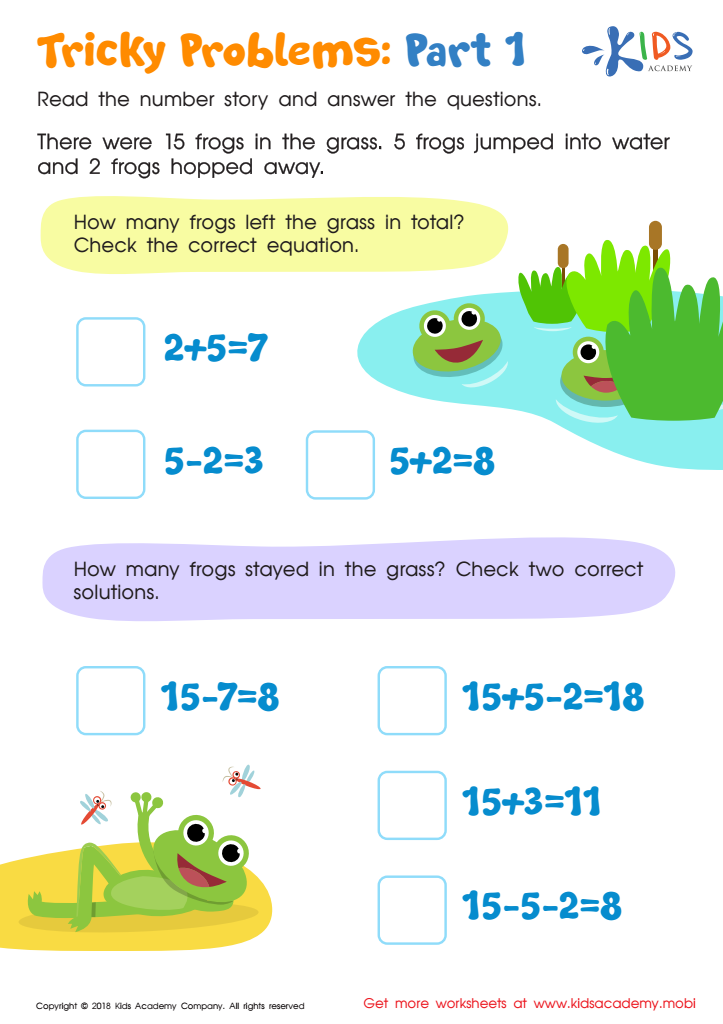
Tricky Problems Worksheet: Part 1
Visualizing word problems can help students solve them. This fun PDF worksheet encourages students to create mental images using math facts, then check boxes to match the equations for basic addition problems. It's a great way to build confidence in solving math.
Tricky Problems Worksheet: Part 1
Worksheet
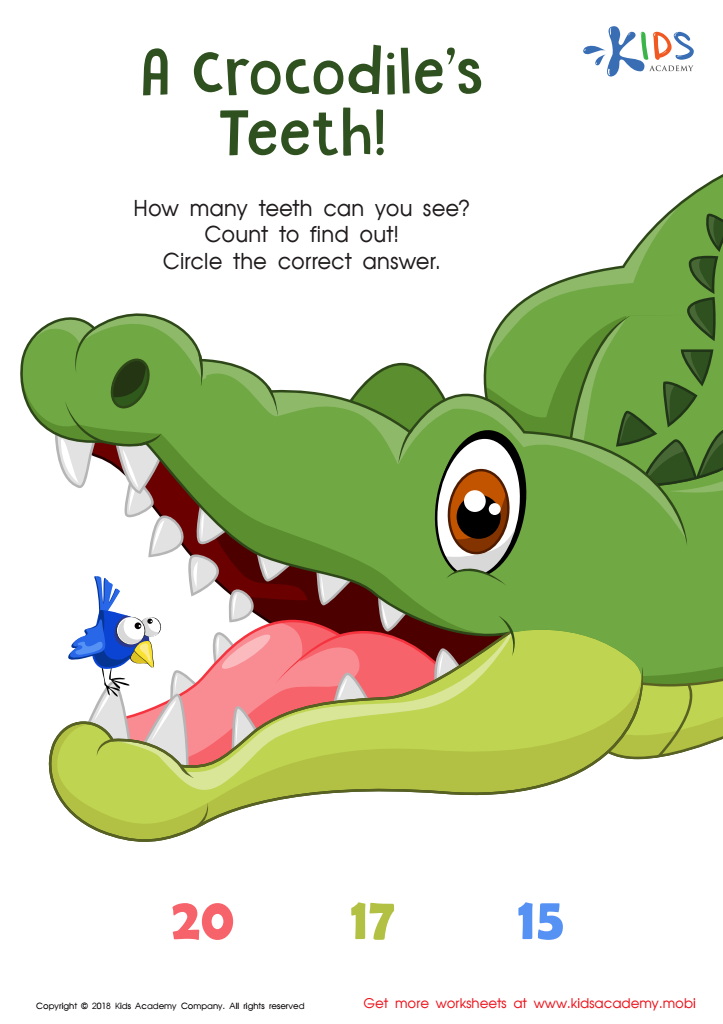
A Crocodile's Teeth Worksheet
Show your child the animal image and ask them to identify it. If they watch animal shows, they'll likely be interested. Count the teeth together, then look at the options and help them circle the right one.
A Crocodile's Teeth Worksheet
Worksheet
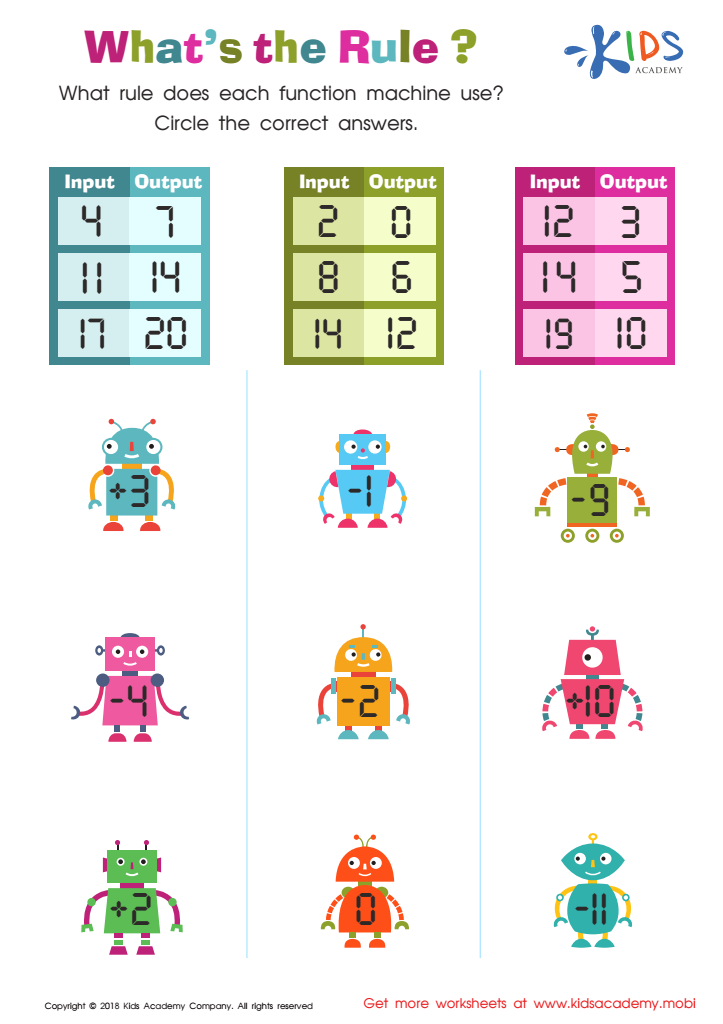
What's the Rule Worksheet
Robots are here to help your child find the relationship between each set of numbers! Adorably illustrated worksheets use vivid pictures that each contain a rule. Look at each function machine and find the pattern or relationship between the input and output. Then, complete the sheet by circling the correct answer!
What's the Rule Worksheet
Worksheet
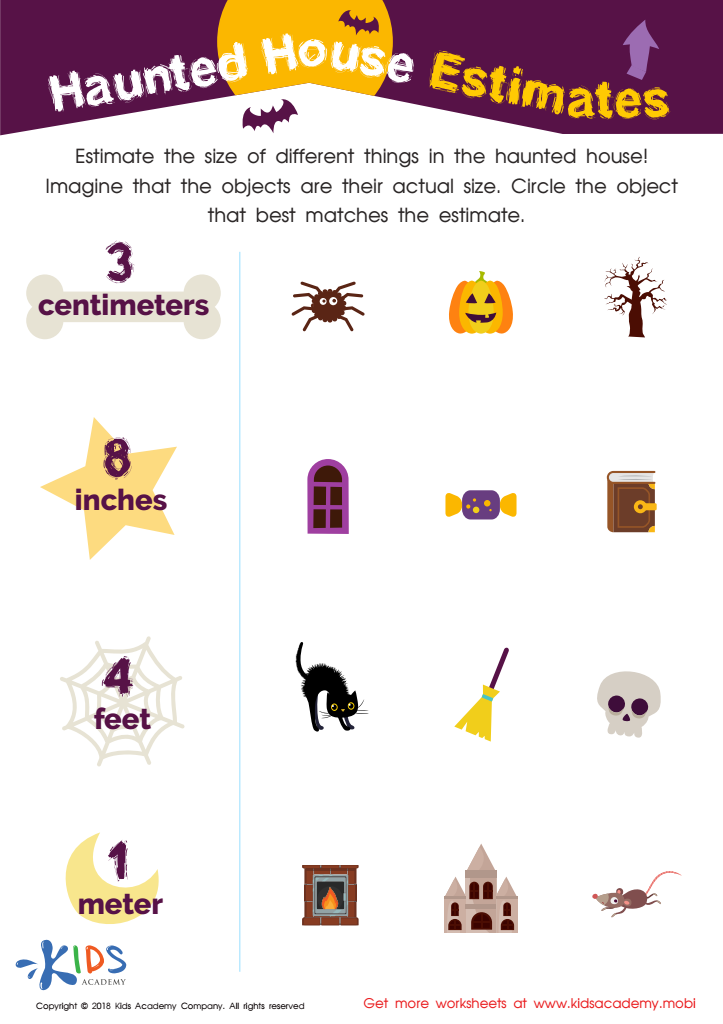
Haunted House Estimates Worksheet
Enliven your kid's learning with this printable worksheet! Have them estimate the size of objects and creatures in a haunted house, then circle the ones that match their estimates. They'll need to understand different measuring units beforehand. It's an exciting way to learn!
Haunted House Estimates Worksheet
Worksheet
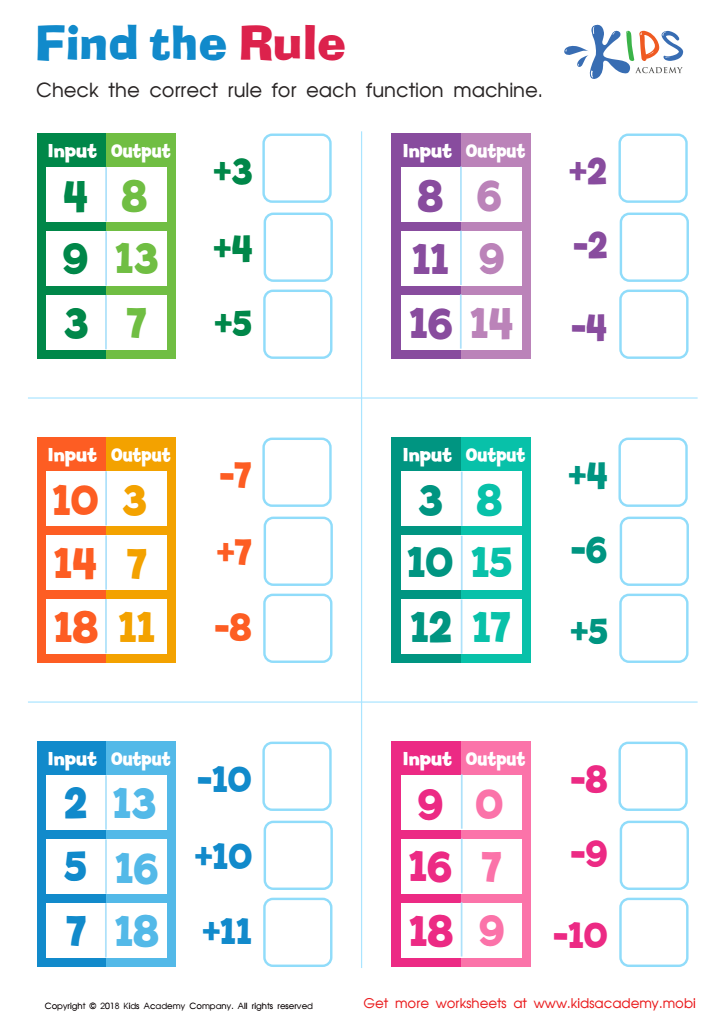
Find the Rule Worksheet
A function machine is an elementary math tool used to find an output by applying a rule, like addition or subtraction, to an input. Children use the diagram to understand the relationship between each input and output, with this worksheet helping them to analyze the machine and find the rule being used.
Find the Rule Worksheet
Worksheet
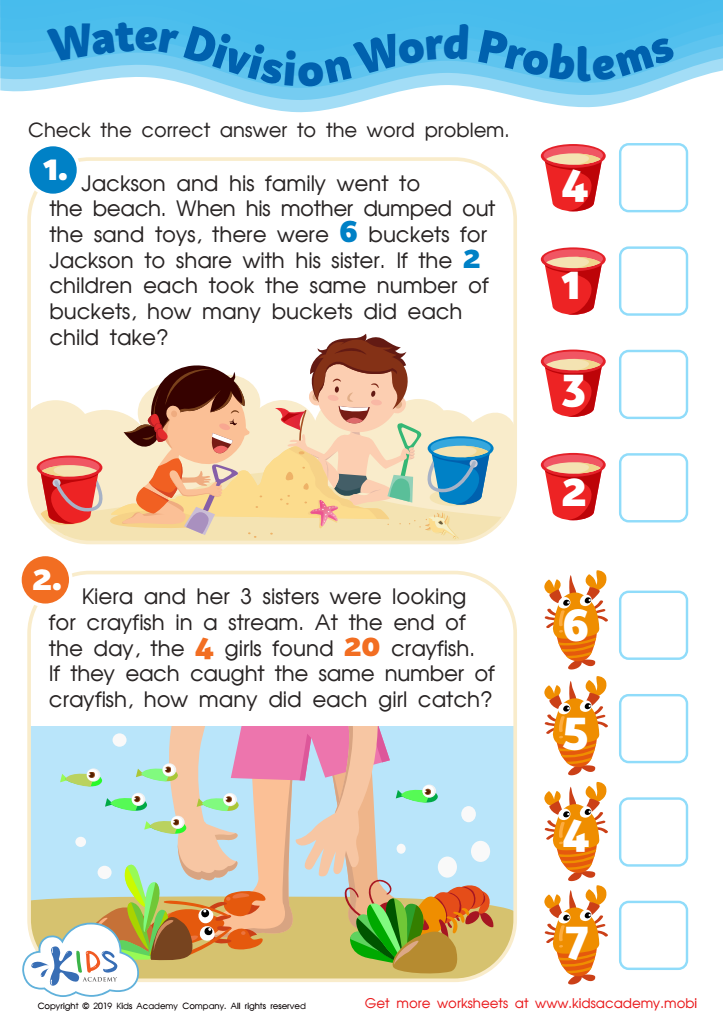
Water Division Word Problems Worksheet
Kids can sharpen their math skills with this fun PDF! They'll see pictures of friends at the beach, plus bold numbers and colorful pictures. All they need to do is read and understand the problem to find the answer - without even realizing they're doing division. A great way to make math enjoyable!
Water Division Word Problems Worksheet
Worksheet
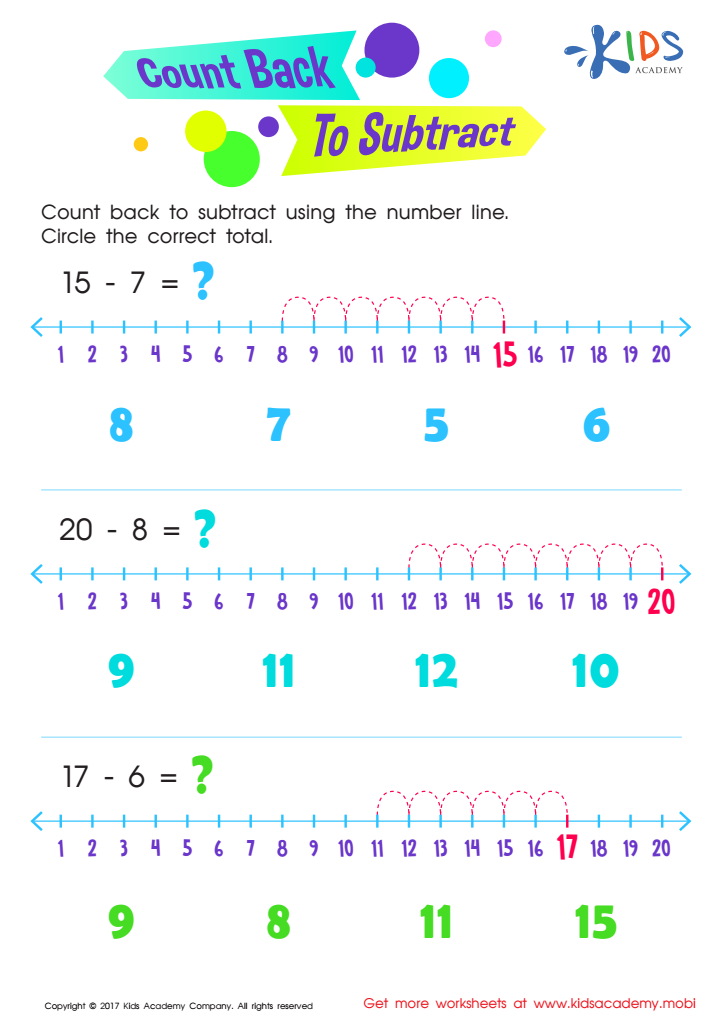
Count Back to Subtract Substraction Worksheet
With this worksheet, your child can visually see and count each number they’re subtracting.
This worksheet provides a number line to help your child master subtraction visually. Counting back on the line will give them a deeper understanding of the concept. It's a great way to teach subtraction and help children gain confidence with the subject.
Count Back to Subtract Substraction Worksheet
Worksheet
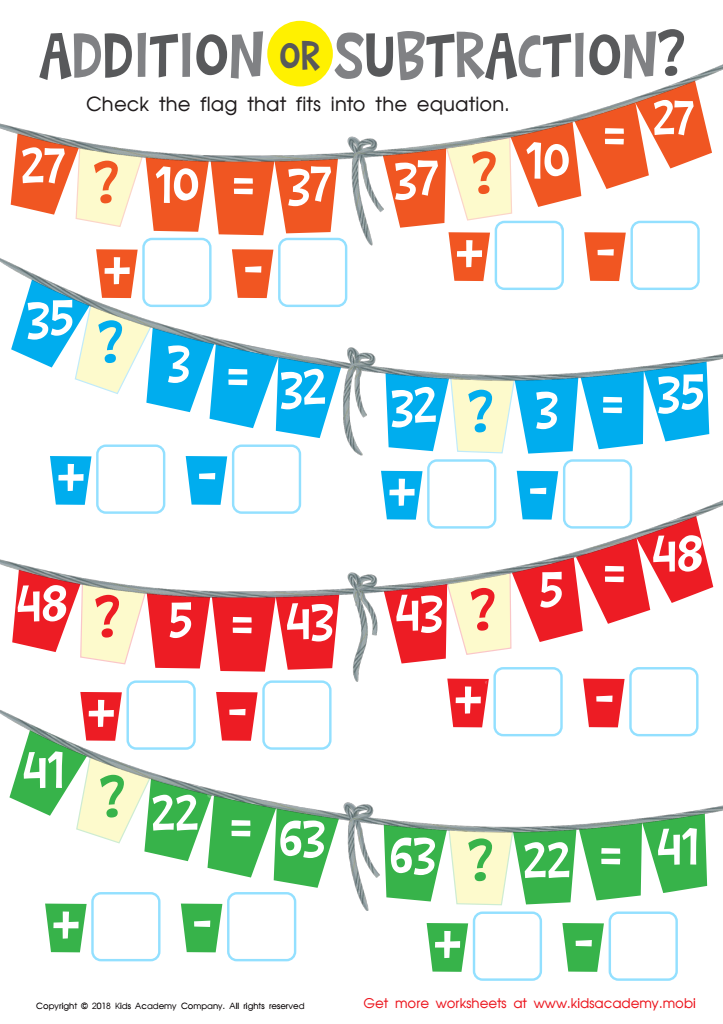
Addition or Subtraction? Worksheet
Help your math whiz's number skills advance with these colorful flag equations! With the free PDF, they'll learn to solve addition and subtraction facts by following the correct orders of operation. And the best part? They'll develop a deeper understanding of how the different operations work together within equations. Give it a try and watch their skills soar!
Addition or Subtraction? Worksheet
Worksheet
Join Kids Academy for Free
Who is primarily going to use this learning content?








Mathematical reasoning is essential for 7-year-olds because it builds a strong foundation for their future learning and problem-solving skills. At this critical age, children are not just learning to count or recognize numbers; they are starting to understand the underlying principles of mathematics. Mathematical reasoning helps them make sense of the world around them, enabling them to think logically and make connections between concepts.
For parents and teachers, nurturing this skill means fostering a child's ability to analyze problems, identify patterns, and deduce conclusions. These are critical thinking skills that extend beyond mathematics and into everyday life. For example, when children learn to recognize patterns, they can better understand events and sequences, which improves their comprehension and organizational skills.
Moreover, early mathematical reasoning can boost academic confidence and persistence. When children experience success in solving math problems, they are more likely to view challenges positively and continue putting effort into their studies. This attitude cultivates a love for learning and perseverance.
Additionally, developing mathematical reasoning skills at a young age can reduce math anxiety, a common issue that negatively impacts students' performance and attitude toward math in later years. By providing a supportive environment where children can explore mathematical concepts without fear of failure, parents and teachers can help cultivate a lifelong appreciation for learning and problem solving.








