
Phonics practice Normal Building Vocabulary Worksheets for 7-Year-Olds
4 filtered results
Difficulty Level
Grade
Age
-
From - To
Subject
Activity
Standards
Enhance your 7-year-old's vocabulary with our engaging Phonics Practice Normal Building Vocabulary Worksheets. Carefully designed to match their reading level, these worksheets offer fun activities that reinforce phonics concepts and vocabulary through interactive exercises. Children will expand their word knowledge while practicing pronunciation and reading comprehension. Perfect for both home and classroom use, these printable worksheets provide essential resources to support early literacy development. Give your child the tools they need to become confident readers with Kids Academy's expertly crafted phonics practice worksheets, making learning an enjoyable adventure.
Favorites
With answer key
Interactive
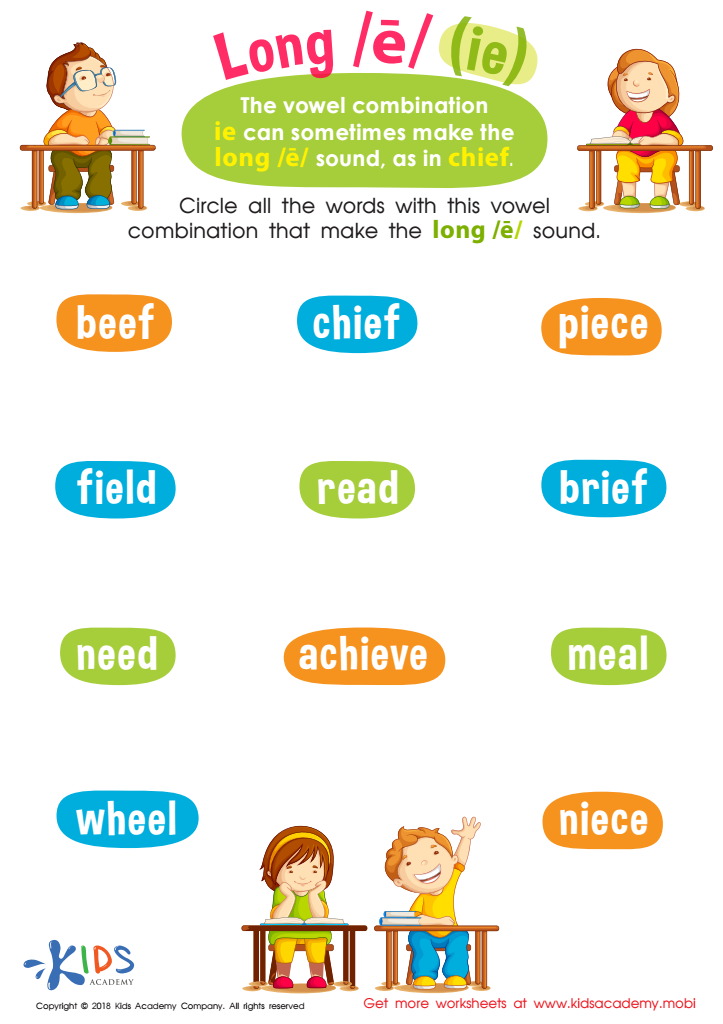
Reading: Long E and IE Worksheet
Ask your child to name some words with the long /e/ sound they hear every day. Then, read aloud all the words in the worksheet with them. Ask them to circle the words containing ie that make this sound.
 Assign to My Students
Reading: Long E and IE Worksheet
Worksheet











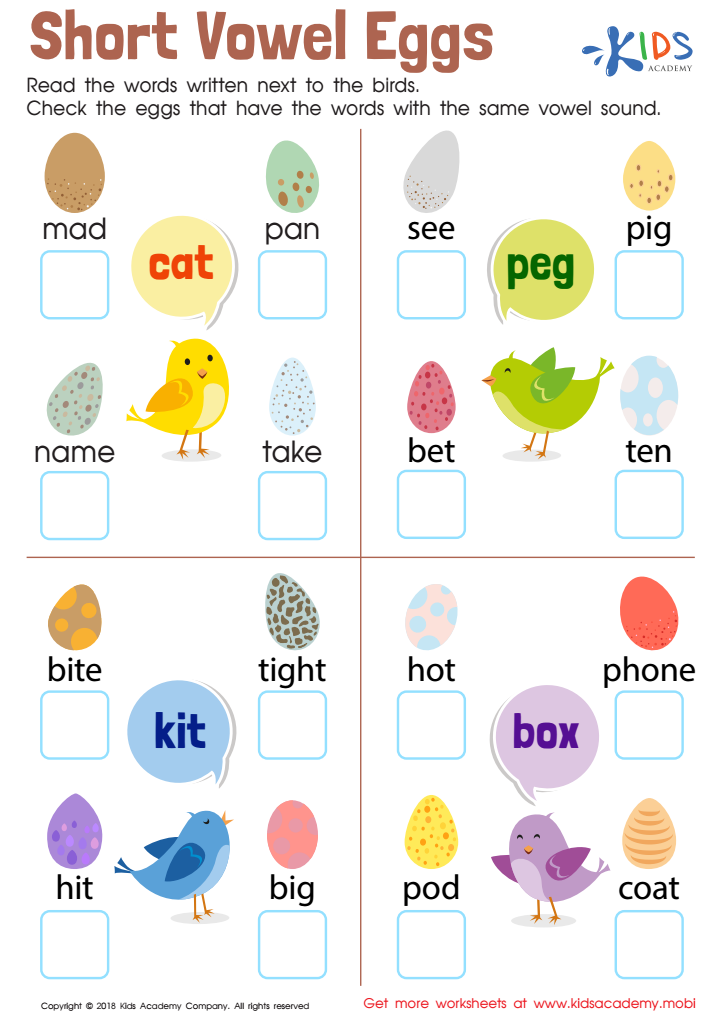
Short Vowel Eggs Worksheet
Your students will love helping these birdies pick the short vowel eggs! Have them read the words in the thought bubbles, then check off the boxes with the same short vowel sounds. The bright colors of this free Worksheet will draw them in and get them practicing their vowels!
Short Vowel Eggs Worksheet
Worksheet
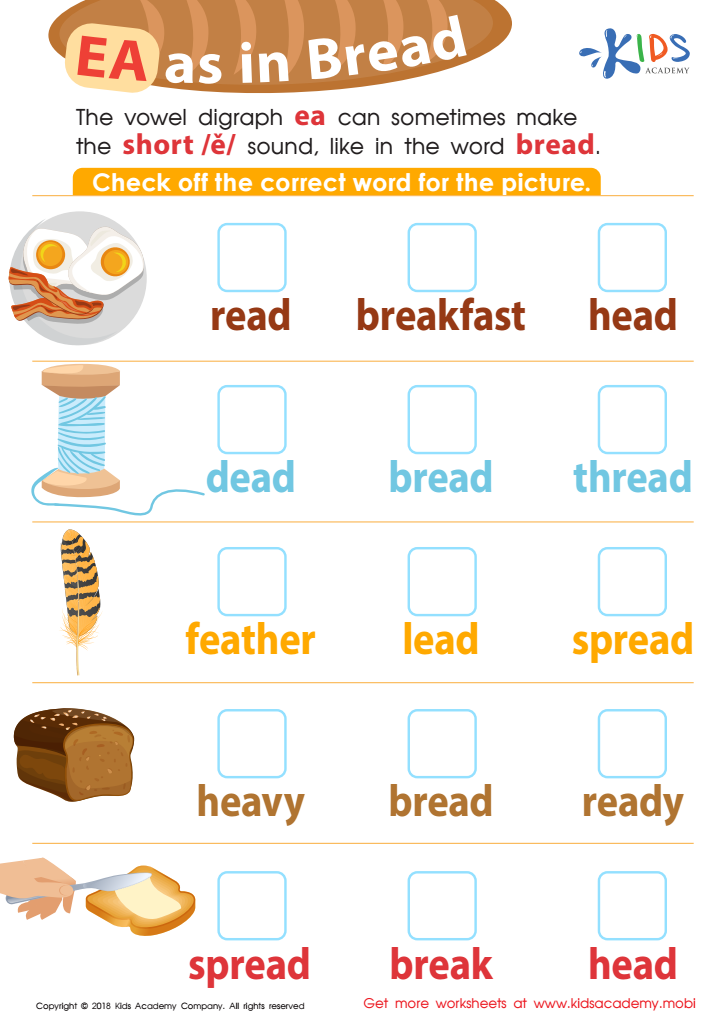
Reading: EA as in Bread Worksheet
The vowel digraph ea can be read in two ways. Examples of the long sound are "read" and "lead"; examples of the short sound are "bread" and "head". Ask your kids to give you more examples and then have them check off the correct word for the pictures on this worksheet. This will help them understand the ea sound.
Reading: EA as in Bread Worksheet
Worksheet
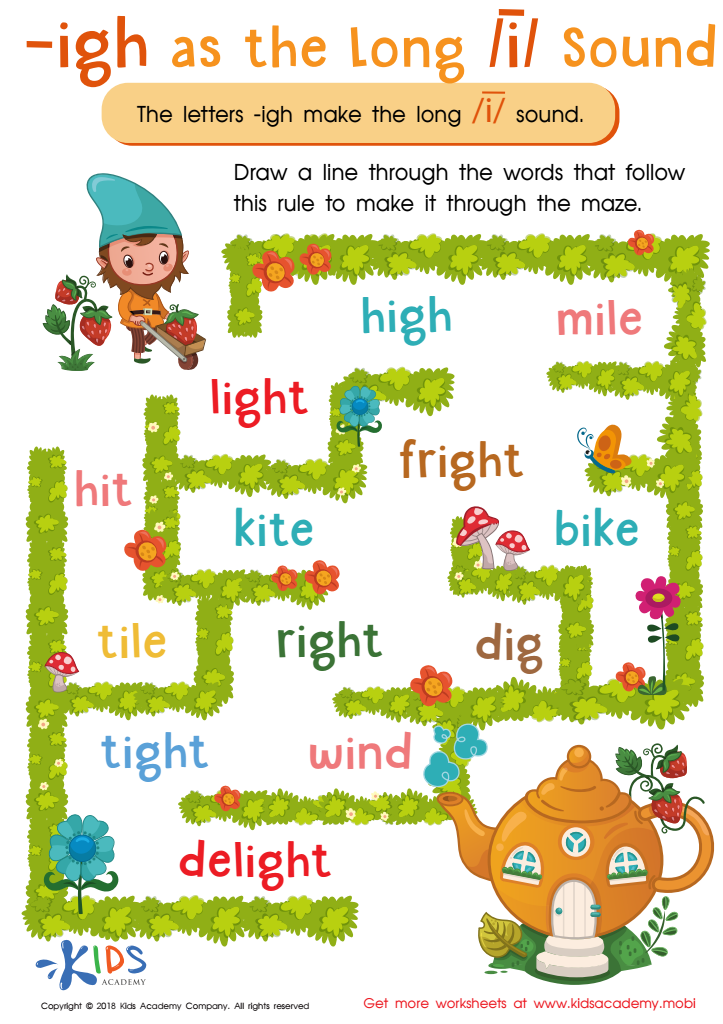
Reading: IGH as Long I Worksheet
Kids can have fun and learn with this maze! They'll look for and read words with the 'long I' sound spelled 'igh'. Most words ending with 'T' have this spelling. Decode words while learning about long vowel sounds and their spellings.
Reading: IGH as Long I Worksheet
Worksheet
Join Kids Academy for Free
Who is primarily going to use this learning content?








Phonics practice and vocabulary building are crucial for 7-year-olds because they form the backbone of literacy, influencing all subsequent learning. Phonics teaches children the relationship between letters and sounds, which is fundamental for accurate reading and spelling. Without a strong grasp of phonics, children may struggle to decode words, leading to difficulties in reading fluently and comprehensively. This, in turn, can affect their academic performance and confidence in various subjects.
Building vocabulary is equally important because it enhances children’s ability to understand and use language effectively. A rich vocabulary enables children to express their thoughts more clearly, understand instructions better, and engage more meaningfully in discussions. Vocabulary development is also closely linked to improved reading comprehension; the more words children know, the easier it is for them to make sense of what they read.
Parents and teachers play a pivotal role in this process by providing stimulating, language-rich environments. Reading aloud, engaging in conversations, and utilizing interactive phonics games are excellent ways to support development. Investing time in phonics practice and vocabulary-building sets the stage for lifelong learning, empowering children to become proficient readers, effective communicators, and curious learners who are well-equipped for future academic challenges.








