Moral understanding Normal Reading Worksheets for 7-Year-Olds
4 filtered results
-
From - To
Discover our engaging Moral Understanding Normal Reading Worksheets designed specifically for 7-year-olds! These worksheets help young learners grasp essential life lessons through captivating stories and relatable scenarios. Aimed at enhancing empathy, honesty, and respect, our resources encourage students to reflect on moral dilemmas and character development. In addition to improving reading skills, these activities foster critical thinking, instilling valuable values at an early age. With colorful illustrations and age-appropriate content, children will be motivated to participate and learn. Explore our collection today to support your child’s reading journey while cultivating their moral compass! Perfect for home and classroom use!
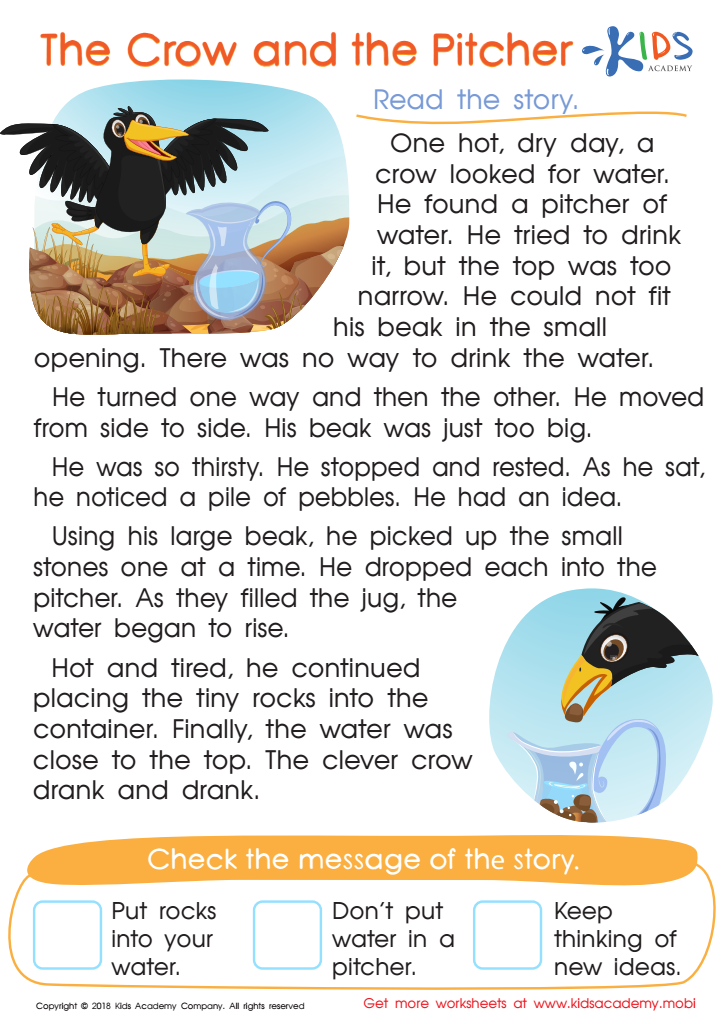
The Crow and the Pitcher Worksheet
 Assign to My Students
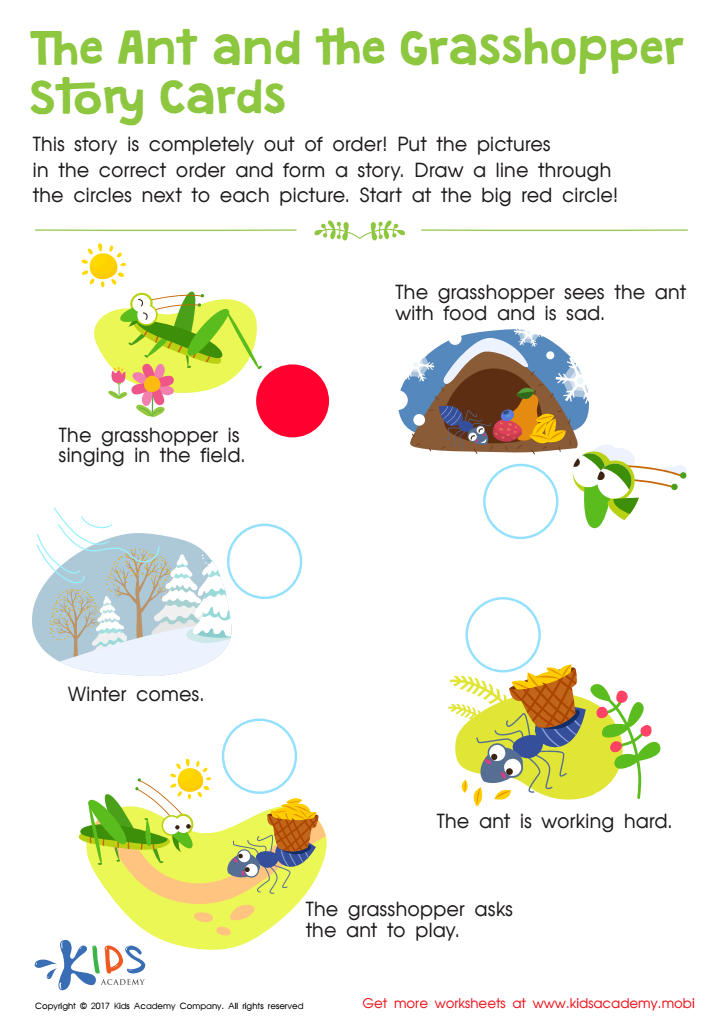
The Ant and The Grasshopper Worksheet
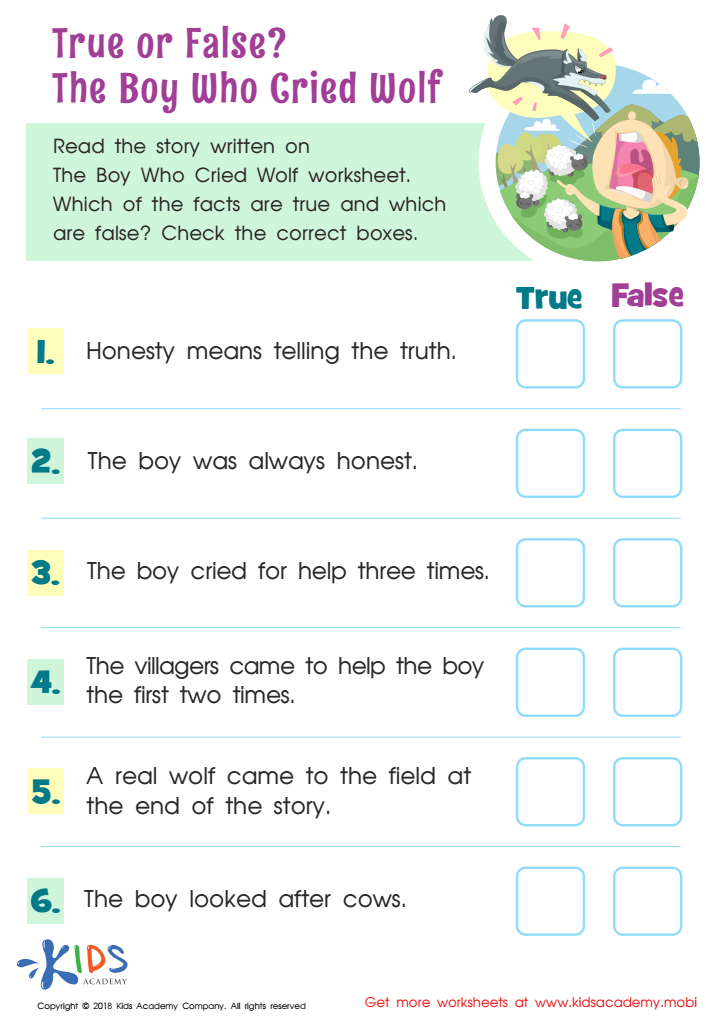
True or False? The Boy Who Cried Wolf Worksheet
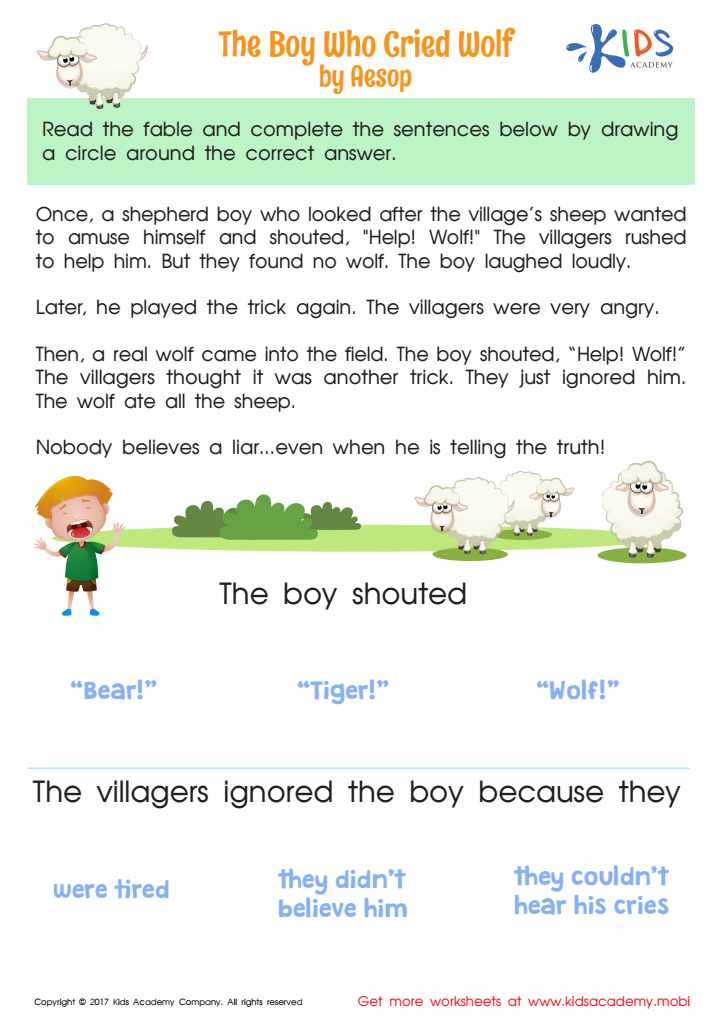
The Boy Who Cried Wolf Worksheet



.jpg)



Moral understanding is crucial for the development of 7-year-olds; it shapes their interactions, decisions, and overall character. At this age, children begin to navigate complex social scenarios, learning right from wrong and the importance of empathy. Parents and teachers play a vital role in guiding this process by fostering moral reasoning and understanding.
First, moral understanding helps children build healthy relationships with peers. Kids equipped with empathy and respect are more likely to resolve conflicts constructively and treat others kindly. This not only enhances their social skills but also contributes to a positive classroom and home environment.
Additionally, nurturing moral understanding encourages critical thinking. Children learn to consider the consequences of their actions and understand different perspectives, helping to develop their decision-making skills. These abilities are essential not just in childhood, but throughout life as they face various moral dilemmas.
Moreover, discussing moral dilemmas through storytelling or real-life examples can spur engaging conversations, encouraging children to articulate their thoughts and opinions. Ultimately, supporting children's moral understanding is essential for fostering responsible, compassionate, and thoughtful individuals as they grow into adulthood. Therefore, it is crucial for parents and educators to prioritize moral development alongside academic achievements.








