Logical Reasoning Normal Reading Fiction Worksheets for 7-Year-Olds
3 filtered results
-
From - To
Explore our collection of engaging Logical Reasoning Normal Reading Fiction Worksheets tailored specifically for 7-year-olds. Designed to ignite young minds, these worksheets seamlessly blend captivating storylines with critical thinking tasks, ensuring that learning is both fun and educational. Each worksheet focuses on improving logical reasoning skills by challenging children to draw conclusions, make predictions, and solve problems based on the fictional texts they read. Perfect for enhancing reading comprehension and cognitive development, these resources will support your child's journey towards becoming a proficient reader and thinker. Equip your child with the tools they need to succeed—explore our worksheets today!
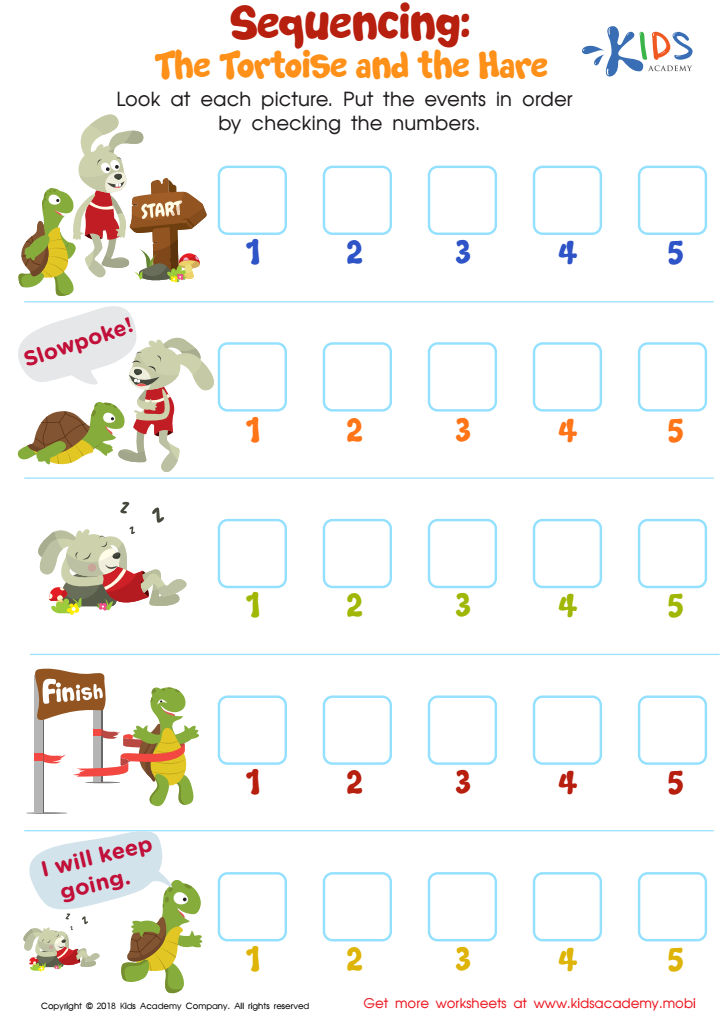
Sequencing: The Tortoise and the Hare Worksheet
 Assign to My Students
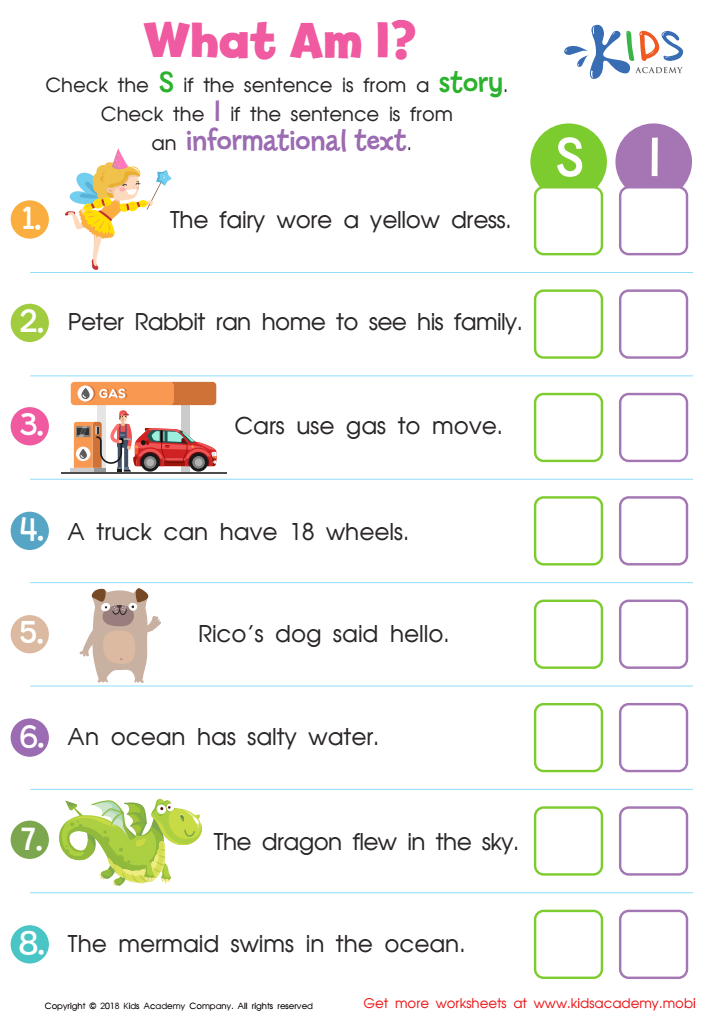
What Am I? Worksheet
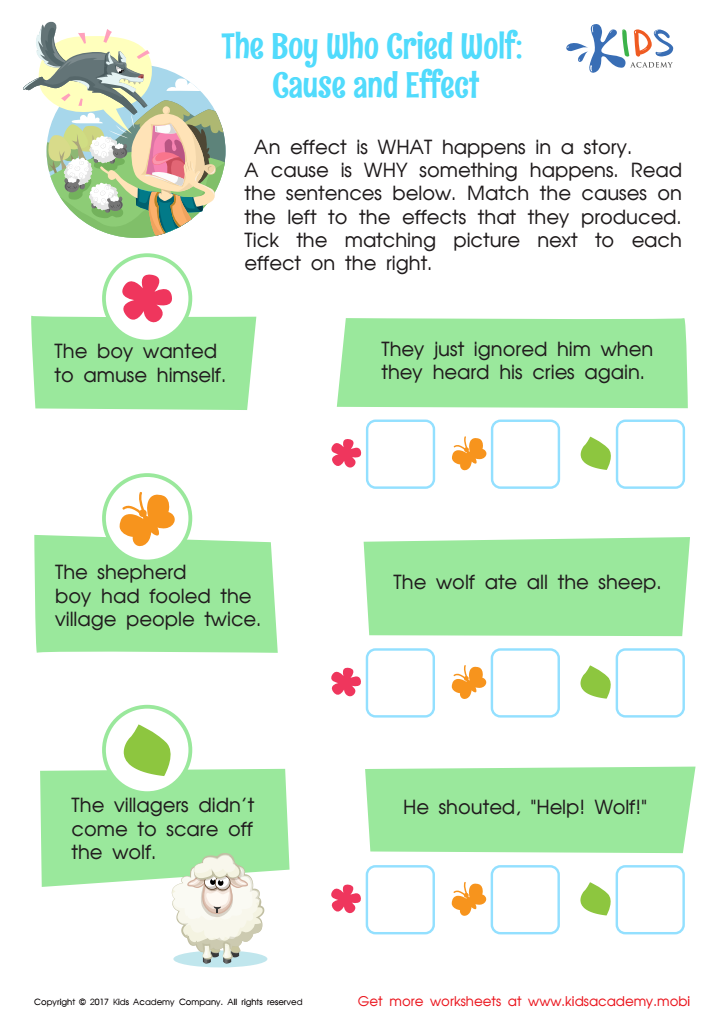
The Boy Who Cried Wolf: Cause and Effect Worksheet








Parents and teachers should place significant importance on fostering logical reasoning and a love for reading fiction in 7-year-olds as these skills are foundational for overall intellectual and emotional development. At this age, children are honing their cognitive abilities, and logical reasoning helps them understand relationships between ideas, solve problems systematically, and develop critical thinking skills. This form of mental exercise enables them to grasp basic concepts in math, science, and everyday decision-making, serving as a stepping stone for more complex thought processes in later years.
Simultaneously, engaging children in normal reading, especially fiction, broadens their imagination and creativity. Through stories, they encounter diverse characters, scenarios, and cultures, which fosters empathy and emotional intelligence. Fiction also expands vocabulary, improves comprehension skills, and ignites a passion for lifelong reading. It allows young readers to explore new worlds and viewpoints, essential for social-emotional development.
Investing in these areas simultaneously ensures a balanced growth curve where logical reasoning aids in structured thinking, and reading fiction nurtures creativity and empathy. These complementary skills not only contribute to academic success but also equip children with the mental agility and emotional resilience needed to navigate life’s complexities effectively.







