Developing observation skills Normal Science Worksheets for 7-Year-Olds
3 filtered results
-
From - To
Boost your child's scientific inquiry with our "Developing Observation Skills Normal Science Worksheets for 7-Year-Olds". Designed to enhance critical thinking and observational skills, these worksheets offer engaging, age-appropriate science activities. Each worksheet introduces fun, exploratory tasks that challenge young minds to observe, question, and analyze their surroundings, fostering a deeper understanding of the natural world. Perfect for both classroom use and at-home learning, these resources support foundational science skills essential for future academic success. Explore our collection to inspire curiosity and a love for science in your 7-year-old!
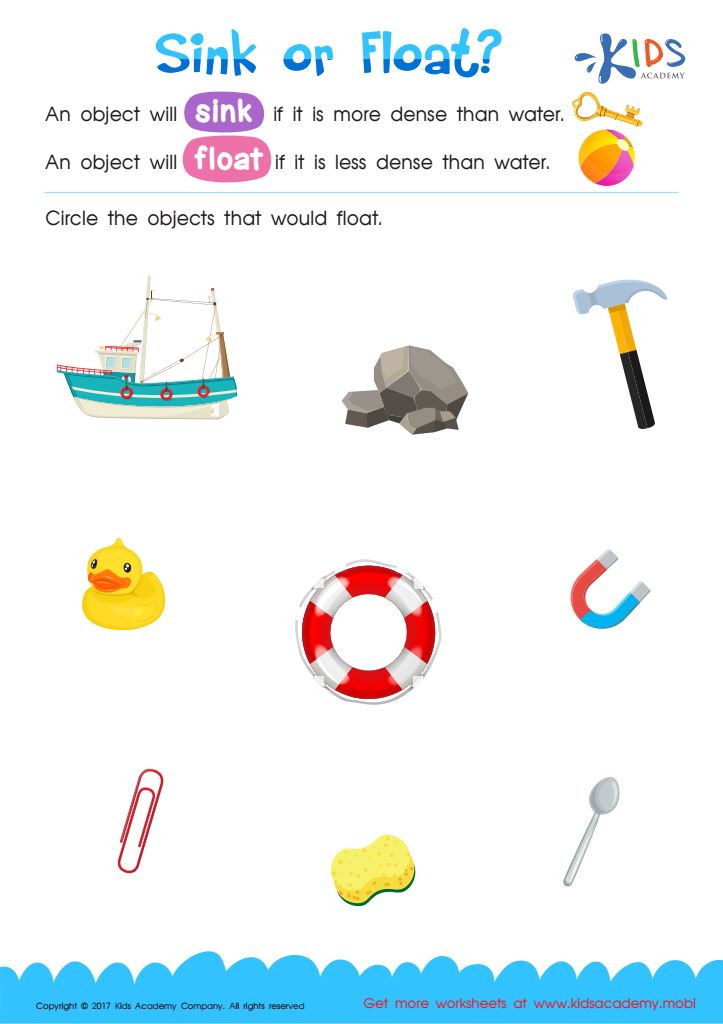
Sink or Float Printable
 Assign to My Students
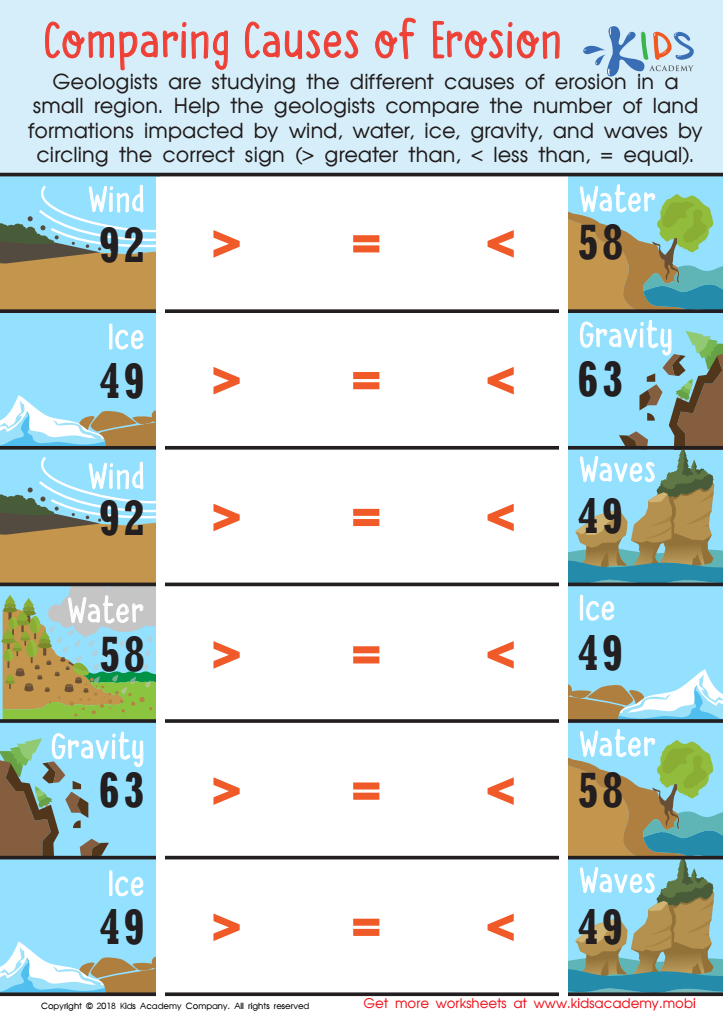
Comparing Causes of Erosion Worksheet
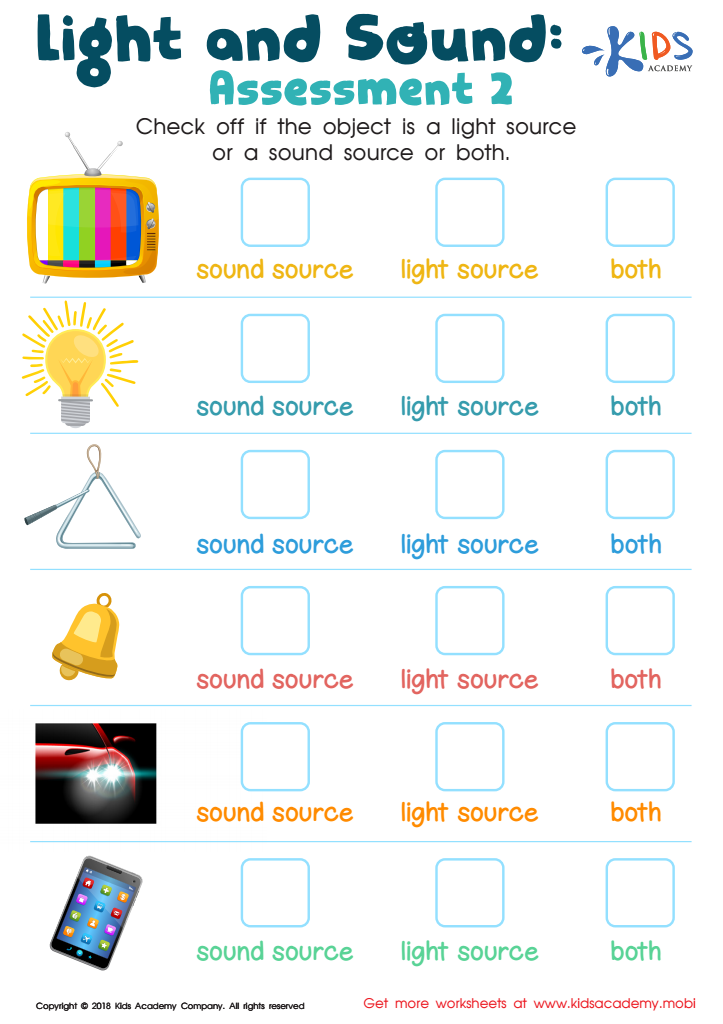
Light and Sound: Assessment 2 Worksheet






Developing observation skills in seven-year-olds is crucial for their cognitive, social, and academic growth. At this early age, children are naturally curious and eager to learn about the world around them. Observation skills enable them to notice details, recognize patterns, and make connections, laying the foundation for critical thinking and problem-solving. For parents and teachers, fostering these skills can lead to more engaged and inquisitive learners.
When children practice observation in the context of normal science, they begin to understand scientific concepts through hands-on experiences and real-world applications. This early engagement with science enhances their ability to learn and retain information, making those lessons more meaningful and memorable.
Moreover, strong observation skills can improve communication and social interactions. By paying closer attention to their surroundings and people, children learn to articulate their thoughts more clearly and observe non-verbal cues, fostering better relationships with peers and adults.
For teachers, developing these skills in students can make lessons more dynamic and effective. Observant children contribute thoughtful questions and insights, enriching classroom discussions. For parents, encouraging observation makes everyday activities like exploring nature or cooking together more educational and enjoyable.
Ultimately, nurturing observation skills helps children become lifelong learners, equipped with the tools they need to succeed academically and socially.







